

 |
Iran is poised to significantly restore its long-range missile strike capabilities against Israel and other Middle Eastern countries after rapidly reopening underground missile depots that were previously sealed off during the war. Experts believe this development highlights the significant limitations of the US and Israeli airstrike strategies aimed at crippling Tehran's missile program.
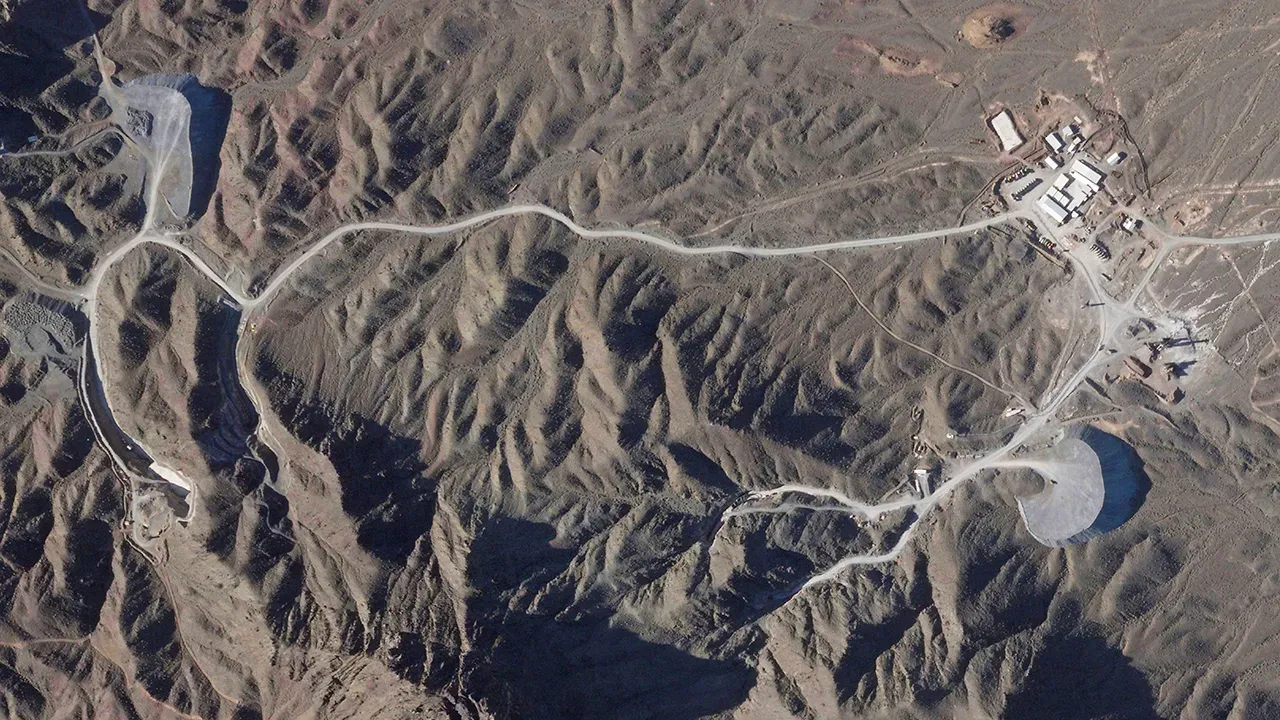
For weeks, the U.S. and Israel focused on targeting Iran's underground missile bases by destroying access routes and collapsing tunnel entrances leading to underground missile storage facilities.
However, satellite imagery analyzed by CNN shows that Iran used simple construction equipment such as bulldozers and dump trucks to quickly clear the rubble, restoring access to the bases. This suggests that targeting only the tunnel entrances was not enough to completely neutralize Tehran's missile capabilities.
Although the US and Iran have reached a preliminary agreement regarding the restoration of maritime activity in the Strait of Hormuz, many key issues remain unresolved, and the risk of renewed conflict persists.
According to Sam Lair, a research fellow at the James Martin Center for Nonproliferation Studies, if hostilities resume, Iran could continue launching missiles for an extended period as long as it has launchers and operating personnel.
"Nothing prevents the launchers from being fully loaded with the massive missile stockpile that Iran still possesses," he stated.
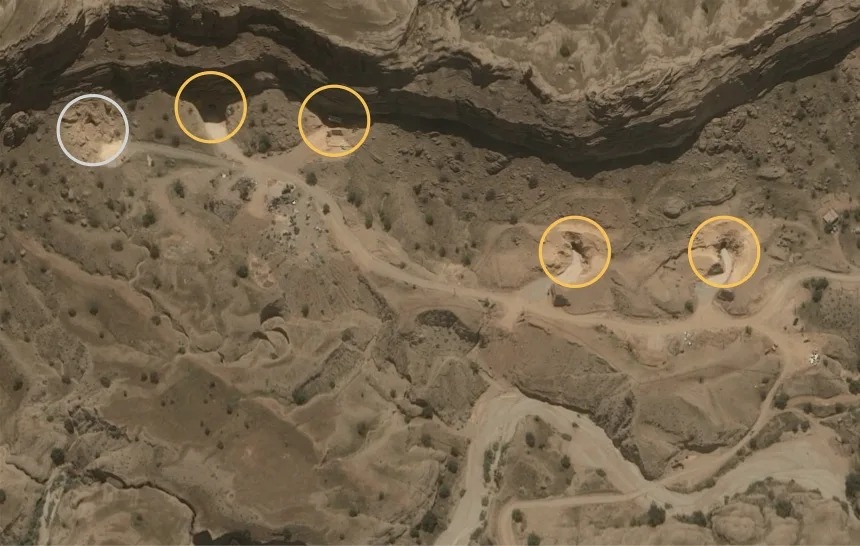 |
At a missile base in Dezful, Iran, four of the five entrances to the underground facility were reopened on May 12. The gray circle represents the only entrance to the complex that remains locked. Photo: Airbus. |
Efforts for rapid recovery
During the war, Iran attempted to excavate tunnels even as the US and Israel repeatedly attacked the construction vehicles. Despite facing numerous risks, Tehran maintained missile launches, albeit at a significantly lower frequency than before.
Since the ceasefire came into effect more than seven weeks ago, the pace of restoring Iran's missile bases has accelerated sharply.
According to CNN 's analysis, Iran has reopened 50 of the 69 tunnels that were destroyed by the US and Israel at 18 different underground missile bases.
In addition to restoring the tunnel entrances, Tehran is also repairing other infrastructure, including roads damaged by bombing to hinder the movement of vehicles carrying missile launchers. Satellite imagery shows that most bomb craters have been filled in, while some roads have even been repaved.
Sam Lair argued that the US campaign achieved significant tactical successes in temporarily weakening Iran's missile capabilities. However, he cautioned that these results might not yield lasting strategic benefits unless they are tied to clear and achievable war objectives.
Pentagon spokesman Sean Parnell declined to comment specifically on CNN 's findings, only emphasizing that the U.S. military has the full capability to carry out missions as decided by the President.
The core objective is wavering.
US President Donald Trump has repeatedly asserted that Iran's missile arsenal is one of the main causes of the war. In a March post on the social media platform Truth Social, Trump stated his goal was to "completely cripple Iran's missile capabilities, launchers, and all related components."
Iran's network of underground missile bases, built over the past two decades, provides significant protection for its missiles and launchers against airstrikes.
Many of these facilities are located deep beneath hundreds of meters of rocky terrain, making it difficult for the US and Israel to access and destroy them directly.
Therefore, in the early stages of the war, the two countries focused on attacking tunnel entrances and hunting down mobile launch platforms, thereby significantly reducing the number of Iranian missiles that could be fired.
The airstrikes inflicted heavy damage on many bases, burying tunnel entrances under massive blocks of earth and rocks and destroying the access routes to the facilities.
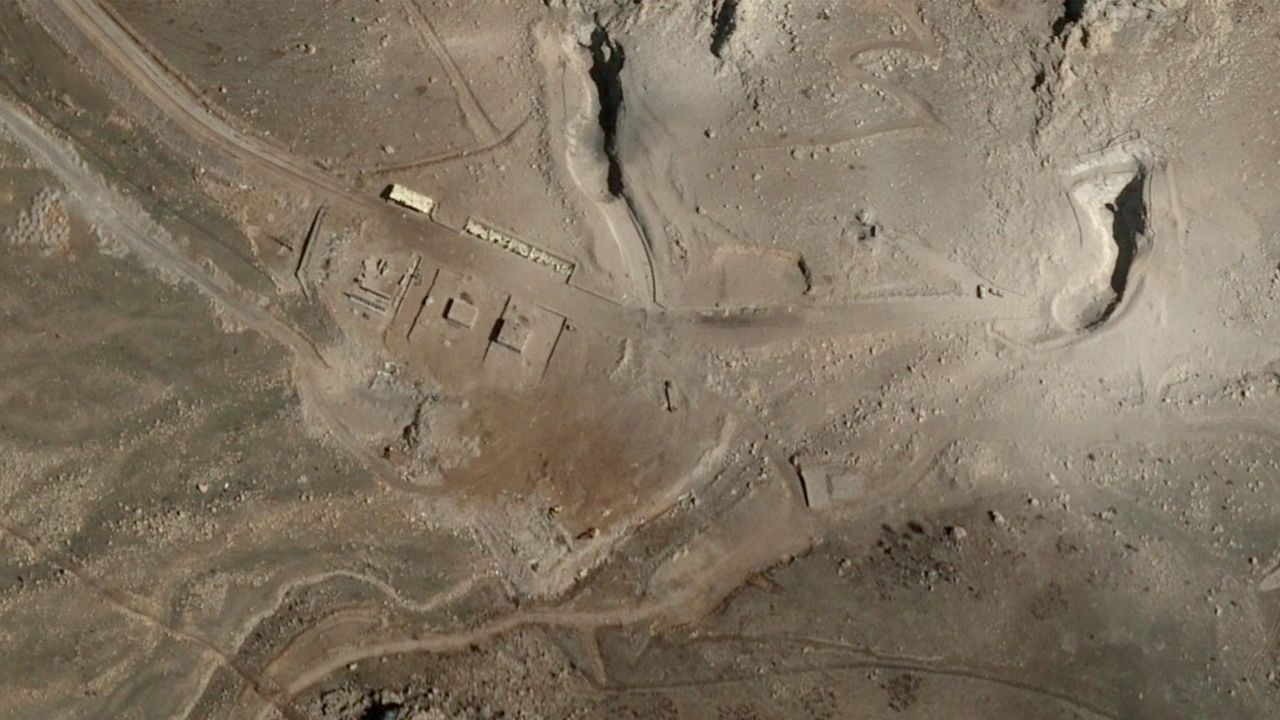 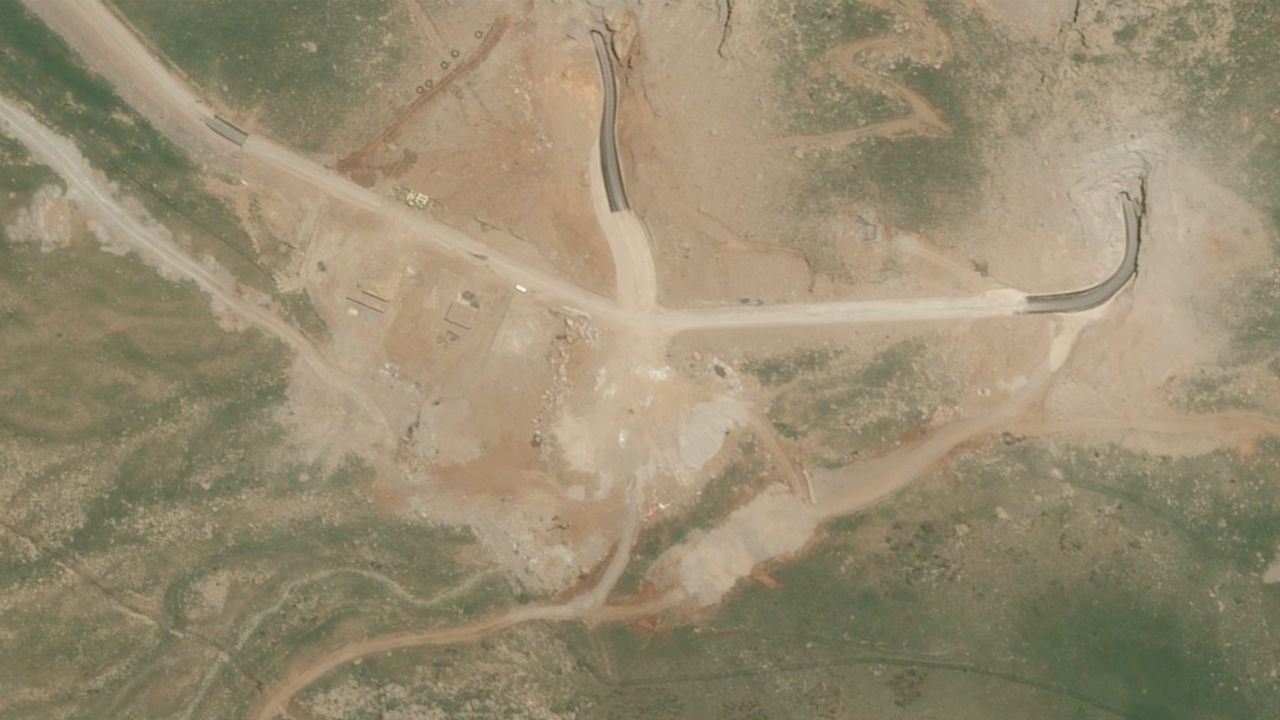 |
Satellite images of a missile base north of Kermanshah (Iran) from March 9 and May 8 show that two tunnel entrances bombed by the US and Israel have been reopened. The roads leading to the tunnels, which had been dug trenches to prevent missile launchers from entering, have been repaired and repaved. Photo: Airbus. |
Satellite imagery previously showed the Isfahan North missile base, one of Iran's key underground facilities, severely damaged, with many tunnel entrances sealed and external launch platforms destroyed.
The US and Israel simultaneously launched a large-scale campaign to cut off Iran's missile supply chain, from factories producing electronic components to facilities manufacturing missile bodies and propellant.
Following the ceasefire agreement between the US and Iran on April 8, US Defense Secretary Pete Hegseth stated that Iran would have to dig to recover its remaining missile launchers and missiles, as it no longer had the capability to replace them.
However, experts believe Iran still has around 1,000 missiles stored in underground facilities.
These missiles, located deep underground, are considered to be virtually immune to significant damage from ground-based airstrikes. Notably, Israel employed a similar tactic during last year's 12-day war but failed to completely destroy Tehran's stockpile.
"Iran has been preparing for a war like this for the past 20 years. They are very well prepared," said Timur Kadyshev, an expert on Iranian missiles at the University of Hamburg.
All you need are... bulldozers.
To reopen the bases, Iran mobilized a range of construction and mechanical equipment. Satellite images showed excavators continuously clearing debris while dump trucks filled in bomb craters.
At a base near Isfahan, the US and Israel have conducted numerous airstrikes aimed at sealing off four tunnel entrances. Two of the tunnel entrances alone have at least 18 bomb craters, indicating the large amount of weaponry used to neutralize the area.
However, just a few weeks later, satellite imagery captured reclamation and restoration work. Two other tunnel entrances at the base were fully reopened, and damaged roads were repaved.
At a base near Khomeyn, photographs taken in mid-April show at least 10 construction vehicles participating in an operation to reopen a blocked tunnel entrance.
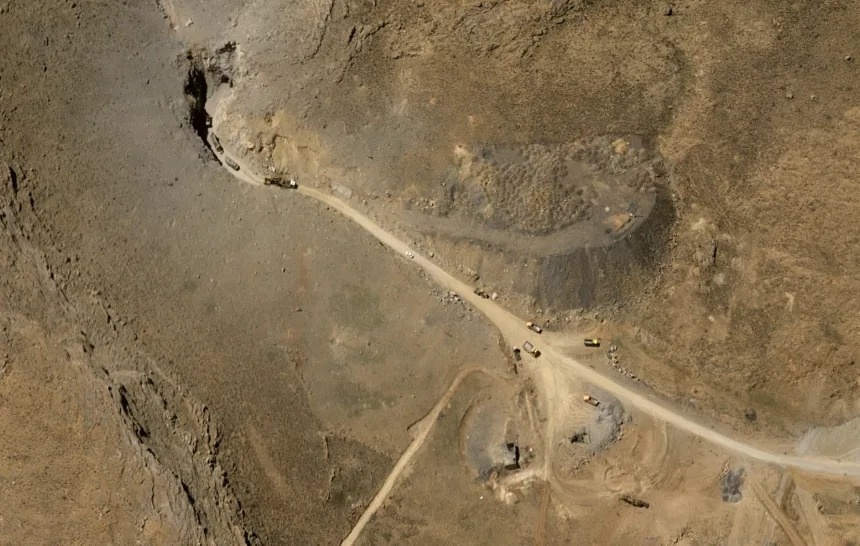 |
Satellite imagery of an underground missile base near Khomyn (Iran) shows at least 10 construction vehicles working to clear the entrance to a tunnel on April 15. Photo: Airbus. |
As Iran gradually restores its missile capabilities and brings its underground bases back into operation, many analysts fear the threat from this arsenal is being underestimated, especially in light of the dwindling US stockpile of interceptor missiles.
Airstrikes targeting Iran's missile industry may also not be enough to prevent Tehran from rebuilding its production capacity in the long term. During the previous 12-day war, many similar factories were attacked but subsequently restored to operation.
Recent U.S. intelligence assessments indicate that Iran has begun rebuilding key military capabilities, including resuming drone production, replacing destroyed launchers, and restoring missile production capacity.
A U.S. official revealed to CNN that Iran's recovery is progressing at a pace far exceeding previous intelligence community predictions.
According to Kadyshev, the contrast between modern military technology and simple recovery measures has exposed a major challenge to military operations against Iran.
"It takes extremely sophisticated and expensive weapons to inflict that kind of damage. But to repair it, Iran only needs bulldozers," he said.
Source: https://znews.vn/iran-doi-gao-nuoc-lanh-vao-my-post1655879.html
![[Image] Hanoi Police officially crowned champions of V-League 2025/2026](https://vphoto.vietnam.vn/thumb/1200x675/vietnam/resource/IMAGE/2026/05/31/1780244769054_ndo_br_039d561b692be875b13a-jpg.webp)





















![[Photo] The General Secretary, President and his wife begin their state visit to the Philippines.](https://vphoto.vietnam.vn/thumb/1200x675/vietnam/resource/IMAGE/2026/05/31/1780230559452_anh-man-hinh-2026-05-31-luc-19-28-11.png)






































































Comment (0)