

 |
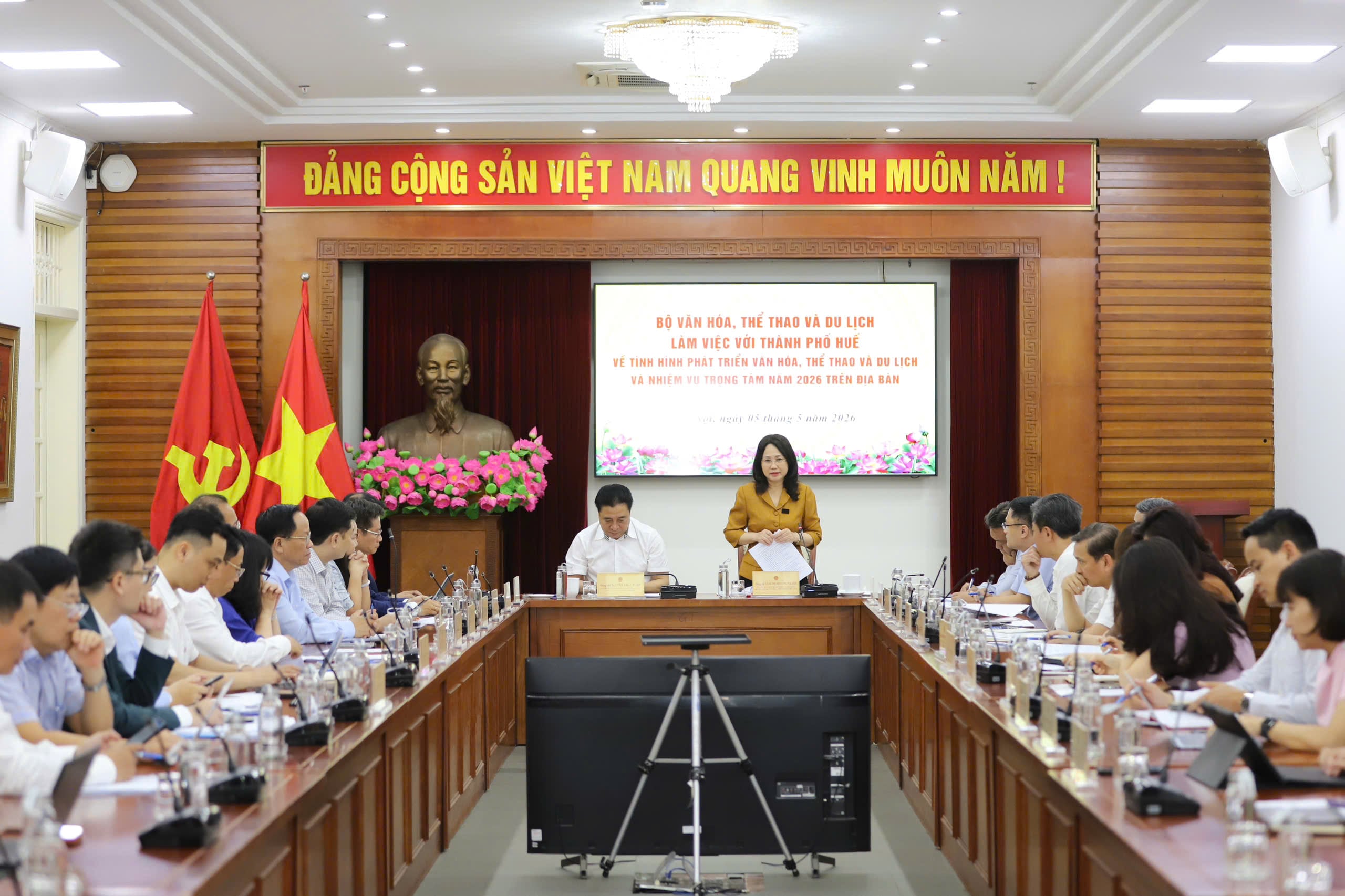
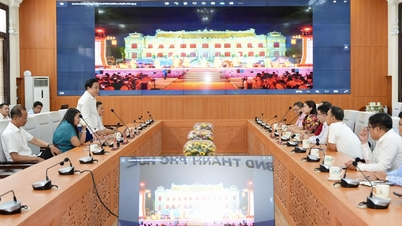
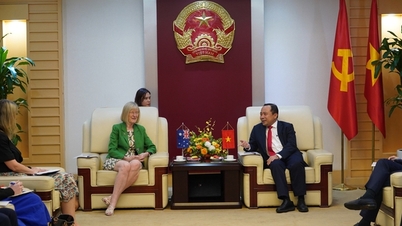
| Comrade Lam Thi Phuong Thanh, Member of the Central Committee of the Party, Minister of Culture, Sports and Tourism, concluded the working session. Photo: Provided by the City People's Committee Office. |
Attending the working session, on the side of the Ministry of Culture, Sports and Tourism were Ms. Lam Thi Phuong Thanh, Member of the Central Committee of the Party, Minister of Culture, Sports and Tourism; Mr. Hoang Dao Cuong, Deputy Minister of Culture, Sports and Tourism, along with leaders of departments, divisions, and units under the Ministry.
Representing Hue City were Comrade Nguyen Khac Toan, Member of the Central Committee of the Party, Deputy Secretary of the City Party Committee, and Chairman of the City People's Committee; Comrade Tran Huu Thuy Giang, Vice Chairman of the City People's Committee; and representatives from relevant departments and agencies.
Towards a model of a "distinctive heritage city"
At the meeting, Chairman of the Hue City People's Committee Nguyen Khac Toan stated that Hue is facing a great opportunity to shape a unique development model for a heritage city. According to Mr. Nguyen Khac Toan, Hue's greatest advantage lies in its profound culture, history, and rare heritage system.
Currently, Hue is the only locality in the country to possess 8 UNESCO-listed heritage sites. In recent years, many key structures within the Hue Imperial Citadel complex have been restored and put into operation, such as Kien Trung Palace, Thai Hoa Palace, Gia Long Mausoleum, Hai Van Pass, etc. These structures not only serve a preservation purpose but are also gradually becoming tourist attractions, generating additional revenue and opening up avenues for the development of a "heritage economy."
Hue is also promoting the restoration of intangible cultural values such as Nha Nhac (court music), Ca Hue (Hue folk songs), royal festivals, and traditional crafts; while simultaneously developing community cultural spaces, pedestrian streets, food streets, and nighttime art activities.
According to a report by the People's Committee of Hue City, in 2025, the locality is expected to welcome approximately 6.3 million tourists, generating tourism revenue of around 13,200 billion VND. In just the first four months of 2026, Hue welcomed over 2.6 million tourists, with estimated tourism revenue exceeding 6,234 billion VND, an increase of over 70% compared to the same period. Particularly during the recent April 30th and May 1st holidays, Hue recorded a surge in visitors, with approximately 610,000 tourists over the five-day holiday. On May 1st alone, the Hue Imperial Citadel complex welcomed over 31,000 visitors, generating revenue of 4.2 billion VND – the highest ever recorded.
Regarding the implementation of Resolution No. 80-NQ/TW dated January 7, 2026, of the Politburo on the development of Vietnamese culture, the locality aims to build Hue into a center of unique literary and artistic creation by 2030, a model of a "distinctive heritage city" of Vietnam.
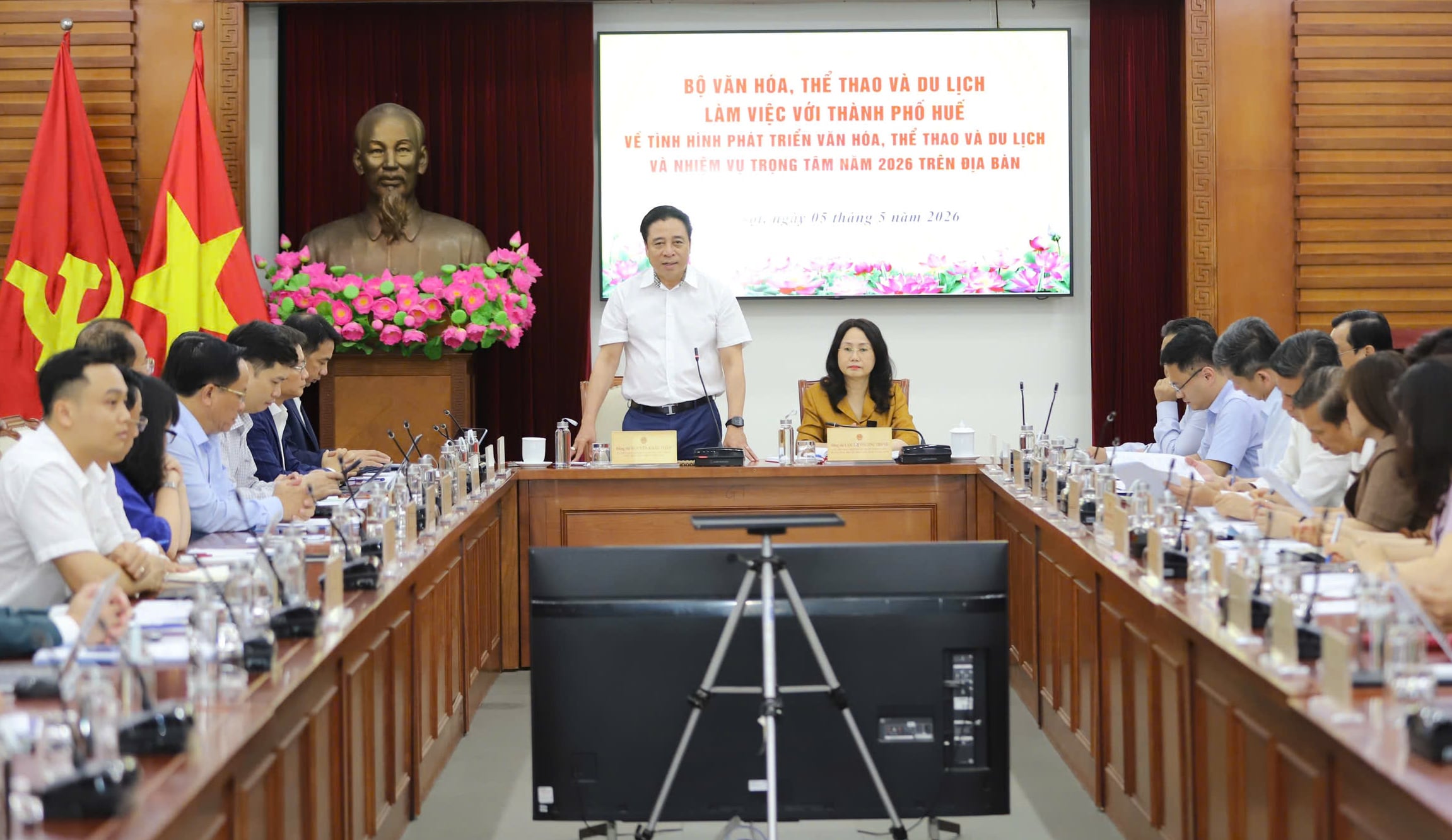 |
| Comrade Nguyen Khac Toan, Member of the Central Committee of the Party, Deputy Secretary of the City Party Committee, and Chairman of the City People's Committee, delivered a speech at the working session. Photo: Provided by the City People's Committee Office. |
Looking further ahead, by 2045, Hue aims to become a "distinctive heritage city - smart city," a unique cultural center of the Asian region, while making the cultural industry a key economic sector, contributing over 20% of the city's GRDP.
To realize this goal, Hue has identified three pillars of development: preserving heritage in conjunction with a heritage economy; building a modern tourism and cultural industry ecosystem; and promoting human resources and Hue's unique identity.
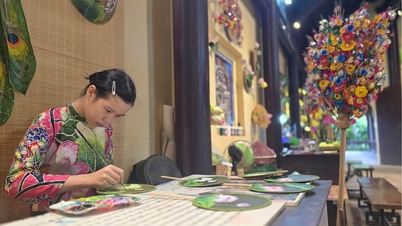
In the new strategy, the cultural industry is considered a key focus area. The city aims to strongly develop sectors with competitive advantages such as cuisine, traditional Vietnamese dresses (áo dài), performing arts, film, night tourism, and cultural experience products.
One notable idea is to develop "The Imperial Citadel at Night" into a leading cultural and tourism product, connecting with the pedestrian streets and commercial services around the Citadel to extend the length of stay and increase tourist spending. Hue also aims to build international-standard royal and folk food streets, a center for experiencing tailoring traditional Vietnamese ao dai, develop MICE tourism, cruise tourism through Chan May port, "Connecting Central Vietnam Heritage" railway tourism, and green and low-carbon tourism models. Alongside this is a digital transformation strategy in the cultural and tourism sectors.
Expanding growth potential from heritage
During the meeting, the Hue City People's Committee also requested the Ministry of Culture, Sports and Tourism to provide support for several key areas to create momentum for a new development phase. Specifically, the city proposed support in completing dossiers for submission to UNESCO for several representative heritage sites; expediting the approval procedures for the Conservation, Restoration, and Rehabilitation Plan for the Hue Imperial Citadel Complex until 2030, with a vision to 2050; and prioritizing the allocation of resources for cultural, heritage, and digital transformation projects.
Hue also proposed that the central government consider and allow the piloting of some specific mechanisms and policies to create more room for the development of cultural industries, heritage economy, and sustainable tourism in the future.
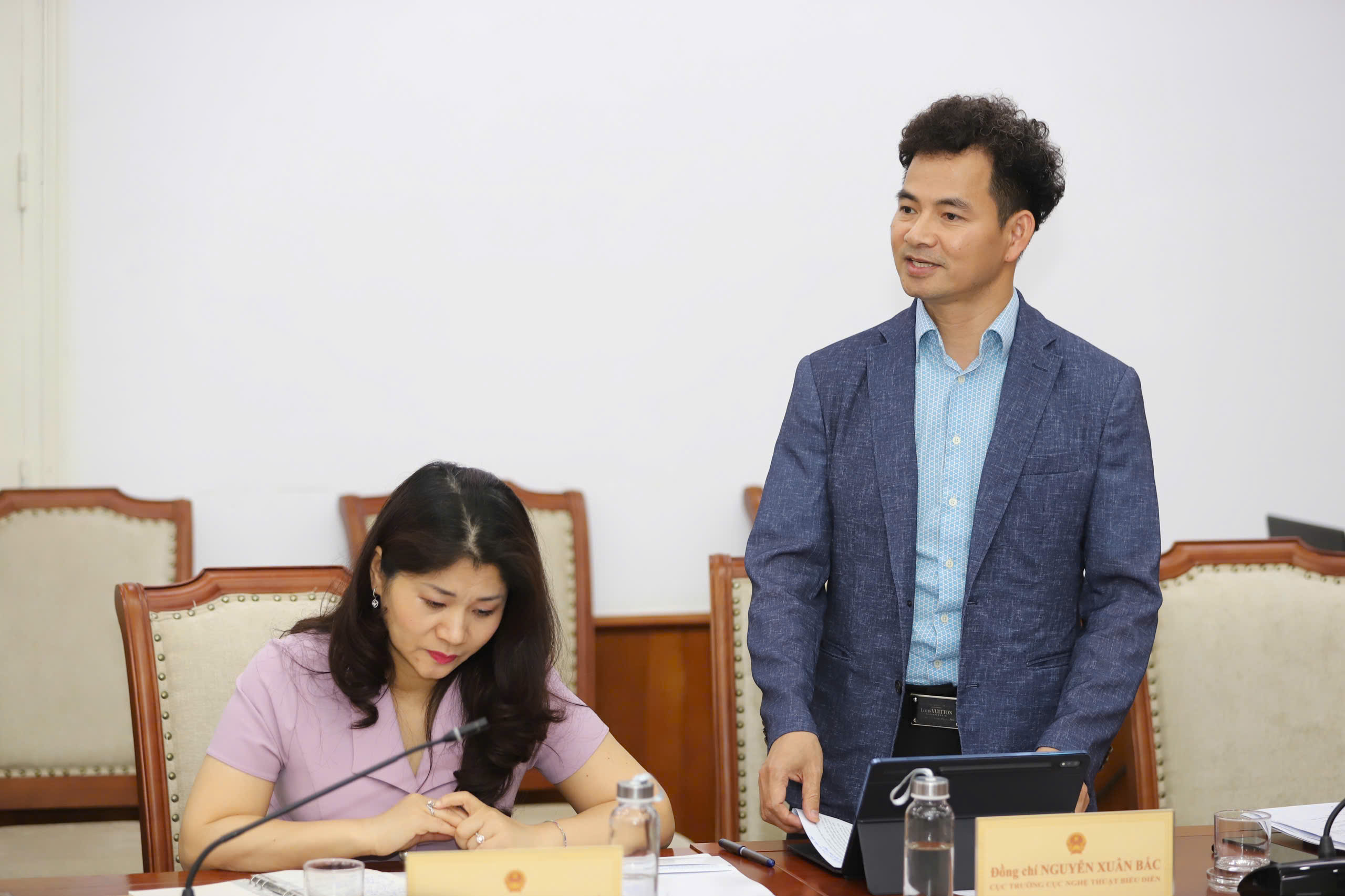 |
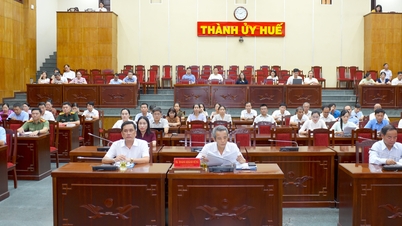
| Delegates speaking at the working session. Photo: Provided by the City People's Committee Office . |
Concluding the working session, Minister of Culture, Sports and Tourism Lam Thi Phuong Thanh highly appreciated the achievements Hue has made in recent years, especially in the field of heritage preservation and cultural tourism development. She requested that Hue continue to promote its unique identity to perfect the model of a distinctive heritage city; accelerate the development of cultural industries in areas with advantages such as ao dai (traditional Vietnamese dress), cuisine, performing arts, and research and develop a Hue film studio.
According to Minister Lam Thi Phuong Thanh, Hue needs to continue identifying tourism as a key economic sector, while also enhancing its capacity for international cooperation and proactively organizing major regional and international events to spread the image of Hue culture and Vietnamese culture.
Regarding the proposals from local authorities, the Minister stated that the Ministry will assign specialized units to research, coordinate guidance, and advise competent authorities to consider them in accordance with regulations.
Source: https://huengaynay.vn/van-hoa-nghe-thuat/thong-tin-van-hoa/khai-mo-dong-luc-tang-truong-tu-di-san-165332.html



![[Image] Close-up view of the interchange connecting the two expressways and Long Thanh Airport.](https://vphoto.vietnam.vn/thumb/1200x675/vietnam/resource/IMAGE/2026/05/25/1779703378210_ndo_br_z7863716673926-224453a31600126cce10622af6290afd-4549-jpg.webp)

![[Image] Hanoi's urban life under the challenge of a "scorching hot" environment](https://vphoto.vietnam.vn/thumb/1200x675/vietnam/resource/IMAGE/2026/05/25/1779706979265_nang-nong-t5-2026-minh-duy-7-4636-jpg.webp)




























































Comment (0)