

.jpg)
Point models
A team of experts from the Vietnam Academy of Science is conducting research on the topic "Assessing the wind power potential of the Hai Phong offshore area and policy recommendations for development".
Research results indicate that the Hai Phong sea area still has great potential for marine renewable energy, including high solar radiation (1,600 - 1,900 hours of sunshine/year), strong wind capacity in the offshore island area, and the potential for developing offshore wind power.
According to the research team's calculations, the average wind energy density in the coastal waters of Hai Phong ranges from approximately 2,425 to 16,171 W/ m² . The wind energy density in the offshore waters of Hai Phong is 2.1 times greater than the average density of the coastal waters of the entire country.
The valuable resources of sunshine and wind from Hai Phong's coast are being transformed into energy sources to serve production activities. DeepC Industrial Park Complex is the business unit managing industrial park infrastructure according to European standards.
DeepC is diversifying its electricity supply through investment in the development of renewable energy systems such as wind turbines and solar panels installed on the roofs of factories in the industrial park. Particularly noteworthy is the wind energy project by DeepC and Unison at DeepC 2B Industrial Park in the Dinh Vu Cat Hai Economic Zone, with a capacity of 2.3MW (currently undergoing trial operation). The goal is to reach 50% of its electricity generation by 2030. Manufacturing activities in the DEEP C industrial park will utilize renewable energy.
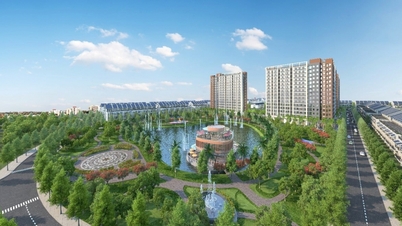
Meanwhile, at the Nam Cau Kien Eco-Industrial Park, Mr. Pham Hong Diep, Chairman of the Board of Directors of Shinec Investment JSC, the industrial park's investor, stated that the company chose the path of developing an eco-industrial park, with the philosophy of "doing business on the land - giving back to the land." The industrial park received the transfer of expertise in promoting renewable energy and the eco-town model from Kitakyushu City (Japan), based on the cooperation mechanism in the environmental field between the two cities.
According to Pham Van Thuan, Deputy Director of the Department of Agriculture and Environment, on January 29, 2026, the City Party Committee issued Resolution No. 08-NQ/TU on green transformation for the period 2026 - 2030, with a vision to 2050.
The city is piloting models of eco-industrial parks, wastewater treatment meeting standards, renewable energy, green transportation, and a circular economy. The development of renewable energy is a global trend aimed at limiting the use of increasingly depleted fossil fuels, contributing to environmental protection and combating climate change. Therefore, the aforementioned renewable energy application models contribute to environmental protection and ensure energy security for sustainable development.
The city is currently operating various renewable energy sources. These include 3.3 MW of onshore wind power, comprising the project to supply electricity to Bach Long Vy island district and the DeepC project. Regarding self-sufficient solar power systems, as of August 28, 2025, the Department of Industry and Trade has issued certificates for 68.716 MW out of the 2,092 MW allocated to Hai Phong city. These are cases where organizations registered to develop self-sufficient solar power sources through the National Public Service Portal.
A series of green transformation projects are underway.
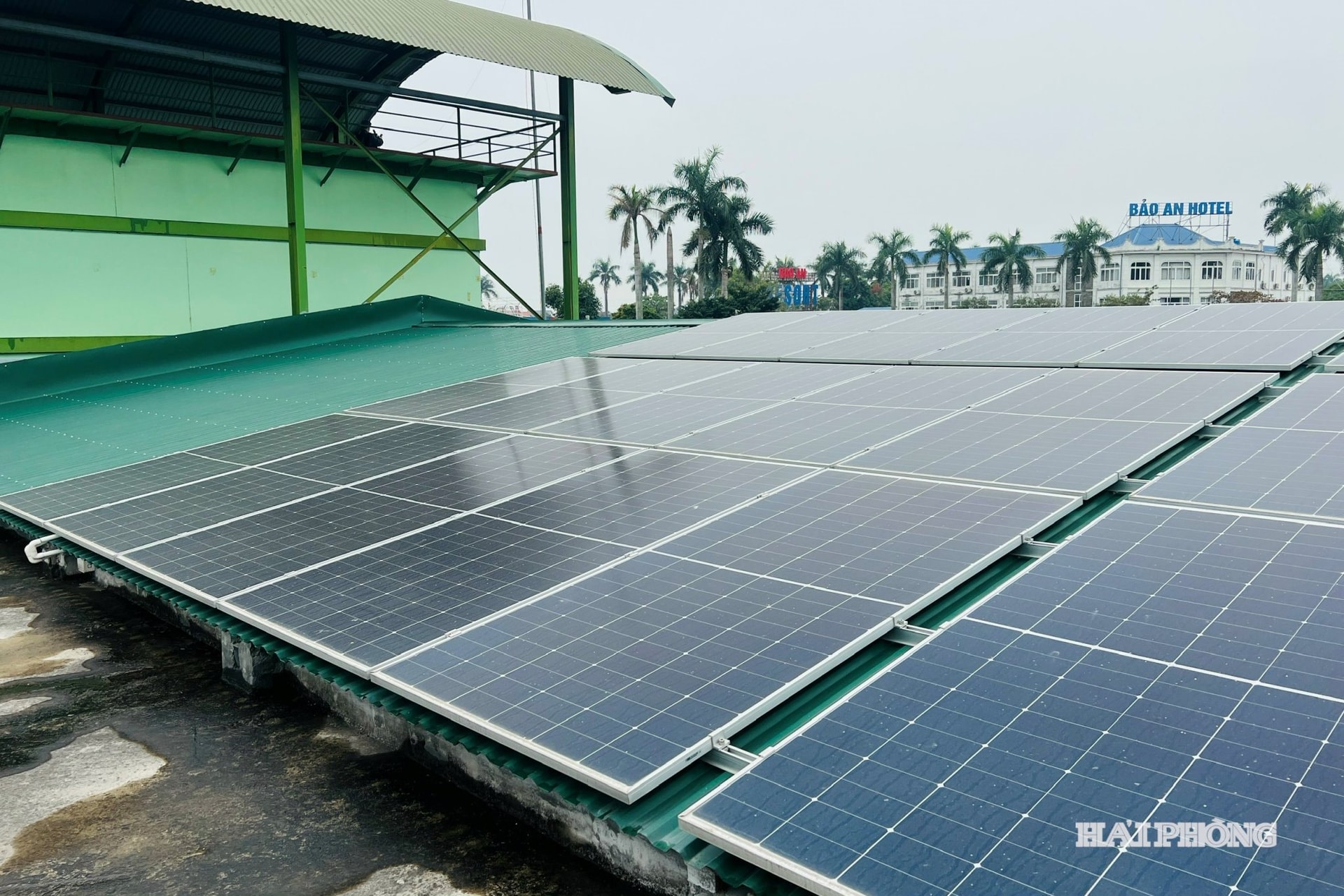
To implement the green energy transition, the city has identified the development of offshore wind power as a key task in accordance with the national marine spatial plan. This includes deploying LNG projects as a stable base load source for the transition period and promoting new energy sources such as rooftop solar power in industrial zones and waste-to-energy (WtE) plants.
Coal-fired power plants are maintained under controlled conditions, with mandatory technological conversion such as biomass/ammonia co-combustion and pilot projects for carbon capture technology to reduce emissions. The power grid is being modernized, a smart grid is being developed, and 500 kV - 220 kV lines are being upgraded to efficiently transmit renewable energy from east to west across the city.
Promote solutions to transform traditional industrial parks into eco-industrial park models, implement energy audits, cleaner production, industrial cooperation, and circular economy to achieve the goal of saving at least 8.5% of industrial energy by 2030.
The city is currently receiving proposals for four offshore wind power projects from the Lung Lo Construction Corporation: the Northern Vietnam Offshore Wind Power Plant 2.1 with a capacity of 500 MW; the Northern Vietnam Offshore Wind Power Plant 3.1 with a capacity of 500 MW, scheduled for implementation from 2025 to 2030; the Northern Vietnam Offshore Wind Power Plant 4 with a capacity of 1,000 MW, scheduled for implementation from 2025 to 2034; and the Northern Vietnam Offshore Wind Power Plant 5 with a capacity of 1,000 MW, scheduled for implementation from 2025 to 2034. These projects are currently under review and evaluation by relevant agencies.
Regarding solar power projects, the city is currently receiving project proposals from Song Da Hoa Binh Investment and Construction Joint Stock Company, proposing 6 locations for floating solar power installations on lakes, with a total capacity of 54 MW, including: Dap Khe Lake, Chi Linh Ward (15 MW); Lan Che Lake, Tran Nhan Tong Ward (9 MW); Suoi Gang Lake, Tran Nhan Tong Ward (6 MW); Ben Tam Lake (Phu Loi Lake), Nguyen Trai Ward (9 MW); Thai Xi Lake, Chi Linh Ward (9 MW); and Phuong Hoang Lake, Chu Van An Ward (6 MW).
Regarding the waste-to-energy project, the city is attracting investment to build two waste-to-energy plants with a capacity of 1,000 tons/day/plant. Of these, the project for the plant in Lai Khe commune's waste treatment area has received investment approval and the investor has been selected; the project for the location in Dinh Vu Industrial Park is currently undergoing bidding.
HUY VU - TRUNG KIENSource: https://baohaiphong.vn/khai-thac-loi-the-de-chuyen-doi-xanh-nang-luong-544480.html



![[Photo] Delegation attending the 14th Congress of the Vietnam Trade Union visits the Mausoleum of President Ho Chi Minh.](https://vphoto.vietnam.vn/thumb/1200x675/vietnam/resource/IMAGE/2026/06/03/1780451842301_ndo_br_img-3824-jpg.webp)








































































Comment (0)