

Since 2021, Vietnam has become the world's largest exporter of cinnamon. Currently, the cinnamon industry needs a strategic innovation to become a sustainable cinnamon exporting nation.
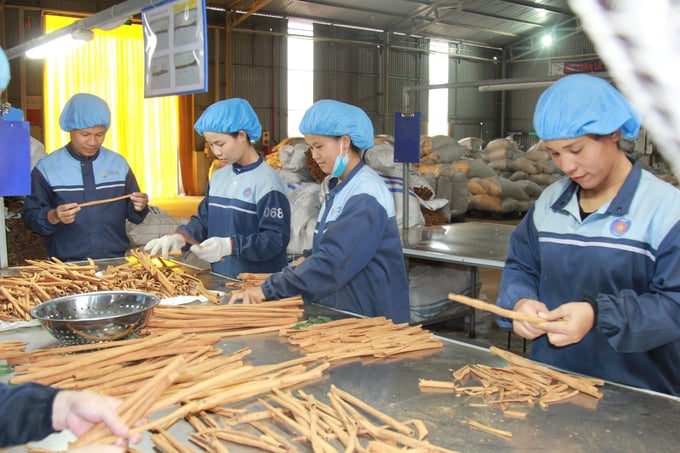
Vietnam has now become the world's largest exporter of cinnamon. Photo: Thanh Tien.
World's No. 1 Cinnamon Exporter
According to the Vietnam Pepper and Spice Association, Vietnam is the world's leading producer of cinnamon, with an area of approximately 180,000 hectares. Since 2021, Vietnam has risen to become the world's leading exporter of cinnamon.
In 2023, Vietnam's cinnamon exports accounted for approximately 34.4% of the world's export market share, with major consuming markets such as India, China, Bangladesh, and the United States. In 2023, Vietnam exported nearly 90,000 tons of cinnamon, with a total export value exceeding US$260 million, representing a 14.6% increase in volume but a 10.7% decrease in value compared to 2022. The average price of cinnamon reached US$2,918 per ton, a 22.1% decrease compared to 2022.
In 2023, India was the main export market for Vietnamese cinnamon with over 38,000 tons, accounting for 42.6%. This was followed by markets such as the United States with over 10,100 tons, accounting for 11.4%; Bangladesh with nearly 6,000 tons, accounting for 6.2%, and so on.
In the first two months of 2024, Vietnam's cinnamon exports reached nearly 10,500 tons, with a total export value of 30 million USD. India was the main export market with nearly 3,200 tons, although exports decreased by 30.3% compared to the same period last year. The United States, the second largest export market, saw a slight decrease of 0.8%, reaching 1,274 tons. Meanwhile, cinnamon exports to European countries increased by 12.7%, reaching 1,235 tons, with exports to the UK increasing by 94.4%.
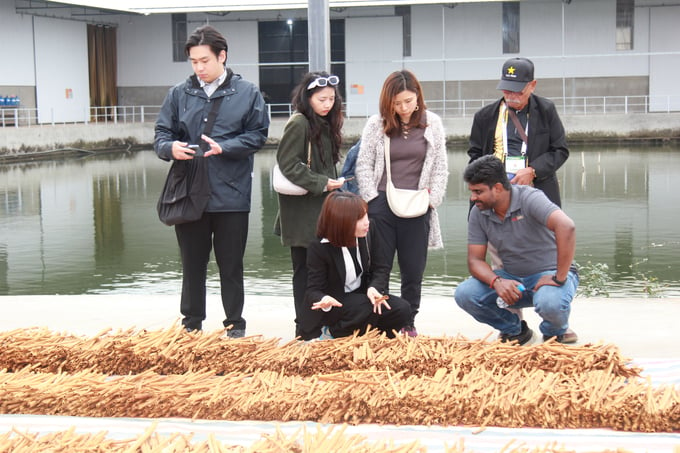
Many markets around the world are very interested in Vietnamese cinnamon products. Photo: Thanh Tien.
Ms. Hoang Thi Lien, President of the Vietnam Pepper and Spice Association, stated that the potential of cinnamon growing areas in Vietnam is enormous due to suitable climate and soil conditions, especially in the northern mountainous provinces such as Yen Bai, Lao Cai , and some other places like Thanh Hoa, Nghe An, Quang Ninh, and Quang Nam…
Over time, farmers have continuously learned from cultivation experiences to improve the quality and yield of cinnamon trees, adapting quickly to and adopting scientific and technical advancements. In addition, production linkage models between businesses and farmers are increasingly being organized to gradually expand sustainable raw material areas.
The Ministry of Agriculture and Rural Development and related agencies have issued many policies and regulations to encourage the private sector to participate in agricultural projects. In particular, the spice and medicinal plant industries have developed and made breakthroughs in a sustainable, organic direction, with large-scale cultivation areas, production and consumption linkages that meet quality and traceability requirements.
The global demand for spices remains high, not only in the food industry but also with continued research and development for applications in pharmaceuticals, cosmetics, functional foods, and more. Vietnam has dozens of companies investing in modern cinnamon processing lines, producing ground cinnamon and cinnamon powder to meet market demands.
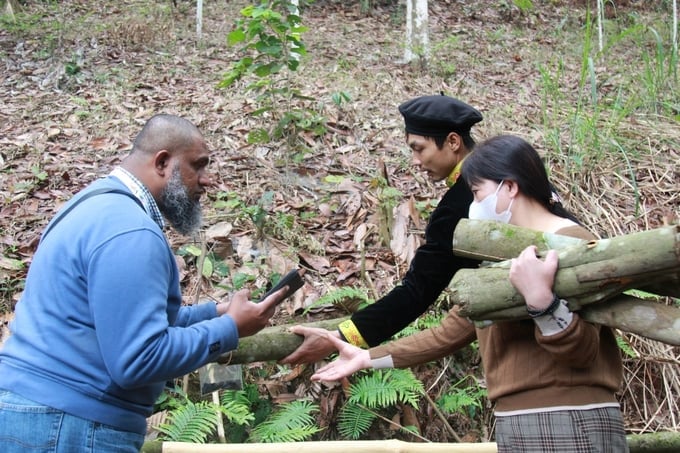
Our country's raw material producing regions need to improve quality to meet the increasingly high demands of the export market. Photo: Thanh Tien.
Furthermore, with 16 FTAs that Vietnam is currently participating in, including many new-generation free trade agreements such as EVFTA, CPTTP, and CREP, Vietnam has a tax advantage over some other countries. This creates extremely favorable conditions and opportunities for Vietnamese cinnamon products to further advance in the international market.
Deep processing to increase value
Currently, Vietnamese cinnamon is exported to nearly 100 countries worldwide, accounting for 95% of the market share in India, 36.5% in the US market, and 35% in the European market. Vietnamese cinnamon products have dominated most major global markets; however, the export volume of processed cinnamon is only 18.6%, reaching 18,659 tons, with 70% exported to the US and only 12% to Europe. Therefore, in the future, the Vietnamese cinnamon industry needs to continue improving post-harvest quality and processing to increase exports to demanding markets such as Europe and the US.
The market is becoming increasingly demanding for cinnamon products, with several basic requirements such as: green consumption and reduced carbon emissions; traceability and sustainable production, including environmental and social factors; quality assurance, including control and compliance with MRL (Maximum Residue Limit) requirements for pesticides in food as regulated by the market; and a growing demand for organic products, value-added products, and functional foods to boost immunity and support health.
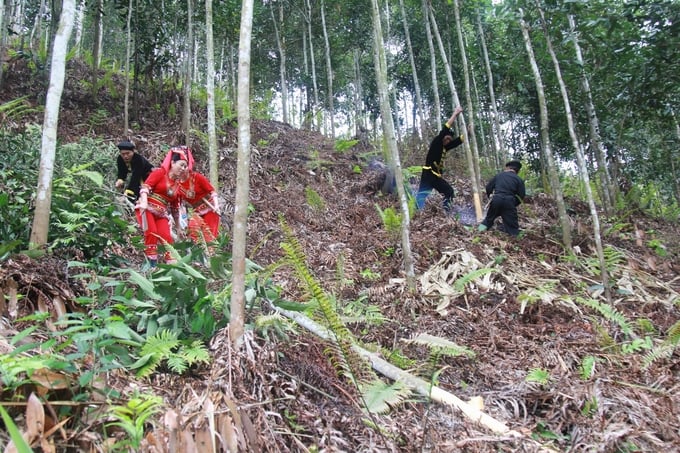
Farmers need to change their cinnamon cultivation methods to achieve sustainable and environmentally friendly production. Photo: Thanh Tien.
Therefore, farmers need to change their farming methods, adopting sustainable and environmentally friendly production practices, and using fertilizers correctly according to established procedures. They should proactively participate in cooperatives and associations to link production with export businesses. This will ensure they can confidently follow the farming procedures provided by the businesses, receive training support, and have their products purchased at market prices.
From the perspective of state management agencies, there is a need for comprehensive planning of growing areas, creating master maps of raw material zones to reassure investors and encourage long-term investment in models linking farmers, exporters, and end buyers. Raw material zone planning should be linked to the development of value chains to connect farmers with processing businesses and exporters. The application of digital technology in production management, traceability, and sustainability programs should be encouraged.
Continue to expand the area of production linkages between businesses and farmers, including the government encouraging and promoting the establishment of cooperatives and production groups in raw material areas to act as partners for exporters in the supply chain.
In particular, the role of local authorities in the raw material areas is crucial in supporting the establishment and organization of people's participation in groups, teams, and cooperatives to connect with businesses and link production locally. They also implement training programs for farmers on sustainable farming practices, reducing carbon emissions, and being environmentally friendly.
To become the world's leading sustainable cinnamon supplier.
According to Ms. Hoang Thi Lien, President of the Vietnam Pepper and Spice Association, the Vietnamese cinnamon industry in general, and Yen Bai in particular, needs significant changes to adapt to the demands of the export market in the coming period. More scientific research is needed to promptly respond to market demands, especially regarding regulations on maximum residue levels and finding appropriate solutions for pest and disease control. Farmers should be encouraged to use biological alternatives, and effective measures and regulations should be implemented to control illegal pesticides not included in the state's management list.
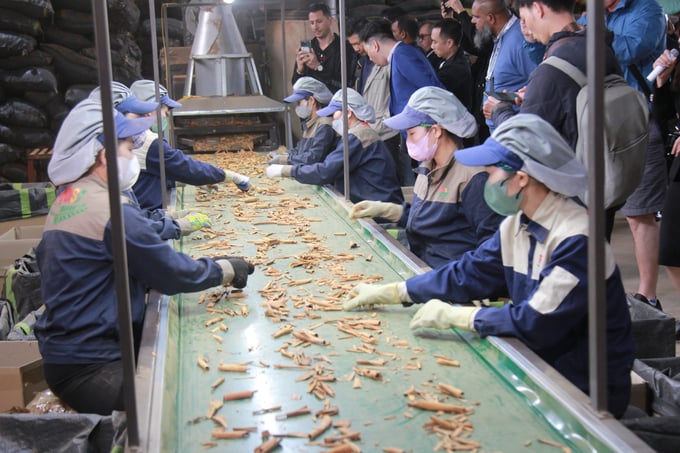
Developing clean raw material areas, deep processing of products, and strengthening trade promotion are optimal solutions to increase the production and export value of cinnamon. Photo: Thanh Tien.
Strengthening trade promotion and building a national brand identity for Vietnamese spices is absolutely essential. This cannot be achieved without the coordinating role of state management agencies to ensure that brand building is carried out professionally, on a large scale, not in a fragmented manner, and creates a ripple effect for the entire industry in the global market.
The government needs to implement appropriate and timely financial support policies and preferential loan programs to ensure farmers can confidently cultivate their land, maintain their orchards, and secure sufficient acreage for a stable supply of raw materials for processing and export. Policies should also encourage businesses to invest in the application of science and technology, providing preferential loans or subsidies for a portion of the investment costs in high-tech production lines to improve product quality and added value.
Strongly promoting public-private partnership models aims to harness the strengths and voices of stakeholders in Vietnam's cinnamon supply chain. Sharing information, seeking support resources, and consulting on policies in a long-term strategy for building and developing the industry comprehensively will help Vietnam become a leading sustainable cinnamon supplier in the world.
According to Ms. Hoang Thi Lien, businesses need to continue strengthening and developing their brands, enhancing deep processing, especially for spices processed from farm to table, in order to participate more deeply in the global value chain. E-commerce is one option for businesses and exporters to consider investing in and developing their industries, increasing product presence to end consumers through the increasingly popular B2C model (a model where sellers connect with buyers through e-commerce platforms).
Source
![[Photo] Ba Lang An Lighthouse - the "eye of the sea" amidst the "rock museum" of Quang Ngai province.](https://vphoto.vietnam.vn/thumb/1200x675/vietnam/resource/IMAGE/2026/05/29/1780038698840_anh-man-hinh-2026-05-29-luc-14-10-42.png)



![[Image] Pleasant weather helps students enter the 10th grade entrance exam with confidence.](https://vphoto.vietnam.vn/thumb/1200x675/vietnam/resource/IMAGE/2026/05/29/1780034401612_ngay-1-thi-lop-10-minh-duy-8-5009-jpg.webp)
















![The Essence of Viet Bac Villages: [Part 3] The Precious Fragrance of Nghinh Tuong](https://vphoto.vietnam.vn/thumb/402x226/vietnam/resource/IMAGE/2026/05/29/1780020600366_5237-tinh-tuy-ban-lang-viet-bac-bai-3-chuyen-o-nghinh-tuong-050626_700.jpeg)
![The Quintessence of Northern Vietnam's Villages: [Part 2] The Famous Cassava Noodles of Kunming](https://vphoto.vietnam.vn/thumb/402x226/vietnam/resource/IMAGE/2026/05/28/1779937455892_3929-3144-mien-dong-15-nongnghiep-023138.jpeg)
![The Essence of the Village: [Part 1] Wine on the mountain, tea in the clouds - Bang Phuc](https://vphoto.vietnam.vn/thumb/402x226/vietnam/resource/IMAGE/2026/05/27/1779841729178_3821-1jpg-nongnghiep-103814.jpeg)




























































Comment (0)