

Vietnam is a maritime nation with over 3,200 km of coastline, and the GDP growth of its marine and coastal economy plays a crucial role in the overall economic development. To promote the marine economy, in recent years, research results from national and ministerial-level marine science and technology programs on marine and island management have made significant contributions, directly driving sustainable marine economic development.
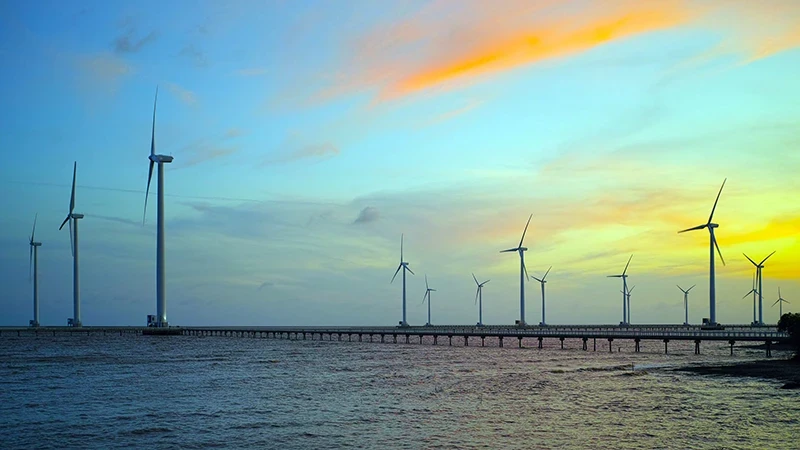
According to the Ministry of Natural Resources and Environment , in recent years, many programs and research projects have yielded positive results, contributing to the development of the marine economy. A prime example is the Science and Technology Program on Integrated Resource Management and Environmental Protection of Marine and Island Areas for the period 2016-2020, which drafted regulations on mechanisms and policies for implementing integrated resource management and environmental protection of marine and island areas.
The research topic has contributed to establishing principles, methods, and criteria for integrating basic resource and environmental surveys of marine and island areas; establishing coastal protection corridors; and classifying island resources. The research results of the program have proposed technologies, methods, and computational models applicable to basic resource surveys, resource control, and environmental protection of marine and island areas; solutions for responding to climate change; and addressing environmental incidents and natural disasters at sea.
Furthermore, the national key science and technology program for the period 2016-2020 on scientific and technological research serving marine and island management and marine economic development has built a database as well as models and technological solutions for marine economic development. Notable examples include: Sustainable development models for estuary areas and island systems; Technologies for exploiting, cultivating, and processing biological resources; Engineering solutions to mitigate coastal erosion; Technologies for forecasting meteorological, hydrological, environmental, and marine natural disasters…
Assessments by marine economic experts indicate that scientific and technological research has identified and clarified the fundamental characteristics of natural conditions, natural resources, and the marine environment; and assessed the potential and predicted prospects for sustainable marine development and the marine economy.
Notably, some results from new research directions have provided arguments and scientific basis for marine planning and the establishment of marine protected areas, contributing to the implementation of several international conventions to which Vietnam is a party. Science and technology have also made positive contributions to the protection of the marine environment and resources, the conservation of marine nature, and the prevention and mitigation of natural disasters; and the protection of marine rights and interests.
A range of marine technology fields have been implemented and applied, focusing on sectors such as: oil and gas, fisheries, maritime transport, offshore construction, coastal engineering, marine surveying and mapping, and marine geology, contributing to promoting production, resource exploitation, and maintaining security and national defense at sea.
Notably, research contributes positively to the socio-economic development of coastal and island areas; enhances the efficiency of offshore fishing; contributes to environmental protection and aquaculture development; and helps alleviate poverty, creating products for domestic consumption and export. Scientific and technological research also plays a crucial role in helping localities plan for rational and effective socio-economic use, reduce poverty, and achieve sustainable development related to the marine economy.
According to Nguyen Duc Toan, Director of the Vietnam Department of Seas and Islands (Ministry of Natural Resources and Environment), despite many positive results, the reality shows that the quality of research is uneven and the effectiveness of application is not high; research activities lack professionalism, and the research content lacks depth and is too broad. Notably, scientific research and technological applications are concentrated in coastal areas and research topics, with very limited research in deep sea and offshore areas…
Therefore, marine science and technology need to effectively implement the requirements and objectives of the Strategy for Sustainable Development of Vietnam's Marine Economy to 2030, with a vision to 2045. Research and application of science and technology should contribute to achieving the basic criteria for sustainable marine economic development; concretizing the viewpoints, objectives, major policies, breakthroughs, and key solutions for sustainable development of Vietnam's marine economy as outlined in the Party's resolutions and the Government's programs and plans.
The science and technology sector, as well as the natural resources and environment sector, need to expand their scientific and technological tasks in the field of marine and island areas... in order to promote science and technology to make a positive contribution to sustainable marine economic development.
Source




















![[Video] Sunset at Lap An Lagoon – Where the sun sets over the fishing nets](https://vphoto.vietnam.vn/thumb/340x192/vietnam/resource/IMAGE/2026/05/31/1780192137701_beach-landscape-sea-water-nature-grass-745871-pxhere-com.jpeg)





![[Photo] The General Secretary, President and his wife lay flowers at the Ho Chi Minh Monument in Manila.](https://vphoto.vietnam.vn/thumb/1200x675/vietnam/resource/IMAGE/2026/05/31/1780219759477_anh-man-hinh-2026-05-31-luc-16-29-07.png)






































































Comment (0)