

Many people have died from lightning strikes while working outdoors.
During the rainy season, people face many natural disasters, including lightning strikes. According to statistics from the Department of Dike Management and Disaster Prevention, in the past two months alone, nearly 20 people have died from lightning strikes in various localities across the country. Most cases occurred while people were working or traveling in open fields without safe shelter.
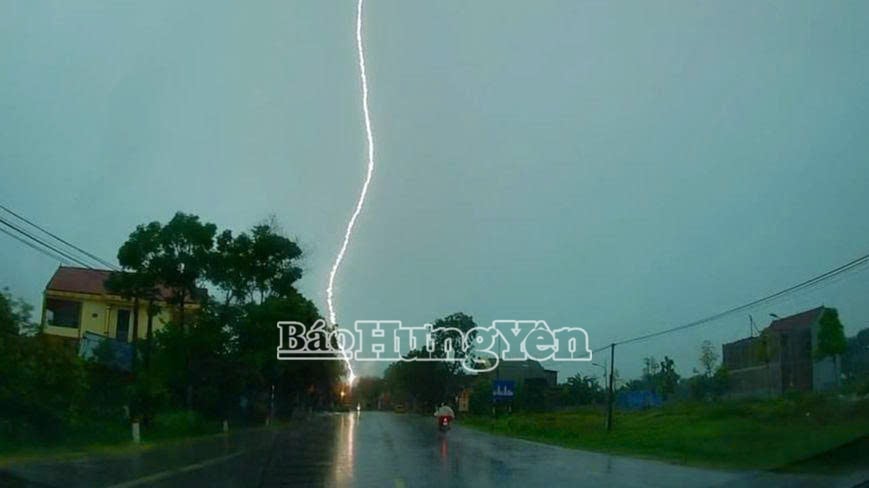
During the rainy season, thunderstorms and lightning are common.
Recently, in Quynh Do village, Dai Thanh commune, Hanoi , a woman was tragically struck and killed by lightning while walking outside during a thunderstorm. This heartbreaking incident once again raises a warning about the dangers of lightning during the rainy season.
In Hung Yen province, several cases of people being struck by lightning resulting in death or severe long-term consequences have been recorded in recent years. Many households have also suffered property damage such as roofs being blown off, and air conditioners, televisions, and electric fans being damaged after lightning struck their home electrical systems.
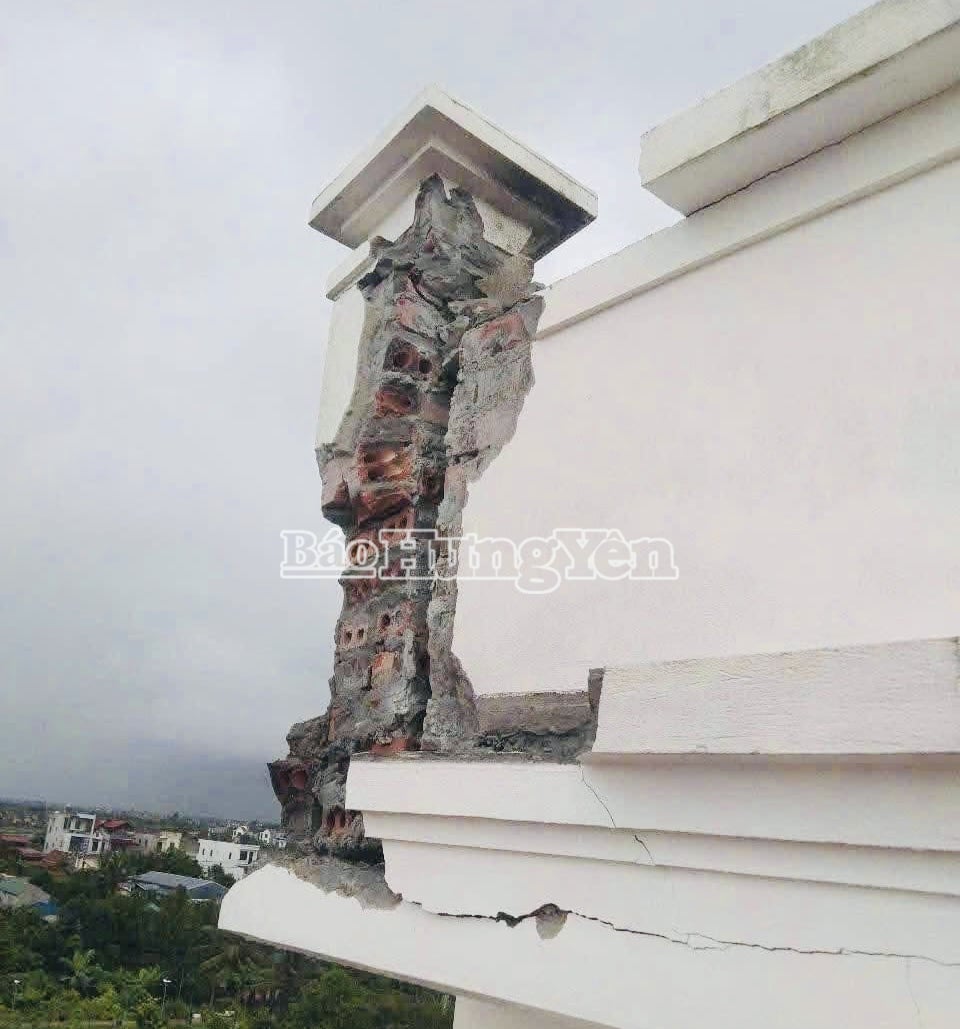
A household in Nam Thuy Anh commune suffered damage to their building after being struck by lightning.
Currently, the Northern region of Vietnam in general, and Hung Yen province in particular, is entering the peak of the rainy season – a period when extreme weather phenomena frequently occur, with lightning being a serious threat. However, many people are still complacent and do not fully understand the level of danger this phenomenon poses.
According to Mr. Duong Van Thai, Deputy Director of the Hung Yen Provincial Meteorological and Hydrological Station, lightning usually occurs during thunderstorms, when hot air currents carrying water vapor collide with ice crystals descending in clouds, creating a strong electrical discharge. The current in the lightning strike is very large, and the temperature can reach 27,700 degrees Celsius – enough to burn any object it passes through. On average, Vietnam records about 2 million lightning strikes per year.
Lightning often occurs before, during, or after rain, especially after prolonged periods of hot weather or during transitional seasons. Therefore, special attention should be paid on days when the weather changes rapidly, with hot and humid days suddenly turning cold, thick dark clouds appearing, and strong winds...
Equip yourself with knowledge – Proactively prevent and protect your safety.
Since lightning is a random natural phenomenon, and there is no completely safe place to avoid it, it is important for people to proactively take precautions and handle thunderstorms properly.
According to the Hung Yen Provincial Meteorological and Hydrological Station, people should regularly monitor weather forecasts to be aware of thunderstorm warnings. When working outdoors, especially in open areas such as fields, carefully observe weather conditions and quickly find safe shelter when signs of thunderstorms and lightning appear. Absolutely do not take shelter under tall trees, high mounds of earth, or near high-voltage power poles; do not handle metal objects; do not gather in large groups; and do not stay near ponds, lakes, or rivers. If you cannot move quickly, sit low, curl up, minimize contact with the ground, and absolutely do not lie flat on the ground.
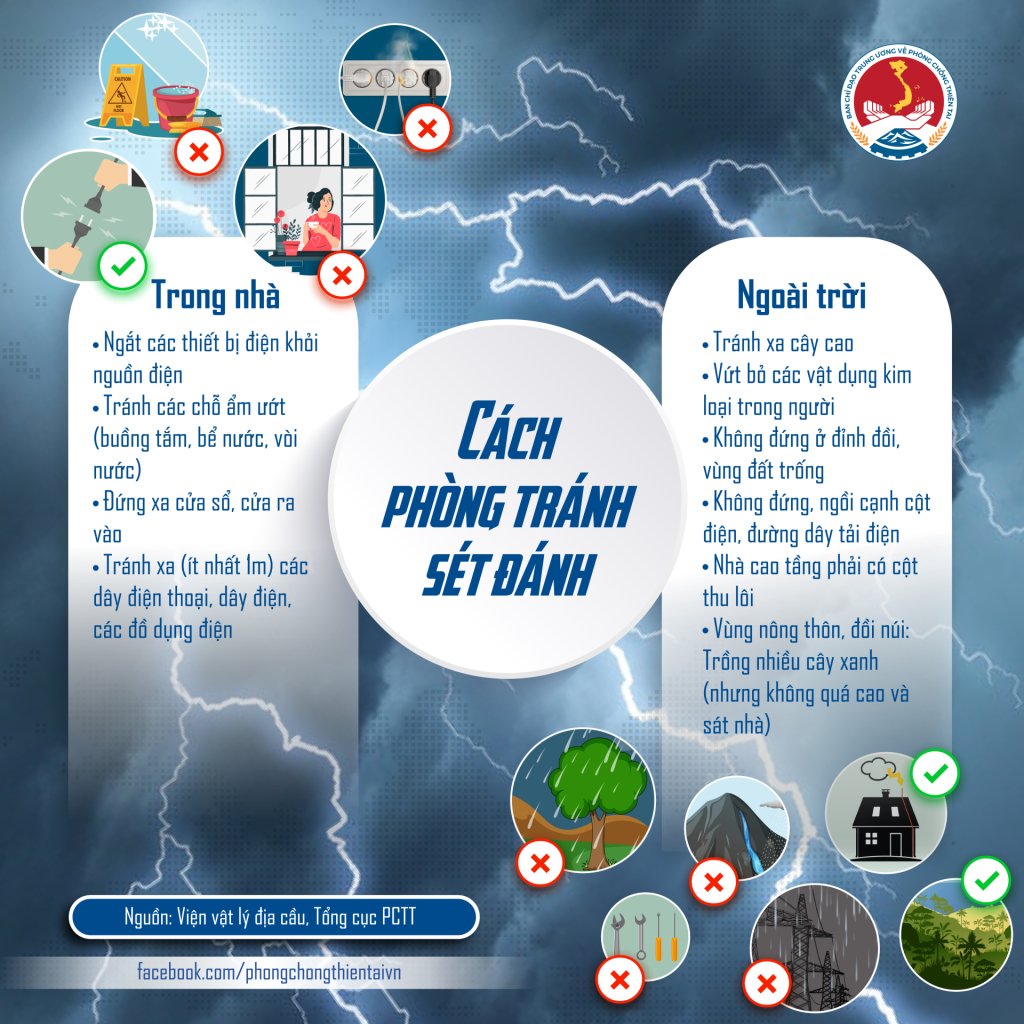
Lightning protection measures recommended by relevant authorities.
When indoors during a thunderstorm, close all doors and windows, unplug electronic devices, and avoid using landline phones or devices that are charging.
Notably, this is the peak season for rice planting, and the prolonged hot weather can easily lead to sudden thunderstorms. Therefore, farmers need to be especially cautious. If you are working in the fields and see dark clouds, strong winds, or the weather turning cold, you should quickly return home or find a safe place to take shelter, and do not bring metal tools with you.
According to medical recommendations, people struck by lightning can suffer serious injuries such as coma, cardiac arrhythmias, respiratory failure, burns, etc. If the victim is still conscious, they should be kept warm and given hot water to drink. If unconscious but still breathing and with a beating heart, gentle stimulation by calling their name, shaking them, or pulling their hair is necessary. If the victim stops breathing and their heart stops beating, artificial respiration and chest compressions should be performed, and then they should be quickly transported to the nearest medical facility.
Duong Mien - Huong Giang
Source: https://baohungyen.vn/khong-chu-quan-voi-set-trong-mua-mua-bao-3182319.html


![[Image] Central Party Office summarizes work in 2025](/_next/image?url=https%3A%2F%2Fvphoto.vietnam.vn%2Fthumb%2F1200x675%2Fvietnam%2Fresource%2FIMAGE%2F2025%2F12%2F18%2F1766065572073_vptw-hoi-nghi-tong-ket-89-1204-jpg.webp&w=3840&q=75)



















































































Comment (0)