

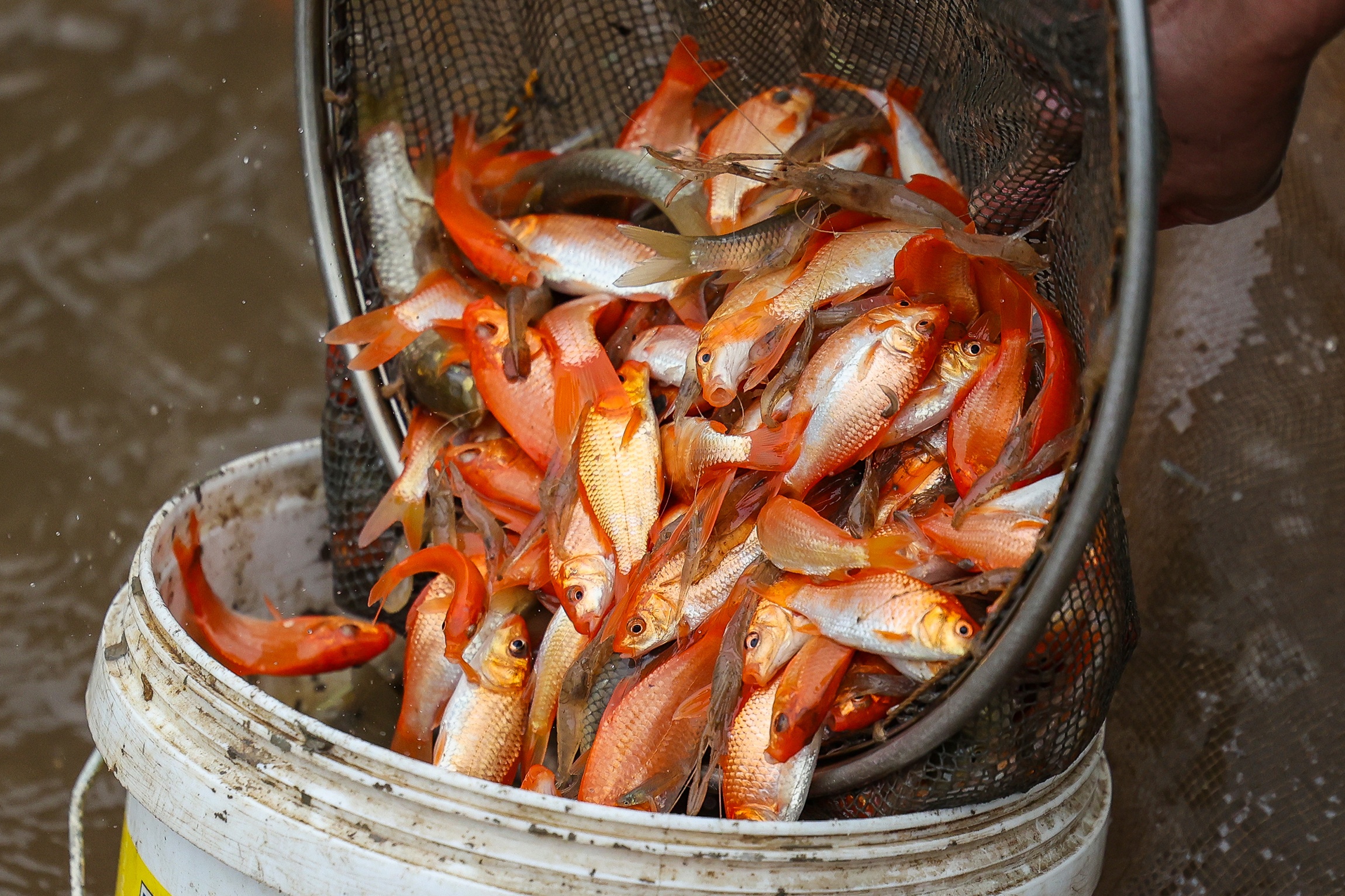
Many people understand "catching two fish with one hand" as the image of someone using both hands to catch two fish at the same time, signifying greed or infidelity in a relationship. However, in An Chi's book "Eastern Stories, Western Stories ," this interpretation is incorrect and does not reflect the original meaning of the idiom.
He explained that the "fish" here doesn't refer to fish in the water, but rather to "betting," or gambling. In traditional Vietnamese, "catching fish" meant accepting a bet by choosing a side or object that would win, such as choosing a fighting rooster, a football team, or a boxer.
Accordingly, "playing both sides" refers to the act of simultaneously betting on two opposing sides so that, regardless of the outcome, one does not lose. From this original meaning, the idiom gradually expanded to describe a double-dealing lifestyle, trying to take on too many responsibilities or maintain an advantage on multiple fronts at the same time.
Scholar An Chi also rejected the interpretation that the phrase originally meant "catching with both hands," which was later mispronounced as "fish" for easier pronunciation. According to him, the idiom was originally "catching fish with both hands," meaning something related to gambling.
Due to a misunderstanding of the word "fish," many other idioms and proverbs have also been misinterpreted. For example, the saying "First, release the fish; second, gamble" was once understood to mean that raising fish is profitable. But in reality, "releasing the fish" is also a term used in gambling, referring to challenging others to bet money on a cockfight or fish fight.
Through these cases, scholar An Chi argues that many familiar words in Vietnamese have changed in meaning over time, making it easy for users today to associate them with modern meanings and forget their original origins.
Source: https://znews.vn/khong-co-con-ca-nao-trong-cau-bat-ca-hai-tay-post1654051.html
![[Photo] The heat at the fireworks display site on the opening night of the Da Nang International Fireworks Festival 2026](https://vphoto.vietnam.vn/thumb/1200x675/vietnam/resource/IMAGE/2026/05/27/1779889741485_ndo_br_z7872039145157-fecaba5112f39e8352544099d7ef4738-5140-jpg.webp)

































































Comment (0)