

But for the past six months, he switched to an electric vehicle – not just for the money – it only costs a few tens of thousands of dong per day for charging – but also because of a feeling that's hard to describe: "Riding is lighter, there's no smoke, and I feel… less guilty towards the city."
Pollution is not just a policy issue.
I overheard Mr. Thien's story while booking a ride from the suburbs to the center of Ho Chi Minh City for an urgent matter. At first glance, the driver's sharing seemed emotional, but it actually touched on a very rational issue: urban air pollution is not just a policy issue, but also a choice made by each individual.
Currently, Ho Chi Minh City is preparing a major step: controlling 100% of vehicles according to emission standards during the 2026-2030 period, aiming to completely transform public transportation to clean energy. In my opinion, this is an ambitious goal, but also something that cannot be delayed. However, the more important issue perhaps lies in how to control emissions in a way that is both environmentally effective and does not create a social burden.
It can be said that the emission testing for motorcycles – expected to be implemented from 2027 in Hanoi and Ho Chi Minh City – is considered a necessary management tool, but looking at the world, not all countries have chosen this path. Thailand exempts motorcycles from testing for the first five years. Indonesia almost never conducts periodic testing nationwide except in heavily polluted cities like Jakarta.
In Europe, many countries don't even require motorcycle inspections, instead focusing on control from the production and maintenance stages. Their commonality isn't laxness, but flexibility. They understand that new motorcycles still meet emission standards within the first 3-5 years, and the bigger problem lies with older, poorly maintained vehicles or a transportation system overly reliant on private vehicles.

I believe that emissions testing is only the "tip of the iceberg." If we only focus on measuring or failing the emissions test, we're only addressing the consequences, not the root causes. The real causes of urban air pollution lie in three factors: excessively high vehicle density, especially motorcycles with internal combustion engines; outdated engine technology that degrades over time but is still in use; and the habit of using private vehicles instead of public transportation.
These three factors do not exist in isolation but rather combine to exacerbate urban air pollution. High vehicle density causes total emissions to increase exponentially, especially during peak hours when vehicles move slowly and burn fuel less efficiently. Meanwhile, many vehicles are old but have not been properly maintained, leading to a decline in combustion and exhaust gas treatment systems, releasing more pollutants than initially expected.
Furthermore, the habit of relying on private vehicles makes it difficult for public transport to develop into an attractive option, creating a vicious cycle: the fewer people use public transport, the more private vehicles there are, and the greater the environmental pressure.
Therefore, if all three issues are not addressed simultaneously, environmental inspections are likely to become "bureaucratized": incurring social costs but yielding disproportionate emission reductions.
The city is "gasping for breath" and needs a multi-layered strategy.
Frankly, a paradox in urban environmental management is evident: air, a shared resource, is consumed like a "free dumping ground." Each motorbike emits a small amount of pollutants, but millions of them, every day, turn that "small" amount into enormous pressure on the urban ecosystem. PM2.5 – the most dangerous type of fine particulate matter – not only blurs visibility but also enters the lungs and bloodstream, silently affecting public health.
Ho Chi Minh City aims to gradually reduce PM2.5 concentrations and maintain an AQI below 100 by 2045. I believe this is a sound goal, but achieving it requires a systemic approach, not just traffic management.
I want to emphasize one point: air pollution is a cumulative problem. That is, every emission source, however small, accumulates over time and space. Therefore, the solution must also be cumulative: many small policies, but implemented synchronously and persistently.
In a city struggling to cope with emissions testing, instead of relying solely on emissions testing, we need a multi-layered strategy. First, we should categorize vehicles by their lifecycle. Instead of mass testing from the outset, we should focus on vehicles over five years old – where emissions begin to increase significantly. This approach saves resources and aligns with international best practices.
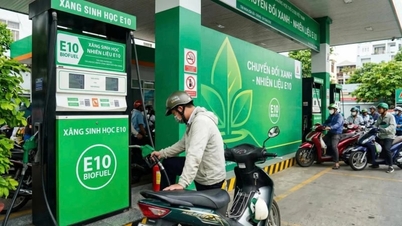
Furthermore, promoting the transition to electric vehicles must be accompanied by the necessary infrastructure. Thien's story clearly shows that people are willing to change if the cost is reasonable and the convenience is sufficient. When charging stations are as widespread as gas stations, the transition will happen more naturally than if it were forced.

Furthermore, it is also necessary to establish "low-emission zones" (LEZs). This is a solution that many large cities have already adopted: restricting substandard vehicles from entering the city center. This not only reduces local pollution but also creates pressure for behavioral change. Importantly, there should be significant investment in public transportation. No city can solve air pollution problems if it continues to rely on private vehicles. Electric buses, metros, public bicycles... are not just means of transportation but a lifestyle choice.
I urge authorities to be transparent about air quality data. When 95% of the population has access to real-time AQI information, they will adjust their behavior accordingly – from choosing when to go out to deciding on a different mode of transportation. Clean air is not something "ready-made," but rather the result of conscious choices.
One afternoon, standing at a busy intersection and watching the endless stream of cars, I suddenly thought, this city breathes the very air we emit. And if each person continues to consider emissions a "minor issue," then air quality will never be a big deal until we can no longer breathe clean air.
Returning to Mr. Thien's story, in my opinion, it's not just about changing cars, but a choice in the right direction. And if there are enough choices like that, coupled with correct and consistent policies, perhaps one day we will all share the same feeling of peace of mind, that today's air is easier to breathe than yesterday's – truly wonderful!
Source: https://danviet.vn/khong-khi-ban-khong-tu-nhien-ma-co-d1430902.html



![[Image] Nearly 125,000 Hanoi students completed the Literature exam for the 10th grade entrance exam.](https://vphoto.vietnam.vn/thumb/1200x675/vietnam/resource/IMAGE/2026/05/30/1780117233041_ndo_br_thiet-ke-chua-co-ten-2-png.webp)












































































Comment (0)