

TikTok has not yet responded to the "eating raw" mukbang video .
Mukbang (a form of eating while filming) involves live-streaming videos of raw food on TikTok in many countries such as South Korea, India, Vietnam, etc.
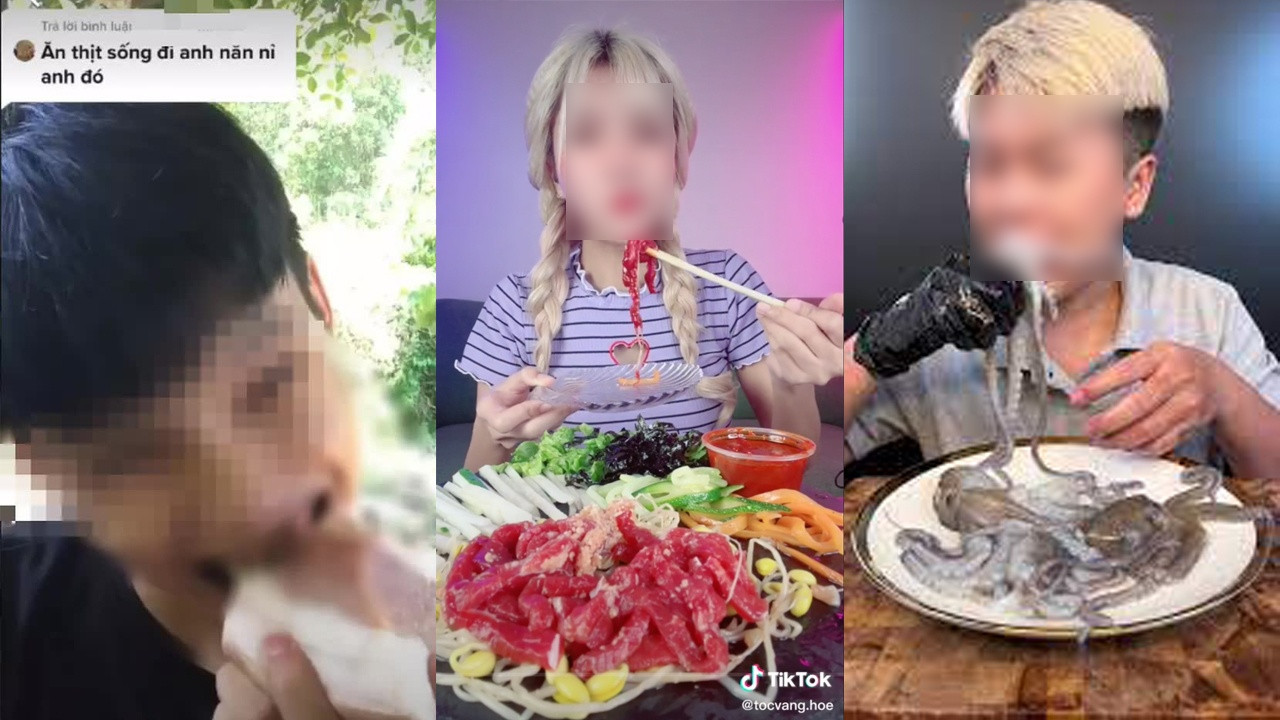
Raw food mukbang videos are rampant on TikTok Vietnam.
According to Giao Thong Newspaper, in Vietnam, TikTok channels such as "Blonde Hair," "Dark Food," and "Spicy Kim" regularly produce mukbang videos featuring raw food, attracting millions of views. A survey on the "Blonde Hair" TikTok channel shows that out of every five raw food mukbang videos, four mention beverage products from various brands such as Pepsi, Que Viet brown rice tea, and Coca-Cola.
Notably, doctors have previously warned about the unpredictable health consequences of this eating habit.
Giao Thong Newspaper contacted TikTok's representative in Vietnam, the Department of Broadcasting, Television and Electronic Information (under the Ministry of Information and Communications ) regarding the aforementioned controversial content, but these units have not yet provided a response.
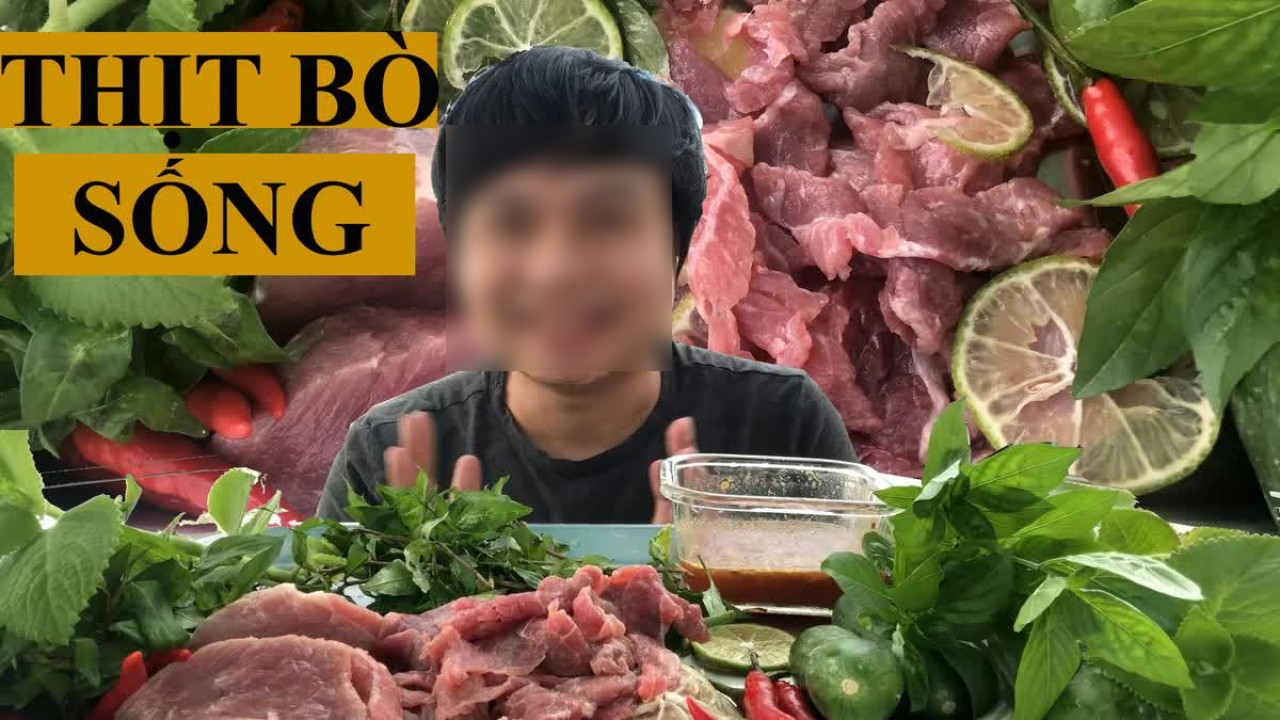
Video of the owner of the "Com Nha TV" channel eating raw beef.
Previously, Mr. Le Quang Tu Do, Director of the Department of Broadcasting and Electronic Information, informed that the Ministry would conduct a comprehensive inspection of TikTok in May. Mr. Nguyen Lam Thanh, TikTok's representative in Vietnam, stated that the platform would update its Community Standards on April 21st "to always ensure TikTok is a safe, inclusive, and welcoming environment for all users," in addition to investing in moderation technology.
What do sociologists say?
Sharing his views on this issue with Giao Thong Newspaper, sociologist Associate Professor Dr. Trinh Hoa Binh acknowledged that, alongside the innovations and conveniences that TikTok brings, it still has other negative aspects.

Assoc. Prof. Dr. Trinh Hoa Binh
"However, this platform is increasingly showing inadequacies in controlling harmful and toxic information. Meanwhile, many people, simply for the sake of fame, do not hesitate to create nonsensical, offensive videos that go against moral values, customs, and the cultural traditions of the country."
Most of these "eating raw" mukbang videos are created to attract interaction and generate curiosity, rather than to honor or innovate culinary art . Traditional cuisine, with its creative innovations, has no limits; however, it must be culturally appropriate and nutritionally sound.
This situation arises from the audience's need for visual and auditory content, as well as the fact that many brands hire advertisers. Evidence of this is that some brands still advertise their videos, even controversial ones, which still garner millions of views. Therefore, if social media users and businesses boycott and eliminate offensive content, harmful and toxic videos will find it difficult to survive.
Given that TikTok has yet to implement effective measures to completely eliminate or minimize harmful videos, parents need to closely monitor their children's use of the app.
Meanwhile, despite warnings and recommendations from the authorities, TikTok has shown no improvement or change. A proposal to ban the platform in Vietnam may be considered," said Mr. Trinh Hoa Binh.
How have other countries responded to the mukbang trend?
In China, mukbang videos featuring excessive eating and drinking have become saturated. Consuming exotic foods, from live insects to animals banned from consumption, has become a popular way for TikTokers and vloggers to gain views in recent years.
Faced with this situation, the country's authorities have begun to take decisive action. For example, in September 2022, Wang Can, who had over 560,000 followers on the video-sharing platform Douyin (the Chinese version of TikTok), was banned from the platform after posting a video of himself eating live wasps.
Wang's lips swelled up, disfiguring his face, after filming the clip, but he claimed that this reckless act helped him gain an additional 100,000 viewers.
The video caption warned, "Danger, do not imitate," but Wang also emphasized it as a "courageous," "fearless" challenge. Wang's account was blocked by Douyin just before the user was about to release a new clip, according to SCMP.
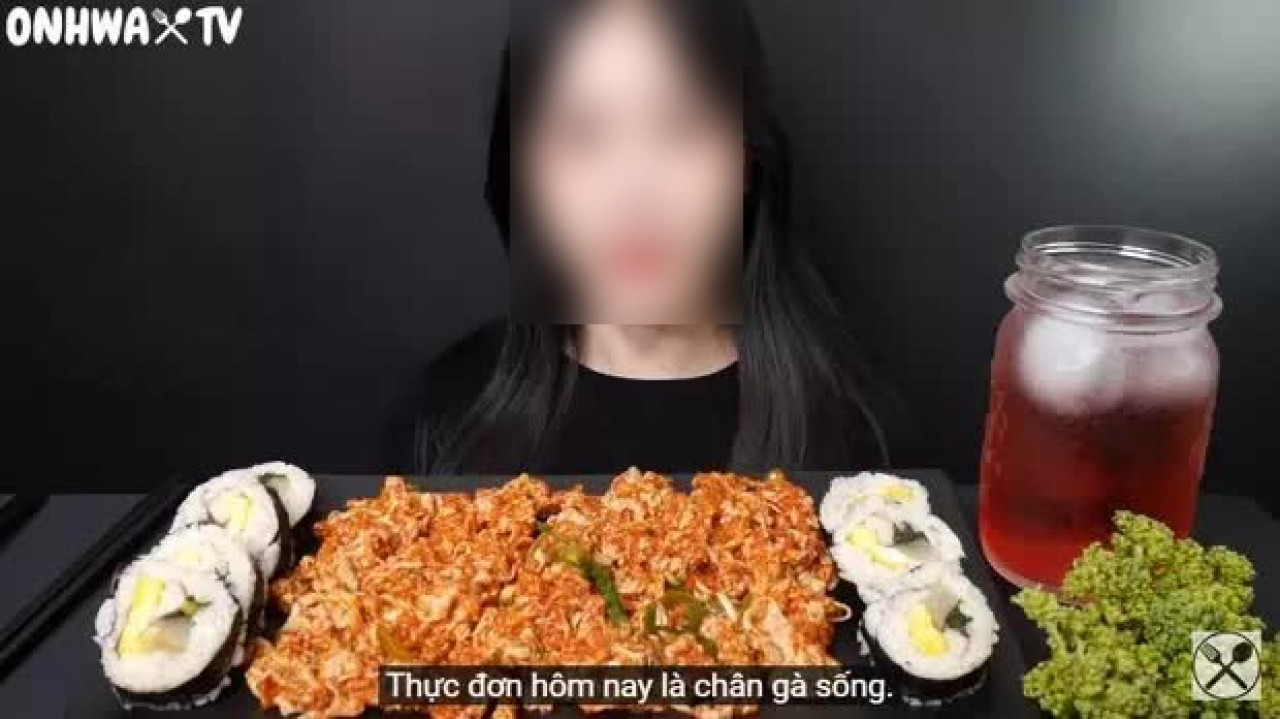
Screenshot from a Korean mukbang video featuring raw chicken feet.
Even in its home country of South Korea, the mukbang trend has declined after more than 10 years since its emergence. The case of several popular Korean food channels such as Boki, Tzuyang, and Mbro being accused of deceiving fans by not publicly and transparently disclosing advertising content caused a public outcry.
According to Yonhap, these channels with millions of followers received money to advertise for fast-food restaurants, but did not clearly show this in their eating videos.
The boycott was so widespread that South Korea's fair trade watchdog had to introduce new rules for mukbangs in particular and online content creators in general.
The code of conduct requires that advertising content be clearly stated in writing and spoken form in video clips to "prevent harm to consumers from deceptive advertising."
In February 2022, a Chinese man nearly died after imitating cooking videos from bloggers on TikTok who regularly ate undercooked beef and lamb.
After eating, this person felt dizzy and vomited repeatedly. Upon examination, doctors discovered that the parasite Toxoplasma gondii, also known as the Toxoplasma gondii worm, was wriggling in the man's brain; any delay could have had extremely serious consequences.
Source
![[Image] "Journey of Hope" promotes the organ and tissue donation movement in Vietnam.](https://vphoto.vietnam.vn/thumb/1200x675/vietnam/resource/IMAGE/2026/05/20/1779294400833_1-8910-jpg.webp)
![[Photo] National Assembly Chairman Tran Thanh Man working with the Standing Committee of the National Assembly's Delegation Affairs Committee.](https://vphoto.vietnam.vn/thumb/1200x675/vietnam/resource/IMAGE/2026/05/20/1779294340023_ndo_br_1-1691-jpg.webp)
![[Photo] General Secretary and President To Lam works with the Party Committee of the Ministry of Health on the work of Vietnamese traditional medicine.](https://vphoto.vietnam.vn/thumb/1200x675/vietnam/resource/IMAGE/2026/05/20/1779294323718_a1-bnd-2978-3319-jpg.webp)


























































Comment (0)