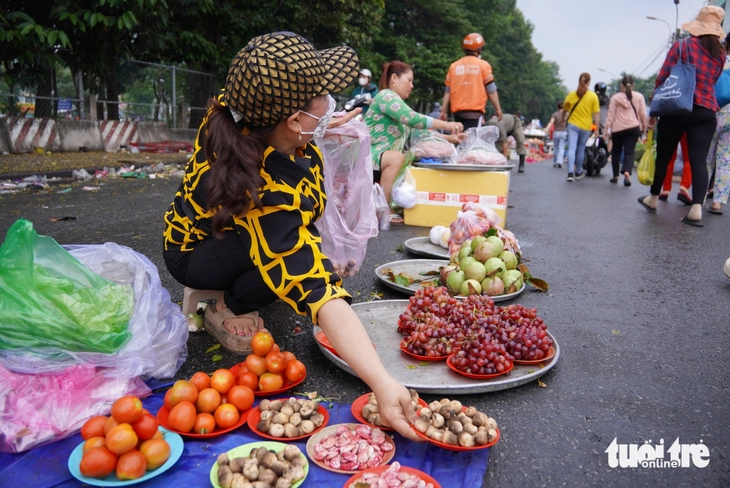
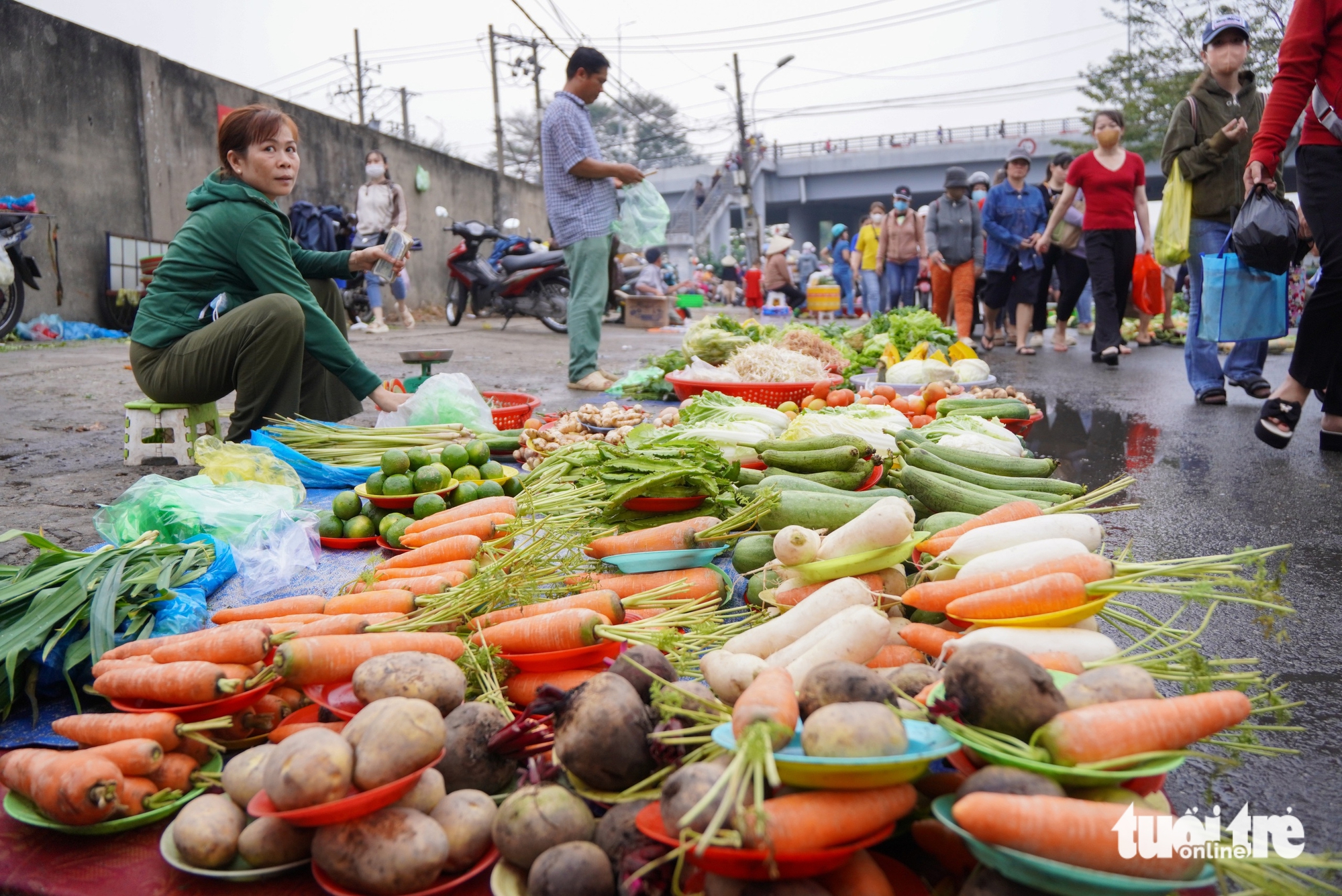
Ms. Bé sells vegetables by the plate, without using scales - Photo: AN VI
Located on Street 54 (Tan Tao Ward, Tan Binh District), this market is a popular spot for workers to buy bags of vegetables, baskets of fish, and other groceries after work at reasonable prices.
Unique market selling food by the plate or basket.
Vegetable stalls and fish vendors spread out on tarpaulins along both sides of the road, with people stopping by every now and then to choose their goods, chatting and laughing merrily. Despite being a makeshift market, the goods here are diverse, ranging from meat and fish to vegetables and various specialties from the Mekong Delta.
As a habit deeply ingrained in the lives of factory workers, the market only operates from 4 PM to around 8 PM, primarily serving workers finishing their afternoon shifts. At lunchtime, the stretch of road becomes quiet and deserted.
Most vendors here sell just enough. For example, Ms. Nguyen Thi Be (41 years old, residing in Binh Tan District) brings in 10kg of various vegetables and 5kg of grapes to sell each day. She says that the food is always fresh and delicious when sold out each day.
"I live in a rented room, so I don't have a place to store goods for long. I just run to the wholesale market around noon to buy a certain amount, then set it up to sell in the afternoon," Ms. Bé said.
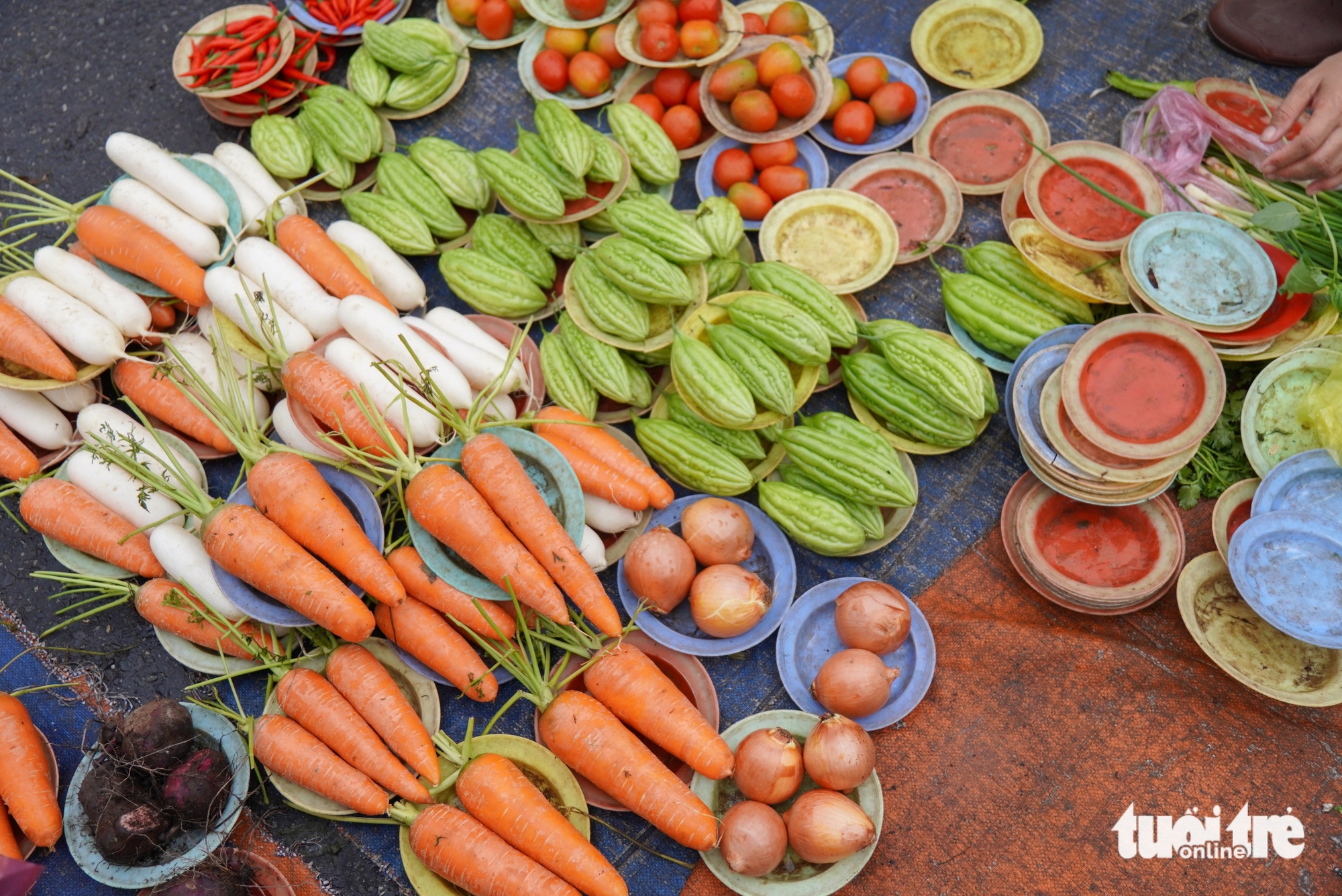
Like many others around her, Ms. Bé's vegetable stall doesn't use scales for weighing; instead, she displays her produce in baskets and on plates with the invitation: "A basket for 10,000 dong, come and buy, folks!"
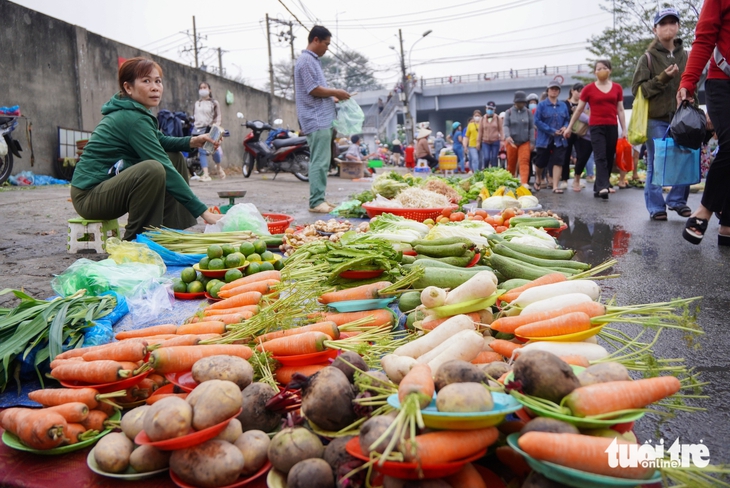
Most vendors here only take just enough food to sell in the afternoon - Photo: AN VI
Ms. Bé doesn't weigh the produce at home beforehand. After picking up the goods from the wholesale market, she transports them directly here and then arranges them on individual plates. For example, with carrots and white cabbage, each plate will contain 3-5 pieces. Potatoes and other small root vegetables will be added in larger quantities, all priced at 10,000 VND per plate.
"I'm just estimating, just enough to fill a plate. I've been selling like this for years; I don't lose money, but the profit is probably not as much as the price per kilogram," Ms. Bé shared.
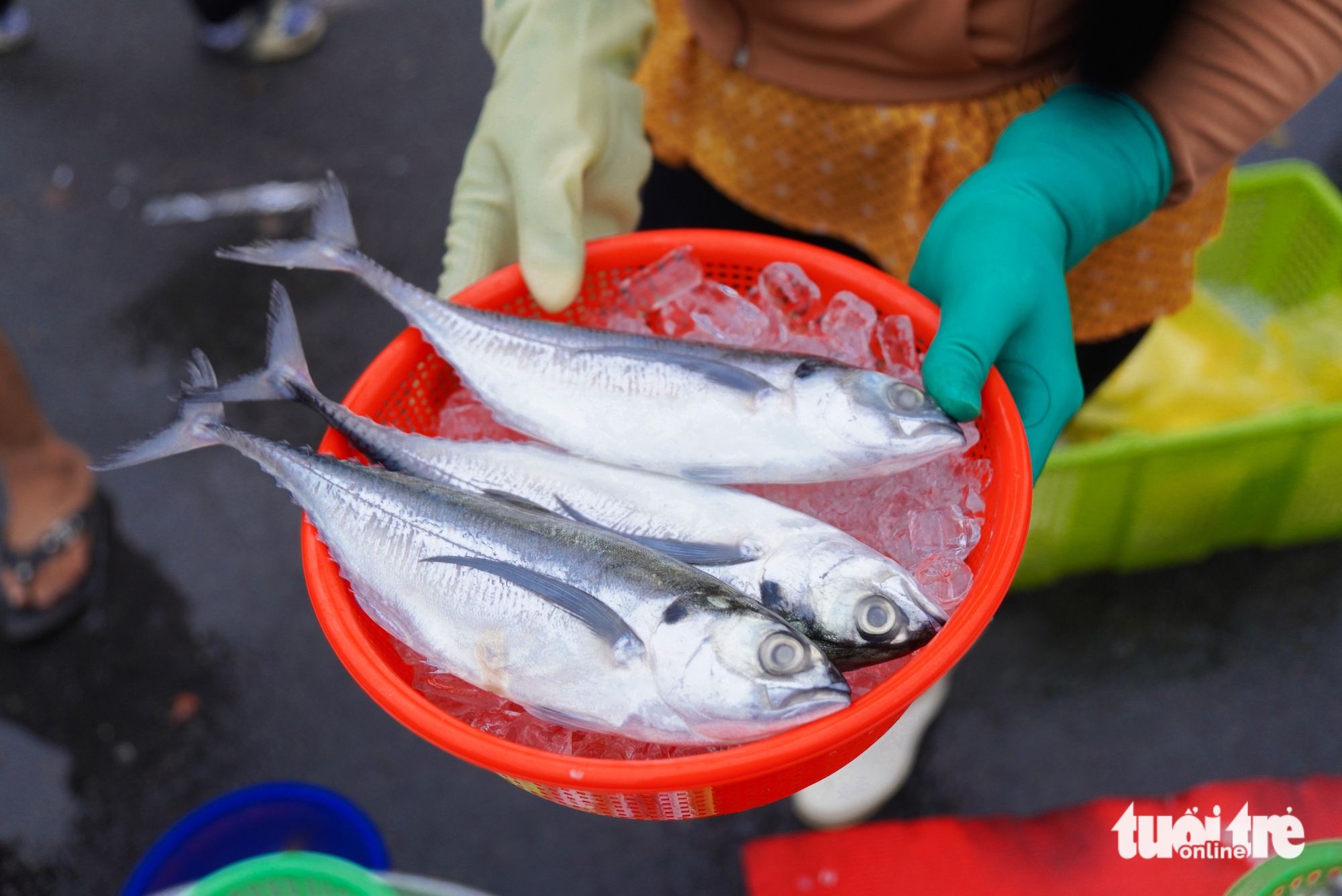
Not far away, the fish stall of Mr. and Mrs. Phuc (residents of Binh Tan District) also loudly proclaimed: "Fresh fish, 20,000 dong a basket, come and choose, come and choose."
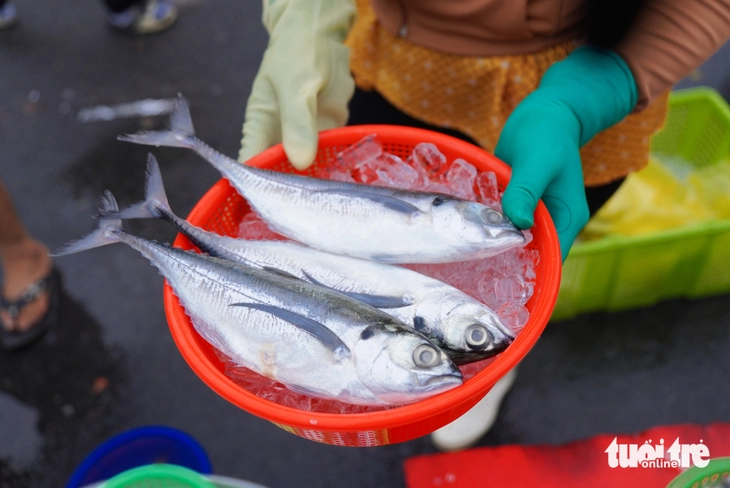
Not only vegetables, but fish are also sold for 20,000 VND per basket - Photo: AN VI
Phuc's fish stall sells a variety of fish, from saltwater to freshwater. He gets his supplies from Binh Dien market early in the morning, sells his wares door-to-door, and then returns to this market at 4 PM to sell to workers leaving work.
"When I sell in the mornings, I weigh the fish as usual. But in the afternoons, when I sell to the workers here, I sell them by the basket, each basket containing about 2-3 fish depending on the type, which is almost a kilogram," Mr. Phuc said.
60,000 dong can cook many meals.
According to Mr. Phuc's explanation, selling by the plate or basket makes it convenient for workers to choose and buy just the right amount.
"Selling by the kilogram is very difficult. I've sold it before. Workers mainly just buy a few fish for their afternoon snack, and weighing several fish at once is awkward and results in odd amounts of money."
"Selling in pre-portioned portions like this is more suitable," Mr. Phuc added.
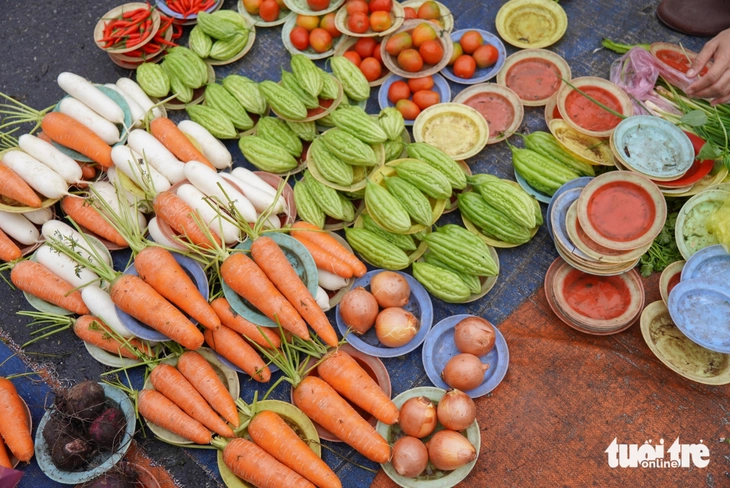
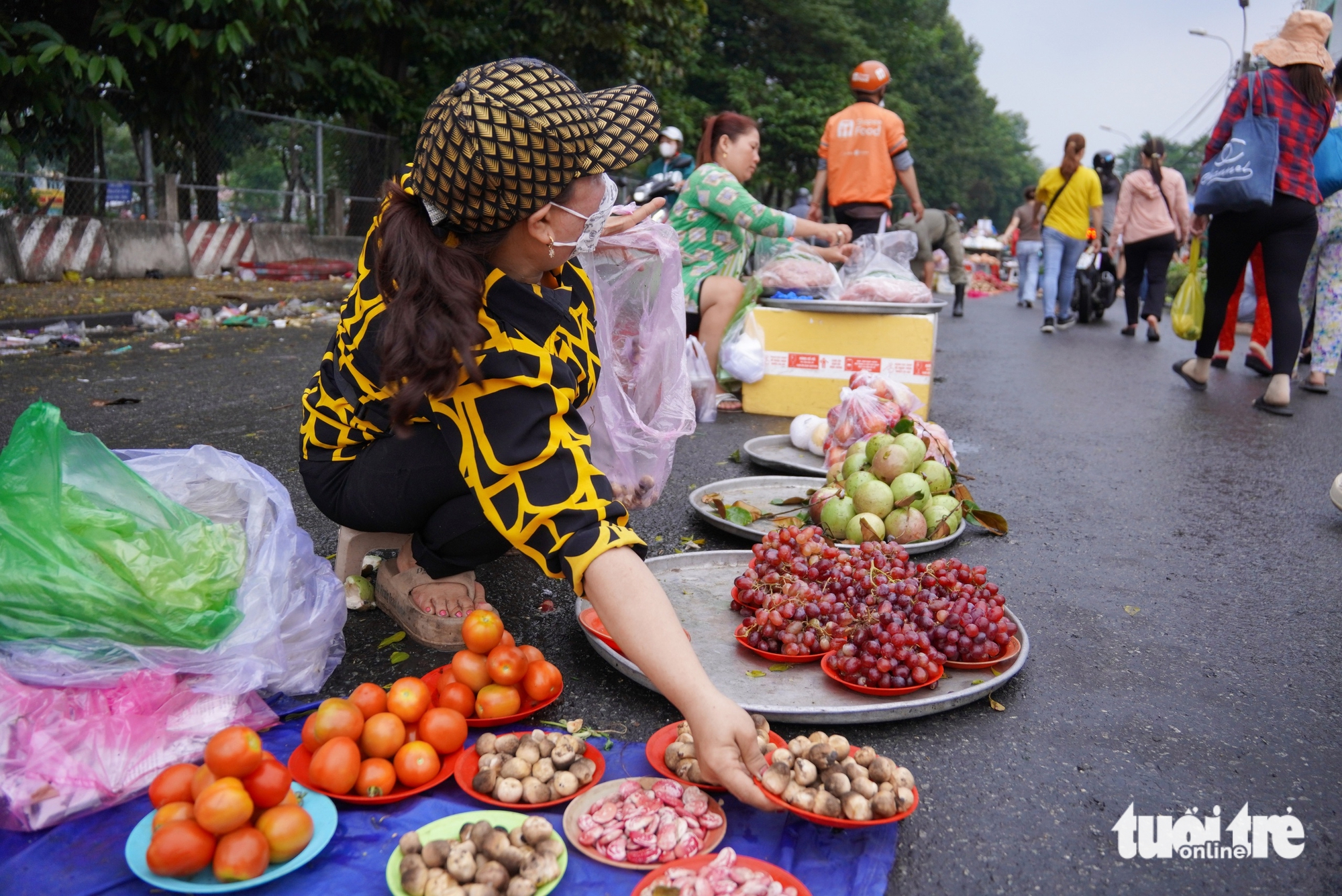
Vegetables arranged on a plate cost between 10,000 and 20,000 VND per plate - Photo: AN VI
And whenever someone bought a basket of fish, Mr. Phuc would give them an extra bunch of scallions and chili peppers.
As usual, after finishing work, Ms. Diem (38 years old, residing in Binh Tan District), a worker at a nearby company, stopped by this market to buy groceries for dinner.
She said that selling food in baskets or on plates like this has been around for quite a while and suits the budgets of factory workers.
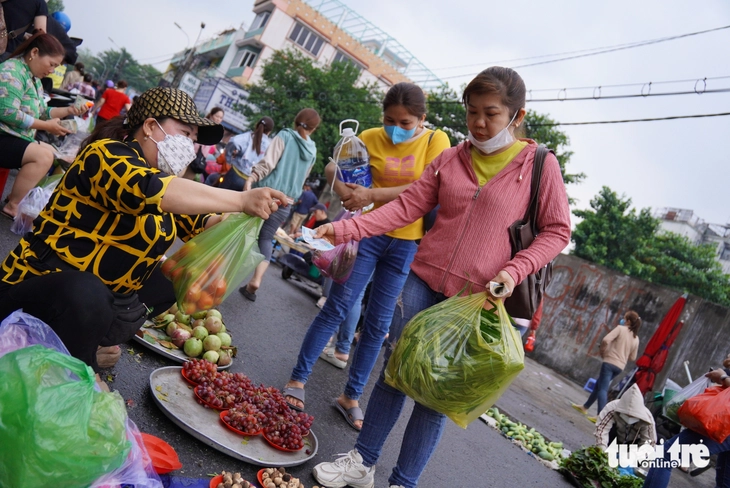
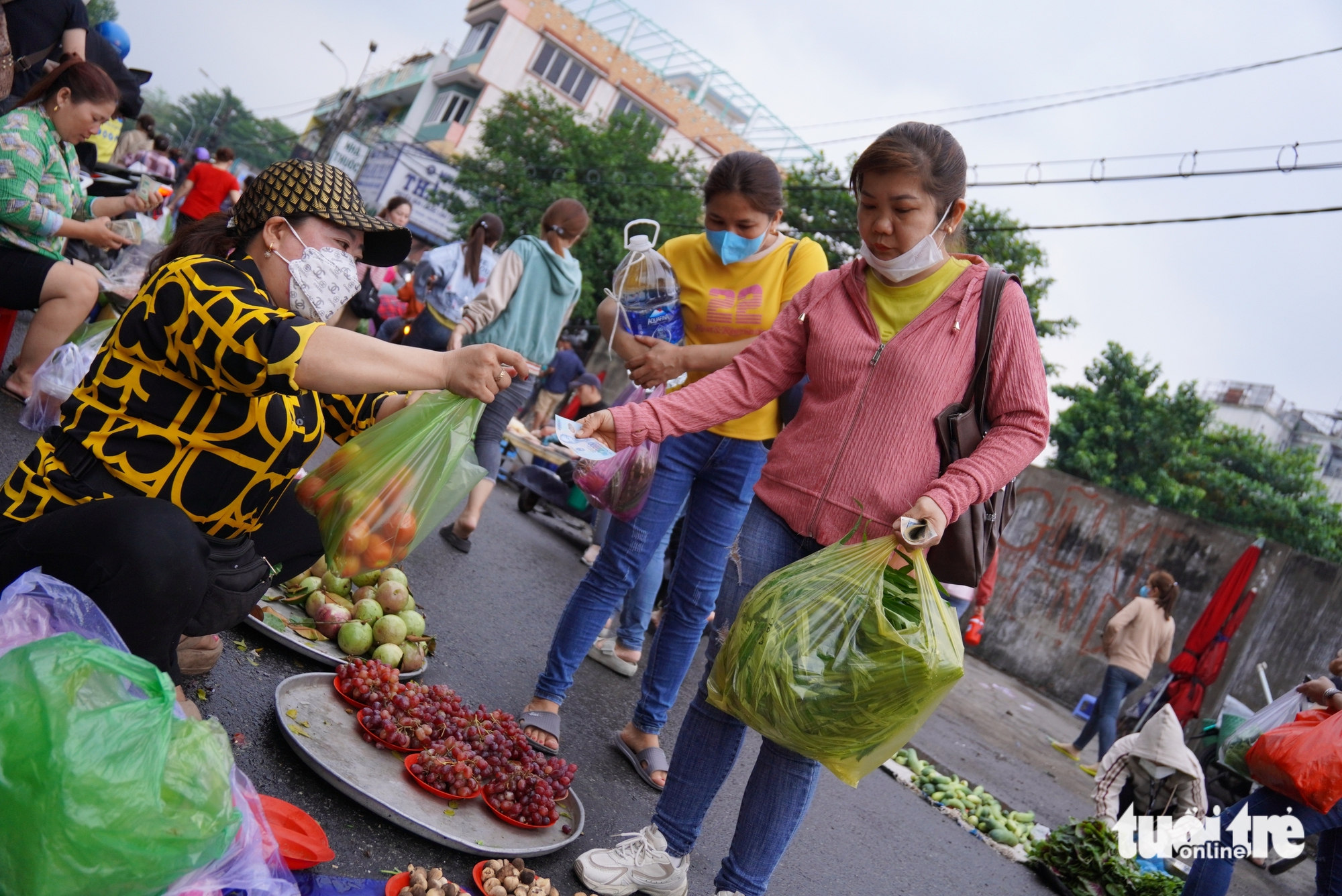
Ms. Diem (in the pink shirt), like many other workers, said that selling food on plates helps them balance their food intake more easily - Photo: AN VI
"For example, I live alone, and if I go to the market and buy only one or two tomatoes, it would be awkward, and the seller wouldn't know how to weigh them. But here, I just take a plate with two or three tomatoes, which is just enough for one meal," Ms. Diem explained.
With 20,000 dong, Ms. Diem was able to buy a basket containing three sea fish. That's enough for dinner and breakfast the next morning before going to work.
And with just 60,000 dong, Ms. Diem bought a decent amount of food that could last for several meals: two plates of tomatoes for 20,000 dong, a plate of straw mushrooms for 10,000 dong, a basket of fish for 20,000 dong, and with the remaining 10,000 dong, she bought an extra basket of mangoes for dessert.
Selling a dozen (12 eggs) is still profitable.
Many food vendors in this market are also factory workers. For example, Ms. Nguyen Thi Huynh Nhu (32 years old, residing in Binh Tan District) is working on leather shoe manufacturing for a nearby company.
For the past few months, business has been slow, so she hasn't worked overtime. After finishing work at 4:30 PM, the woman from Tien Giang province rushes to the Western Bus Station to pick up the chicken eggs, duck eggs, and dried seafood that her family sent from her hometown by bus to sell.
She said that if sales were good, she could earn 100,000 to 150,000 dong per session.
Having sourced her goods from the Mekong Delta, Ms. Nhu also sells them in the Mekong Delta style: "Like my mother, who buys eggs in the countryside, a dozen eggs is 14, but here I sell a dozen of 12 eggs and still make a profit, and I get a lot of support from the workers."
"I'm a factory worker too, so I understand the difficult situation these women are facing right now. Even if the profit margin is small, it's okay as long as everyone is happy," Ms. Nhu said with a smile.
Tuoitre.vn
Source: https://tuoitre.vn/doc-la-khu-cho-khong-can-ky-chi-ban-dong-theo-dia-20250221125955634.htm#content-3


![[Photo] General Secretary and President To Lam presides over a meeting with the Central Organizing Committee.](https://vphoto.vietnam.vn/thumb/1200x675/vietnam/resource/IMAGE/2026/06/03/1780482764658_a1-bnd-4741-3342-jpg.webp)

![[Photo] Secretary of the National Assembly Party Committee, Chairman of the National Assembly presides over the meeting of the Standing Committee and Executive Committee of the National Assembly Party Committee.](https://vphoto.vietnam.vn/thumb/1200x675/vietnam/resource/IMAGE/2026/06/03/1780480353201_ndo_br_bnd-2585-jpg.webp)
![[Photo] First session of the 14th Congress of the Vietnam Trade Union](https://vphoto.vietnam.vn/thumb/1200x675/vietnam/resource/IMAGE/2026/06/03/1780465947883_ndo_br_img-3852-jpg.webp)












































![[Video] Sunset at Lap An Lagoon – Where the sun sets over the fishing nets](https://vphoto.vietnam.vn/thumb/1200x675/vietnam/resource/IMAGE/2026/05/31/1780192137701_beach-landscape-sea-water-nature-grass-745871-pxhere-com.jpeg)































Comment (0)