

Possessing valuable and unique natural tourism resources, attracting tourists with its rich and distinctive cultural features; a convenient transportation and telecommunications system; a comprehensive information system; and dining and shopping services that meet the needs of tourists... the Dù area in Xuân Sơn commune, Tân Sơn district, has become an attractive destination for domestic and international tourists.
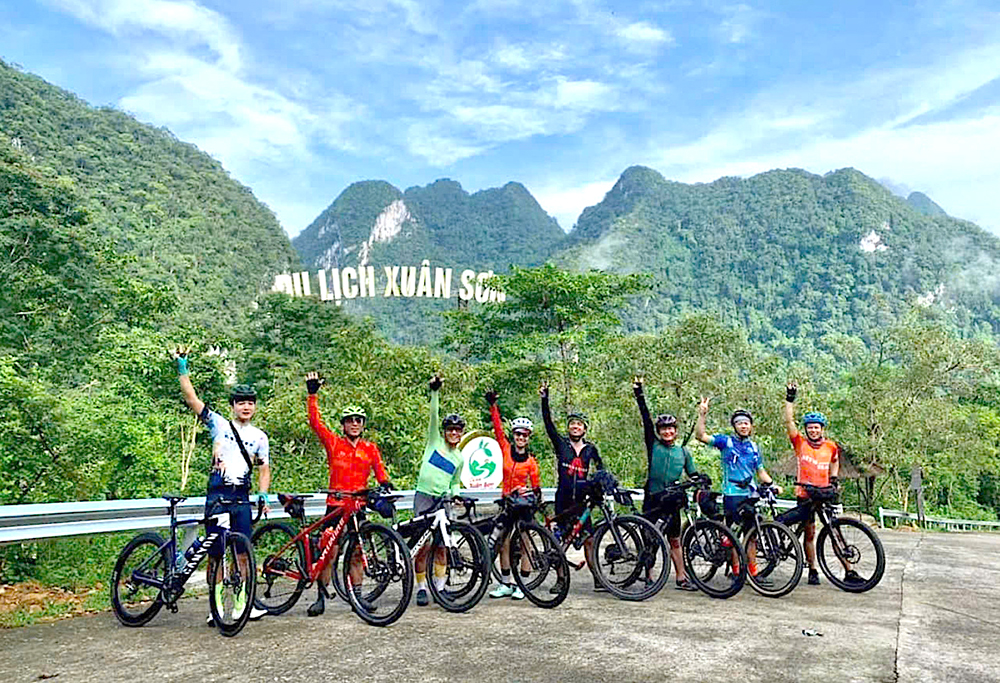
Tourists experiencing life at Xuan Son National Park.
The Dù area is located in the center of Xuân Sơn commune, within the core zone of Xuân Sơn National Park. It is a place rich in tangible and intangible cultural heritage, particularly the unique traditional culture of ethnic minorities, such as traditional houses and costumes, traditional musical instruments, customs, and folk cuisine . The Dù area currently has 78 households with nearly 300 inhabitants from various ethnic groups living together, with the Dao and Mường people accounting for 97% of the population. Through centuries of coexistence, land reclamation, and life-building, the close relationship between the Mường and Dao people has remained strong. The people of the area share difficulties, care for and support each other, and work together in solidarity to develop production, build, and protect their homeland.
Previously, the people in the Dù area, as well as the people of Xuân Sơn commune, lived primarily self-sufficiently, cultivating wet rice, upland rice, and some cash crops such as sticky corn, cassava, upland potatoes, bananas, papayas, pomelos, and sugarcane... and raising buffaloes, cows, goats, pigs, ducks, geese, and especially multi-toed chickens (the "royal chicken"). In recent years, thanks to the attention of various levels and sectors, investment in tourism infrastructure has been made, facilities have been strengthened, and training and professional development in eco-tourism and community tourism services have been provided. The renovation of the cultural center and the landscape of the Dù area has created a highlight within the local tourism complex. As a result, on average, over 8,000 tourists visit and experience the area each year.
A day in the Dù area offers visitors a distinct experience of the four seasons: cool mornings like spring, warm afternoons like summer, breezy evenings like autumn, and chilly nights like winter. Having visited several times with friends and family, Ms. Nguyen Thi Hoai Thu from Thai Nguyen province shared: “My friends and I often come to Xuan Son during the wild sunflower blooming season to create wonderful memories. With its cool and fresh climate, we chose the Dù area as our destination for outdoor team-building activities, bonfires in the evenings, and enjoying the local ethnic dishes. It seems that the hustle and bustle of daily life disappears amidst the magnificent nature.” With over 1,200 plant species and 365 animal species, including 46 species listed in the Vietnam Red Book and 18 species listed in the World Red Book, the Dù area is an ideal location for developing ecotourism and community-based tourism.
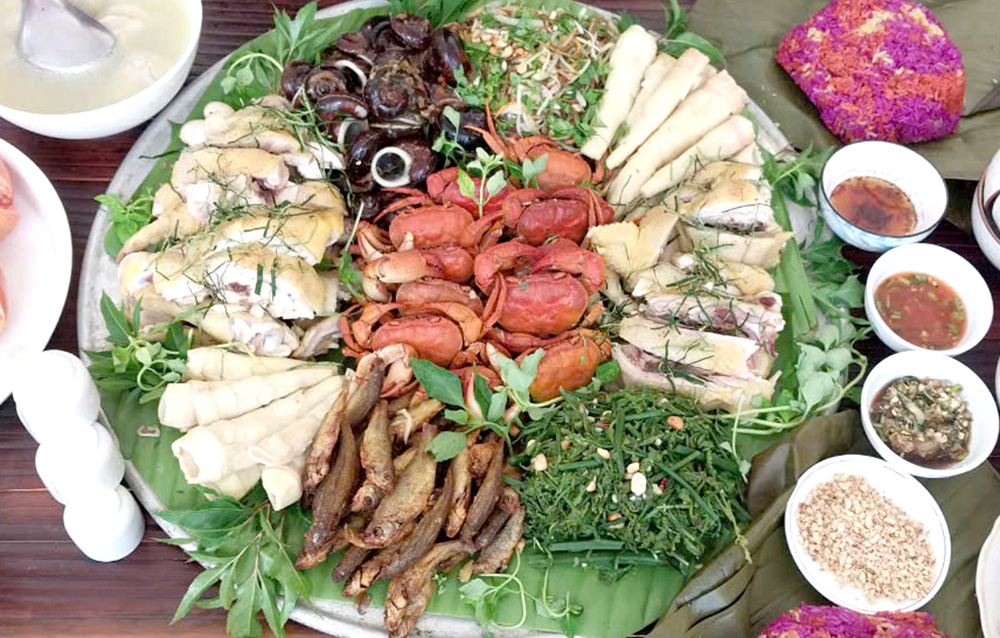
At the Dù community tourism destination, visitors will have the opportunity to enjoy local mountain and forest specialties.
Visiting the Dù area, tourists can not only explore and experience traditional crafts but also participate with ethnic minorities in folk performances such as Cham Duong singing, Vi singing, Rang singing, gong and drum playing, bamboo pole dancing, etc. They can also enjoy traditional cuisine such as multi-toed chicken, wild boar, stream duck, mountain goat, sắng vegetables, bò khai vegetables, sour meat, bamboo rice, corn wine, Shan Tuyet tea, etc. The transportation system has been invested in, infrastructure has been improved, and there is a system of signposts and six restaurants serving food with a maximum capacity of 3,000 visitors per year.
Ms. Ha Thi Hien, Vice Chairman of the People's Committee of Xuan Son commune, said: “Based on the actual tourism development situation in the Du area and the criteria for recognizing tourist destinations as stipulated in the 2017 Tourism Law and Government Decree 168/2017/ND-CP detailing some provisions of the Tourism Law, the Du area has met the conditions to be recognized as a provincial-level tourist destination. The local government hopes that all levels and sectors will continue to pay attention and invest in building and completing the tourist destination; strengthen support for promoting and marketing the destination; guide the development and exploitation of tourism products and services to serve tourists at the site; and guide environmental protection in tourism activities after the tourist destination is recognized.”
Hong Nhung
Source: https://baophutho.vn/khu-du-diem-den-hap-dan-222829.htm

![[Image] Prime Minister Pham Minh Chinh presides over the second meeting of the Government's Steering Committee on macroeconomic management and administration.](/_next/image?url=https%3A%2F%2Fvphoto.vietnam.vn%2Fthumb%2F1200x675%2Fvietnam%2Fresource%2FIMAGE%2F2026%2F01%2F26%2F1769402831322_ndo_br_dsc-3583-jpg.webp&w=3840&q=75)

![[Photo] General Secretary To Lam presides over the welcoming ceremony for General Secretary and President of Laos Thongloun Sisoulith](/_next/image?url=https%3A%2F%2Fvphoto.vietnam.vn%2Fthumb%2F1200x675%2Fvietnam%2Fresource%2FIMAGE%2F2026%2F01%2F26%2F1769398330249_ndo_br_1-jpg.webp&w=3840&q=75)
![[Photo] General Secretary To Lam working with Ambassadors and Heads of Vietnamese representative offices abroad attending the 14th National Congress of the Party](/_next/image?url=https%3A%2F%2Fvphoto.vietnam.vn%2Fthumb%2F1200x675%2Fvietnam%2Fresource%2FIMAGE%2F2026%2F01%2F25%2F1769334314499_image.jpeg&w=3840&q=75)



Comment (0)