

Heritage awakens
Under the hazy drizzle of Hanoi's early 2026 weather, the Old Quarter suddenly became unusually vibrant and bustling. The sound of festival drums echoed, blending with the lively sounds of the crowds flocking towards the heritage center at 22 Hang Buom Street to participate in the "Vietnamese Tet - Street Tet 2026" program.
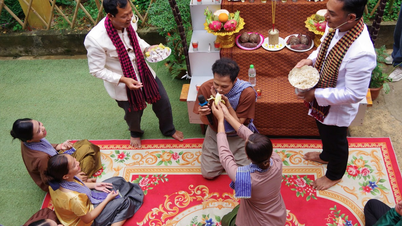
Here, the Tet atmosphere and Tet market of the Northern Delta region are vividly recreated down to the smallest detail, from the vibrant five-fruit platter, the ancient houses with their dark brown fish-scale tiled roofs, the solemn worship space with its gilded altar, to the rustic thatched-roof stalls, and the elderly calligraphers in their traditional long robes and turbans writing calligraphy and giving away blessings...
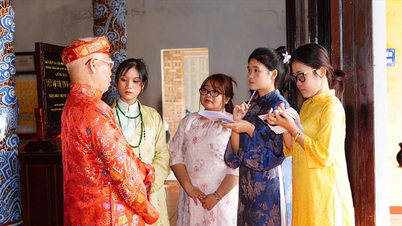
It's not uncommon to see groups of young people beaming in traditional five-panel dresses, holding blossoming peach branches, excitedly posing in elaborately decorated spaces. Or, groups of young people enthusiastically learning about and directly experiencing workshops to decorate handcrafted products themselves at traditional stalls.
From carefully writing the first characters of the year with a calligrapher to meticulously embroidering or decorating cultural items in a modern, stylized way, young people are truly "touching" the soul of the nation with their own hands and creativity.
|
Young people dressed in traditional costumes "checked in" at the "Vietnamese Tet - Street Tet 2026" space. |

In fact, the wave of modern cultural heritage is no longer unfamiliar in recent years, with distinctive development and innovation in terms of form, scale of organization, and areas of exploitation year after year. A prime example is the Creative Design Festival, a series of events spanning a long period, which began impressively with two days of "Creative Gathering" at Hoan Kiem Lake.
Simply put, this is where creative passions from various fields such as fashion, architecture, music , and technology come together to breathe new life into traditional values. The festival infuses design ideas into every corner of everyday life, making historical sites more vibrant than ever before.
For example, industrial heritage sites such as old factories or ancient water towers, which had been forgotten, are now being "reawakened" to become unique performing arts spaces. Thanks to the support of modern lighting and sound, stories of old urban history are retold in a way that is engaging and easily understandable to young people.
|
Young people enthusiastically study architectural models at the Creative Design Festival. Photo: Organizing Committee. |

A highlight of this trend is the "Hundred Flowers Walking Tour" - a unique cultural festival that attracts those who love traditional Vietnamese clothing.
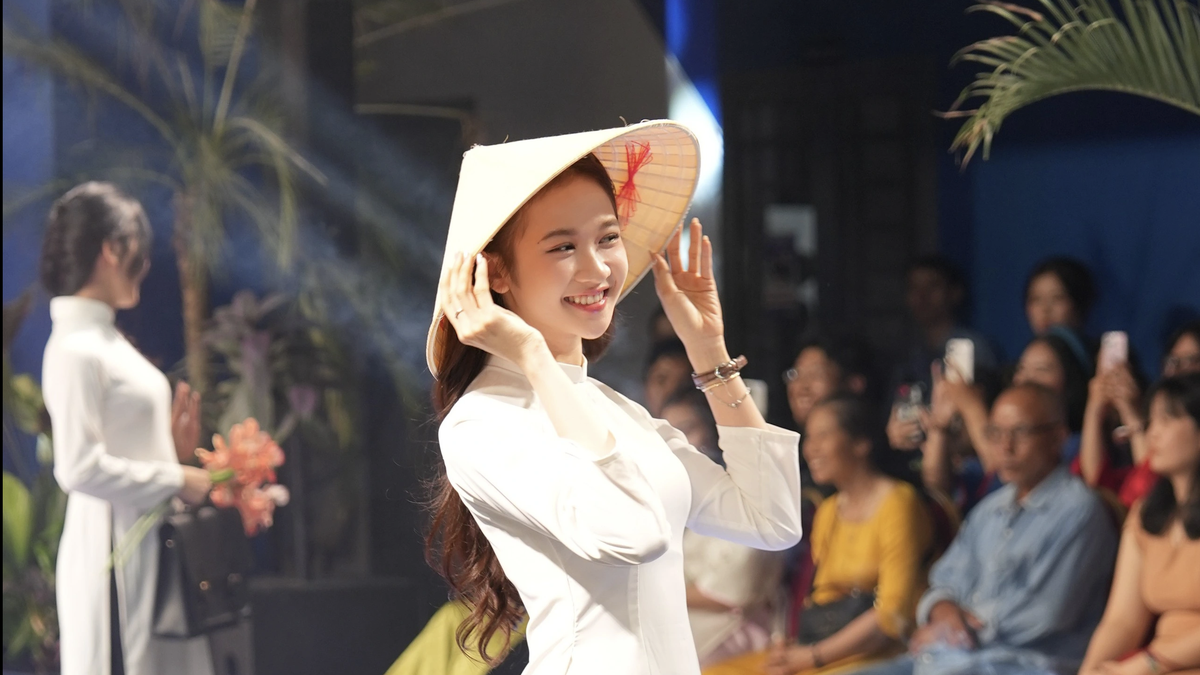
Thanks to meticulous planning and investment, the "Hundred Flowers Walking Parade" has spread rapidly, attracting the attention and participation of millions of young people through viral videos and stunning images on Facebook and TikTok. No longer just dry, unfamiliar documentary footage, this large-scale art parade transforms Hanoi's streets into a vibrant "forest of flowers" showcasing a variety of traditional Vietnamese costumes from the Ly, Tran, Le, and Nguyen dynasties.
Hundreds of young people confidently donned traditional ethnic costumes amidst modern city streets, creating a vibrant bridge between the past and the present. The goal of this journey was not just a performance, but to honor the value of traditional clothing and bring it back into everyday life, encouraging young people to learn about and use traditional attire naturally and proudly.
When experience becomes the connecting thread
The biggest common thread among heritage events in recent years is the rise of modern design language and open experiential spaces.
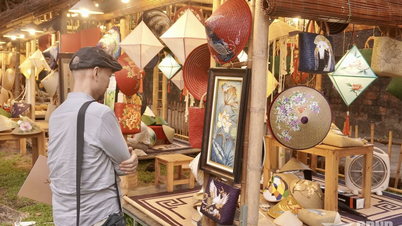
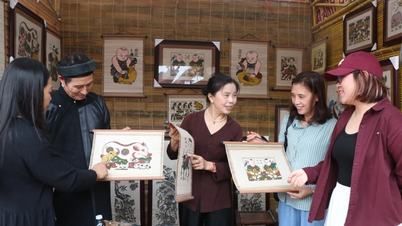
The first thing that captivates young people is the cool and trendy look of traditional materials. From mirrors with geometric ceramic frames to 3D Dong Ho paintings and stylized traditional costumes, heritage has stepped out of the display case to become part of the personal aesthetic of the new generation.
However, the new appearance is only the "door"; it is the shift from observation to direct participation that is the key to completely changing preconceptions about heritage. Instead of dry "no touching" signs, festivals now open up vibrant cultural spaces – where young people are invited to pick up paintbrushes, sculpt pottery, or immerse themselves in parades.
|
A booth featuring stylized traditional products at "Vietnamese Tet - Street Tet". |
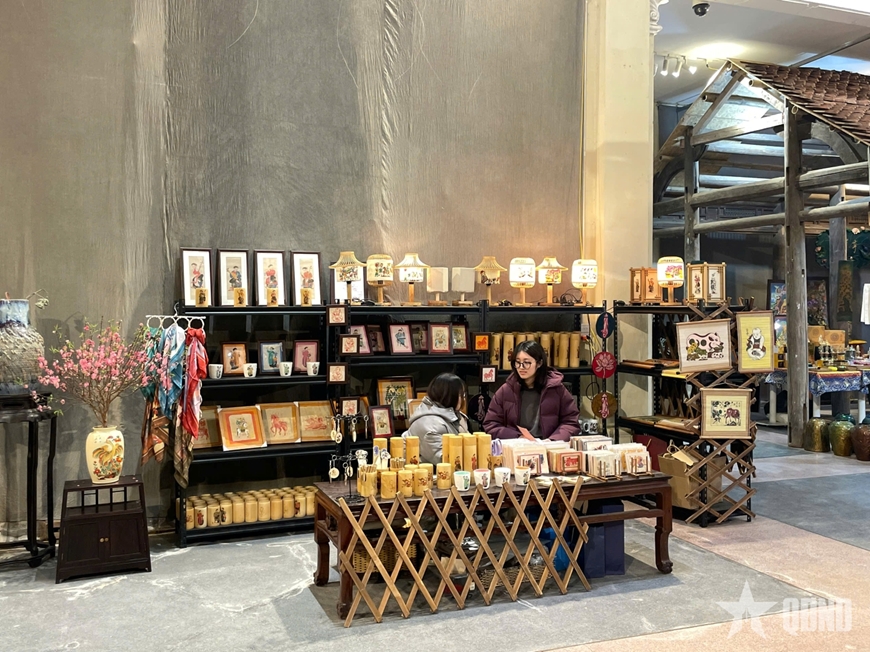
Participating directly in handicraft workshops within the framework of the "Vietnamese Tet - Street Tet" program gave Le Thi Dieu Anh (20 years old, Hanoi) a completely different perspective on heritage: “Previously, I thought heritage was something to display, something you could only look at but not touch. But when I made and decorated a traditional product myself, I found it much more intimate and interesting.”
For many young people, experiencing heritage goes beyond mere emotion; it also leads to a change in how they perceive their surrounding living spaces. Thieu Huyen Thuong (22 years old, Hanoi) shared an interesting perspective while standing amidst the Creative Design Festival: “For me, heritage and design are like laws of physics or chemistry – they are always present and govern society, but are often taken for granted. Before, I unconsciously walked past old streets and buildings every day. But when I heard the stories behind them, understood why they exist, everything suddenly became different.”
|
Young people, dressed in traditional Vietnamese ao dai, explore the art of embroidery at the "Vietnamese Tet - Street Tet" space. |

From her very first experience at the 2023 Creative Design Festival, held at the Gia Lam Railway Factory, Ms. Huyen Thuong made a special impression. She spent a lot of time researching materials and exhibition spaces about Hanoi's old factories and continued to actively seek out more related content after the event ended. "Events like this make me not just 'pass by,' but begin to see and appreciate the connections between the past and the present," Ms. Thuong added.
Meanwhile, for those participating in the "Hundred Flowers Walking March," the most prominent emotions were pride and community connection. Mai Quynh Huong (23 years old, Hanoi) shared her unforgettable experience of wearing traditional ethnic costumes and walking alongside the procession through the modern streets of Hanoi: "A group of people marching together through the streets, recreating various costumes from different historical periods, created a cultural space that was both solemn and close to modern life. Bringing traditional costumes and elements into public spaces makes heritage no longer distant, but a vibrant part of today's urban life."
|
The "Hundred Flowers Walking" event attracted many young people. Source: Organizing Committee. |

The appeal of modern cultural events lies in how they empower young people to participate and tell their own stories.
The shift from "seeing" to "experiencing," from "hearing" to "feeling for oneself," has helped cultural heritage break free from traditional boundaries and become an integral part of contemporary life. And in this journey, young people are not just spectators, but active participants who contribute to renewing, spreading, and bringing heritage closer to the community.
Engaging the younger generation with heritage "translated" to suit the modern era is crucial for sustainable preservation. Instead of passively receiving culture, these workshop experiences and "check-in" activities transform heritage into a vibrant, highly connected entity.
The greatest significance of this trend is the blurring of the line between the old and the new, helping young people confidently assert that heritage is not just immutable artifacts, but an endless source of inspiration, allowing them to create their own identity in the modern world.
Source: https://www.qdnd.vn/van-hoa/doi-song/de-di-san-dan-toc-khong-bam-bui-thoi-gian-1022813

![[Photo] National Assembly Chairman Tran Thanh Man successfully concludes his participation in IPU-152](https://vphoto.vietnam.vn/thumb/1200x675/vietnam/resource/IMAGE/2026/04/18/1776502638199_vna-potal-chu-tich-quoc-hoi-ket-thuc-tot-dep-chuong-trinh-tham-du-ipu-152-8709975-jpg.webp)























































Comment (0)