

On the morning of January 16th, a delegation led by Mr. Tran Van Huyen, Deputy Secretary of the Can Tho City Party Committee, visited and surveyed the operations of the Con Son Agricultural Tourism Cooperative (Binh Thuy District). The delegation included representatives from the Standing Committee of the Can Tho City People's Council, leaders from the City Party Committee's Propaganda and Mass Mobilization Department, the Department of Culture, Sports and Tourism, the Department of Agriculture and Environment, and the Culture and Social Affairs Committee of the City People's Council.
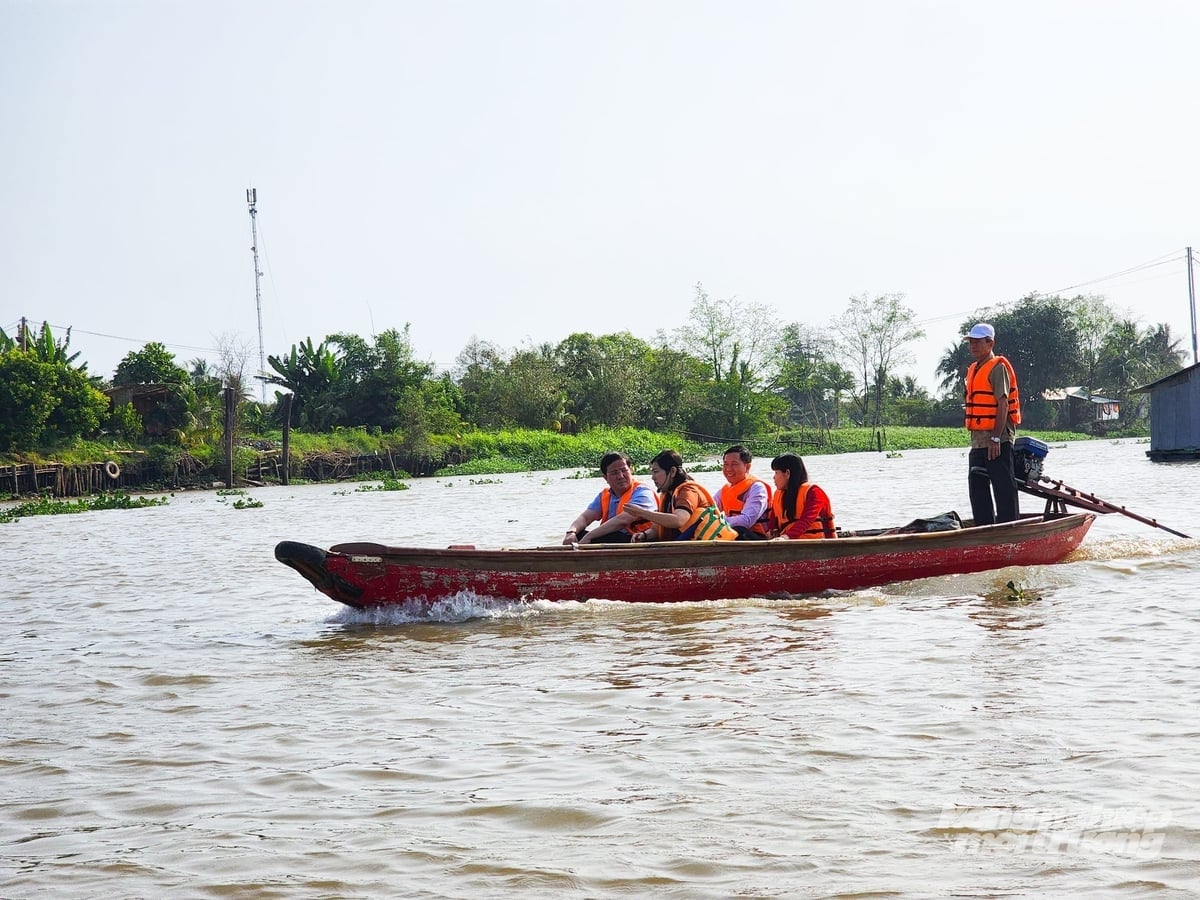
The delegation traveled by motorboat on the river to reach community tourism destinations in Con Son, directly experiencing the waterway tour. Photo: Van Vu.
During the survey, the delegation directly learned about the organizational model and operation of community tourism; visited experiential sites associated with ecological agricultural production, fruit orchards, folk culinary products, and the daily life of local people. The Con Son tourism model was assessed as typical of a community-based development approach, promoting local values and the advantages of the riverine and orchard areas.
Reporting to the delegation, the cooperative's representative stated that in recent years, tourism has become the main source of livelihood for many households, contributing to improving their lives and promoting the local image. However, the operation still faces many difficulties, especially regarding transportation infrastructure, wharves, legal procedures related to watercraft, land, and water surfaces; promotion and advertising; and improving tourism skills for the local people.
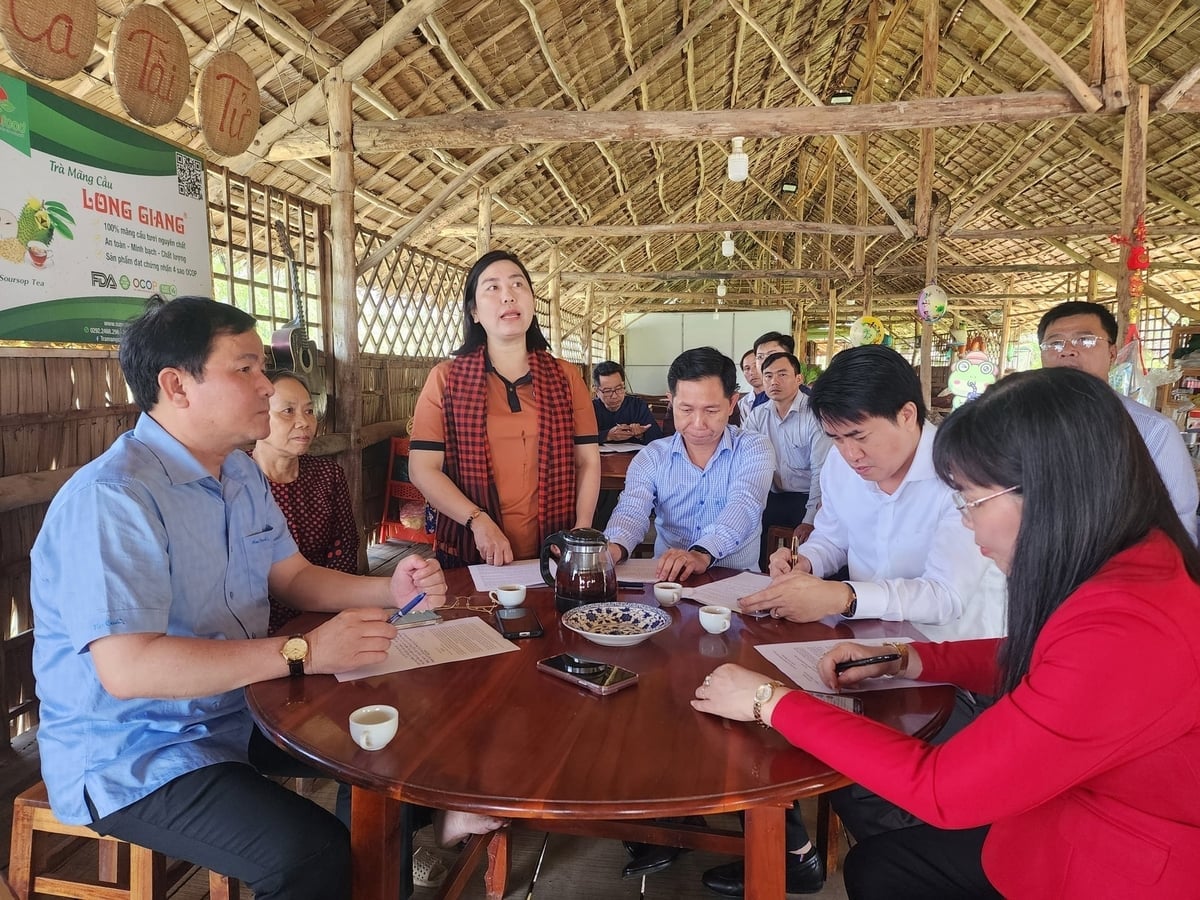
City leaders and representatives from various departments and agencies worked with the Con Son Agricultural Tourism Cooperative, listening to suggestions and proposals from the local people. Photo: Van Vu.
Reflecting on practical experience, Ms. To Hoang Dich Thuy, a member of the Con Son Agricultural Tourism Cooperative, stated that the current watercraft registration process has many shortcomings. According to regulations, vessels with 13 to 49 seats must submit their documentation to the Ministry of Transport for assessment, leading to lengthy procedures and causing apprehension among residents and businesses. In reality, there have been cases where completed vessels could not be registered, resulting in abandoned boats and significant waste. She suggested decentralizing the registration process for this group of vessels to local authorities to facilitate tourism development.
In addition, Ms. Thuy also hopes that the authorities will consider retaining some traditional wharves that have been long associated with tourism on Con Son Island, and at the same time, promptly resolve the issue of leasing the adjacent alluvial land so that people can invest with peace of mind, avoiding temporary and illegal operations.
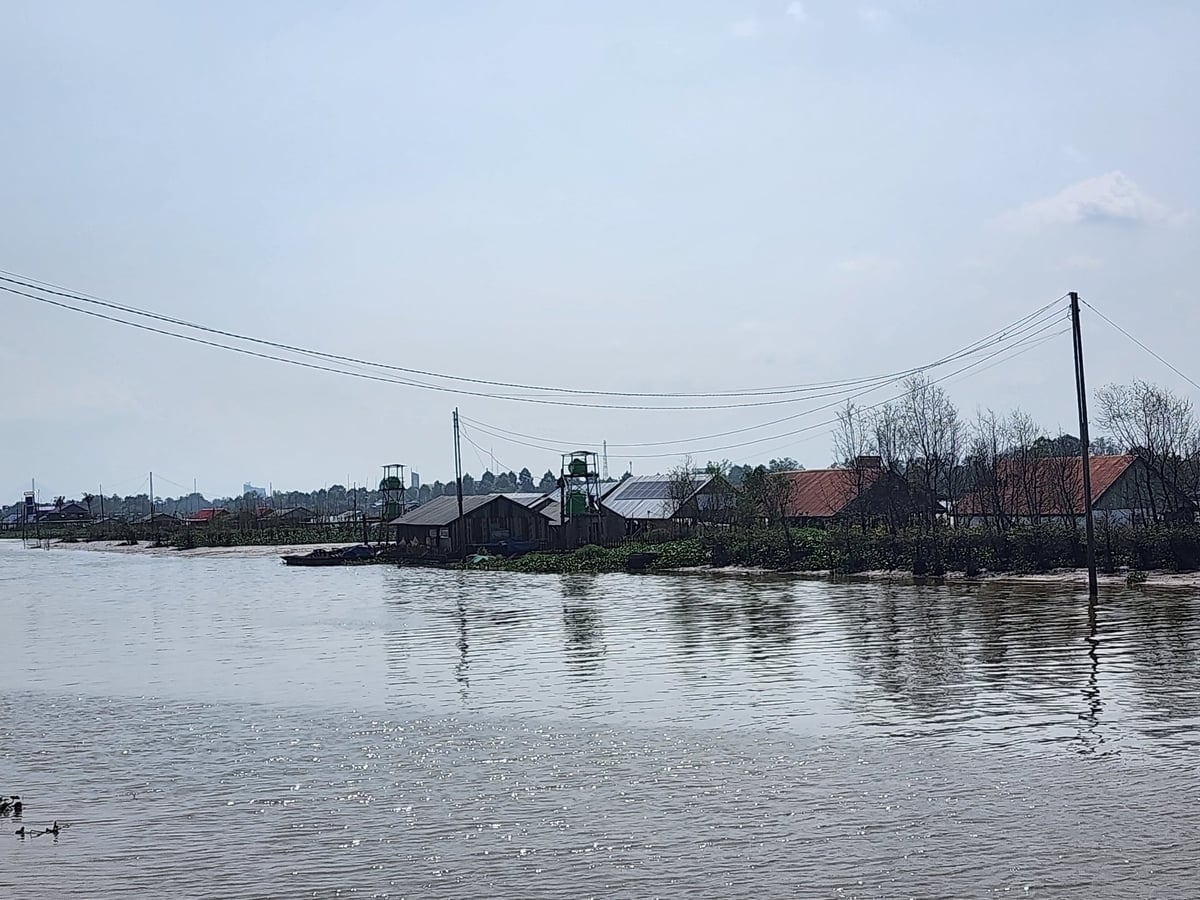
The riverside dock area at Con Son, where locals have proposed preserving traditional wharves to serve community tourism development. Photo: Van Vu.
According to Mr. Ly Van Bon, representative of the Con Son Agricultural Tourism Cooperative, previously, most households on the island were classified as poor or near-poor. Since the development of tourism, the lives of the people have gradually improved and they have now escaped poverty sustainably. Tourism is not only a source of income but also an effective channel for promoting local products.
However, according to Mr. Bon, Con Son Island still faces many obstacles that often limit tourist stays to short periods. These include, most notably, unclear planning, which discourages long-term investment by locals; land issues, as a large portion of the area is agricultural land; persistent erosion; and unresolved procedures for leasing water surface areas and obtaining permits for wharves and docks.
Sharing at the meeting, Ms. Phan Kim Ngan, Director of Con Son Agricultural Tourism Cooperative, said that after more than 11 years of developing tourism, the number of visitors has been increasing, confirming that the direction taken by the local people is correct. The fact that city leaders and relevant departments directly surveyed the area has helped the people feel more secure, receiving advice on the landscape, tourism space, as well as legal procedures to develop in accordance with regulations.
In his concluding remarks, Mr. Tran Van Huyen acknowledged and highly appreciated the cooperative's proactive and creative approach in developing a community-based tourism model linked to ecological agriculture. According to him, this direction aligns with the city's tourism development strategy, creating livelihoods while contributing to promoting the image of Can Tho.
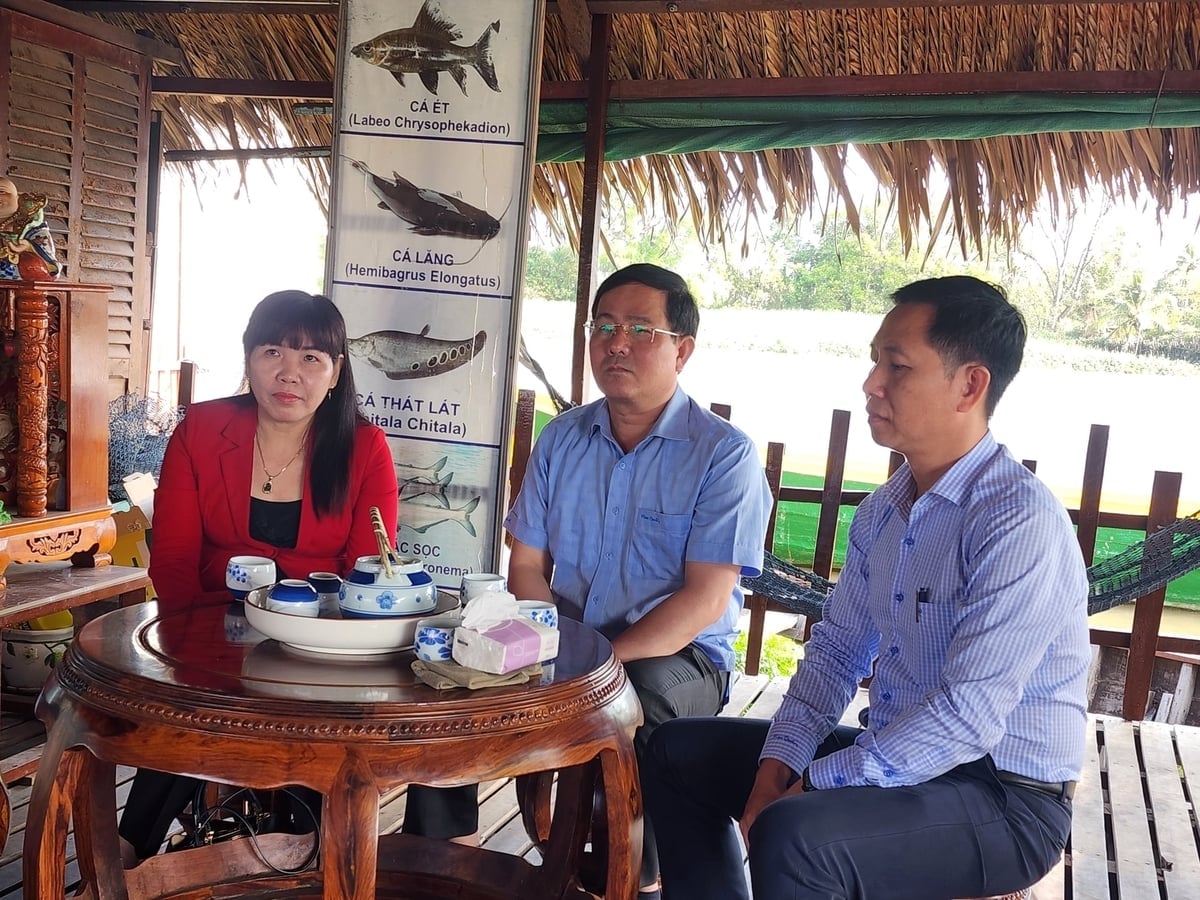
Mr. Tran Van Huyen (center), Deputy Secretary of the Can Tho City Party Committee, acknowledged and highly appreciated the community-based tourism model linked with ecological agriculture of the Con Son Agricultural Tourism Cooperative. Photo: Van Vu.
Mr. Huyen emphasized that, for sustainable development, Con Son needs to continue removing "bottlenecks" in infrastructure, land, water resources, human resources, and capital; while also paying more attention to the "clean and beautiful" aspect, creating new products, promoting digitalization in management, and developing nighttime services to extend the length of stay for tourists.
The working group stated that they will compile all the recommendations from the people and cooperatives to report to the city leaders, as a basis for adjusting the planning for the period 2021-2030, with a vision to 2050, in order to create a favorable legal framework for the sustainable development of community tourism in Con Son.
Source: https://nongnghiepmoitruong.vn/lanh-dao-can-tho-khao-sat-con-son-go-vuong-mac-cho-nguoi-lam-du-lich-d793972.html



![[Photo] General Secretary and President To Lam presides over a meeting on preparations for the review of one year of operation of the three-tiered government system.](https://vphoto.vietnam.vn/thumb/1200x675/vietnam/resource/IMAGE/2026/06/02/1780391821195_a1-bnd-4595-9717-jpg.webp)

































































Comment (0)