

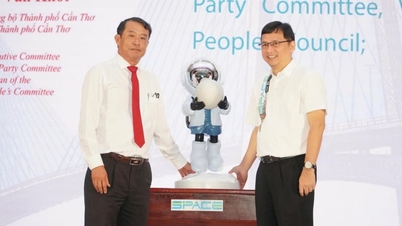
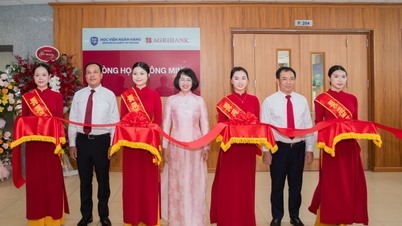
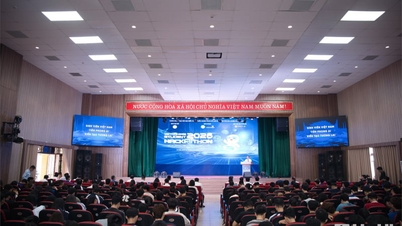
The launch ceremony not only marks the beginning of a strategic educational project but also demonstrates a commitment to promoting STEM education innovation in the context of digital transformation and innovation.
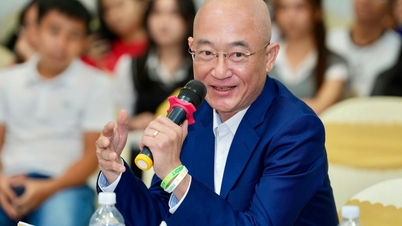
Speaking at the event, Mr. Thai Van Tai – Director of the Department of General Education (Ministry of Education and Training) emphasized that STEM is not a separate model, but needs to be implemented immediately in subject-specific classrooms, using existing teaching equipment and interdisciplinary teaching activities according to the 2018 General Education Program.
The Ministry of Education and Training's guidelines have clearly defined the organization of STEM-based teaching and learning as a way to develop general and specific competencies in students. Therefore, educational institutions should approach STEM as a teaching and learning method rather than viewing it as a separate model requiring separate investment.
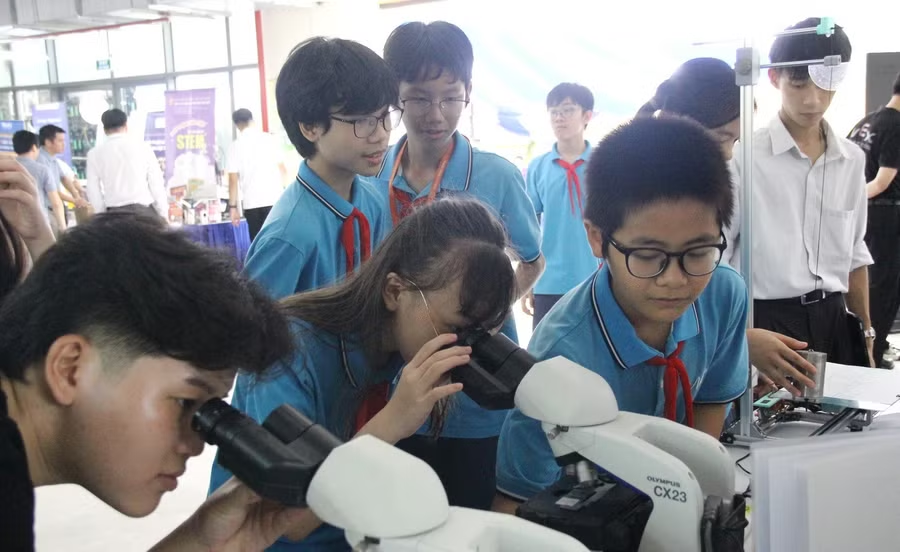
Mr. Thai Van Tai stated that in the coming period, the Ministry of Education and Training will supplement the development orientations for STEM education linked to national digital transformation in accordance with the spirit of Resolution 57-NQ/TW.
In addition to the list of minimum teaching equipment and subject-specific classrooms, the Ministry will develop guidelines on STEM creative spaces to create a legal framework for localities to implement them synchronously.
In parallel, the Ministry of Education and Training is developing a national digital education database project, aiming to create a shared digital learning resource ecosystem nationwide.
According to the head of the Department of General Education, the development of digital learning materials and STEM will contribute to narrowing the gap in access to education between regions, creating equal learning opportunities through digital technology .
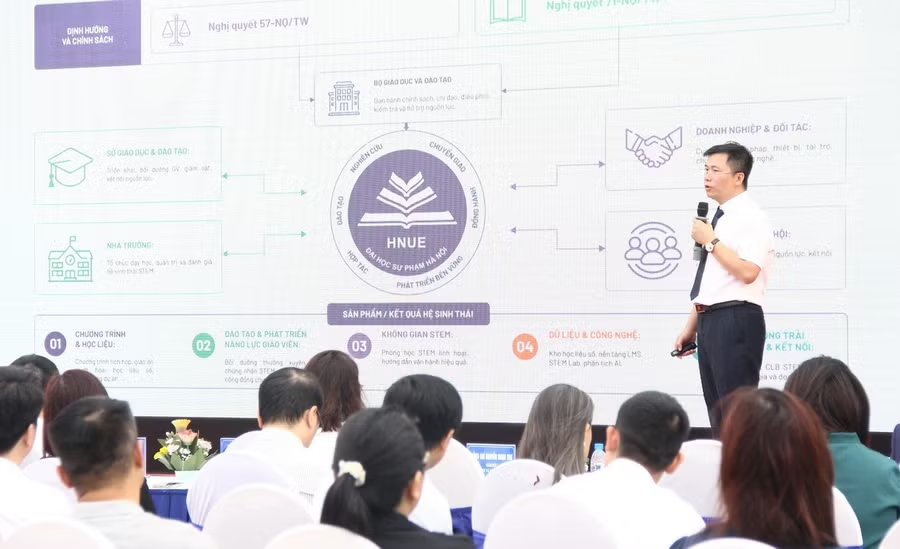
Speaking at the event, Associate Professor Dr. Nguyen Van Bien - Director of the Center for Research and Development of Pedagogical Professionalism (Hanoi University of Education) said that the HNUE STEM Ecosystem is built on the connection between universities, businesses, and general education institutions.
In this model, Hanoi University of Education plays a central role in researching and developing STEM programs, teaching materials, and topics; businesses participate in developing lectures, equipment, and technological solutions; and high schools are the direct implementers for students.
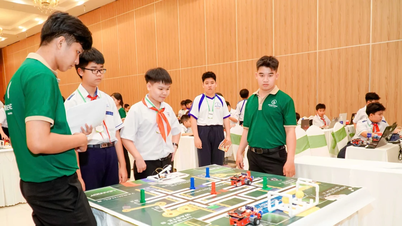
The school's STEM program is based on the 2018 General Education Curriculum and is implemented in three ways: STEM in lessons, STEM experiential activities, and science and technology research for gifted students.
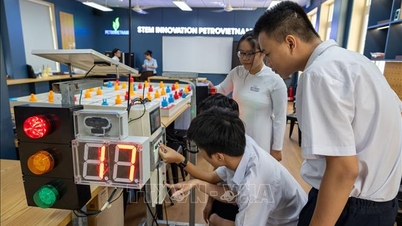
Notably, the HNUE STEM Lab model was introduced as an illustrative solution for secondary schools. It's an open, flexible space tailored to each grade level: primary school focuses on experiential learning; lower secondary school develops digital and STEM skills; and upper secondary school focuses on career orientation.
In addition, the laboratory systems in the Physics, Chemistry, Biology, and Technology departments, along with the university's IT Center, will form a network to support students and teachers nationwide.
In the near future, the school plans to collaborate with businesses to build more experiential learning areas linked to practical production.
According to Associate Professor Dr. Nguyen Van Bien, the school is ready to transfer the collaborative model, educational program, equipment, and operational procedures of the STEM Lab to suit the conditions of each locality in order to promote the development of STEM education nationwide.
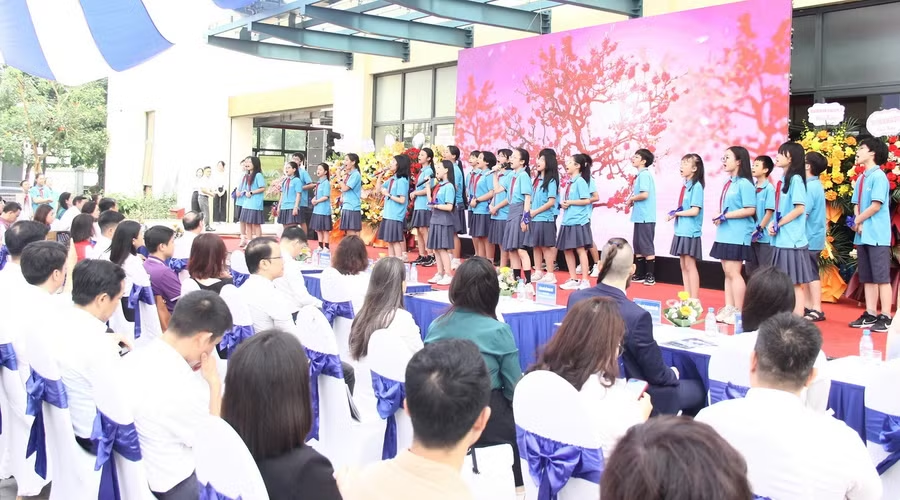
Also at the event, Hanoi University of Education signed cooperation agreements with many businesses, educational organizations, and strategic partners to jointly develop learning materials, support equipment, build a STEM experiential environment, train teachers, and expand STEM access opportunities for students.
Source: https://giaoducthoidai.vn/kien-tao-he-sinh-thai-giao-duc-stem-toan-dien-post778603.html
![[Photo] Ba Lang An Lighthouse - the "eye of the sea" amidst the "rock museum" of Quang Ngai province.](https://vphoto.vietnam.vn/thumb/1200x675/vietnam/resource/IMAGE/2026/05/29/1780038698840_anh-man-hinh-2026-05-29-luc-14-10-42.png)














![[Image] Pleasant weather helps students enter the 10th grade entrance exam with confidence.](https://vphoto.vietnam.vn/thumb/1200x675/vietnam/resource/IMAGE/2026/05/29/1780034401612_ngay-1-thi-lop-10-minh-duy-8-5009-jpg.webp)







































Comment (0)