

Controversy is considered a financial risk.
A survey conducted by reporters with several advertising brands and KOL management companies in Vietnam reveals that the criteria for selecting influencers (people with influence on social media) have changed significantly in the past year. While previously follower count and reach were almost the deciding factors, many brands now require background checks, media safety assessments, and crisis management skills.
According to Nguyen Hoai Nam (Revu Vietnam, a company specializing in booking KOLs for the cosmetics industry), many brands require a thorough review of an influencer's past content before signing a contract. "There are cases where influencers have very high engagement but are still rejected because of previous sexist statements or false advertising. Previously, scandals sometimes helped increase brand recognition, but now many brands see them as a real financial risk. This means that celebrities are not just selling their image; they're also selling brand safety," Nam shared.
Why are brands increasingly afraid of KOLs getting involved in scandals?
According to Dr. Le Quynh Trang, the biggest reason lies in the speed of social media's response. An inappropriate statement, a careless livestream, or a misleading advertising clip can trigger a boycott wave in just a few hours. This pressure is even greater in the context of businesses increasingly relying on e-commerce and digital media. An advertising campaign now not only aims to increase brand awareness but also directly impacts sales revenue in real time. Dr. Trang cited the case of a famous sanitary napkin brand that faced a fierce backlash after inviting rapper Negav to participate in a promotional activity for women. Many online users argued that this choice contradicted the brand's message of "respecting and supporting women," as Negav had previously been involved in controversies related to his statements about women. In South Korea, actor Kim Soo-hyun also had many brands remove advertisements or terminate collaborations after a personal scandal in 2025.
Ngoc Ha, an artist manager in Hanoi, said that many current contracts include clauses allowing brands to terminate the partnership if the representative is involved in ethical controversies or violates the law during the campaign. “Some artists are asked to limit spontaneous live streams because brands fear they might make unscripted statements. Social media can record everything, and if information is lost for any reason, there are hundreds, even thousands, of cameras capturing screenshots. A single slip of the tongue in a few dozen seconds could affect an entire multi-million dollar campaign,” she said.
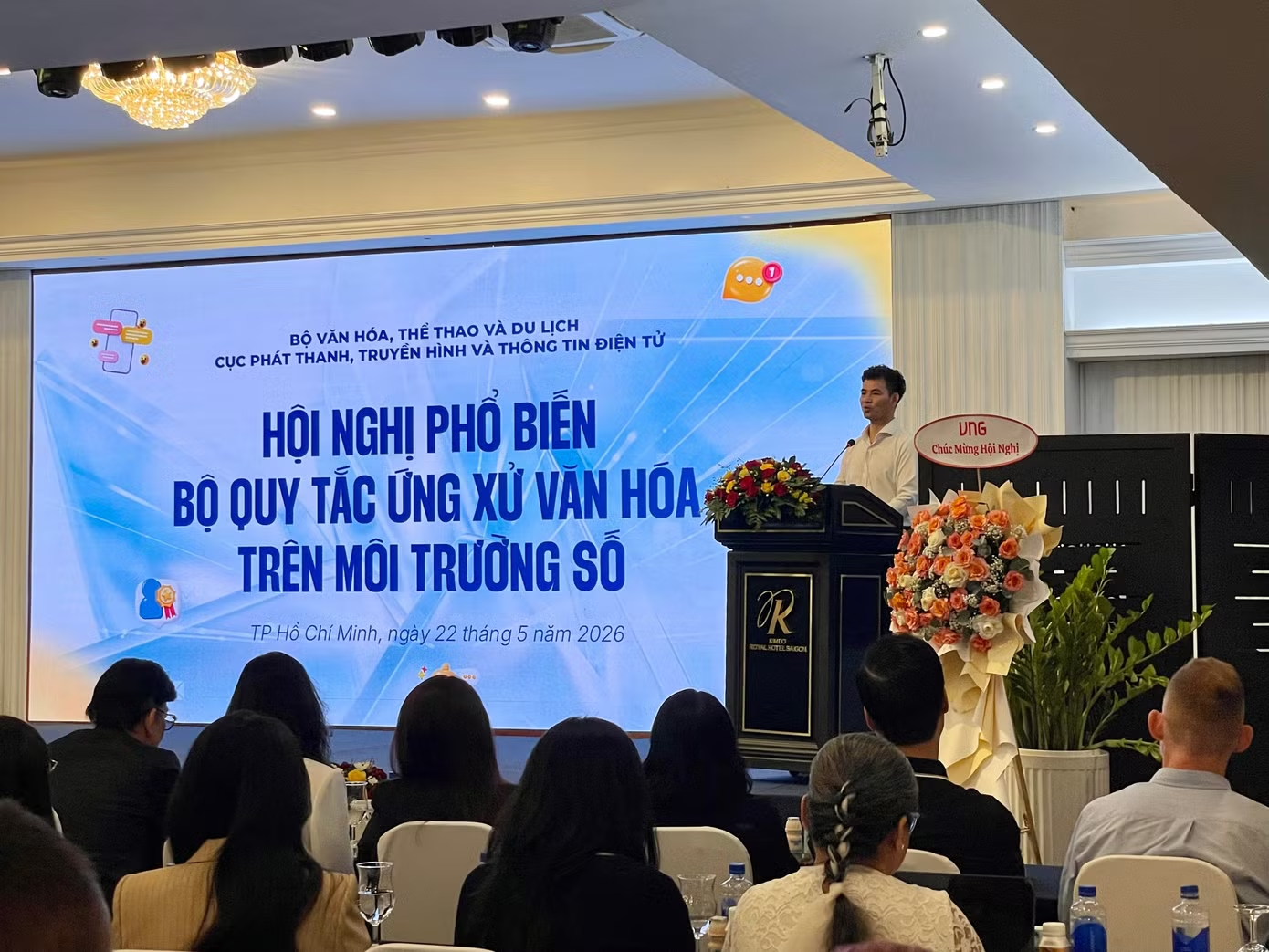
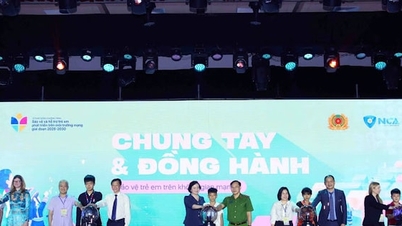
At the conference on disseminating the Code of Conduct for Digital Culture, People's Artist Nguyen Xuan Bac also emphasized that brands need a "framework" to evaluate media partners. According to him, no one wants to spend a large amount of money on a campaign only to face scandals or unfavorable information related to their representative.
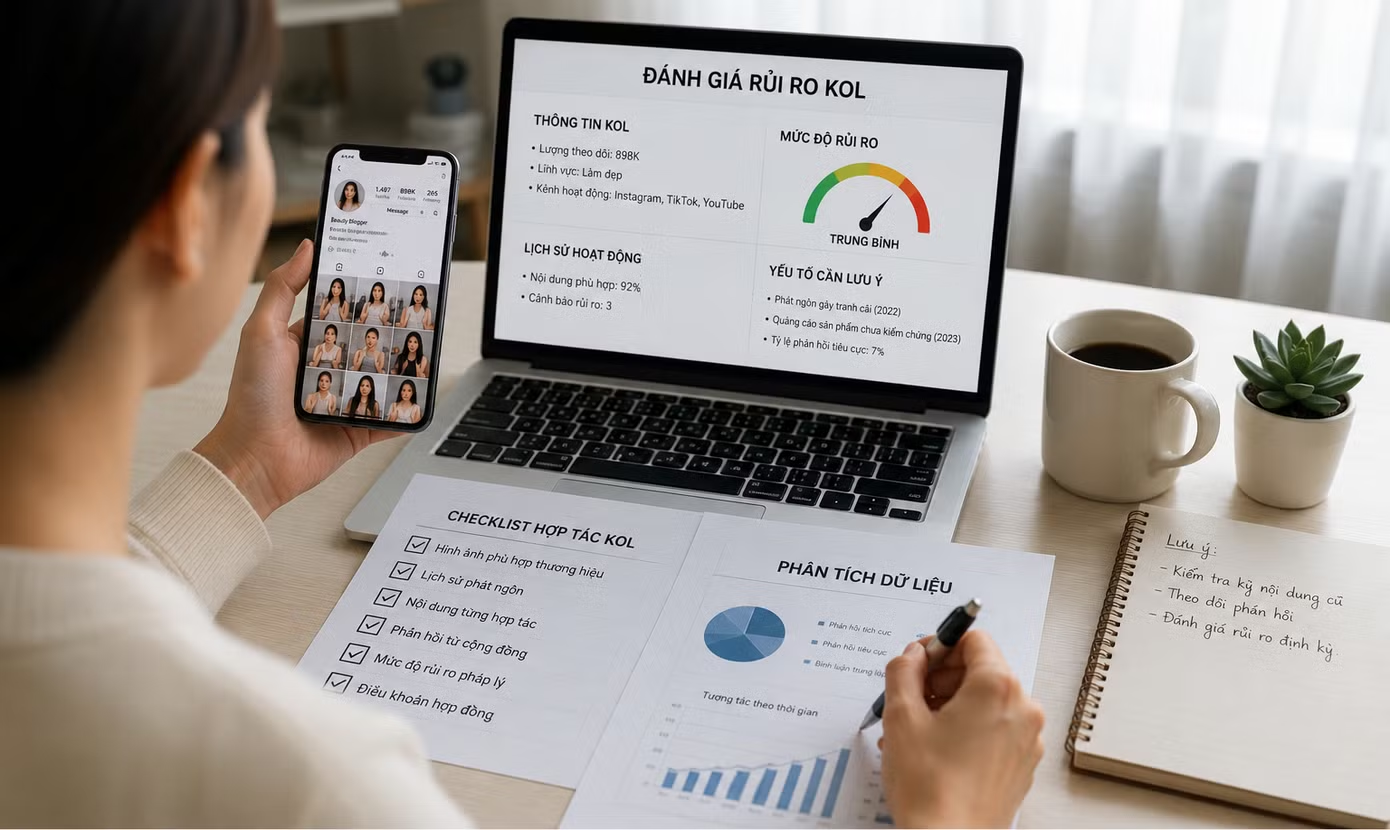
Many experts believe that the Ministry of Culture, Sports and Tourism's issuance of the Code of Conduct for Digital Culture is a significant boost, pushing the content creation profession towards professionalization. Previously, many viewed digital content creation as a personal activity, where people could say whatever they wanted. But now, creators are directly involved in the advertising, sales, and social influence chains. An individual with millions of followers essentially possesses media influence equivalent to a small spokesperson.
Currently, at many advertising companies, the process of reviewing influencer profiles is almost like a recruitment process. Nguyen Hoai Nam revealed that large brands often review three years of social media content before signing a contract with a KOL. “There are some very popular individuals, but the legal team assesses the risk as too high. We have to look at comments, how they respond to anti-fans, old livestream content, and any previous accusations of misleading advertising,” Nam said.
The era of "saying whatever you want" is over.
One of the most noticeable changes in recent years is the public's attitude towards scandals. While in the past many internet sensations could become famous through shocking statements, now the pressure to boycott them is much "faster and more dangerous."
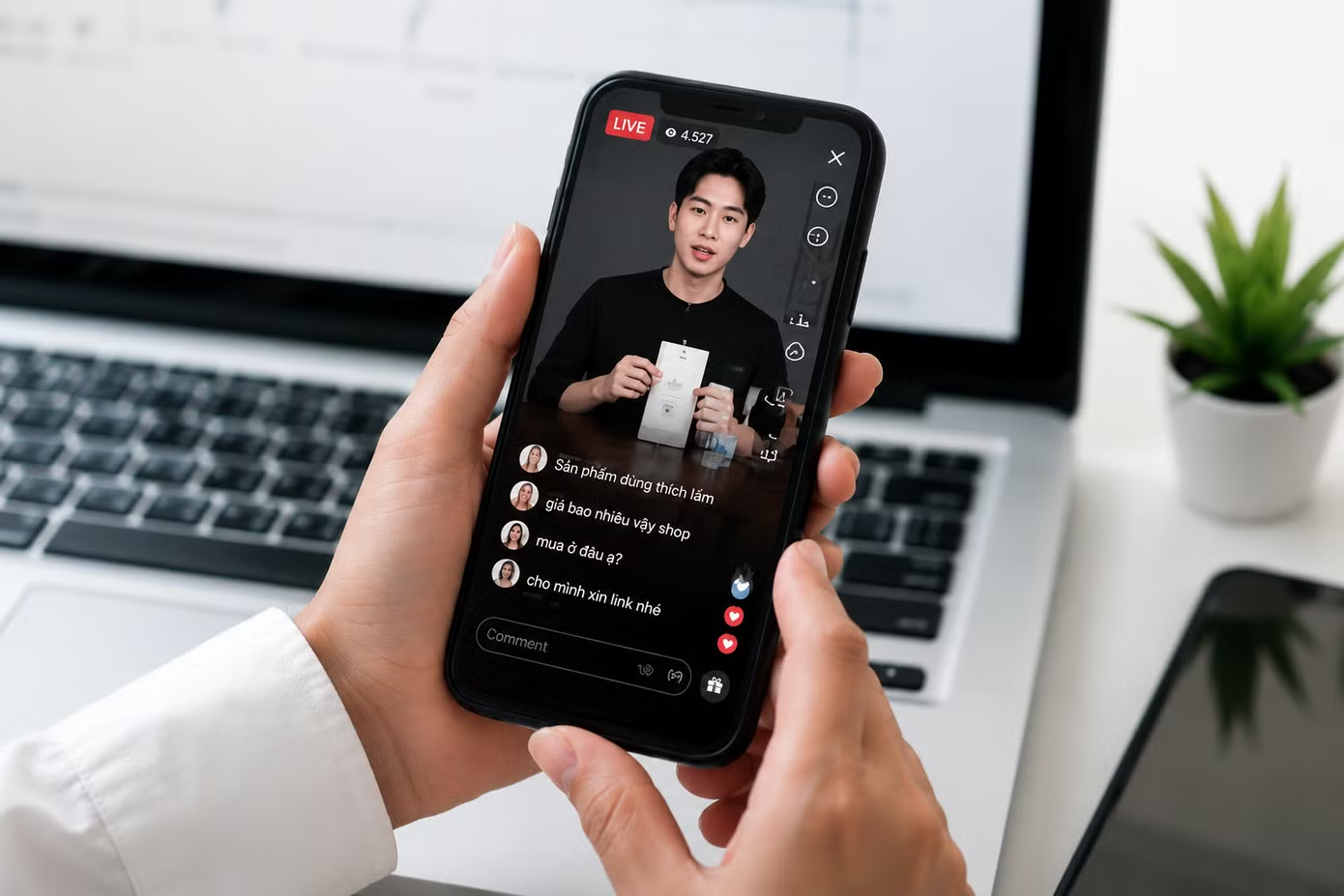
Within hours of an offensive livestream, hashtags calling for the cancellation of collaborations can appear all over TikTok, Facebook, and Instagram. Digital data makes scandals no longer as easily buried and covered up as they were in the old days.
According to Dr. Le Quynh Trang, a specialist in digital culture, the influencer profession is facing a double impact from both algorithms and market mechanisms. “Digital platforms used to heavily reward controversial content because it generated high engagement. But large brands need a safe environment to promote their products. This puts influencers in a contradictory situation; they want to become famous quickly but also need to maintain a stable image to earn money in the long term,” she analyzed.
According to Ms. Trang, this is why codes of conduct are starting to receive more attention than before. “They are not only ethical but also reflect the operational requirements of the digital content economy . A content creator today is more like a worker in the media industry than a freelance artist,” Ms. Trang said.
A quick survey conducted by reporters with a few dozen students doing affiliate marketing on TikTok in Hanoi revealed that most are well aware of the importance of keeping their profiles clean. Many avoid discussing politics, refrain from using extremist language, and are more cautious when accepting advertisements.
Nguyen Minh Anh, a third-year student in Cau Giay, once turned down a weight-loss campaign for fear of damaging her image in the long run. "I've noticed that netizens dig up everything very quickly these days. A single inaccurate video can cost you followers and even future collaboration opportunities," Minh Anh said.
However, the creation of a digital ethical resume has also generated much debate. Many content creators worry that the line between cultural regulation and the pressure to control public opinion will become increasingly blurred.
TikToker Lan Huong Chibli, who has over 500,000 followers in Ho Chi Minh City, believes that the scariest thing right now isn't the regulatory authorities, but the pressure of online mob mentality. "Sometimes, just a clip taken out of context is enough for people to jump to conclusions. Many brands are afraid of the risks and cancel collaborations very quickly, even before they know the truth," Huong shared.
Experts also argue that if all creative activities are judged solely on the criterion of "absolute safety," the digital content environment could become overly cautious and lack individuality.
Source: https://tienphong.vn/kol-gio-phai-song-bang-ho-so-sach-post1846824.tpo



![[Photo] Admire the coral "masterpiece" amidst the million-year-old heritage of Dak Lak province.](https://vphoto.vietnam.vn/thumb/1200x675/vietnam/resource/IMAGE/2026/05/30/1780107638639_y25-jpg.webp)




































































Comment (0)