

The agricultural value chain refers to agricultural products produced through a process that connects multiple stages and steps of production. The agricultural value chain is a crucial factor in increasing yield, quality, competitiveness, and value of agricultural products, thereby promoting sustainable agricultural development and improving farmers' livelihoods.
Linking production along the value chain helps to form concentrated production areas that uniformly apply mechanization to all stages of production.
Agricultural production linkages along the value chain have been established and developed in the province. This model ensures that economic entities participating in the value chain share benefits and responsibilities, regulate market supply and demand, and enable product traceability.
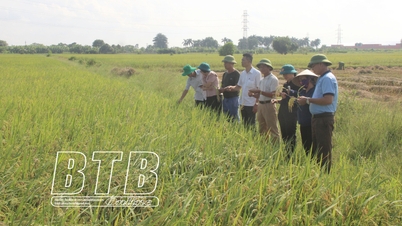
Having accumulated over 10 hectares of rice paddies, for many years, through the cooperative, Mr. Nguyen Duy Tam, from An My commune (Quynh Phu district), has participated in a rice seed production linkage with ThaiBinh Seed Group Joint Stock Company. Mr. Tam said: "By linking with the enterprise, we get to use high-quality rice seeds and receive guidance on cultivation processes, resulting in high and stable yields. In addition, the enterprise buys our rice at a price 1.3 times higher than the market price, so the economic efficiency is higher, especially when planting on a large scale."
Minh Hoa H4G Co., Ltd., located in Duyen Hai commune (Hung Ha district), is a business that owns a complete, closed-loop supply chain encompassing production, processing, and consumption. Currently, the company has a production capacity of 3-4 quintals of tilapia per day, supplying 1-1.5 quintals of boneless tilapia to the market.
Mr. Nguyen Van Hinh, Director of the company, said: "Raising snakehead fish is a highly profitable endeavor if there is a stable market, especially processed products made from snakehead fish, which yield 10-15% higher profits compared to selling commercial fish. Therefore, in 2019, I established the business, expanding cooperation with fish farmers, providing fingerlings, technical guidance, and purchasing products from them. This linkage helps us control the quality of raw materials while ensuring stable sales for farmers, preventing them from being exploited by small traders. By strictly controlling the farming and processing processes to ensure food safety, my products are currently undergoing the necessary documentation to obtain certification for a safe food supply chain, aiming for distribution to major supermarket chains. Recently, our boneless snakehead fish product received a 3-star OCOP certification at the district level."
Minh Hoa H4G Co., Ltd. is currently collaborating with numerous farming households throughout the province. This collaboration not only creates jobs and stable income for direct laborers but also helps farmers secure stable output, invest confidently in production, and transition from traditional methods to safe production practices, aiming towards a concentrated, safe, and commercial agricultural production system.
Implementing the province's agricultural restructuring plan, the agricultural sector and localities have focused on investing in production development aimed at improving productivity, quality, and efficiency, linked with restructuring crops and livestock; developing linkage models and building large-scale, high-tech, concentrated production areas along the value chain. Agricultural production has undergone a strong shift towards commodity production, with the internal structure of the agricultural sector shifting towards increasing the proportion of livestock farming and decreasing the proportion of crop cultivation. The crop structure has strongly shifted towards high-economic-value crops with limited pest and disease control. Livestock farming has significantly decreased from small-scale, household-based operations to concentrated, enterprise-scale, farm-based, and semi-industrial models. Aquaculture has diversified into various forms (tidal flats, ponds, lagoons, semi-floating ponds, cage farming, etc.), moving towards marine farming. The cooperative economy has seen positive development with the establishment of new cooperatives participating in the agricultural commodity production chain.

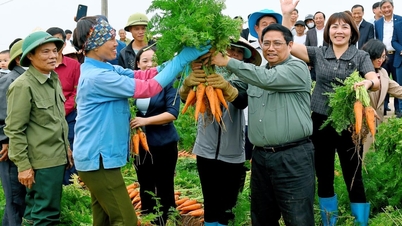
The main carrot growing area is in Diep Nong commune (Hung Ha district).
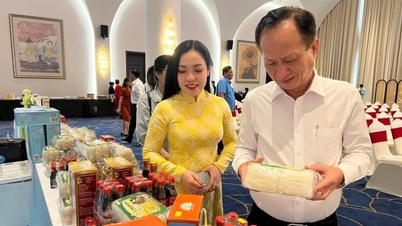
To date, the province has 250 cooperatives participating in production and consumption linkages with 20 businesses inside and outside the province. The total area of crop production under linked production and consumption contracts reaches over 10,000 hectares per year, mainly focusing on the production of rice seeds and commercial rice. In livestock farming, there are 5 businesses linked with 33 pig and poultry farm owners; many cooperatives and livestock production groups are operating effectively. Many chains have invested in relatively synchronized technical infrastructure, applying high technology associated with the development of OCOP products, thus establishing brand and product quality. The province has 28 cooperatives that have built 34 brands with labels and packaging, of which 16 products have been recognized by the Provincial People's Committee as 3-star and 4-star standard OCOP products; 18 products have been evaluated and classified by the provincial council from 3-star to 4-star and are completing dossiers for submission to the Provincial People's Committee for recognition. Businesses and cooperatives that control the supply chain play a key role in selecting input suppliers, supervising production techniques, purchasing, processing, branding, promoting, introducing, and selling products. Partners participating in the chain fulfill their linkage contracts and conduct production and business activities in accordance with the instructions and requirements of the businesses and cooperatives.
According to Ms. Tran Thi Lien Hoa, Deputy Head of the Sub-Department of Quality Management of Agricultural, Forestry and Fishery Products: Production linkages along the value chain bring value to four parties: farmers don't have to worry about what crops to grow, what livestock to raise, how to produce, where to sell, or how to sell their products, because businesses and cooperatives, as owners of the chain, play the role of selecting and supplying input materials, supervising production techniques, purchasing, processing, building brands, promoting, introducing, and selling products; cooperatives lead the linkage to organize concentrated and synchronized production, thereby improving efficiency in operations and management; businesses can proactively manage raw material areas, thereby proactively developing consumption markets; and for localities, production linkages along the chain help form concentrated production areas and develop advantageous, key products. Production linkages along the value chain have contributed to promoting the development of key agricultural products in the province towards commercialization, increasing their value, avoiding the situation of bumper harvests leading to price drops, contributing to raising people's income, developing the local economy, and building new rural areas.

Minh Hoa H4G Co., Ltd., located in Duyen Hai commune (Hung Ha district), is a company that owns a complete, closed-loop supply chain.
(to be continued)
Ngan Huyen
Source






















































Comment (0)