

Since January 2025, news that China requires durian shipments exported to its market to have certificates testing for Yellow O (a chemical with a high risk of causing cancer) and Cadmium (a heavy metal) has led to many durian export shipments being returned.
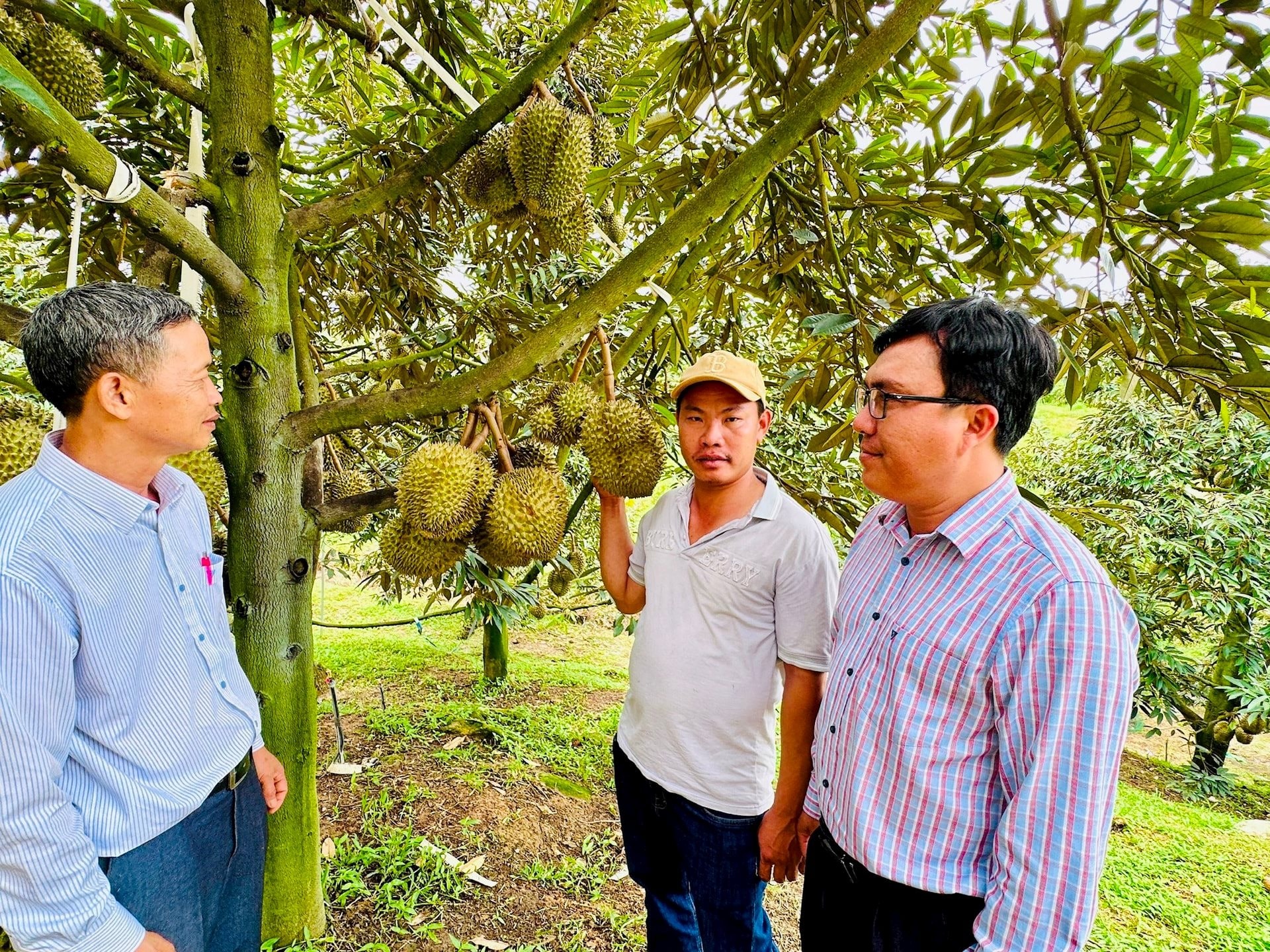
Perhaps this is why, despite it being the off-season and there is a shortage of durian, prices in orchards have dropped by more than 60% compared to the same period last year. Although Binh Thuan is not a major durian-growing region in the country, in recent years, durian cultivation has expanded to three growing areas: Ham Thuan Bac, Tanh Linh, and Duc Linh, with a total area of over 3,000 hectares, helping farmers effectively switch crops. Of these, Ham Thuan Bac district alone currently has nearly 2,000 hectares, with one of the largest growing areas being Da Mi commune, with an average yield of 15-30 tons/ha and a harvest of approximately 50,000 tons per year.
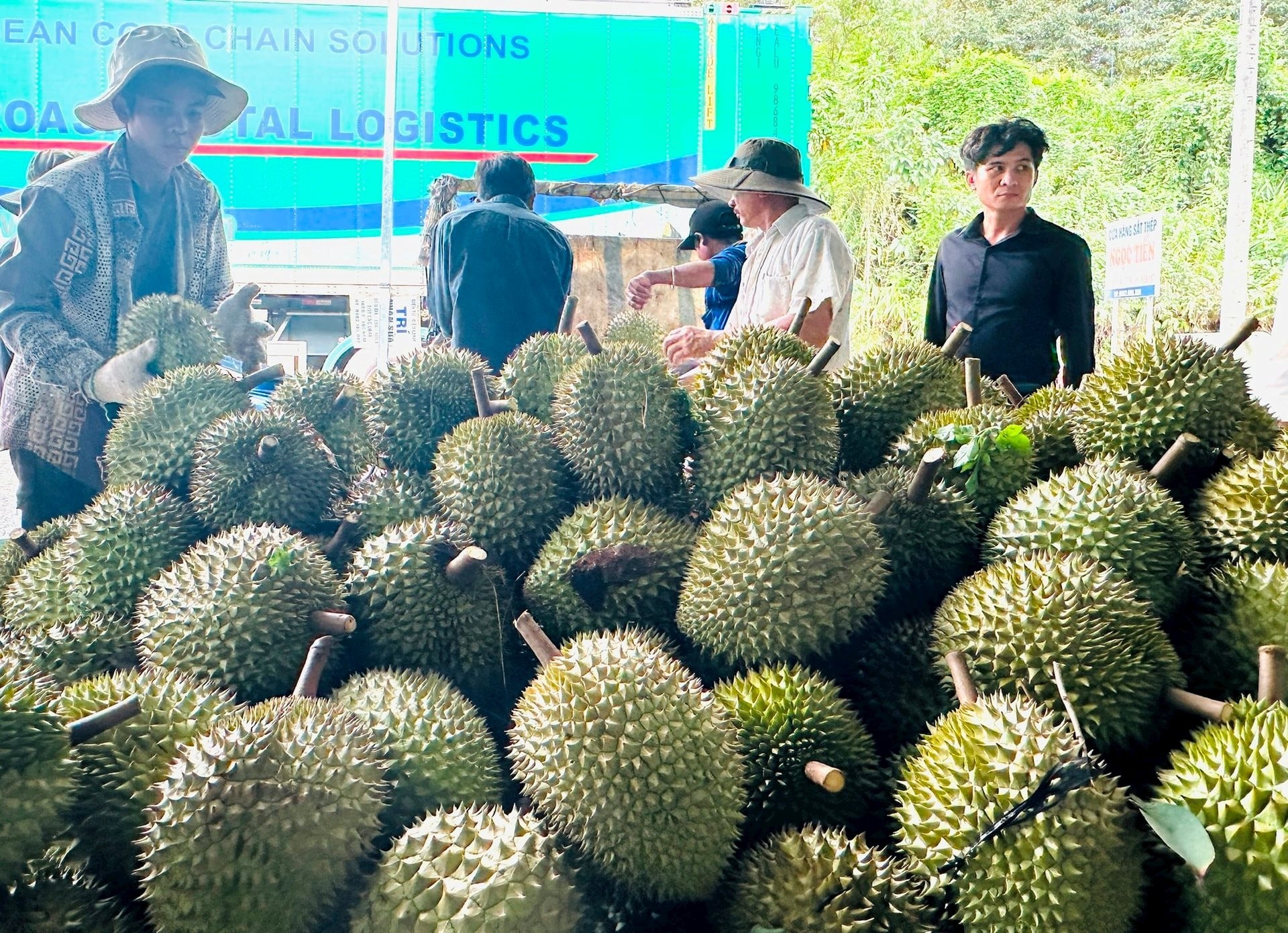
To ensure that durian from the province can gain a foothold and compete with durian produced in countries like Thailand and Malaysia, farmers are gradually producing durian according to VietGAP standards, ensuring safety, in order to more easily enter demanding markets. However, durian exports from Vietnam in general and Binh Thuan in particular are going through the most difficult period since China allowed official exports.
Auramine O, chemically known as Diarylmethane, is a coloring agent used in industry. It is banned from use in animal husbandry and is prohibited from being used in the production and processing of agricultural products or as a food additive. Auramine O is a toxic substance, classified as a Group 3 carcinogen by the International Agency for Cancer Research (IARC), meaning it has a high potential to cause cancer. It ranks 5th among the 116 leading carcinogens worldwide.
In the context of increasingly demanding export markets regarding food safety and environmental standards, receiving warnings from other countries not only directly impacts the reputation and brand of agricultural products but also affects export revenue. The story of the yellow card warning regarding illegal, unreported, and unregulated (IUU) fishing is a prime example. Since receiving the EU's "yellow card," the domestic seafood export industry has faced numerous difficulties over the past seven years. During the "yellow card" period, 100% of seafood containers exported to the EU were held up for inspection of their origin, resulting in wasted time and increased export costs. Therefore, in light of China's warning requiring a certificate of yellow O content testing for durian, Vietnam needs to comply with relevant laws, regulations, and standards to avoid unnecessary losses. It's not just durian; many other agricultural products are also experiencing a decline in export volumes due to increasingly stringent regulations in many markets.
Reportedly, the quality inspection process for durian transport vehicles takes 7-9 days. In fact, many vehicles that had already completed export procedures to China were ordered to return to Vietnam by Chinese authorities because they did not meet the quality inspection standards of the Chinese side.
Therefore, to facilitate the production, trading, and export of goods (especially durian) through border gates for businesses in Binh Thuan province, the relevant authorities have informed durian exporting businesses in the province about China's increased quality inspection of durian. This aims to prevent risks and losses, and to enable them to proactively monitor and update themselves on new changes in China's regulations on agricultural product quality standards.
Recently, Deputy Prime Minister Tran Hong Ha requested relevant ministries and agencies to immediately implement measures to ensure compliance with export market standards, in order to protect the reputation and position of Vietnamese agricultural products in the international arena. Accordingly, exporters need to ensure that products do not exceed the permitted levels of chemical residues and meet the strict requirements of Nordic importers. This includes using EU-approved pesticides; testing for chemical residues at internationally accredited laboratories before export; and ensuring phytosanitary certification is a mandatory requirement for products to enter the EU market…
According to the latest information, by the end of February, Vietnam had 6 testing centers for Yellow O in durian that were recognized by China. Each testing center has the capacity to test about 100 samples per day, still meeting the needs of people and durian export businesses. However, if urgent solutions are not implemented to control cadmium residue and Yellow O to increase exports, durian prices risk a collapse during the main harvest season from April to September.
The story of the durian shows that farmers need to change their production mindset and adhere to clean, closed-loop, and safe agricultural practices. In addition, relevant authorities need to tighten the management of chemicals and antibiotics in production and cultivation, and the testing process for domestic agricultural products must be more rigorous so that Vietnamese agricultural products can gradually gain credibility in the global market.
Authorities advise that without a certificate verifying the quality of durian (Yellow O), businesses are not allowed to export durian to China. If they intentionally export without complying with regulations, the risk of further warnings from China is very high. This could lead to China temporarily suspending durian imports from Vietnam, causing significant losses to the entire industry and damaging the reputation of Vietnamese agricultural products, not just a few businesses.
In 2024, Vietnamese agricultural products received 114 warnings from the EU, including 61 warnings about chemical residues, a 23-fold increase compared to 2023. In the first two months of this year alone, the EU issued 16 warnings regarding Vietnamese agricultural and food exports due to violations of food safety regulations.
Source: https://baobinhthuan.com.vn/sau-rieng-va-cau-chuyen-chu-tin-cho-nong-san-128619.html
















































































Comment (0)