

The workshop is primarily aimed at students from universities and colleges, especially those in economics , commerce, information technology, communication, and entrepreneurship, thereby contributing to preparing a young workforce capable of adapting to the digital labor market in the future.
E-commerce in the context of digital transformation: Opportunities and requirements for students.
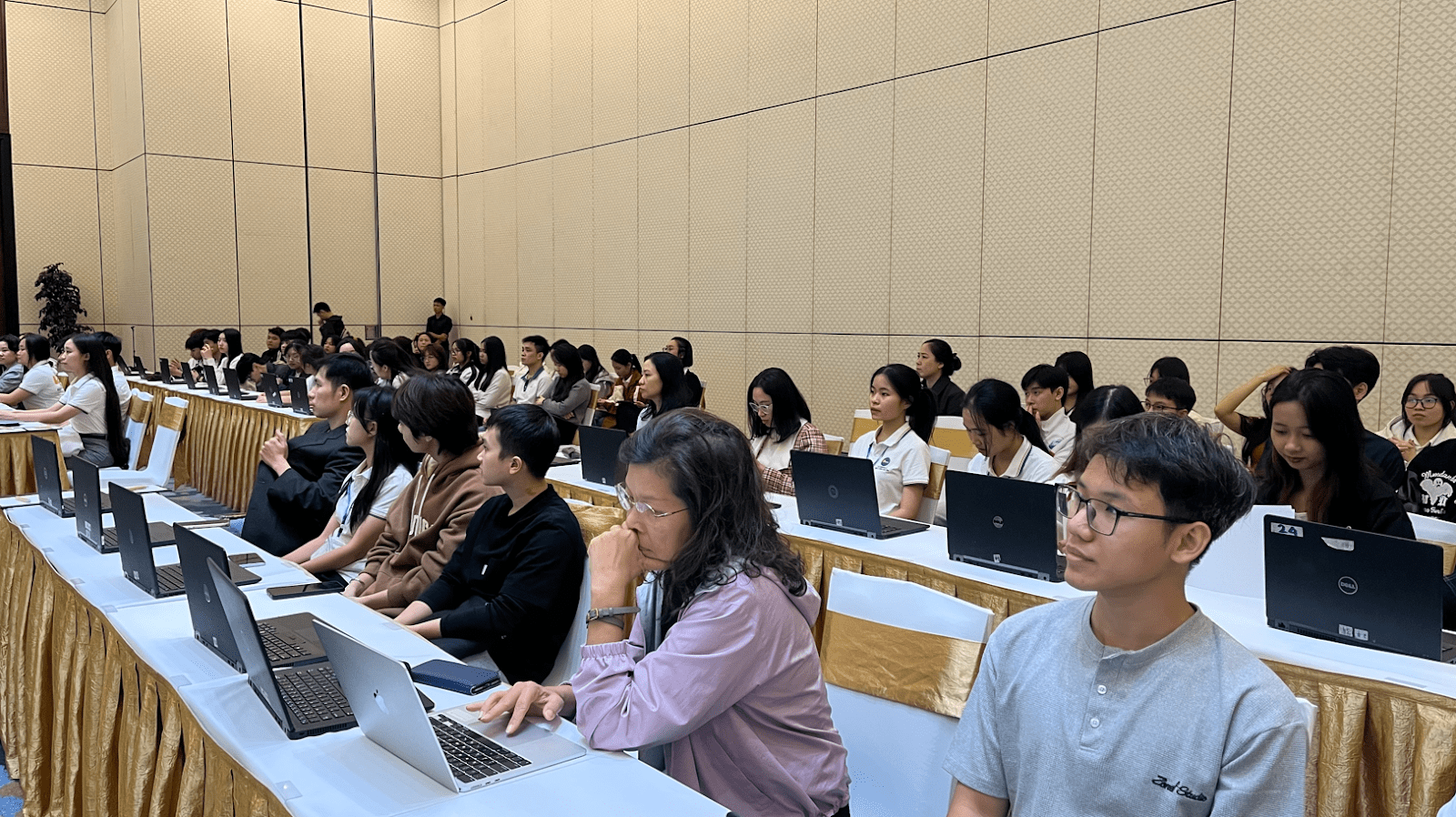
In recent years, along with the national and global trend of digital transformation, e-commerce has become a crucial component in the digital economy development strategy. Beyond its role as a sales channel, e-commerce is increasingly linked to innovative business models, changing consumer behavior, and opening up many new career opportunities for young workers. However, in practice, many students still lack systematic knowledge, practical skills, and a comprehensive understanding of how e-commerce operates in the digital business environment. In this context, organizing specialized workshops and sharing best practices is considered a necessary solution to help students quickly grasp market trends and bridge the gap between education and business needs.
At the seminar, Mr. Nguyen Huu Tuan – Director of the Center for E-commerce and Digital Technology Development (eComDX), Department of E-commerce and Digital Economy – shared an overview of the current state and development trends of e-commerce in Vietnam within the context of the global digital economy. According to Mr. Tuan, e-commerce is no longer simply seen as a supplementary sales channel, but has become a core, strategic business model, playing a key role in the digital transformation of the retail industry globally. This is also a field that opens up many job opportunities, startups, and innovation possibilities for students in the near future.
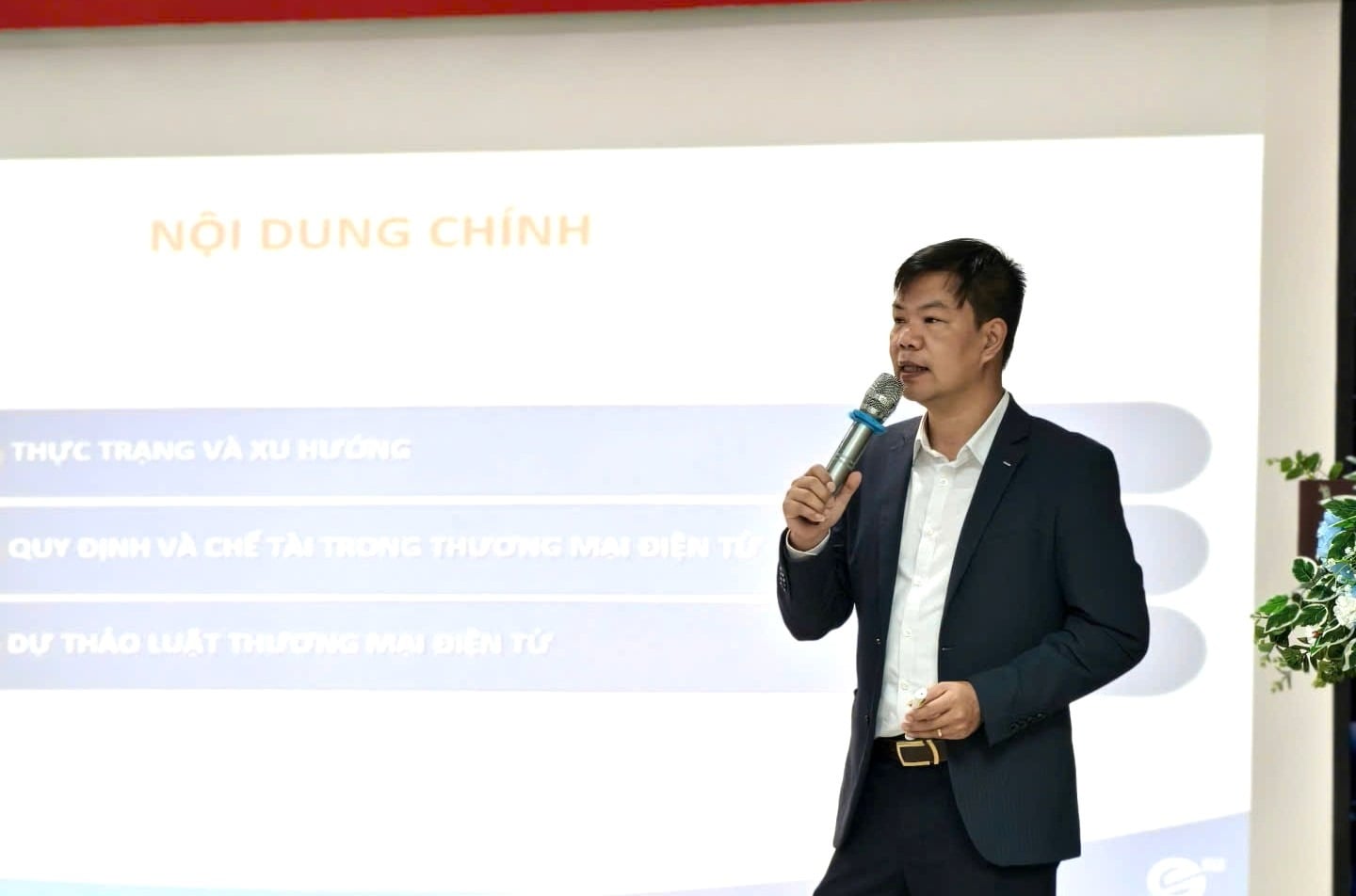
Mr. Nguyen Huu Tuan – Director of the Center for E-commerce and Digital Technology Development (eComDX), Department of E-commerce and Digital Economy
From an international perspective, Mr. Tuan stated that global e-commerce retail sales are projected to reach approximately US$6.86 trillion in 2025, with a growth rate of 8.3%. China currently accounts for about 44% of the global e-commerce retail market share, followed by the United States with approximately 16%. Notably, Southeast Asia, including Vietnam, Indonesia, and Thailand, is emerging as the fastest-growing region in the world , thanks to its young population, high internet penetration rate, and the explosion of digital platforms. These trends indicate that e-commerce will continue to be a highly promising sector, requiring a young workforce with digital mindset, creativity, and the ability to adapt quickly.
Analyzing the trends for 2024–2025 in more detail, Mr. Nguyen Huu Tuan believes that e-commerce is witnessing a strong increase in mobile shopping, with M-commerce transactions accounting for a large proportion of total transactions. Along with this is the increasingly widespread application of artificial intelligence in product search, recommendation, and personalization of the shopping experience. Forms such as livestreaming sales, social commerce, cross-border e-commerce, and omnichannel retail models are developing rapidly, fundamentally changing how consumers access and make purchasing decisions. According to Mr. Tuan, these are the trends that students need to grasp early to proactively plan their studies, careers, and entrepreneurship in the future.
Regarding Vietnam, Mr. Tuan stated that the e-commerce market size is projected to reach approximately US$25 billion in 2024, with a growth rate exceeding 25%, placing Vietnam among the top 10 fastest-growing e-commerce countries globally. It is expected that by 2025, the market size will surpass US$30 billion, accounting for approximately 10% of the total retail sales of goods and consumer services nationwide. Average per capita e-commerce spending is projected to reach around US$400 per year, with over 55% of the population participating in online shopping. These figures demonstrate a significant demand for e-commerce human resources in the coming years, while also creating numerous job opportunities for students even while still in school.
In this context, Mr. Nguyen Huu Tuan also shared many new online business models and trends that are emerging and developing strongly in Vietnam, such as the sharing economy, online tourism, dropshipping, and direct sales from businesses to consumers. In particular, the trend of young consumers, especially Generation Z, who tend to access entertainment content before making purchasing decisions, has strongly promoted forms such as livestreaming sales, interactive shopping videos, and gamification. According to Mr. Tuan, this is a huge advantage for students if they know how to utilize their creative thinking, content creation abilities, and digital skills to participate in the e-commerce field.
Besides analyzing market trends, Mr. Nguyen Huu Tuan also addressed legal issues in his presentation. He stated that the Law on E-commerce, officially passed by the National Assembly on December 10th, has created an important legal framework for the development of e-commerce in the coming period. Understanding new legal regulations, especially the responsibilities of sellers, platforms, and other entities involved in e-commerce, is essential not only for businesses but also for students – the future workforce of the digital economy. According to Mr. Tuan, early access to legal knowledge will help students develop a sustainable and legally sound business mindset from the moment they enter the digital environment.
AI applications in e-commerce and career guidance for students.
Within the framework of the Workshop, Mr. Cao Qui Long – lecturer at the Center for E-commerce and Digital Technology Development (eComDX), Department of E-commerce and Digital Economy, Ministry of Industry and Trade – presented content related to the application of digital technology and artificial intelligence (AI) in e-commerce, including an overview of AI, applications of AI to support effective business on e-commerce platforms (such as Shopee), and the necessary skills to operate online stores, plan, and implement content using AI.
Mr. Long affirmed that Artificial Intelligence (AI) is a groundbreaking technological field that is reshaping the future. The main positive aspects of AI are work automation (reducing manual time), saving time and costs thanks to chatbots that provide 24/7 customer support, and supporting quick and accurate decision-making due to its ability to process data thousands of times faster than humans. In particular, in e-commerce, AI plays a crucial role in digital transformation through personalizing the customer experience (based on shopping behavior and search history), optimizing pricing and promotions, and creating automated content (product images, descriptions, titles, introductory videos).
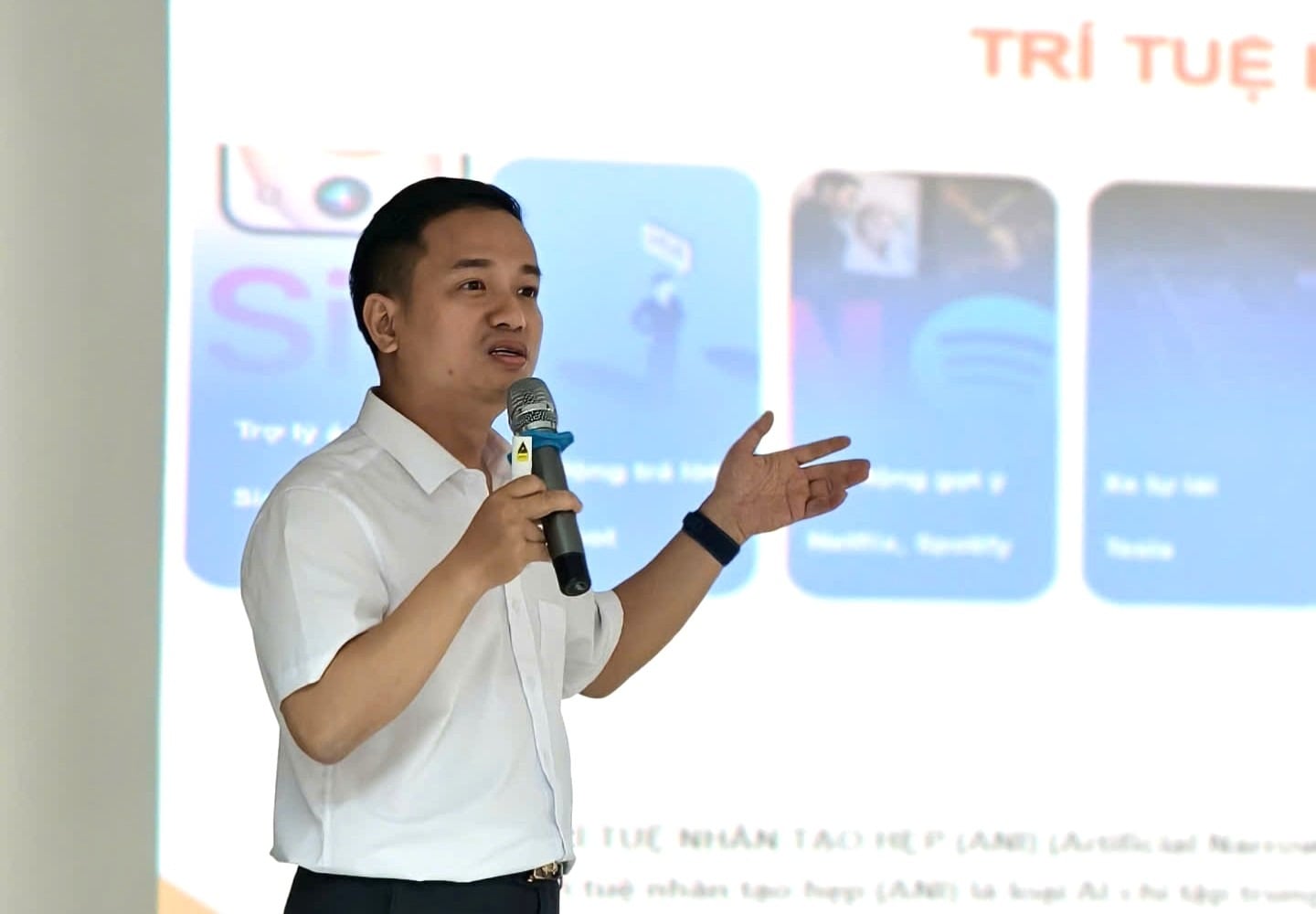
Mr. Cao Qui Long – Lecturer at the Center for E-commerce and Digital Technology Development (eComDX), Department of E-commerce and Digital Economy, Ministry of Industry and Trade.
To fully exploit the potential of AI, Mr. Long emphasized the importance of using prompts effectively, considering prompts as "a crucial bridge between humans and AI." An effective prompt must include all core components such as: Context (providing clear roles and objectives), Specific tasks, Style/Tone, Output format, and Specific constraints (such as length, quantity).
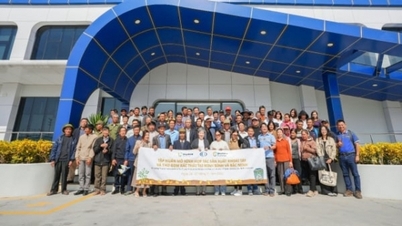
At the workshop, participating students had the opportunity to access practical knowledge, update themselves on new market trends, and directly exchange ideas with experts on academic, career, and entrepreneurial orientation in the fields of e-commerce and the digital economy. The workshop is expected to contribute to raising awareness, inspiring a spirit of learning and creativity, and preparing students with the necessary knowledge to confidently participate in the labor market amidst the ongoing digital transformation.
Source: https://moit.gov.vn/tin-tuc/hoi-thao-ve-ung-dung-cac-giai-phap-va-xu-huong-moi-trong-thuong-mai-dien-tu-cho-sinh-vien.html
![[Image] Leaked images ahead of the 2025 Community Action Awards gala.](/_next/image?url=https%3A%2F%2Fvphoto.vietnam.vn%2Fthumb%2F1200x675%2Fvietnam%2Fresource%2FIMAGE%2F2025%2F12%2F16%2F1765882828720_ndo_br_thiet-ke-chua-co-ten-45-png.webp&w=3840&q=75)
![[Live] 2025 Community Action Awards Gala](/_next/image?url=https%3A%2F%2Fvphoto.vietnam.vn%2Fthumb%2F1200x675%2Fvietnam%2Fresource%2FIMAGE%2F2025%2F12%2F16%2F1765899631650_ndo_tr_z7334013144784-9f9fe10a6d63584c85aff40f2957c250-jpg.webp&w=3840&q=75)


![[Photo] Prime Minister Pham Minh Chinh receives Lao Minister of Education and Sports Thongsalith Mangnormek](/_next/image?url=https%3A%2F%2Fvphoto.vietnam.vn%2Fthumb%2F1200x675%2Fvietnam%2Fresource%2FIMAGE%2F2025%2F12%2F16%2F1765876834721_dsc-7519-jpg.webp&w=3840&q=75)
![[Photo] Prime Minister Pham Minh Chinh receives the Governor of Tochigi Province (Japan)](/_next/image?url=https%3A%2F%2Fvphoto.vietnam.vn%2Fthumb%2F1200x675%2Fvietnam%2Fresource%2FIMAGE%2F2025%2F12%2F16%2F1765892133176_dsc-8082-6425-jpg.webp&w=3840&q=75)














































![[Photo] Prime Minister Pham Minh Chinh attends the Vietnam Economic Forum 2025](https://vphoto.vietnam.vn/thumb/402x226/vietnam/resource/IMAGE/2025/12/16/1765893035503_ndo_br_dsc-8043-jpg.webp)























Comment (0)