
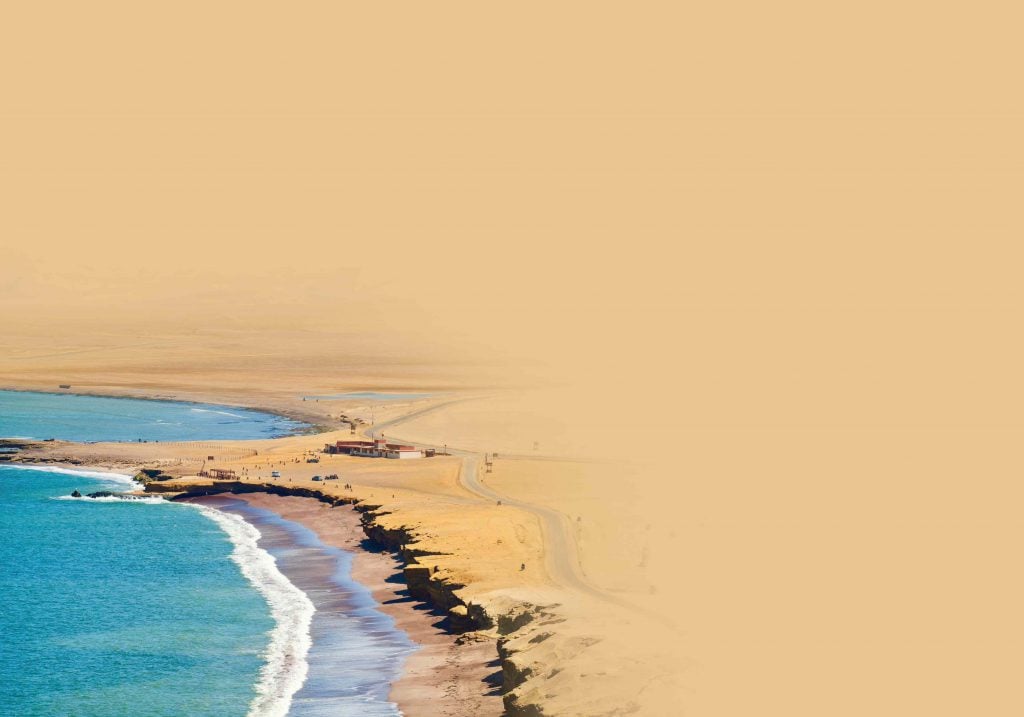
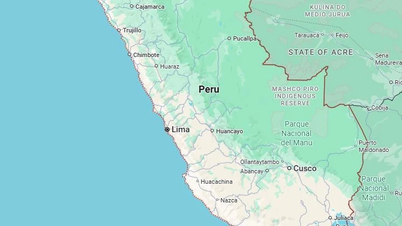
Along with China, India, Mesopotamia, Egypt, and Central America, Peru is recognized as one of the six cradles of world civilization. The South American civilization of the Andes Mountains is believed to have emerged around 5000 years ago. Peru today still boasts many ancient structures and sites containing countless mysteries that remain unsolved. Peru also has fascinating natural landscapes, many unique climate zones, and an extremely rich ecosystem. Of the 32 climate zones in the world, Peru has 27! It has the sea, the Andes Mountains, and the Amazon rainforest. Even the capital city of Lima is remarkably unique, having gone 600 years without rain! Over 60% of the world's plant life originates from Peru! Many plants in Vietnam from the early 20th century, introduced by Europeans, likely originated in Peru.
The wonders of Peru
Walking into the food markets in Peru, tourists will still be dazzled by the variety of fruits and vegetables, in every color and size.
 Việt Nam•03/10/2024
Entering the food markets in Peru, whether in large cities or remote mountain villages, visitors will be overwhelmed by the sheer variety of fruits and vegetables in every color and size. Even with the same dragon fruit, passion fruit, or sapodilla, there are dozens of different varieties here, ranging in size, sourness, color, and flavor. Similarly, Peruvian chili peppers come in thirty or forty different types. As for potatoes, there are over 4000 varieties: red, yellow, green, purple, two-colored with edges, round or elongated, large or small. For example, while they're called potatoes, it would be more accurate to call them "Peruvian potatoes." Before potatoes appeared on the tables of Westerners, they were considered a precious commodity by the ancient Peruvians: used as food, medicine, and for their high nutritional value and long shelf life.
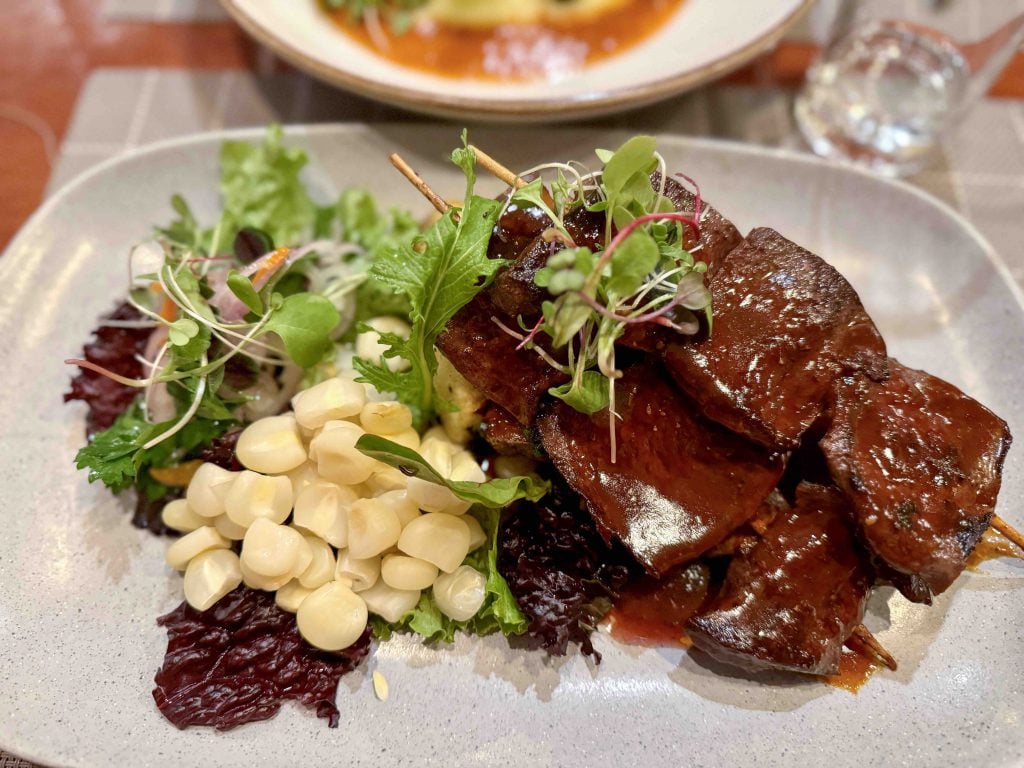

Grilled beef tongue is a traditional Peruvian specialty.
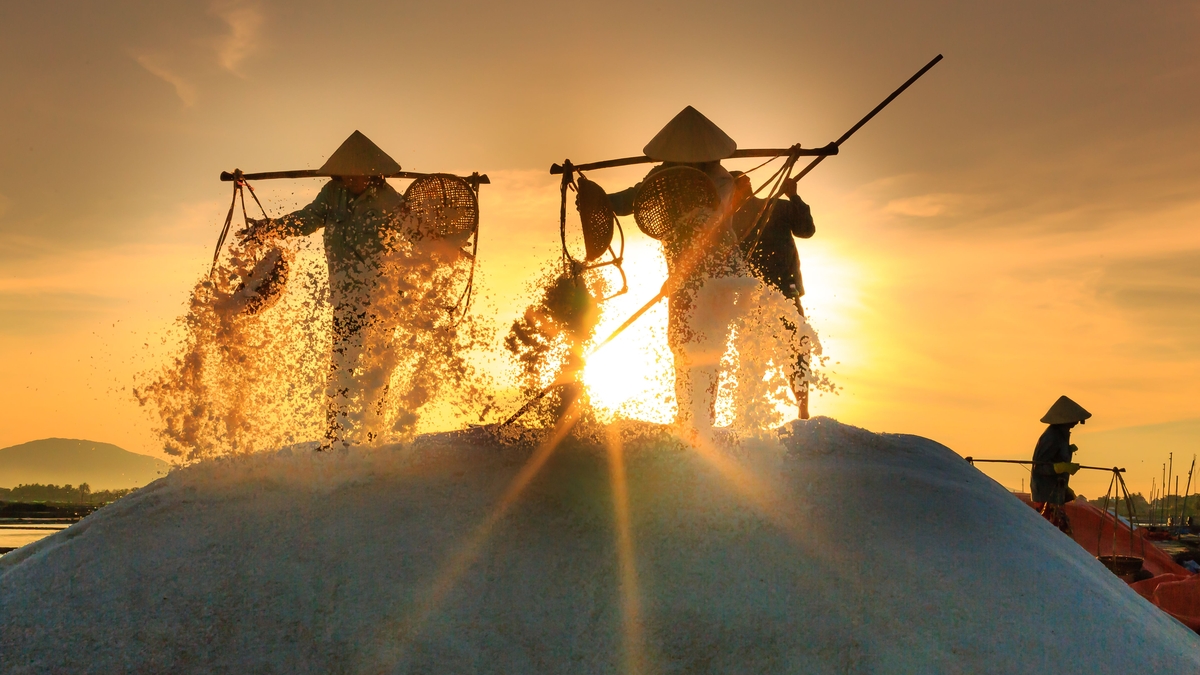
Not only does Peru boast diverse climates and rich ecosystems, but its people have also possessed highly developed agricultural techniques since ancient times. Visiting the Moray site, we were amazed by the meticulous planning of the irrigation system and admired the skill in planting and breeding hybrid crops that can withstand drought during the dry season as well as freezing temperatures during the cold season. Near Moray are the Salineras De Maras salt terraces, also showcasing incredibly precise calculations for extracting salt from the brackish springs that have existed for 13 or 14 centuries.
With its diverse flora and fauna, coupled with the influence of European cuisines introduced by the Spanish centuries ago, Japanese cuisine thanks to the waves of migration in the first half of the 20th century, and Chinese cuisine in later years, Peruvian cuisine is undeniably incredibly rich. Peru probably has the most Michelin-starred chefs in South America. Many restaurants require reservations months to a year in advance, despite the high prices, ranging from $400–$500 per meal per person. But even more surprisingly, not only the high-end restaurants, but every restaurant we tried, even in the remote mountain regions, was excellent. Most impressive was the meticulousness and aesthetic appeal in the presentation and decoration of the dishes, which blended European, Asian, and indigenous flavors of the Andes mountains.
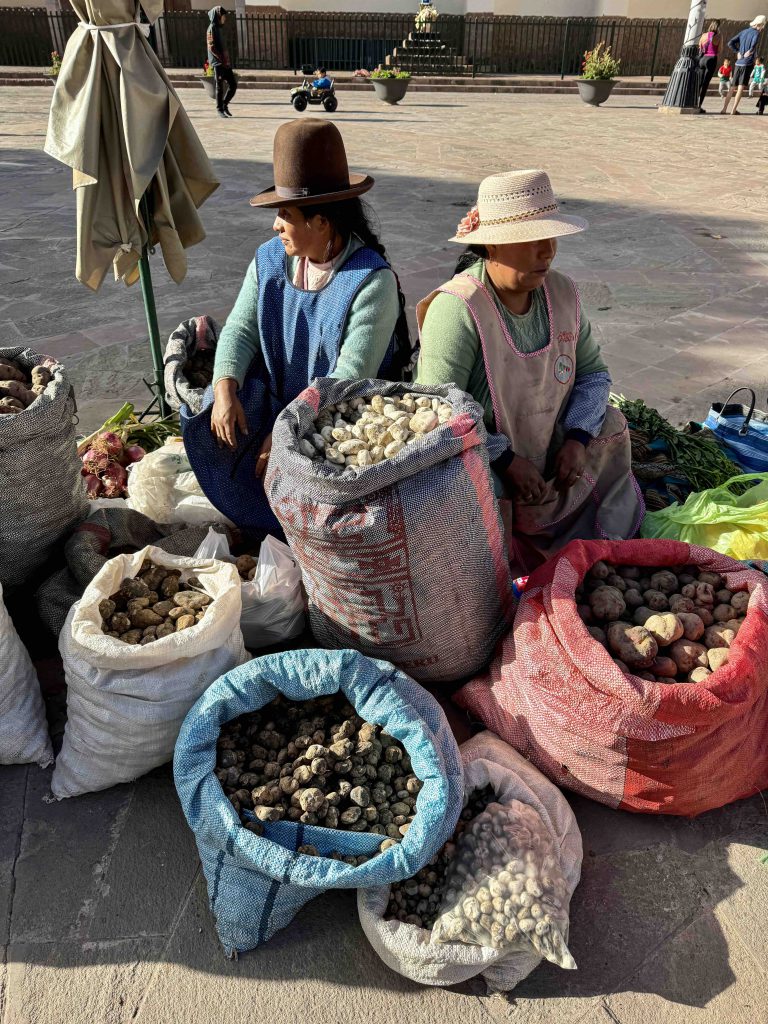
Pisaq mountain market – women sell all kinds of potatoes of all colors and sizes.

Peru also boasts a rich and ancient indigenous culture. In large cities like Lima and Cucso, markets are often separate, focusing on agricultural products from handicrafts. In contrast, in the mountains and remote villages, these two markets are usually located side-by-side, making a day-long visit a truly enjoyable experience. You'll find a wide variety of products, including scarves, hats, ponchos, and rugs woven from llama and alpaca wool, specialties of the Andes mountains. Handicrafts such as paintings, sculptures, and silver jewelry are also incredibly unique.
If you see many beautiful handicrafts in the markets, you can be sure that the museums display many unique ancient artifacts. True to its reputation as one of the six cradles of ancient civilization, Peruvian museums possess vast collections of artifacts that have existed for thousands of years. Remote, relatively expensive, and with less than ideal domestic security, Peru is not as well-known to international tourists as other famous tourist destinations like Egypt, China, and India. But the more you learn about Peru, the more surprises and delight you'll find in discovering how many ancient mysteries remain unsolved!
Source: https://heritagevietnamairlines.com/ky-thu-peru/


































![[Video] Sunset at Lap An Lagoon – Where the sun sets over the fishing nets](https://vphoto.vietnam.vn/thumb/1200x675/vietnam/resource/IMAGE/2026/05/31/1780192137701_beach-landscape-sea-water-nature-grass-745871-pxhere-com.jpeg)


























Human kindness on the highway

Vietnam's islands and seas

Comment (0)