

Interest rates for unsecured loans range from 20% to 45% per year.
A reporter from Thanh Nien newspaper contacted an employee of Vietnam Prosperity Bank Finance Company Limited (SMBC) to inquire about unsecured cash loans. The employee stated that for a loan of 90 million VND, the interest rate would be 24,000 VND per million VND per month (equivalent to 2.4% per month). For a 100 million VND loan, the monthly interest would be approximately 2.4 million VND. Over a 36-month repayment period, the average monthly payment for principal, interest, and insurance would be over 5.34 million VND. In case of early repayment, the penalty fee is 8% of the outstanding balance. All loan applications are processed through the company's app, so borrowers need to download and receive instructions on how to use it. According to the Home Credit website, interest rates start from 0.75% per month (equivalent to 9% per year) with a maximum flat rate of 33.94% per year. For example, if a customer borrows 60 million VND for 12 months, with a flat interest rate of 20.22% per year, the total amount to be repaid is over 71.97 million VND (including all fees, excluding optional insurance fees, money transfer fees, and early repayment fees).

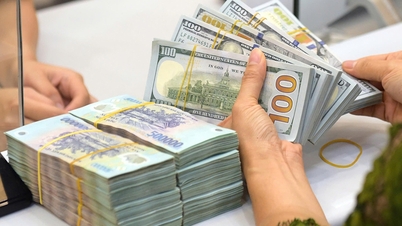
Banks are raising interest rates on consumer loans and credit cards.
Photo: Ngoc Thang
From the end of 2025 onwards, finance companies have tended to slightly increase interest rates amidst rising capital costs. Specifically, in December 2025, unsecured consumer loans for cash, car purchases, children's tuition, airline tickets, etc., had interest rates ranging from 18% to 45% per year. By March 2026, this level was adjusted upwards to approximately 20% to 45% per year.
Besides finance companies, commercial banks have also increased interest rates on consumer loans and credit cards. Specifically, for mortgage loans and car loans, interest rates range from 8-14% per year. For unsecured loans through credit cards, interest rates have increased by about 3-4% compared to last year. Customers using credit cards who fail to pay their outstanding balances on time (interest-free for 45-55 days) at banks such as Agribank, Vietcombank,ACB , Sacombank, etc., face interest rates ranging from 15-35% per year.
According to the State Bank of Vietnam (SBV), outstanding consumer loans are projected to reach approximately VND 3 trillion by the end of 2025, accounting for over 20% of the total outstanding loans in the entire economy . Specifically, outstanding consumer loans in Ho Chi Minh City and Dong Nai province are expected to reach approximately VND 1.57 trillion by the end of January 2026, representing 26.9% of total credit outstanding, a 14.6% increase compared to the same period in 2025. According to FinGroup's assessment, Vietnam's consumer credit potential remains very large. Currently, Vietnam's consumer credit volume is only slightly over 10% of GDP, significantly lower than many regional economies such as South Korea (over 40% of GDP) or Hong Kong (over 20%).
The upward trend continues.
In the draft Circular amending Circular No. 39/2016 on lending activities of credit institutions, the State Bank of Vietnam proposes increasing the limit for small loans from VND 100 million to VND 400 million, while removing the VND 100 million ceiling for loans conducted entirely online. This means the limit for unsecured loans could reach VND 400 million. Financial expert Nguyen Tri Hieu believes that if this regulation is approved, it will better meet customer needs. However, banks must also manage risks more strictly. Because if a consumer loan loses capital, the bank or finance company needs to make five new loans at a 20% interest rate to compensate for this risk. Therefore, when risk management is not good, consumer loan interest rates will increase. "Currently, banks and financial companies are facing difficulties in raising capital. This explains the increase in consumer loan interest rates from last year until now. Typically, consumer loan interest rates are reflected immediately when deposit interest rates increase," Mr. Hieu explained.
In a recent report, MB Securities (MBS) stated that despite rising savings interest rates, deposit growth remains slow. The gap between deposit and credit growth continues to push deposit interest rates higher, especially among small and medium-sized commercial banks, thus affecting the average lending interest rate across the entire industry in the first half of 2026. Continuously high credit growth compared to deposit growth during the two years of monetary easing has strained liquidity across the entire system. Interbank interest rates remain high, sometimes soaring above 17%, indicating significant liquidity pressure as deposits across the system remain quite difficult. Exchange rate pressure, coupled with high credit growth and positive developments in asset markets such as gold and stocks, has slowed down deposit mobilization from the public. This trend is expected to continue in the first six months of 2026, despite the rapid increase in deposit interest rates, which shows no signs of stopping. Banks are expected to continue raising deposit interest rates to compensate for liquidity shortages in medium- and long-term loans, as they cannot rely too heavily on the interbank market.
Regarding interest rate forecasts, MBS believes that deposit interest rates will continue to rise in the first few months of 2026. Specifically, deposit interest rates at private commercial banks may increase by 2-2.5% compared to the end of 2025, while those at state-owned commercial banks will see a more moderate increase of around 1-1.5%. The overall loan portfolio structure shows a significant increase in medium- and long-term loans compared to short-term loans. Medium- and long-term debt at the end of 2025 increased by 27.3% and 26.5% respectively compared to the beginning of the year, while short-term debt across the industry only increased by 14% compared to the beginning of the year. Therefore, MBS believes that interest rates in 2026 will be higher than in 2025 due to the impact of floating interest rates on medium- and long-term loans, meaning higher interest rates for new loans. In the first half of 2026, lending interest rates faced pressure from industry-wide credit controls and the real estate sector, but this was offset by the impact of slow deposit mobilization, causing capital costs to temporarily not react to the high deposit interest rate level. In the second half of 2026, banks will intensify deposit mobilization to compensate for a more positive liquidity situation, but at the same time, lending interest rates will gradually increase in line with the rise in deposit interest rates.
At the regular government press conference in March, Deputy Governor of the State Bank of Vietnam, Pham Thanh Ha, stated that interest rates have recently faced upward pressure due to several factors. These include the potential impact and competition from other investment channels in mobilizing capital across the entire credit institution system, leading to a tendency for deposit interest rates to increase from the end of 2025 after a period of stability. Furthermore, the fact that credit growth is higher than deposit growth indicates high demand for credit to meet the capital needs of the economy, especially in the context of achieving double-digit growth targets. The State Bank of Vietnam will continue to closely monitor developments in the global and domestic economies to proactively and flexibly manage monetary policy, coordinating closely with a reasonable and focused expansionary fiscal policy and other macroeconomic policies to steadfastly prioritize inflation control, contributing to maintaining macroeconomic stability and supporting sustainable economic growth.
Source: https://thanhnien.vn/lai-vay-tieu-dung-len-cao-185260405211739584.htm
































































































Comment (0)