

Basic science is the foundation of strategic technology.
According to Professor Tran Tuan Anh, Vice President of the Vietnam Academy of Science and Technology, to become a developed country with a high income, Vietnam cannot simply stop at technology outsourcing but must have the capacity to create new knowledge and core technologies. In that process, basic scientific research plays a fundamental role, the starting point of that capacity.
In national science and technology development strategies, the Party and State have always identified basic science as the foundation of science and technology and innovation. This spirit is further emphasized in Resolution 57-NQ/TW of the Politburo on breakthroughs in national science and technology development, innovation, and digital transformation, with the view that investing in basic scientific research is a long-term investment in sustainable development.
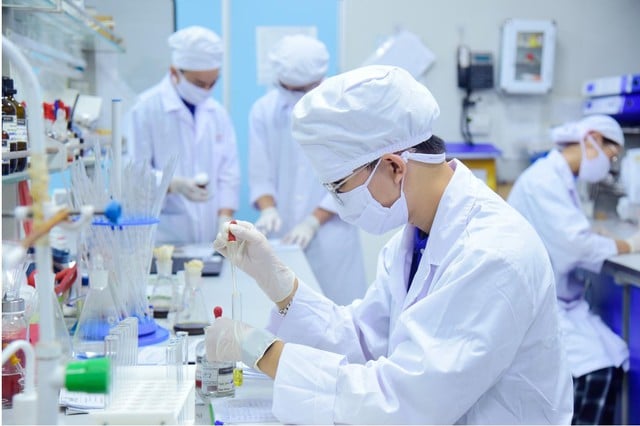
Science and technology are not only considered a driving force for economic development but also the foundation of national self-reliance.
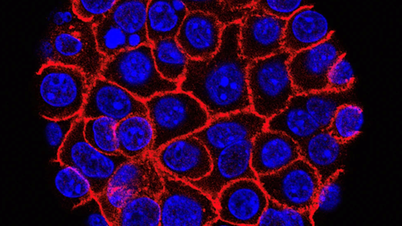
First and foremost, basic scientific research generates new knowledge, forming the basis for the development of modern technologies. Basic scientific research is also the source of innovation and future technologies.
Many initial results from basic scientific research may not be immediately applicable, but over time they become the foundation for important technological industries, directly contributing to socio-economic development as well as national defense and security.
Furthermore, basic scientific research contributes to enhancing the nation's self-reliance. By mastering knowledge and new research directions, Vietnam will gradually develop endogenous economic capacity through science and technology, reducing dependence on imported technology. This also provides an environment for training highly qualified experts, thereby affirming the country's scientific and technological capabilities.
Many of the world's most advanced technologies originate from fundamental research that has received continuous investment over decades. These initial studies may not have been immediately applied, but they later become the foundation of crucial technological sectors, directly contributing to socio-economic development and national defense and security.
Sharing this view, Professor Tran Dai Lam, Director of the Institute of Materials Science, believes that fields shaping the future of the world today, such as semiconductors, quantum technology, new energy, and advanced materials, all begin with basic research. Therefore, investment in basic science and materials science should be seen as a strategic investment in national self-reliance.
Professor Tran Dai Lam also frankly acknowledged that while developed countries consider materials science as the "industry of industries," the foundation of semiconductors, new energy, and high-tech defense, in Vietnam, investment in this field remains fragmented, short-term, and has not yet created a sufficiently strong research ecosystem.
Remove bottlenecks to enable scientists to break through.
Scientists also mentioned bottlenecks in the development of basic science. According to Professor Tran Dai Lam, the major bottleneck today is not simply a lack of resources, but rather a lack of mechanisms suitable for the nature of basic scientific research and strategic technologies. Research directions such as semiconductor materials, quantum materials, or new energy technologies all require long investment cycles, potentially spanning decades, before creating breakthroughs.
Meanwhile, the current system is still heavily reliant on input management, detailed annual budgeting, numerous administrative procedures, and a fear of risk. This causes many scientists to spend too much time on paperwork and procedures instead of focusing on their expertise.
According to many scientists, the directives of the General Secretary and President on "shifting strongly from administrative management to creative governance; from pre-approval to post-approval; and accepting scientific risks" are considered a change of great significance for the research community.
Associate Professor Dr. Dinh Van Trung, Director of the Institute of Physics, believes that in many developed countries, it is normal for a scientific project to not achieve the expected results in the process of scientific discovery. Large projects may be stopped if the scientific council deems them no longer feasible. Meanwhile, in Vietnam, prematurely ending a project that has not yet achieved results is still subject to many procedural and accountability constraints, leading researchers to choose a safer path rather than pursuing groundbreaking ideas.
Professor Phung Ho Hai, former Director of the Institute of Mathematics, also stated that basic research is at the root of the entire ecosystem for training scientific and technological human resources. Investing in basic research is not only about creating knowledge but also about training a workforce capable of transforming knowledge into technology.
Professor Phung Ho Hai suggested that the State needs to identify and invest in professional and serious scientists. This is somewhat similar to the goal of gifted student competitions, which aim to discover and nurture talented students. Ultimately, like any competition, evaluating research quality plays a crucial role. In reality, over the past 20 years, the use of bibliographic indices has shown many negative aspects. To truly evaluate researchers, peer review is necessary. However, this must be done seriously, openly, and transparently, with close and active participation from the international scientific community. "And, once investment is made, the best possible conditions must be provided for them. In other words, if a task is assigned, trust must be placed in them," Professor Phung Ho Hai added.
Professor Tran Hong Thai, President of the Vietnam Academy of Science and Technology, stated that quantum technology and materials science are fields with very high demands on research infrastructure. If each institute or university invests separately, it will be very wasteful and will not create the necessary threshold to develop genuine competitiveness.
With its traditional strengths in physics, materials science, photonics, mathematics, and information technology, the Academy is well-positioned to lead the development of key laboratories for quantum sensors, quantum communication, photonic materials and components, and quantum simulation. Simultaneously, the Academy will closely collaborate with relevant ministries and agencies, major universities, and domestic technology corporations to ensure that research results are driven by practical needs and have specific applications.
Source: https://suckhoedoisong.vn/lam-gi-de-khoa-hoc-co-ban-o-viet-nam-phat-trien-dot-pha-169260530131621514.htm






![Transforming from Resolution 57: [Part 1] 'Digital Field' in the Heart of the City](https://vphoto.vietnam.vn/thumb/402x226/vietnam/resource/IMAGE/2026/06/01/1780313803412_2848-htx-nong-nghiep-tuan-ngoc-8-173833_249-173836.jpeg)






















![[Photo] Reception to welcome General Secretary and President To Lam and his wife on their State visit to the Philippines](https://vphoto.vietnam.vn/thumb/1200x675/vietnam/resource/IMAGE/2026/06/01/1780295488620_vna-potal-chieu-dai-chao-mung-tong-bi-thu-chu-tich-nuoc-to-lam-va-phu-nhan-tham-cap-nha-nuoc-toi-philippines-8798060-7855-jpg.webp)

























































Comment (0)