

At the regular government press conference on the afternoon of May 6th, the Ministry of Public Security provided information on the progress and results of investigations into the cases of producing and trading counterfeit milk and counterfeit medicine that have caused a stir recently.
In particular, regarding the production and sale of counterfeit medicines and preventative drugs in Thanh Hoa province and many other provinces and cities nationwide, the Thanh Hoa Provincial Police have decided to initiate criminal proceedings and indict 14 individuals on charges of producing and selling counterfeit medicines and preventative drugs.
Regarding the case of health supplements produced by Hirbitech Co., Ltd. using falsified test results to market the product, the Police Investigation Agency of the Ministry of Public Security has issued a decision to prosecute, arrest warrants for temporary detention, and search warrants for the residences of four individuals from the aforementioned company, on charges of violating accounting regulations causing serious consequences.
Proactively equip yourself with the knowledge to identify counterfeit drugs.
Pharmacist Pham Ngoc Thao Uyen, Head of the Pharmacy Department at Nam Saigon International General Hospital, noted that the production and sale of counterfeit drugs is currently a complex issue, employing many sophisticated methods.
Therefore, in addition to the efforts of the authorities, patients need to equip themselves with knowledge to protect themselves.

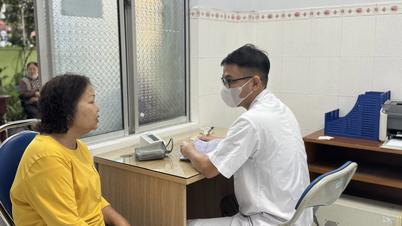
People wait for medical examinations and to receive medication at Nam Saigon International General Hospital (Photo: Hospital).
According to pharmacist Thao Uyen, all information about drugs with registration numbers has been publicly and transparently disclosed on the Public Service Portal of the Drug Administration of Vietnam (https://dichvucong.dav.gov.vn/congbothuoc).
People can look up and verify the legality of medications on this portal by entering the drug name or registration number into the system, thereby preventing the use of counterfeit drugs.
In addition, according to pharmacist Thao Uyen, there are several ways to help people proactively identify counterfeit drugs.
Check the packaging and labels.
Counterfeit medications often have poor-quality packaging with spelling errors, inconsistent or faded colors. Patients should carefully examine the manufacturer's logo, font, and color against the packaging of medications they have used before.
External packaging details that can indicate counterfeit medicine include: scratched or easily peeled anti-counterfeiting seals; barcodes or QR codes that cannot be scanned; and vague or incomplete manufacturer information.
The sealing tape is abnormal, showing signs of having been tampered with; the printed color is often lighter, the font is unusual; the batch number is often blurred, difficult to read, or illegible; the expiration date on the packaging and on the blister pack are inconsistent...
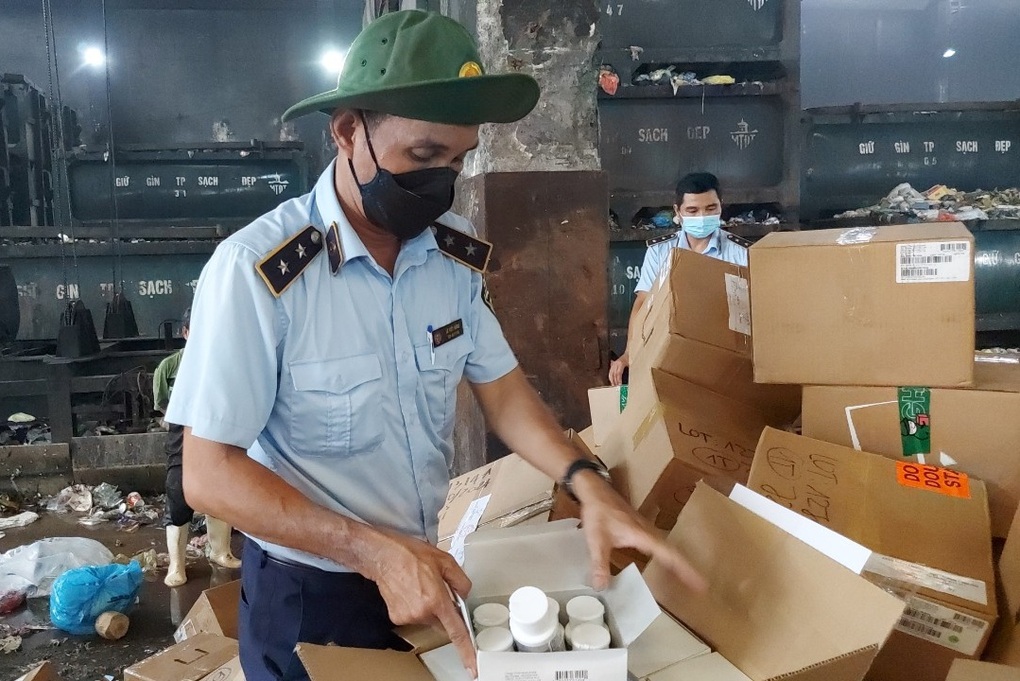
A large shipment of smuggled medicines was previously discovered and destroyed by authorities in Ho Chi Minh City (Photo: Ho Chi Minh City Market Management Department).
Physical characteristics of drugs
Counterfeit drugs often have unusual physical characteristics such as brittle, easily broken tablets, uneven surfaces, or color differences between tablets in the same blister pack.
Some specific suspicious signs of the medication include: inconsistent size and shape; uneven color, the appearance of spots or unusual discoloration; and inconsistencies in shape and size between tablets within the same box.
Origin and price
Medications that are significantly cheaper than the average price are also a suspicious sign. Patients should purchase medications from reputable pharmacies with clear business licenses (such as hospital pharmacies). They should avoid buying medication through unofficial channels such as social media.
Abnormal treatment effectiveness
If a familiar medication suddenly stops working or develops unusual side effects, patients should suspect the quality of the medication.
Counterfeit drugs not only fail to provide effective treatment but also pose risks of poisoning, allergies, metabolic disorders, liver and kidney damage, and especially worsening underlying conditions in people with chronic diseases.
"Before using any medication, consult your doctor or pharmacist to ensure it is suitable for your health condition and will not cause side effects," emphasized the Head of Pharmacy at Nam Saigon International General Hospital.
How to look up the registration number and label design of approved drugs:
Step 1: Access the online public service system of the Drug Administration of Vietnam: https://dichvucong.dav.gov.vn/congbothuoc
Step 2: Select "Drug Name" in the search box and enter the name of the drug you want to look up, then click the "Search" button.
Step 3: Compare with the displayed information. The system will provide details such as: drug name, registration number, dosage, manufacturer, and registration authority. You can also view the approved label sample and instructions for use in the "Instructions for Use/Label Sample" column.
Source: https://dantri.com.vn/suc-khoe/lam-sao-de-nhan-dien-thuoc-gia-20250508130119040.htm




![[Photo] Prime Minister Pham Minh Chinh receives the Chinese Ambassador to Vietnam](https://vphoto.vietnam.vn/thumb/1200x675/vietnam/resource/IMAGE/2026/04/05/1775397481797_ndo_br_dsc-5512-jpg.webp)






















































































Comment (0)