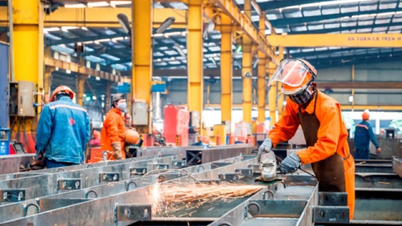
Many countries are stepping up protection for their steel production.
Over the past period, most countries have implemented policies to restrict the import of steel products through anti-dumping duties, countervailing duties, origin fraud, or quotas on annual imports...
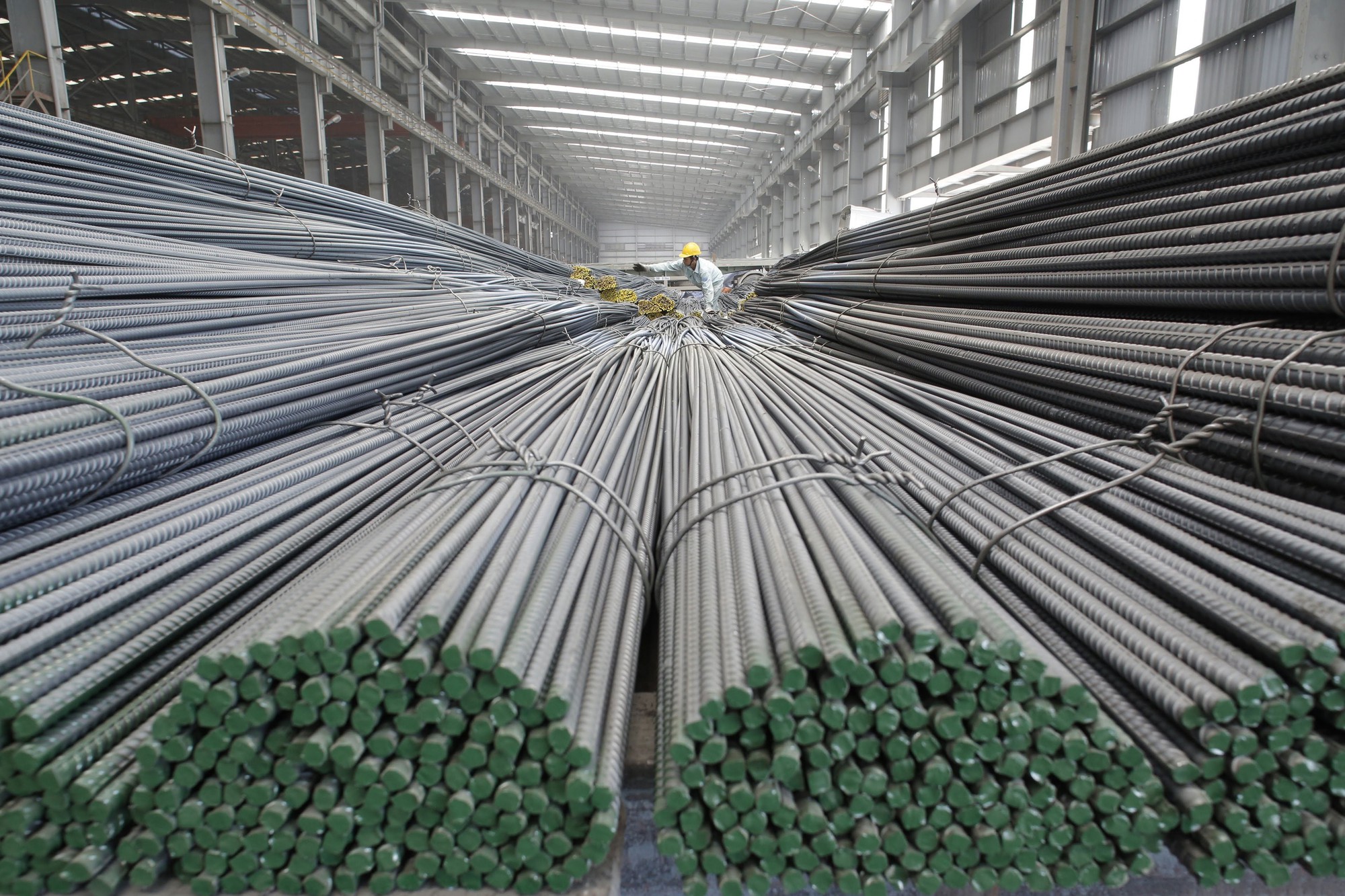
Domestic steel companies suffer losses and reduce production.
Most recently, at the end of 2022, the European Commission reviewed anti-subsidy duties on steel imports from producers in India, Algeria, Türkiye, and Vietnam. This was due to Southeast Asian and Indian steel mills being the largest suppliers of hot-rolled coil (HRC) to the EU last year, with the bloc's HRC import market share reaching 46%, up from 38% in 2021.
Therefore, steel mills in Japan and Asia have become more cautious in exporting hot-rolled coil (HRC) steel to the EU due to concerns about the possibility of the EU imposing trade safeguard measures. Previously, the EU also included Vietnam in the group of countries subject to import quotas, with a limit of 2.1 million tons of hot-dip galvanized steel (HDG) from July 1, 2021 to June 30, 2022, increasing by 4% in the following two years. Similarly, cold-rolled steel from Vietnam, if using hot-rolled steel imported from Taiwan and South Korea, will be subject to anti-dumping and countervailing duties totaling over 450% when exported to the US market. Likewise, galvanized steel products will be subject to these two types of duties totaling nearly 240%...
Not only the US, EU, Canada, Mexico, etc., have imposed very high tariffs on imported steel products, but countries in the ASEAN region and Asia are doing the same. In addition to applying tariff policies, many countries have erected strict technical standards to restrict the amount of steel imported into their domestic markets.

For example, to export steel to Indonesia, products must be certified by SNI, the Indonesian National Standard. Foreign manufacturers applying for SNI certification need to register through a representative (company or individual) in Indonesia. This representative will be authorized to act on behalf of the foreign manufacturer throughout the SNI certification process. SNI certification is granted through the production process, audits of related management systems, and on-site or market testing and supervision.
Furthermore, after receiving the SNI certificate, businesses must apply for permission to use the SNI label. Next, imported goods that are required to have SNI certification will be subject to control through the NPB code – by obtaining a certificate of conformity issued by a specific conformity assessment body…
Many businesses report that obtaining export permits for steel to various countries is a laborious process with numerous strict criteria and regulations. Meanwhile, in Vietnam, data released by the Ministry of Finance and statistics from the General Department of Customs show that hot-rolled steel coils (under group 72.08) reached 5.3 million tons in 2018, with a total import value of approximately US$3.09 billion. Of this, 88% of the total import value was subject to the Most Favored Nation (MFN) import tax rate of 0%, such as HRC products imported from China.
In Vietnam, in 2019, the Ministry of Finance proposed increasing the tax on HRC products (under group 72.08) to 5% instead of the current 0%. The reason given by the Ministry of Finance for this proposed tax increase was the US-China trade war, which was raising concerns about the potential influx of cheap Chinese steel into Vietnam, causing a sharp drop in steel prices on the market.
Citing a report from the Steel Association, the Ministry of Finance stated that domestic demand for hot-rolled steel coils is approximately over 10 million tons per year. However, domestic production capacity in 2018 only met about 50% of this demand (expected to reach about 70% by the end of 2019). Since domestic production of some HRC (Hot-Rolled Coil) products has now reached nearly 50% of domestic and export demand, the Ministry of Finance proposed adjusting the Most Favored Nation (MFN) import tax on hot-rolled steel coils under group 72.08 from 0% to 5%. Hot-rolled steel is an input for the production of cold-rolled steel and coated steel sheets, which have basic tax rates ranging from 5% to 25%, thus aligning with the principle of gradually increasing import taxes from raw materials to finished products. However, this proposal was not implemented. And imported steel in general, and steel from China in particular, continues to flood the domestic market.
Applying various appropriate solutions
Vietnam has also begun considering applying trade safeguard measures to certain imported steel products such as steel billets, steel coils, and steel wire imported from some countries and territories. Similarly, Vietnam has increased the import tax on alloy steel in bar and rod form from 0% to 10%. The reason is that steel coils containing boron (used to harden steel) from China are being declared as alloy steel to benefit from a 0% import tax instead of the 12% tax rate on ordinary construction steel coils...
Many businesses say that the aforementioned tax policies have contributed to reducing the influx of foreign steel into Vietnam, decreasing trade fraud, and protecting domestic consumers from being misled by substandard goods. Therefore, tax policies and technical barriers need to be continued and may be even more stringent in the future.



According to economist Dinh Trong Thinh, the Ministry of Finance's previous proposal was appropriate due to the sharp increase in imported products, which could significantly impact domestic production. That proposal aimed to protect domestic businesses and ensure fair competition among imported products. Regarding the imposition of separate trade safeguard tariffs on goods originating from individual countries, a specific investigation is needed to determine the extent to which imported goods pose a threat to domestic production. Besides tariffs, technical barriers are also a solution that could be considered if deemed necessary to protect both domestic businesses and consumers, preventing the proliferation of low-quality products on the market.
Meanwhile, Dr. Nguyen Quoc Viet, Deputy Director of the Vietnam Institute for Economic and Policy Research (VEPR) - University of Economics (Vietnam National University, Hanoi), argued that tax solutions must be consistent with the free trade agreements that Vietnam has participated in. However, state management agencies need to be mindful of avoiding the risk of Vietnam becoming a transit point for goods from other countries through origin fraud for export to third countries. This requires clear regulations and control over the issuance of certificates of origin for goods from Vietnam. Simultaneously, relevant technical standards need to be reviewed, but most importantly, implementation and supervision are crucial. According to him, Vietnam still experiences many instances of "the elephant slipping through the needle's eye," resulting in many imported products entering the market that do not meet quality standards and involve trade fraud, despite regulations and technical standards being complete and in line with international standards.
Data from SUMEC Group (China) indicates that Vietnam was the second largest market for Chinese steel in 2022. Hot-rolled coil (HRC) was China's main export product to Vietnam, reaching 3 million tons, accounting for 25% of China's total HRC exports. The average price difference between Chinese HRC and Southeast Asian HRC is $25/ton, suggesting higher export profits compared to domestic sales. Furthermore, weak steel consumption in China is expected to lead to increased exports in 2023. Therefore, the amount of HRC imported from China to Vietnam with a 0% tariff is likely to continue to increase.
Source link


![[Image] National conference summarizing one year of operation of the overall organizational model of the political system, the three-tiered government model.](https://vphoto.vietnam.vn/thumb/1200x675/vietnam/resource/IMAGE/2026/07/01/1782882811691_ndo_br_1-jpg.webp)