

Entering the fray with a determined spirit.
Resolution No. 02-NQ/TW of the Politburo, with its grand orientations, vision, and high demands, opens a new chapter for the development of Hanoi. In particular, in this new phase, Hanoi faces the requirement not only to develop itself but also to play the role of a "locomotive" and "growth pole," leading the entire Red River Delta region and spreading the impetus for national development. Following this, at its first session, the 16th National Assembly passed the Law on the Capital City in 2026, with many unique and superior mechanisms and policies, demonstrating the central government's great concern, expectations, and trust in Hanoi. And recently, the approval of the Master Plan for Hanoi with a 100-year vision further opens up a new development space, not only for the present but also for the city's long-term future for many decades to come.
It can be said that never before has Hanoi enjoyed such a convergence of favorable conditions, special mechanisms, and high expectations as it does now. The most important thing at this moment is to translate these major policies into concrete actions and tangible results so that every citizen can feel the city's progress in each project, each policy, and each change in urban life.
To implement Resolution No. 02-NQ/TW of the Politburo , Party committees and authorities at all levels, from the city to the grassroots, have clearly demonstrated their exemplary role and leadership in reforming leadership methods in the spirit of: "Decisive, synchronized, creative, and effective"; using tangible results as a measure; and taking the satisfaction and happiness of the people as the ultimate goal. This has shaped a new working style and method, enhancing the sense of responsibility of cadres, civil servants, and public employees, especially those in leadership positions, engaging genuinely and decisively, acting immediately, effectively, and thoroughly; focusing on strategic tasks and urgent, important requirements.
The Party committees and political system of Hanoi have seriously implemented the objectives of the strategic "three pillars" with the motto "understand correctly, act immediately, and see it through to the end." They have developed action programs and work plans that span the four axes (Party committees, People's Councils, People's Committees, the Fatherland Front, and political and social organizations) with the motto "six clear points, one consistent point" to bring the objectives of the "three pillars" into reality. In this process, agencies and units at all levels and sectors have implementation plans with clear roadmaps, specific assignments, and accountability to each individual. Each program and action plan produces concrete products, measurable targets, and completion deadlines. This has created a strong shift from "administrative management" to "creating and serving development"; the new working style is also reflected in its closeness to the people and grassroots level.
In particular, city leaders regularly work directly with units and localities to understand the practical situation, thereby making appropriate decisions. This helps shorten the gap between policy and practice and improve implementation efficiency. According to Associate Professor Dr. Tran Viet Luu, former Director of the General Affairs Department, Central Propaganda Department (now the Central Propaganda and Mass Mobilization Department), the city leaders' direct visits to the grassroots level convey a very important message about the method of governance: There is no more time for empty talk; directives and resolutions are not just on paper, but must be closely followed in practice, inspected, and difficulties and obstacles are resolved. At the same time, it is also a message about leadership thinking that must listen to the people, dialogue with the people, understand what the people need in order to solve the right problems, and turn directives into concrete results.
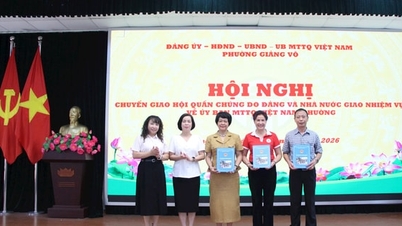
The spirit of action has spread from the city down to the grassroots. For example, in Van Dinh commune, in most models, the role of the leader is clearly demonstrated in the organization and management stages. From implementing "Digital Party Branches," administrative reform, to urban beautification and environmental pollution control, the commune leaders not only issue plans but also directly inspect and supervise the progress of implementation at the grassroots level. Many tasks are specifically assigned to each unit and organization, with direct responsibility linked to the responsible officials. This is also a factor that has created uniformity in the implementation of tasks in the locality in recent times.
Create movement and tangible results.
With major policies implemented synchronously, pressing and long-standing issues, "bottlenecks" in the capital such as traffic congestion, environmental pollution, flooding, urban order, food safety, and new, difficult, and unprecedented problems have been thoroughly addressed and resolved by the city, contributing to the realization of the goals and targets set out in Resolution No. 02-NQ/TW of the Politburo.
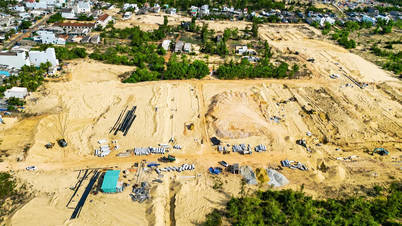
To achieve double-digit growth targets in 2026, Hanoi city has identified accelerating land clearance and implementing long-stalled urban infrastructure projects, thereby unlocking land resources, as a key and urgent task. According to statistics, 1,428 projects (including 1,281 projects funded by the state budget and 147 projects funded by non-state budgets) are currently being implemented in wards and communes across Hanoi. Among these are 27 large, important, and key projects that contribute to resolving bottlenecks and promoting socio-economic development in the capital city.
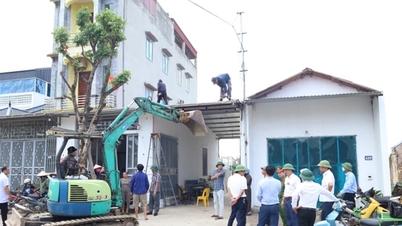
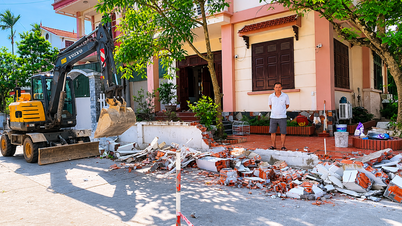
In a spirit of urgency, the Hanoi City Party Committee established a Steering Committee for land clearance of key city projects; the Standing Committee of the City Party Committee directly led, directed, inspected the sites, and reviewed the progress of key projects weekly. Each task was defined with specific timelines; this approach aimed to ensure continuous direction, avoid shirking responsibility, and create pressure for implementation on each agency, unit, and individual. All levels and sectors focused on decisively resolving difficulties and obstacles, removing bottlenecks in compensation, support, and resettlement work to accelerate land clearance for project implementation, especially strategic transportation infrastructure projects, regional connectivity infrastructure, and key projects of the Capital.
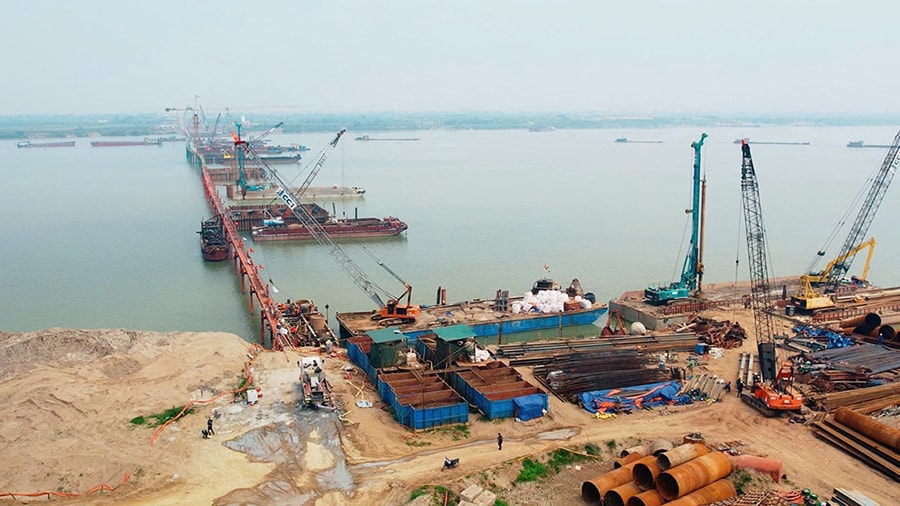
Thanks to the synchronized and decisive leadership, direction, and implementation by the entire political system, land clearance and project progress have seen significant improvements. Regarding road infrastructure, the Hanoi Capital Region Ring Road 4 construction project has basically completed land clearance, with 13 out of 13 resettlement areas completed, and approximately 35km of the parallel road under construction (reaching about 85% completion) – directly connecting Hanoi with Hung Yen and Bac Ninh. Ring Roads 3.5 and 5 are currently being implemented, and together with Ring Roads 1, 2, 2.5, 3, and 4, will form a system of 7 strategic ring roads linking Hanoi with 6 adjacent provinces and cities. Seven key bridge projects across the Red River (Tu Lien, Tran Hung Dao, Ngoc Hoi, Thuong Cat, Van Phuc, Hong Ha, and Me So) are being actively constructed with positive progress. At the construction sites of the Hong Ha Bridge, Ngoc Hoi Bridge, and Tu Lien Bridge, thousands of engineers and workers persevered, working throughout the holidays to complete the river-side components before the early summer flood season. Construction units at the Phu Do regulating reservoir project, Me Tri main reservoir, Yen Nghia reservoir, Cu Khoi reservoir, etc., accelerated their efforts, striving to complete the main components before the 2026 rainy season…
Key projects in Hanoi, with their large investment capital and wide-ranging impact, will significantly contribute to realizing the economic growth target of over 11% in the 2026-2030 period, enhancing the capital's role as a leading engine and driving force for regional and national development.
It can be said that the significant progress in the implementation of key projects in the capital city recently is clear evidence of the concretization of the directions from Resolution No. 02-NQ/TW of the Politburo. At the same time, it affirms the city's new leadership and management method based on discipline, tangible effectiveness, verifiable and measurable results, absolutely ensuring no delays, and fulfilling its mission as the "national political and administrative nerve center; a place where the cultural essence, intellect, and resources of the country converge and spread; a center for creation, playing a leading role in shaping new development models and thinking; a nucleus, a connecting center, and a driving force for regional development and a growth pole of the entire country."
Source: https://hanoimoi.vn/lan-toa-tinh-than-hanh-dong-thuc-day-cac-muc-tieu-phat-trien-866890.html


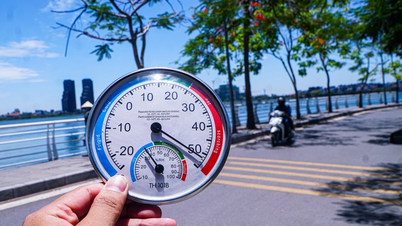
![[Image] Hanoi's urban life under the challenge of a "scorching hot" environment](https://vphoto.vietnam.vn/thumb/1200x675/vietnam/resource/IMAGE/2026/05/25/1779706979265_nang-nong-t5-2026-minh-duy-7-4636-jpg.webp)



























































Comment (0)