

Immediately after the merger, all 99/99 communes and wards of Lao Cai established steering committees for universal education , literacy eradication, and building a learning society, and simultaneously issued working regulations and assigned specific tasks to each member.
Communes and wards should urgently strengthen community learning centers to avoid disrupting the task of building a learning society, especially focusing on implementing universal education and literacy programs in accordance with the new situation.
Continuing this process, by the end of 2025, Lao Cai will have 99 out of 99 communes meeting the literacy standard at level 2; 98.8% of people aged 15-35 will be literate at level 2, and 95.0% of people aged 15-60 will be literate at level 2. Notably, the literacy rate at level 1 among people aged 15-60 in particularly difficult areas and ethnic minority regions will reach 94.3%.
Immediately after the merger, the entire province organized 71 literacy classes with 1,578 students. At the same time, the vocational education sector showed encouraging results, with the rate of trained workers in Lao Cai estimated at 70%; of which, 25.3% of trained workers had diplomas or certificates, and 45% of ethnic minority workers had received training.
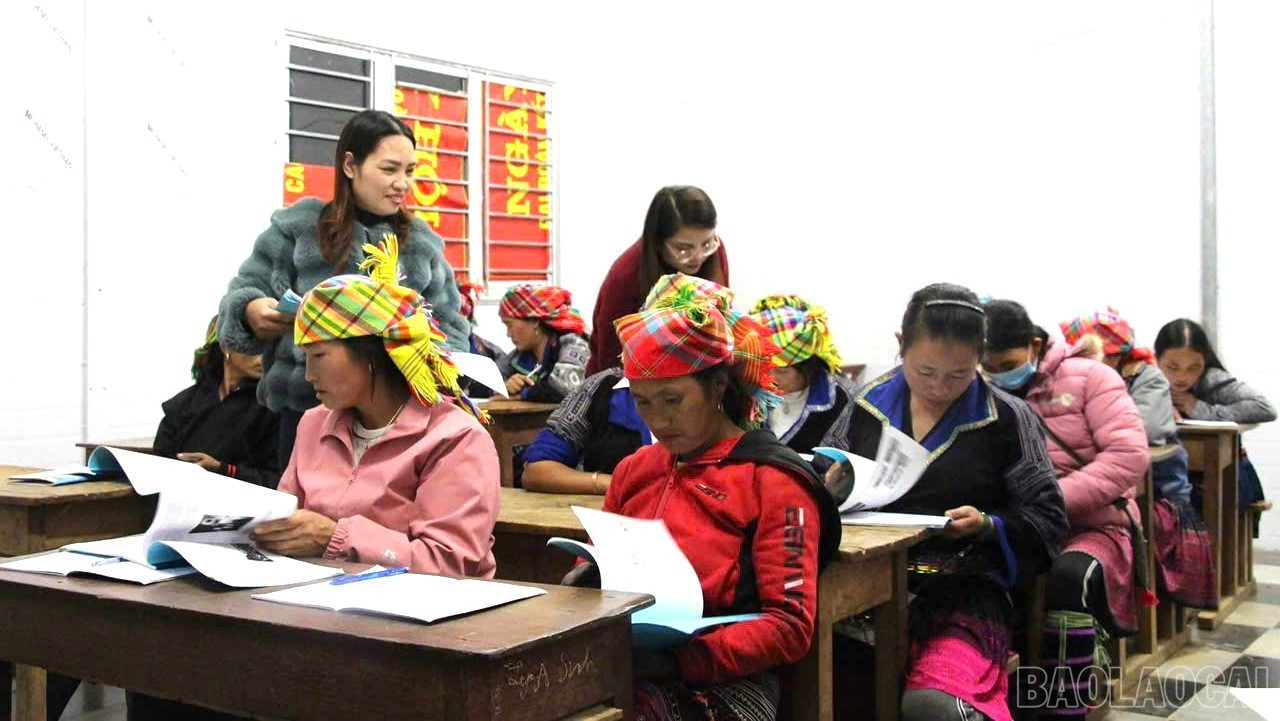

Furthermore, the development of a learning society has spread widely within each family, clan, and community. The tradition of valuing education serves as a spiritual driving force, encouraging people to study regularly and build models of studious families, studious clans, and learning-promoting communities, creating a learning society in villages, hamlets, and communes.
A typical example is the Sa family, of the Thai ethnic group in Cat Thinh commune. Always remembering the teachings of their ancestors: to strive to study hard to become good people, good citizens, and make useful contributions to their homeland and country; the members of the family have continuously strived to overcome difficulties in order to access knowledge.
Mr. Sa Quang Phung, Head of the Liaison Committee and Head of the Education Promotion Committee of the Sa clan in Cat Thinh commune, shared: "Throughout hundreds of years, generations of descendants have continuously strived and together continued to write the golden pages of the Sa clan's tradition of studiousness."
With over 70 families and nearly 400 members, the Sa clan in Cat Thinh commune currently has 68 Party members, 70 people with college, university, and postgraduate degrees, including 4 master's degree holders. By 2020, 100% of the households in the Sa clan had achieved the title of "Learning Family" and received a score of 95/100 in the "Learning Clan" evaluation.
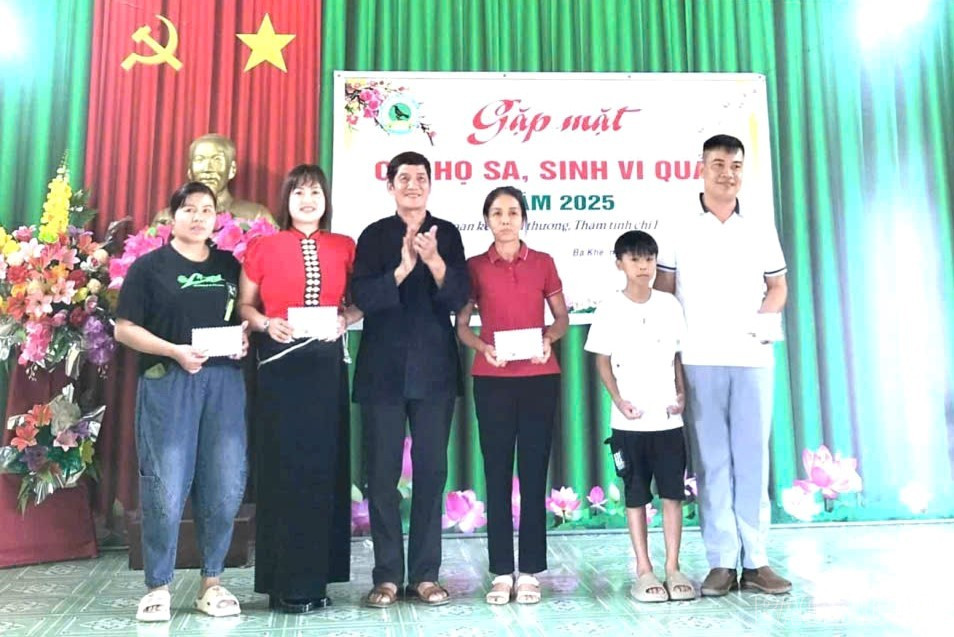

The learning society model has created a synergistic force in implementing the movement to build a learning society, developing learning families and learning clans, and improving the quality of human resources.
To date, the province has 303,660 "Learning Families," accounting for over 71%; more than 1,170 "Learning Clans," reaching over 60%; nearly 2,400 "Learning Communities," reaching over 83%; 1,669 "Learning Units," equaling 98%; and over 491,000 members of the Association for the Promotion of Learning, accounting for 27.3% of the population.
The Associations for the Promotion of Learning at all levels, in coordination with local authorities, organize literacy classes and teach the spoken and written languages of ethnic minorities, contributing to the preservation and promotion of ethnic culture. In this area, the activities of the Associations for the Promotion of Learning in the Tran Yen area are a shining example.
Mr. Nguyen Van Khanh, a member of the Standing Committee of the Lao Cai Provincial Association for the Promotion of Learning, in charge of the Tran Yen area, emphasized: “The implementation of the 15 criteria for building “Learning Communities” at the commune level in the Tran Yen area has been inspected, assessed, and evaluated by relevant agencies. Based on the ranking, 100% of localities have consistently achieved the “Good” rating for “Learning Communities” at the commune level from 2020 to 2024. In particular, the area has established 10 new models of “Learning Promotion Clubs for the Development of Ethnic Cultural Identity”.


In the context of rapid digital transformation, Lao Cai has quickly implemented and kept pace with the trend through various learning models linked to the application of digital technology . The Provincial Association for the Promotion of Learning proactively coordinates closely with localities to organize classes, workshops, and training courses on digital skills for people, especially in remote areas, helping everyone have the opportunity for lifelong learning.
Building an open online learning resource library and digital learning models not only helps bridge the geographical gap between regions within the province, and between Lao Cai and other provinces, but also provides all citizens with the opportunity to access new knowledge anytime, anywhere, in the shortest time and at the lowest cost.
Evaluating the indicators regarding: universities implementing digital universities and developing digital learning materials; general education, continuing education, vocational education, and other educational institutions implementing management, teaching, and learning activities in a digital environment; and community learning centers applying information technology in management and organizing educational activities, all achieving 100%, demonstrates the efforts and determination of Lao Cai in overcoming difficulties during the past five-year period.
The expanded space following the merger continues to set higher goals, greater responsibilities, and stronger efforts in building a learning society in Lao Cai during the 2026-2030 period: achieving universal preschool education for 5-year-old children, universal primary education at level 3, universal lower secondary education at level 2, and achieving literacy eradication at level 2.
Source: https://baolaocai.vn/lan-toa-tinh-than-toan-dan-hoc-tap-post891181.html




























































































Comment (0)