

Last August, Mr. Le Quang Toai (59 years old, residing in Dang village, Tho Dien commune, Vu Quang district, Ha Tinh province) was suggested and guided by plant protection officers on how to breed yellow ants to kill pests and insects in his orange orchard instead of using pesticides.
Initially, Mr. Toai was quite surprised, thinking this was impossible. Afterward, he diligently studied and researched the matter.
An elderly farmer uses "poison to fight poison" to protect his specialty fruit orchard ( Video : Duong Nguyen).
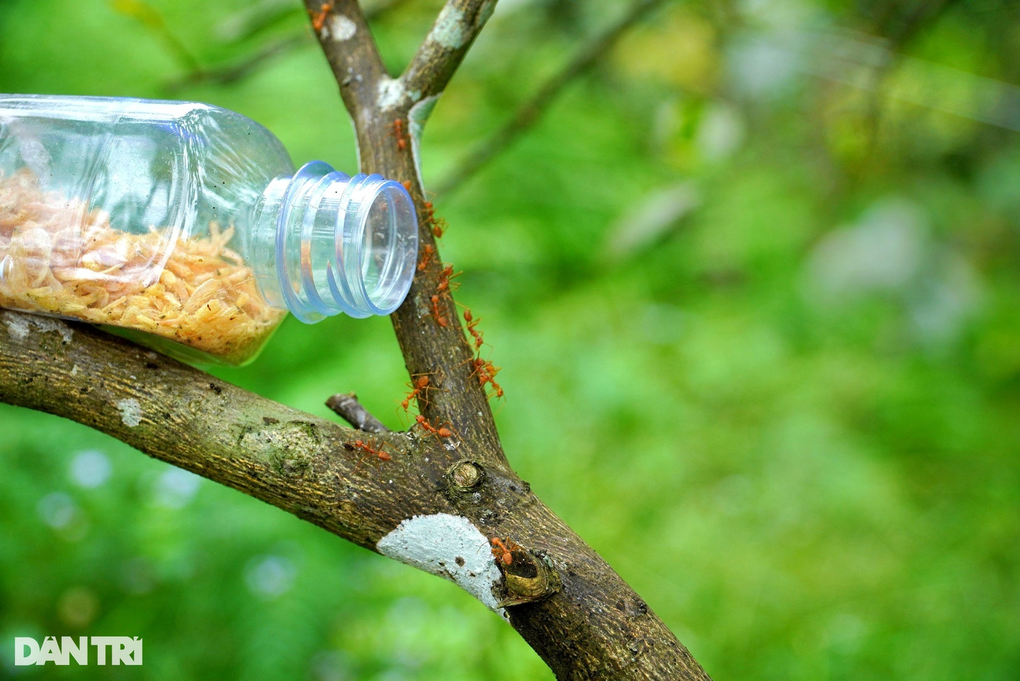
Mr. Toai raises ants on orange branches in his garden (Photo: Duong Nguyen).
"At that time, I thought that if we could successfully use ants to control pests without using pesticides, that would be great. Because this method could protect the environment and health, and save costs for growers," he recalled.
After the training period, Mr. Toai began implementing his plan by going to the local melaleuca forest area to search for ants. When he found yellow ant nests high up in the trees, he cut off the branch containing the nest, covered it with a cloth bag, and brought it back to release onto an orange tree in his garden.
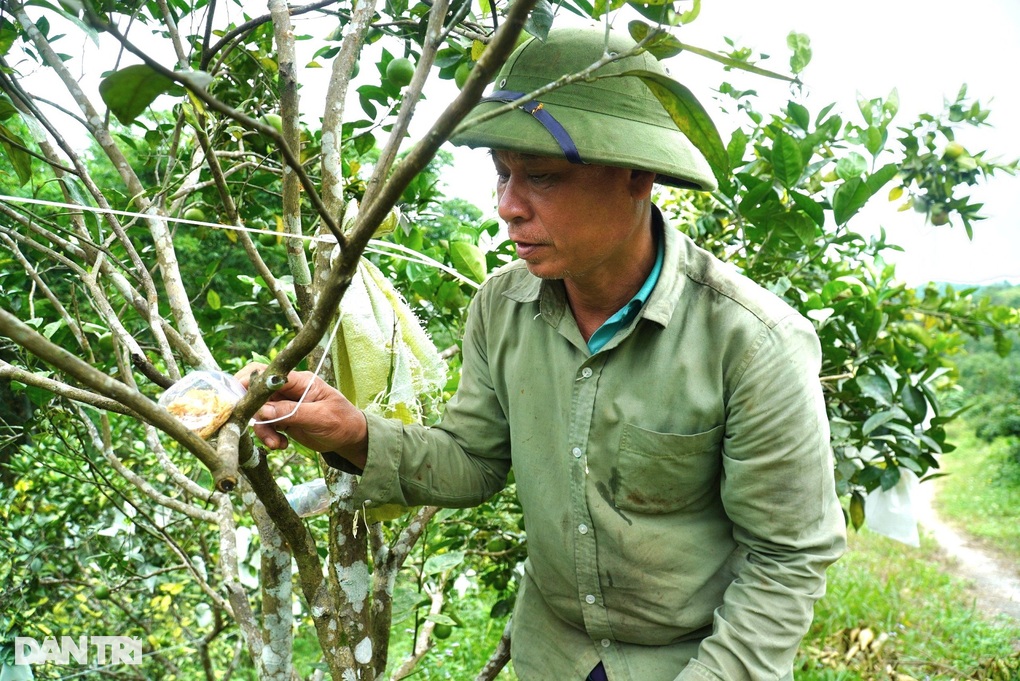
Mr. Toai said that over the past two months, the method of raising ants instead of using pesticides has yielded unexpected results (Photo: Duong Nguyen).
When first releasing them, to help the ants settle down, he used plastic bottles containing dried shrimp and leftover rice, tying them securely to tree branches so the ants would have food to build their colony and nest. This farmer also used white fishing line strung between trees to create pathways for the yellow ants to find food.
From there, the ant colony reproduces and grows, moving to other trees to build new nests. Over the past two months, Mr. Toai's 2-hectare orange orchard has seen the addition of nearly 40 ant colonies, totaling tens of thousands of ants.
Yellow ants can kill various insects such as stink bugs, aphids, caterpillars, mealybugs, stink ants, and spiders.
"Initially, I found this method effective; the crops grew well and weren't damaged. Before, we had to spend nearly ten million dong each year on pesticides and also had to spend extra labor on care," Mr. Toai said enthusiastically.
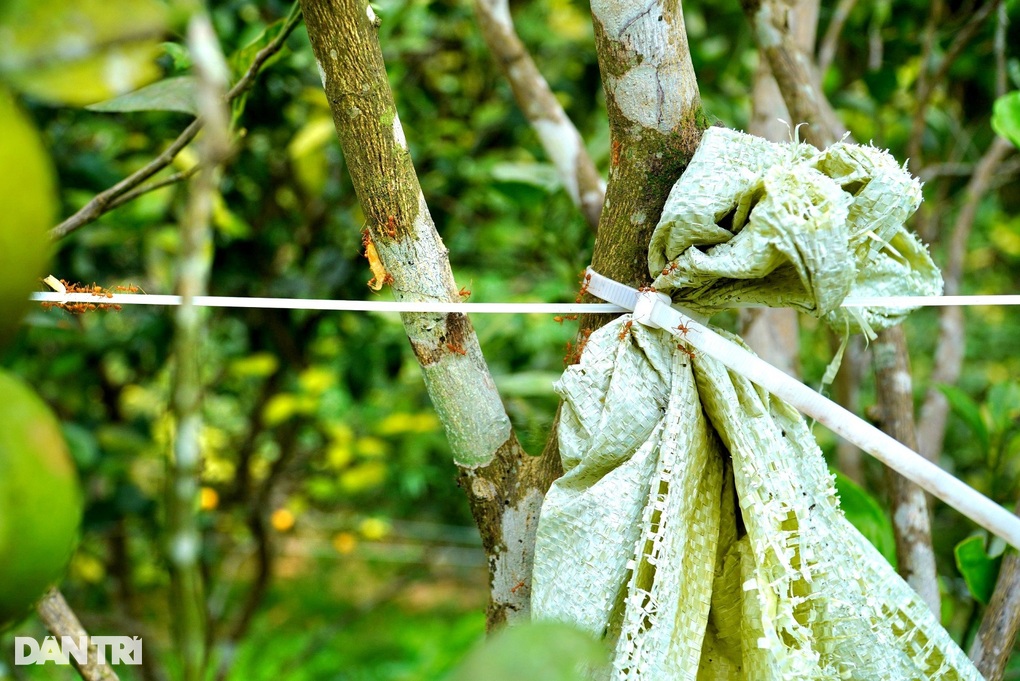
The old farmer uses string to create a "bridge" between one tree and another so that ants can hunt insects (Photo: Duong Nguyen).
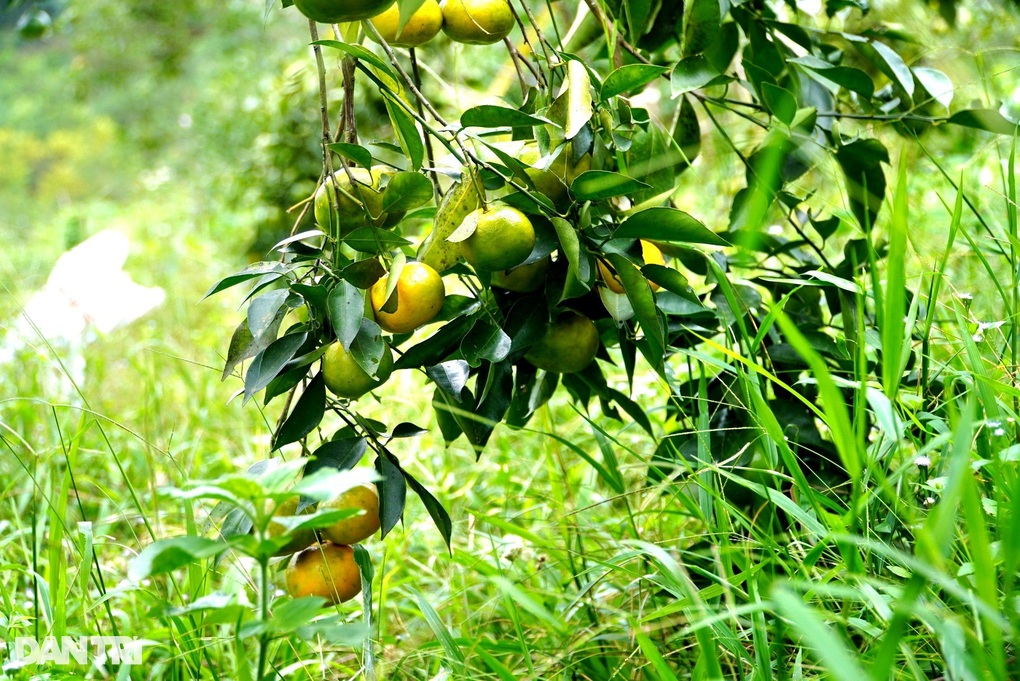
Thanks to dozens of colonies of yellow ants, the 2 hectares of orange trees on the forest hill belonging to Mr. Toai's family are protected and thriving (Photo: Duong Nguyen).
Besides raising yellow ants, the orchard owner also uses non-woven fabric bags to wrap and protect each orange that is about to be harvested.
Mr. Toai has been running a farm on a hilly, forested area more than 1km from his house since 2015. The farm covers 3 hectares, of which 2 hectares are planted with mandarin oranges (Cam Bu and Cam Canh varieties). Currently, many of the orange trees are already bearing fruit.
"From now until Tet (Lunar New Year), we will finish harvesting. This year, the orange crop is abundant, with a yield of about 15-20 tons. We estimate we will earn 200-300 million VND," Mr. Toai calculated.
Besides Mr. Toai's family, three other households in the area are also using the "fight fire with fire" method, raising yellow ants as natural predators to control pests instead of pesticides.
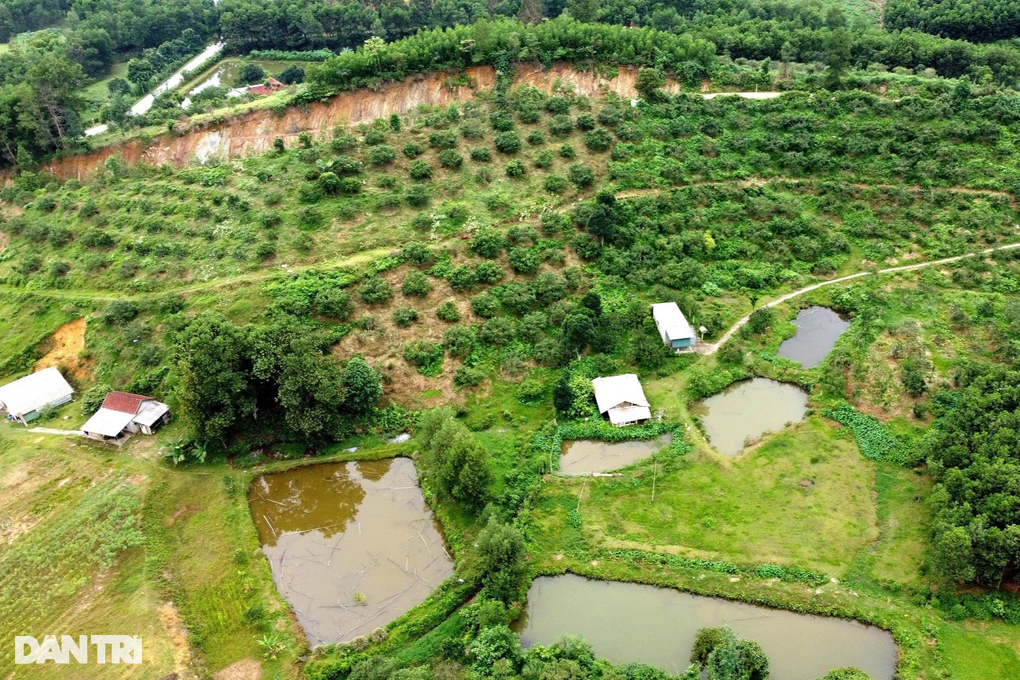
The model of raising yellow ants on citrus fruit trees is being implemented in many households in Vu Quang district (Photo: Duong Nguyen).
Recently, this model has been implemented under the guidance of the Regional Plant Protection Center IV (Department of Plant Protection) in coordination with the Center for Application of Science and Technology and Plant Protection of Vu Quang district in Tho Dien, Quang Tho, and Duc Lien communes, covering more than 10 hectares of citrus orchards belonging to local households.
According to Mr. Phan Anh Toan, an official at the Center for Application of Science and Technology and Plant Protection in Vu Quang district, after more than two months of implementation, the model has shown effectiveness, with the yellow ants controlling various harmful insects and pests.
This is a smart biological solution that replaces pesticides and protects the environment, fostering healthy organic farming practices and contributing to sustainable green agriculture.
Source link














![[Photo] Prime Minister Pham Minh Chinh holds a phone call with the CEO of Russia's Rosatom Corporation.](/_next/image?url=https%3A%2F%2Fvphoto.vietnam.vn%2Fthumb%2F1200x675%2Fvietnam%2Fresource%2FIMAGE%2F2025%2F12%2F11%2F1765464552365_dsc-5295-jpg.webp&w=3840&q=75)














































Comment (0)