


Businesses are still grappling with the issue.
As the internship recruitment season approaches, Minh Thu, a third-year student at the University of Economics and Law (Vietnam National University Ho Chi Minh City), dedicates significant time to preparing for her first career opportunity. Applying for a purchasing position at a company, Minh Thu understands the requirements well. Besides her professional knowledge, she also hones her skills in working with suppliers, negotiating prices, controlling quality, and ensuring deadlines. To increase her competitiveness, she proactively completes her personal profile, reviews her major, participates in skills training courses, and improves her foreign language proficiency. Minh Thu's story reflects the increasing proactiveness of students in bridging the gap with the labor market. However, from the perspective of businesses, this gap remains quite large.
Concerned about the quality of newly graduated workers, Ms. Dao Khanh Chi - Head of Human Resources at Sungroup - stated that in the last two years, many businesses have experienced strong growth in both scale and quality, leading to pressure to optimize human resources. In this context, recruiting new personnel but having to retrain them from scratch not only incurs costs but also reduces the motivation of the employees themselves.
"Most students have a good professional foundation, but their adaptability and practical skills are limited. What businesses want is for the training process to be linked to practice right from within the school," Ms. Chi said.
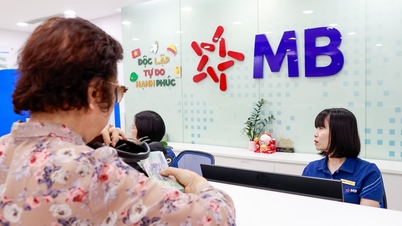
In the finance and banking sector, the requirements for human resources are even more stringent. Mr. Pham Hong Hai, General Director of Orient Commercial Bank, noted that the industry is undergoing a strong transformation under the impact of digitalization and fintech, thus requiring highly skilled personnel who understand the operating system, and possess the ability to analyze and make decisions.
According to Mr. Hai, the reality is that there is no shortage of academically gifted students, but they often lack business acumen, the ability to understand customers, and the capacity to operate in a real-world environment. Particularly in the finance and banking sector, the demands for professional ethics, a sense of responsibility, and risk management capabilities are increasingly paramount.
Another weakness pointed out by Mr. Hai is the limited autonomy of students in their work. Many employees still tend to be passive after completing assigned tasks, and they lack sufficient data processing skills (a crucial element in the digital age). "Businesses cannot wait until training is complete before recruiting. We need to participate early through mentoring, co-designing training programs, and working alongside schools to cultivate potential human resources even before students officially enter the labor market," Mr. Hai shared.
A human resource development strategy is needed.
From the perspective of educational institutions, Dr. Vu Dinh Bay, Principal of Dong An High-Tech College in Ho Chi Minh City, observes that the gap between training and practical needs has not only failed to narrow but is even widening rapidly in the context of digital transformation. Regarding the reasons, Dr. Bay attributes it to the delay in updating training programs, while businesses continuously change their technology, processes, and business models. The consequence is an increasingly evident "skill mismatch": students have a strong theoretical foundation but lack practical skills, digital skills, and adaptability.
“In the context of digital transformation, innovating programs to align with businesses, increase practical experience, and develop comprehensive skills is no longer an option, but a mandatory requirement. To ensure graduates are immediately employable, Dong An High-Tech College in Ho Chi Minh City has been shifting from ‘training what we have’ to ‘training what businesses need.’ The focus is on implementing substantive collaborative models such as dual training (learning at school combined with working at businesses), early and extended internships, businesses co-developing programs and participating in teaching, as well as assigning real-world problems for students to solve,” Mr. Bay stated.
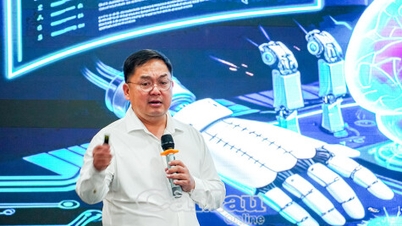
Regarding the quality of human resource training today, Associate Professor Bui Quang Hung, Vice Director of the University of Economics Ho Chi Minh City (UEH), stated: In the new context, education cannot develop in isolation. We hope to contribute resources and work together with businesses and the community to create long-term values for society. When knowledge is disseminated correctly, it becomes the most sustainable foundation for development.
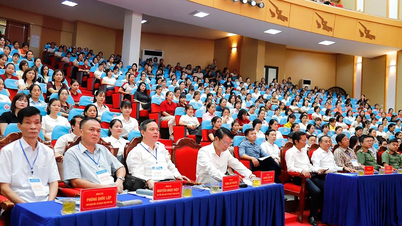
From a state management perspective, Mr. Lam Dinh Thang, Director of the Ho Chi Minh City Department of Science and Technology, clearly affirmed the role of the "three-party" linkage model: the State, schools, and businesses.
According to Mr. Thang, the "three-party" linkage model is the key to transforming knowledge into practical value, thereby creating high-quality human resources to directly serve the sustainable development of the city. Meanwhile, Ms. Luong Thi Toi, Deputy Director of the Ho Chi Minh City Department of Internal Affairs, stated that improving the quality of human resources is a comprehensive task requiring the coordination of many agencies and units. If improvements are delayed, this will become a major "bottleneck," directly affecting labor productivity and growth targets.
According to the Ho Chi Minh City Department of Home Affairs, the city aims to create approximately 180,000 new jobs in 2026. Between 2026 and 2030, this number is projected to reach around 900,000 jobs. To achieve this goal, Ho Chi Minh City is operating a mechanism to connect labor supply and demand through job exchanges, while regularly updating market data to ensure timely and effective connections.
Source: https://daidoanket.vn/lien-ket-ba-nha-de-giai-bai-toan-nhan-luc.html



![[Image] Hanoi's urban life under the challenge of a "scorching hot" environment](https://vphoto.vietnam.vn/thumb/1200x675/vietnam/resource/IMAGE/2026/05/25/1779706979265_nang-nong-t5-2026-minh-duy-7-4636-jpg.webp)

























































































Comment (0)