

Helps you hit the target with the first shot.
At Workshop X56 under the Logistics and Technical Department of Military Region 3, the technical soldiers are accustomed to repetitive work that demands very high precision. Each year, the unit repairs approximately 50 artillery pieces, 4,000 guns, and about 300 other types of equipment. This does not include mobile repair missions for units on islands and in remote areas.
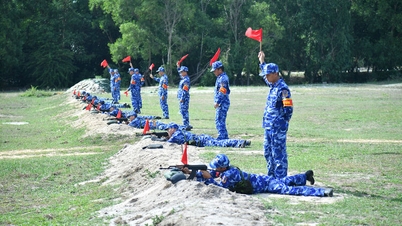
One such step is acceptance testing and calibration of infantry weapons after repair. During transportation, use, maintenance, or repair, weapons can always be subjected to external forces that cause the positioning of the aiming mechanisms to be misaligned, resulting in the target impact point no longer being as accurate as originally designed.
Previously, determining the point of impact on the target from the first salvo was largely manual and dependent on the experience of the person performing the task. This resulted in longer adjustment times, higher ammunition consumption, and accuracy that was not always as desired.
Having been involved in technical support work for many years, Lieutenant Colonel Le Van Nguyen - Deputy Director of Workshop X56 - understands that this inconvenience is not only a matter of professional operation, but also a "bottleneck" that needs to be resolved if work efficiency is to be improved.
Based on that reality, he and Lieutenant Tran Chi Cong - Assistant to the Planning Staff of Workshop X56, began researching the initiative "Device for preliminary inspection and adjustment of the aiming line of 7.62mm and 12.7mm infantry rifles".
According to Lieutenant Colonel Nguyen, the core idea of the initiative is to create a device that allows the gun to hit the target with the first shot, providing a basis for further, more precise adjustments later on.
This device requires high precision, while the availability of materials, machinery, and equipment for research is limited. The research team had to design, manufacture, and experiment simultaneously, continuously adjusting every small detail over a period of three months.
“During the initial testing, the device didn't produce the expected results. We fired six bullets from two test guns but still couldn't find the point of impact on the target. We had to investigate the cause, make adjustments, and continue testing. It wasn't until the third attempt that we achieved the desired results,” Lieutenant Colonel Nguyen recalled.
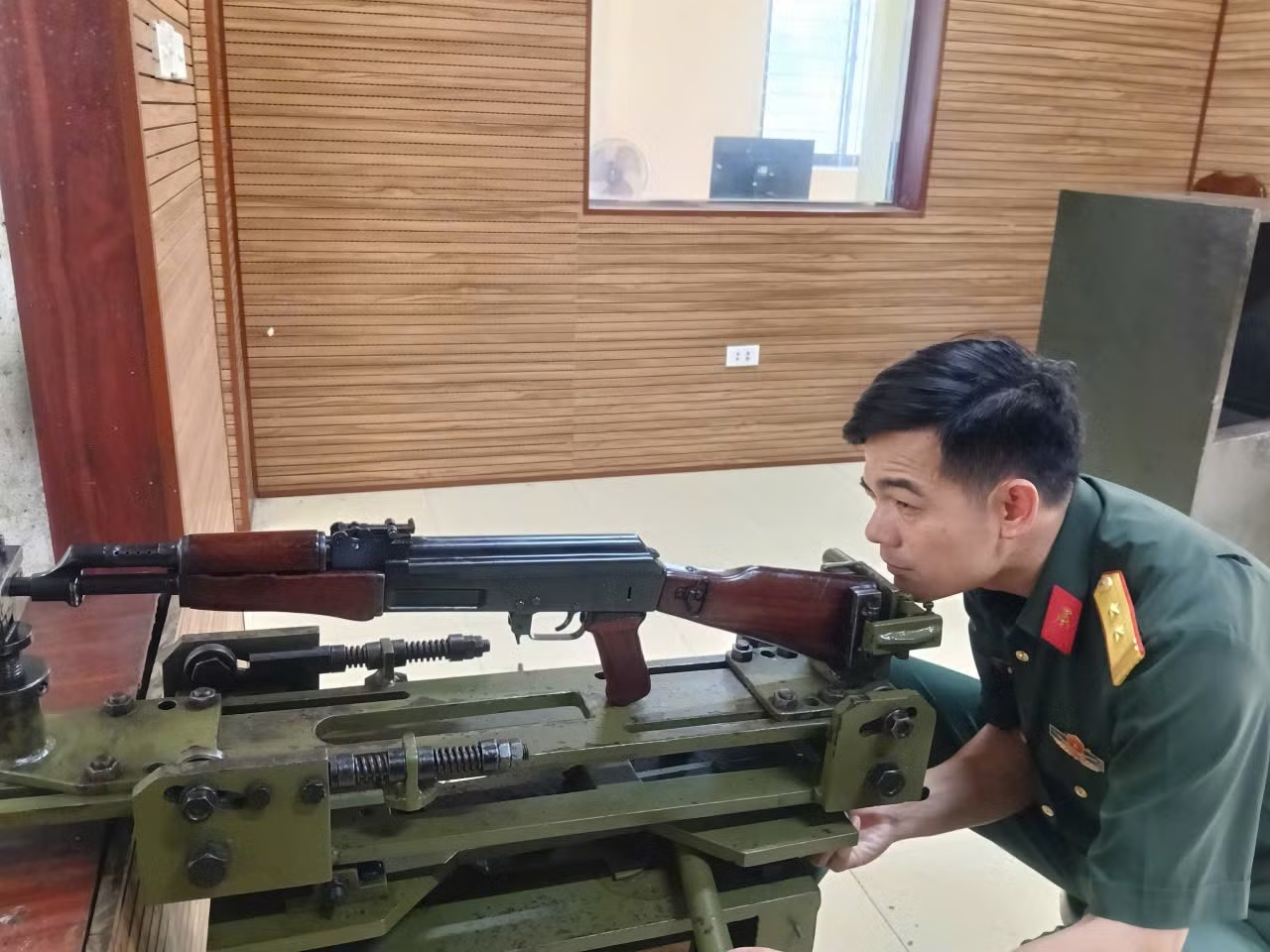
Lieutenant Colonel Nguyen added that the device has proven effective in practice, reducing the time required to inspect and calibrate a gun from an average of 10 minutes to approximately 6 minutes, thereby saving time, effort, and ammunition consumption during the calibration process.
Protect your teammate's lungs.
While at Workshop X56, the technical challenge began with ensuring the accuracy of a repaired rifle, Major Nguyen Thanh Tung, Assistant for General Planning (Planning and Staff Department, Logistics and Technical Department of Military Region 3), was focused on finding solutions to protect the health of the soldier-workers in the workshop.
Major Tung stated that in the maintenance and repair of weapons and technical equipment, or in the processing of products at the carpentry workshop, operations such as rust removal, surface treatment, spray painting, and varnishing are familiar to the technical force. However, these tasks come with dust, toxic fumes, and subtle impacts on the health of workers, the working environment, and the lifespan of machinery and equipment.
Having directly worked in planning and advisory roles in the logistics and technical field, Major Tung clearly saw these shortcomings. For him, the use of dust and toxic gas filtration equipment in stations and workshops was not only a need to improve working conditions, but also a practical requirement to enhance the efficiency of mission performance in the unit.
Based on that reality, Major Tung began researching a mobile industrial dust filter device. From the initial conception of the idea to the completion of the product, the research process lasted about 6 months, encompassing design, manufacturing, testing, adjustments, and finalization. But that time wasn't just measured in drawings or technical specifications.
According to Major Tung, the biggest challenge was having to fulfill his assigned duties while also taking advantage of breaks and days off to be present at the mechanical workshop, monitor the machining process, and discuss each detail specifically to transform ideas on the drawing board into actual products.
“In addition to the equipment for testing and preliminary calibration of the aiming lines of 7.62mm and 12.7mm infantry rifles, we will continue to conduct research on solutions for developing a modern, operational-level weapons and equipment repair workshop in the new situation.” Lieutenant Colonel Le Van Nguyen - Deputy Director of Workshop X56, Logistics and Technical Department, Military Region 3
Along with that came the story of selecting the right equipment and components, from size to functionality, to create a product that met both technical requirements and practical usage conditions at the unit. His first experiment did not yield the expected results.
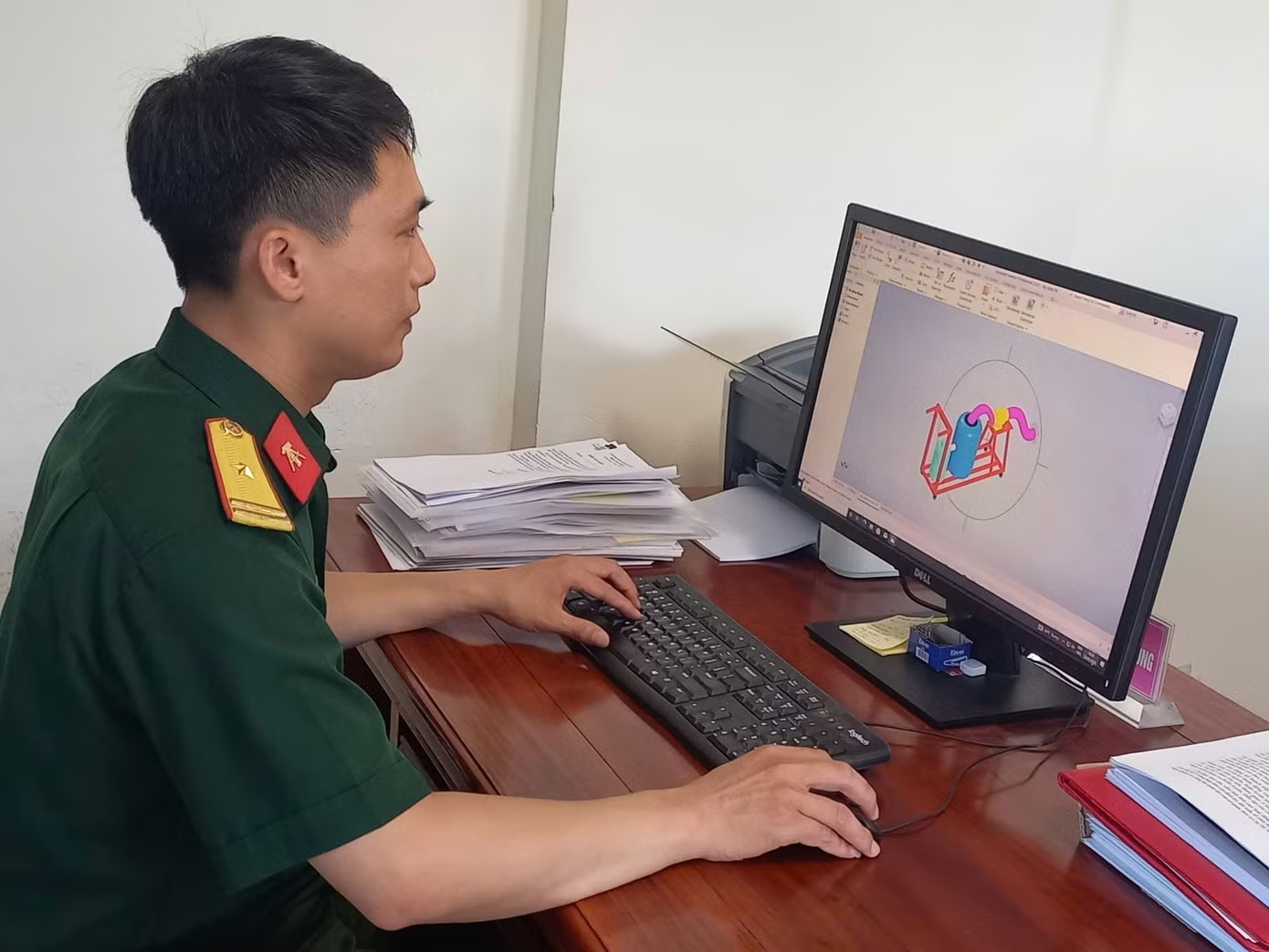
“When the product was first manufactured and assembled, the device couldn't suck and expel dust through all the filtration systems, only the first two. After many days of thinking, researching, and changing the structure and materials, the product finally operated as initially expected,” Major Tung shared. The final product is a device with a reasonable structure, easy to use, convenient to operate, highly mobile, and ensures user safety.
Source: https://tienphong.vn/linh-ky-thuat-go-nut-that-tu-thuc-tien-post1846538.tpo

![[Photo] Standing Committee member of the Party Central Committee Tran Cam Tu working with the Central Inspection Committee](https://vphoto.vietnam.vn/thumb/1200x675/vietnam/resource/IMAGE/2026/05/28/1779969579668_ndo_br_bnd-2495-jpg.webp)






































































































Comment (0)