

Amaranth is a herbaceous plant that usually grows upright. Spiny amaranth is the common name for species in the genus Amaranth, all of which have everlasting flowers, and some species grow wild.
In Vietnam, common varieties of amaranth include red amaranth (purple amaranth), common amaranth, and spiny amaranth, all of which are used as food.
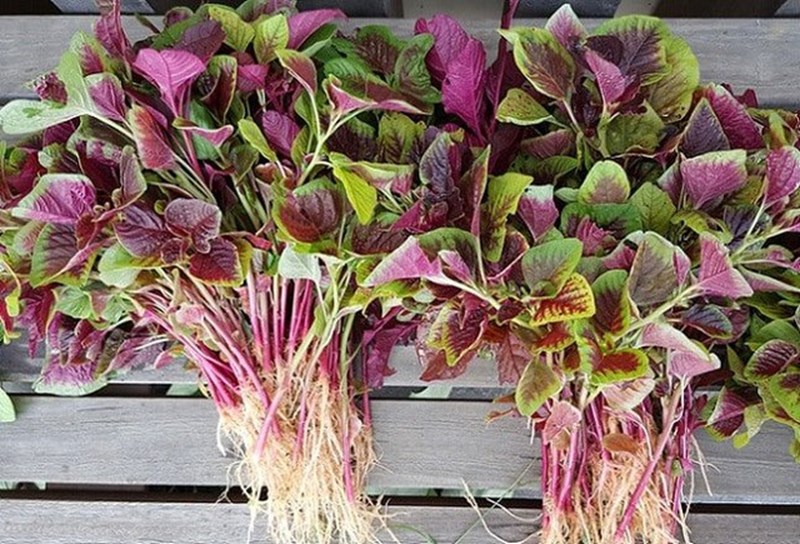
Photo: Internet.
Amaranth can be boiled, used in soups, or stir-fried, all of which are delicious and good for your health. In addition, this plant is also used as a medicinal ingredient.
Amaranth is also a familiar remedy in Traditional Chinese Medicine. Amaranth has a sweet taste and a cooling nature, with effects such as clearing heat, cooling the blood, promoting urination, disinfecting, and detoxifying. In addition, amaranth also helps treat constipation, headaches, and facial flushing.
According to traditional Chinese medicine, amaranth, with its diverse varieties, sweet and cooling taste, and abundance of essential nutrients, is particularly rich in iron. It is known as the "king of iron" among vegetables.
Consuming amaranth can help reduce inflammation, is good for bones, and helps prevent cardiovascular disease and diabetes.
Eating amaranth regularly can help stabilize blood sugar, improve type 2 diabetes, and lower cholesterol levels in the body.

In addition, tocotrienol—a type of vitamin E found in this vegetable—also helps remove bad cholesterol and prevent coronary heart disease.
This vegetable also contains three times more fiber than wheat. Therefore, it can help improve your digestive system and prevent constipation.
This vegetable is also very good for children and the elderly. A decoction made from fresh amaranth leaves can help treat diarrhea, bleeding, and dehydration.
How to choose fresh and delicious amaranth.
When buying amaranth, choose fresh green leaves or those with a reddish-purple tint. Select bunches with firm, sturdy stems, not soft ones, and with leaves that are not bruised or rotten.
Choose to buy amaranth from clean, hygienic, and reputable vendors to avoid buying produce that has been sprayed with excessive pesticides and herbicides.
You shouldn't buy amaranth that is wilted, has yellow leaves, or has soft stems that show signs of sliminess, as this indicates the vegetable has been left for too long and will not taste good.
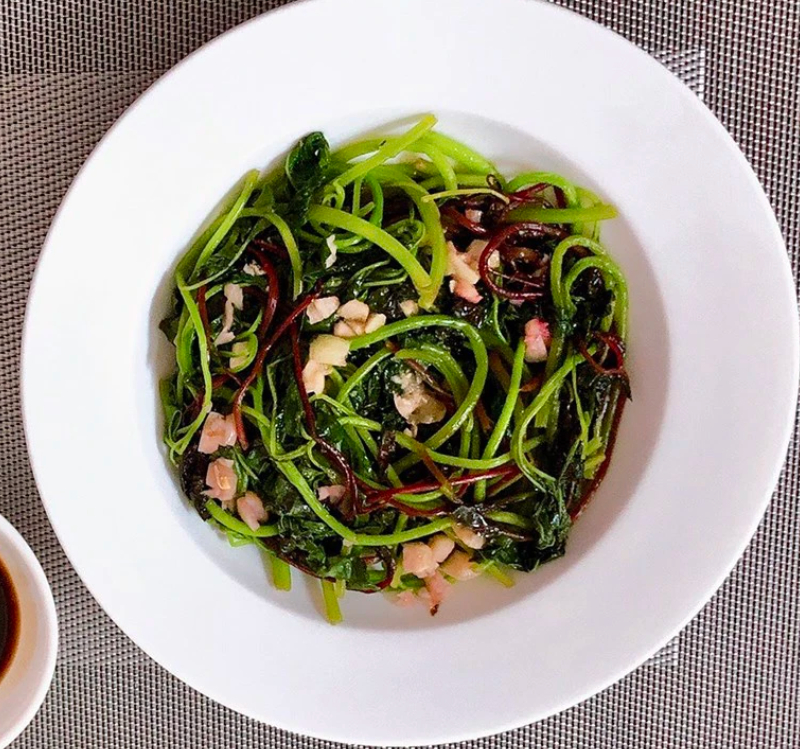
Stir-fried amaranth with garlic
Ingredient
500 grams of amaranth
3 cloves of garlic
2 tablespoons cooking oil
Common seasonings (a small amount of salt/seasoning powder/MSG)
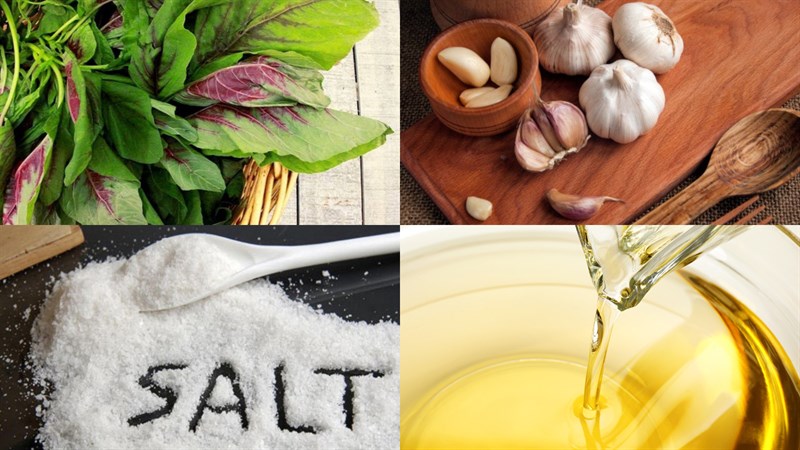
Making
Wash the amaranth leaves, remove the roots, and drain.
Peel the garlic and mince it finely.
Heat 2 tablespoons of cooking oil in a pan. Add the garlic and sauté until cooked and fragrant. Then add the spinach and 1/2 cup of water (rice bowl size) to the pan and simmer for 5 minutes over medium heat until the spinach is tender and cooked through.
Then adjust the seasoning to your liking, turn off the heat, and you're done.
To enhance the aroma of your stir-fry, you can add a little ground pepper.
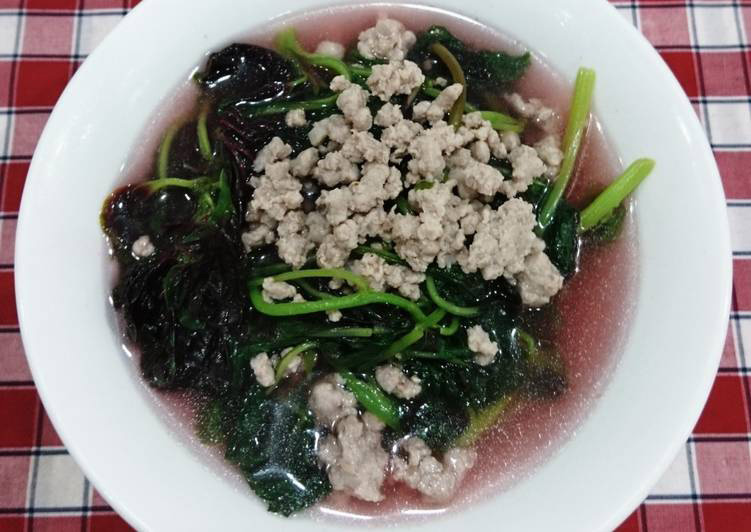
Spinach soup with minced meat
Ingredient:
400g amaranth; 200g minced meat; 3 scallions; 1 tablespoon cooking oil
Salt, sugar, seasoning powder, pepper…
Making:
Place the meat in a bowl, add 1 teaspoon of seasoning powder, 1 teaspoon of salt, 2 teaspoons of sugar, and 1/2 teaspoon of pepper. Mix well, cover the bowl with plastic wrap, and marinate for about 15 minutes.
Heat 1 tablespoon of cooking oil over medium heat. Add the marinated pork to the pot and stir-fry for about 5 minutes. Then add 1 liter of water, turn up the heat, and bring to a boil.
When the meat broth comes to a boil, add the amaranth leaves and cook for about 2 minutes. Season to taste.
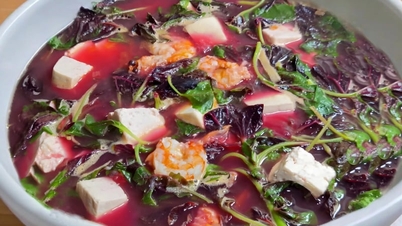
Spinach soup with shrimp
Ingredient:250g fresh shrimp
1 bunch of amaranth
2 dried onions
Fish sauce, salt, seasoning powder…
Remove any damaged leaves from the amaranth, soak in diluted salt water for about 15 minutes, rinse thoroughly, and drain.
Peel the shrimp, remove the heads and veins, wash them thoroughly, cut them in half, and then marinate them in a bowl with 1 teaspoon of salt and 1 teaspoon of seasoning powder for about 10 minutes.Peel, wash, and finely chop the shallots.
Place a pan on the stove, add 1 tablespoon of cooking oil and heat it up. Add the shrimp heads and shells to the pan, stir-fry them with a small bowl of water, then blend them in a food processor until smooth. Strain the mixture through a sieve to extract the shrimp liquid for use in the soup.
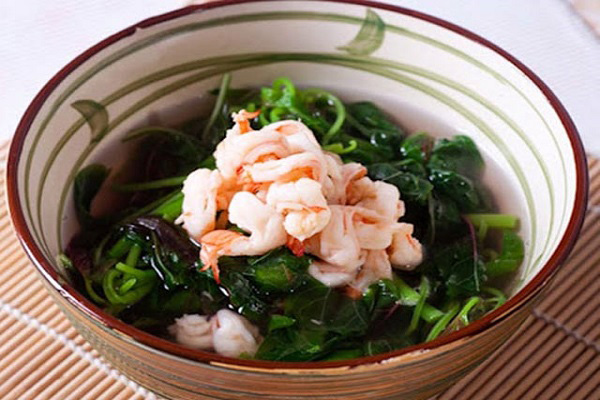
Place a pot on the stove, add cooking oil and dried onions, sauté until fragrant, then add the shrimp and stir-fry until cooked through. Mix the strained shrimp juice with 2 bowls of filtered water and pour into the pot with the shrimp, then bring to a boil.
Add the spinach to the pot, turn up the heat, and cook until the spinach is tender. Season to taste and then turn off the heat.
Ladle the soup into bowls, garnish attractively, and enjoy.
Amaranth soup with century egg
Ingredient:
2 preserved eggs
1 bunch of amaranth
Fish sauce, seasoning powder…
Making
Remove any damaged leaves from the amaranth, soak in diluted salt water for about 15 minutes, rinse thoroughly, and drain.
Peel the outer shell off the century eggs, wash them thoroughly, drain, and then boil them until cooked. Once cooked, remove them from the pot, soak them in ice water for about 5 minutes, then peel and cut them into bite-sized pieces.
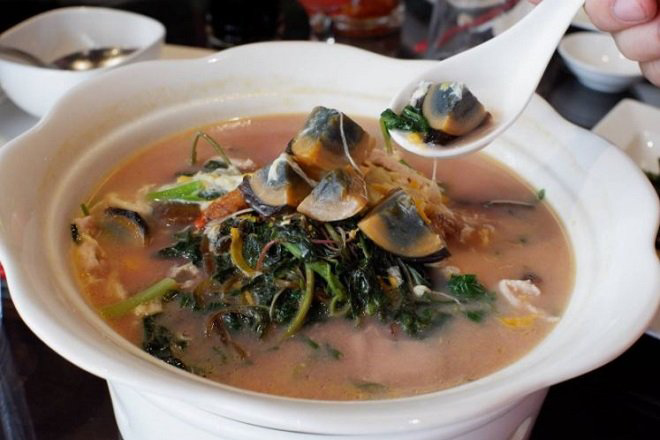
Place a pot on the stove, add 1.5 liters of boiling water, blanch the amaranth leaves until softened, then add the century eggs and cook for about 5 minutes. Season to taste, then turn off the heat.
Source
![[Image] Pleasant weather helps students enter the 10th grade entrance exam with confidence.](https://vphoto.vietnam.vn/thumb/1200x675/vietnam/resource/IMAGE/2026/05/29/1780034401612_ngay-1-thi-lop-10-minh-duy-8-5009-jpg.webp)



![[Photo] Ba Lang An Lighthouse - the "eye of the sea" amidst the "rock museum" of Quang Ngai province.](https://vphoto.vietnam.vn/thumb/1200x675/vietnam/resource/IMAGE/2026/05/29/1780038698840_anh-man-hinh-2026-05-29-luc-14-10-42.png)




























































































Comment (0)