

Green logistics helps businesses reduce costs, improve operations, and win over customers.
The big player accelerates.
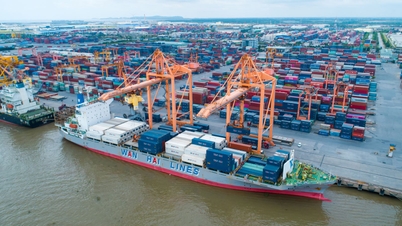
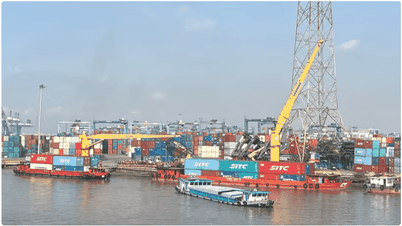
Over a year ago, Maersk, a shipping and logistics company, invested $150 million to build a logistics center in the Shanghai Free Trade Zone (China), expected to be completed in the third quarter of this year. The center will have a warehouse area of approximately 150,000 square meters, including four three-story standard warehouses and a 24-meter-high warehouse.
Notably, this logistics facility utilizes advanced, environmentally friendly materials and is equipped with rainwater harvesting systems and solar panels to optimize water and energy consumption efficiency. The new center also features low-carbon energy systems, including natural ventilation and heating using non-fossil fuels, minimizing negative environmental impacts.
In addition to this center, Maersk also plans to invest in building a smart and green integrated logistics center covering the Asia-Pacific region in the Yantian Comprehensive Bonded Zone (China) to further exploit market potential.
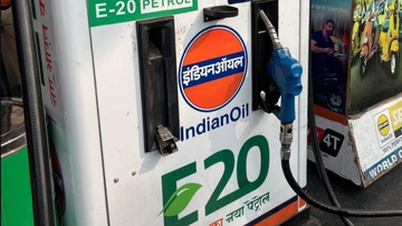
A Maersk representative revealed that the company will have 13 ships running on green fuel by 2026. Initially, the ships may run on fossil fuels, but in the future they will operate on green methanol. Maersk has also signed cooperation agreements with six global energy developers to increase green methanol production to meet shipping needs.
Maersk's competitor, CMA CGM, is also pursuing a green logistics strategy. The company announced the purchase of six methanol-fueled vessels. According to a CMA CGM representative, the company uses alternative fuels such as biomethane, meeting at least 10% of the vessels' fuel consumption in 2023.
The European Union's FuelEU Maritime Regulation (expected to come into effect in 2025) sets a target for ships to significantly reduce greenhouse gas emissions in the coming decades. Meanwhile, according to Facts and Factors' Green Logistics Market Size Research Report, the global green logistics market is projected to grow at a CAGR of 6.10%, reaching over $1,481.5 billion by 2028.
According to investors, Vietnam is benefiting from global manufacturing and retail businesses seeking to diversify their supply sources and reduce their dependence on the Chinese market.
However, Vietnam needs to provide investors with a complete production ecosystem including: diverse suppliers, good information technology linkages, high-quality labor, and optimized, fuel-efficient logistics.
Synchronization strategy
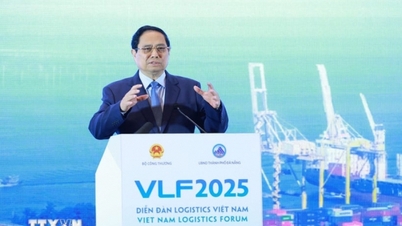
According to statistics from the Vietnam Logistics Business Association (VLA), the transportation industry contributes 24% of global emissions. The journey towards green logistics and rapid adaptation will contribute to the carbon reduction process of the Vietnamese logistics industry in particular and the global industry in general.
“Developing a green supply chain is a must right now. It is closely linked to the goal of reducing net emissions to 0% (Net Zero) that Vietnam committed to at COP 26,” said Mr. Le Duy Hiep, Chairman of VLA.
From the perspective of a logistics operator operating within a cluster model of industrial logistics parks, Ms. Pham Thi Bich Hue, Chairwoman of Western Pacific Group (WPG), affirmed that transportation costs in
Logistics in Vietnam accounts for over 50% of the economy, leading to significant emissions. Therefore, in addition to fuel efficiency, Vietnam needs a comprehensive green logistics development strategy.
Specifically, synchronization between manufacturers and logistics centers will help operators optimize the transportation route. In this solution, government regulation is the most important and obvious factor.
Warehousing is a crucial element in implementing a green logistics model. This is still considered a distant prospect, as 90% of businesses in the industry are small, medium, or micro-enterprises, and implementing green logistics would be costly.
However, Ms. Hue believes this is not a major problem, because if businesses do not yet have the means to switch to more expensive fuels, they can apply optimization solutions. Western Pacific Group is applying a cluster industrial model on a small scale, while the industrial park model will be calculated on a local basis.
Source: https://baodautu.vn/logistics-xanh-tao-loi-the-canh-tranh-ben-vung-d219948.html
![[Photo] First session of the 14th Congress of the Vietnam Trade Union](https://vphoto.vietnam.vn/thumb/1200x675/vietnam/resource/IMAGE/2026/06/03/1780465947883_ndo_br_img-3852-jpg.webp)
![[Photo] General Secretary and President To Lam presides over a meeting with the Central Organizing Committee.](https://vphoto.vietnam.vn/thumb/1200x675/vietnam/resource/IMAGE/2026/06/03/1780482764658_a1-bnd-4741-3342-jpg.webp)

![[Photo] Secretary of the National Assembly Party Committee, Chairman of the National Assembly presides over the meeting of the Standing Committee and Executive Committee of the National Assembly Party Committee.](https://vphoto.vietnam.vn/thumb/1200x675/vietnam/resource/IMAGE/2026/06/03/1780480353201_ndo_br_bnd-2585-jpg.webp)











































![[Video] Sunset at Lap An Lagoon – Where the sun sets over the fishing nets](https://vphoto.vietnam.vn/thumb/1200x675/vietnam/resource/IMAGE/2026/05/31/1780192137701_beach-landscape-sea-water-nature-grass-745871-pxhere-com.jpeg)


























Comment (0)