

Real estate credit has increased sharply.
According to statistics from the State Bank of Vietnam, as of the end of June, real estate credit increased by 4.6%, with real estate business credit increasing by 10.29%. The proportion of real estate business credit accounted for 39-40% of total real estate credit, while credit for real estate consumption only increased by 1.15%.
According to the Finance magazine, statistics from the State Bank of Vietnam (SBV) show that outstanding credit for real estate business activities reached approximately VND 1,093 trillion by the end of 2023. Thus, from the beginning of the year to the end of May 2024, banks have lent an additional VND 112,000 billion to project developers.
Bank credit to the real estate sector has been more active in the first half of this year. Last year, demand for home loans saw a significant decline, with consumer credit increasing by only 1% (the lowest level in the past 5 years), while credit to developers increased by more than 35%. Notably, at one point (the first 9 months of 2023), credit for consumer and self-use purposes saw a decrease of nearly 4% compared to the end of 2022.

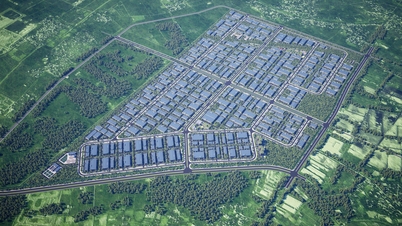
Credit flowing into real estate has increased sharply. (Illustrative image from the internet.)
The real estate market has seen many positive developments since the beginning of the year, with supply and liquidity gradually recovering. According to information from the Ministry of Construction , after a period of restriction, the supply of real estate is shifting in a positive direction. The market has witnessed the return of numerous old projects being restarted and new projects being launched.
Accordingly, in the first half of the year, 18 commercial housing projects were completed, and 23 new projects were licensed. For infrastructure construction projects leading to the transfer of land use rights for housing construction, 32 projects were completed and 16 projects were licensed. Regarding the social housing segment, 8 projects were completed in the past six months.
In terms of purchasing power, the market recorded approximately 253,000 successful transactions, an increase of about 10% compared to the same period last year. The Ministry of Construction assessed that the real estate market has reacted positively with signals such as increased interest and searches for real estate information from customers and investors. However, the recovery rate is very slow, due to both objective and subjective reasons.
Why is credit flowing into real estate?
Currently, numerous banks are competing to lower interest rates on loans for buying land and renovating houses. According to Tien Phong newspaper, Mr. Pham Nhu Anh, General Director of Military Bank (MB), said that banks have lowered interest rates to their lowest level in the past 10 years. Lower capital costs will stimulate increased credit demand.
Economist Can Van Luc, a member of the National Advisory Council on Financial and Monetary Policy, stated that real estate credit currently accounts for one-fifth of the total outstanding credit of the economy. The early application of new laws such as the Land Law, the Housing Law, the Real Estate Business Law, and the Law on Credit Institutions… will contribute to a stronger recovery of the real estate market in the coming period.
Mr. Le Xuan Nghia, a member of the National Monetary Policy Advisory Council, also assessed that access to capital remains a persistent challenge for real estate businesses. In particular, credit remains the primary channel for businesses to utilize their operations, as other fundraising channels are facing difficulties.
Currently, the government has provided various forms of support in terms of interest rates and legal frameworks. Therefore, experts believe that businesses must proactively restructure and orient their business strategies to better suit market trends and the new legal framework. Credit growth in the first six months of the year also shows that confidence in the real estate market has partially recovered. Important new regulations related to real estate have been approved, and although they are not yet in effect, they have already boosted market sentiment.
The increase in credit has reduced the liquidity risks for real estate businesses as many companies proactively repurchase corporate bonds ahead of schedule and restructure debt. Real estate businesses that benefit will be those owning clean land funds and projects that meet the sales targets and serve genuine housing needs.
Dao Vu (Compiled)
Source: https://www.nguoiduatin.vn/ly-do-tin-dung-do-vao-bat-dong-san-tang-manh-204240728175023704.htm









































































































Comment (0)