

Diseases eligible for a one-time social insurance benefit.
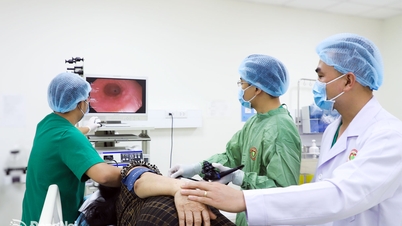
The Ministry of Health has issued Circular 18/2022, effective from February 15, 2023, stipulating that the following individuals are eligible for a one-time social insurance benefit: those suffering from life-threatening diseases such as cancer, polio, cirrhosis, leprosy, severe tuberculosis, or HIV infection that has progressed to AIDS; and those suffering from illnesses that reduce their working capacity by 81% or more and who are unable to manage their own daily activities and require complete care.
Thus, the new circular has simplified the conditions for withdrawing social insurance benefits in a lump sum compared to Circular 56/2017. Previously, workers suffering from life-threatening illnesses had to simultaneously meet the condition of being unable to live independently and requiring a caregiver. The second group consisted of workers suffering from other illnesses that resulted in a reduction of their working capacity or disability of 81% or more, and who were unable to live independently and required a full caregiver.
The remaining cases eligible for a lump-sum social insurance withdrawal remain as per Circular 56/2017, including: workers who have reached retirement age but have not contributed to social insurance for 20 years and wish to withdraw; female full-time workers in communes and wards who retire at age 55 and have contributed to social insurance for 15 to less than 20 years; people who emigrate; and certain cases in the armed forces who, upon demobilization, discharge, or termination of service, do not meet the conditions for receiving a pension.
One-time social insurance benefit
The Social Insurance Law of 2014 stipulates the lump-sum social insurance benefit levels for 2023 as follows:
For those participating in compulsory social insurance, the lump-sum social insurance benefit in 2023 is calculated based on the number of years of social insurance contributions, with each year calculated as follows: 1.5 months of the average monthly salary used for social insurance contributions for years prior to 2014; and 2 months of the average monthly salary used for social insurance contributions for years from 2014 onwards.
If the period of social insurance contributions is less than one year, the lump-sum social insurance benefit is calculated at 22% of the monthly salaries on which social insurance contributions were paid, with a maximum amount equal to 2 months of the average monthly salary on which social insurance contributions were paid.
Specifically, for employees who are officers and professional soldiers of the People's Army; officers and non-commissioned officers of the People's Public Security; personnel working in cryptography receiving salaries equivalent to military personnel; non-commissioned officers and soldiers of the People's Army; non-commissioned officers and soldiers of the People's Public Security serving for a limited period; and military, police, and cryptography trainees receiving living allowances who have contributed to social insurance for less than one year, the social insurance benefit will be equal to the amount contributed, with a maximum of 2 months' average monthly salary used for social insurance contributions.
For those participating in voluntary social insurance, the lump-sum social insurance benefit is calculated based on the number of years of social insurance contributions, with each year calculated as follows: 1.5 months of the average monthly income used for social insurance contributions for years prior to 2014; and 2 months of the average monthly income used for social insurance contributions for years from 2014 onwards.
If the period of social insurance contributions is less than one year, the social insurance benefit will be equal to the amount contributed, with a maximum amount equal to 2 months of the average monthly income used for social insurance contributions.
Procedures for processing lump-sum social insurance benefits
Based on Article 109 of the Social Insurance Law and Point 9, Section III, Part B of the administrative procedures under the authority of Vietnam Social Insurance issued together with Decision No. 222/QD-BHXH dated February 25, 2020, by the Director General of Vietnam Social Insurance;
Required documents:
- Original Social Insurance Book;
- Original Application Form (Form No. 14-HSB);
- For individuals going abroad to settle permanently, they must also submit a copy of the Certificate of Renunciation of Vietnamese Citizenship issued by a competent authority, or a certified or notarized Vietnamese translation of one of the following documents: a passport issued by a foreign country; a visa issued by a competent foreign authority confirming permission to enter the country for the purpose of permanent residence abroad; a document confirming that they are in the process of acquiring foreign citizenship; a document confirming or a permanent residence card or temporary residence permit valid for 5 years or more issued by a competent foreign authority;
- In cases of life-threatening diseases such as cancer, polio, cirrhosis, leprosy, severe tuberculosis, or HIV infection progressing to AIDS: Provide a copy/summary of the medical record. If suffering from other diseases, replace this with a Medical Assessment Report from the Medical Assessment Board indicating a disability level of 81% or more, showing the inability to care for oneself;
- In cases where medical examination fees are paid, additional documents such as invoices or receipts for the examination fees must be provided.
- Original copy of the Personal Declaration on the time and location of service in the Army with regional allowance (Form No. 04B-HBQP issued with Circular No. 136/2020/TT-BQP dated October 29, 2020) for individuals who served in the Army before January 1, 2007, in areas with regional allowances, but whose social insurance book does not fully reflect the information needed to calculate the regional allowance.
Number of documents: 1 set
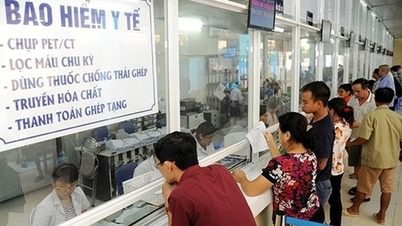
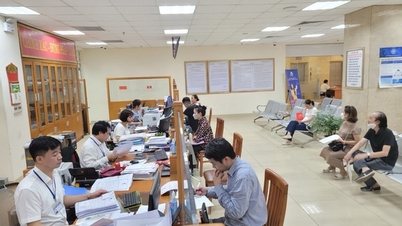
How to submit: Applications can be submitted via one of the following methods: electronically; through public postal services; or directly at the Social Insurance agency.
Processing time: Maximum 5 working days from the date the Social Insurance agency receives all required documents.
Minh Hoa (compiled)
Source
![[Photo] National Assembly Chairman Tran Thanh Man attends the groundbreaking ceremony for the National Highway 1A spatial axis project.](https://vphoto.vietnam.vn/thumb/1200x675/vietnam/resource/IMAGE/2026/05/19/1779161360398_ndo_br_bnd-1412-jpg.webp)
![[Photo] Capturing the moment the tide recedes at Yen Binh Son rapids - a million-year-old scenic spot in Quang Ngai.](https://vphoto.vietnam.vn/thumb/1200x675/vietnam/resource/IMAGE/2026/05/19/1779175463885_yen9-1199-jpg.webp)
![[Photo] General Secretary and President To Lam presides over a meeting on the implementation of Directive No. 34-CT/TW of the Party Central Committee.](https://vphoto.vietnam.vn/thumb/1200x675/vietnam/resource/IMAGE/2026/05/19/1779192417177_anh-man-hinh-2026-05-19-luc-19-06-45.png)
























































![[Photo] General Secretary and President To Lam receives Indian Defense Minister Rajnath Singh](https://vphoto.vietnam.vn/thumb/402x226/vietnam/resource/IMAGE/2026/05/19/1779184046302_anh-man-hinh-2026-05-19-luc-16-46-58.png)
























Comment (0)