

The Mid-Autumn Festival feast is not simply about delicious food, but also holds spiritual value, helping to strengthen family bonds and preserve the beauty of traditional culture.
Mid-Autumn Festival, also known as the Moon Festival or Children's Festival, is one of the most important traditional holidays in Vietnam. Taking place on the 15th day of the 8th lunar month each year, it's a time for families to gather, and for children to enjoy feasts and carry lanterns under the moonlight.
But Mid-Autumn Festival feast It's not simply about arranging fruits and sweets; it also holds rich cultural and spiritual significance, expressing gratitude, blessings, and hopes for the future.
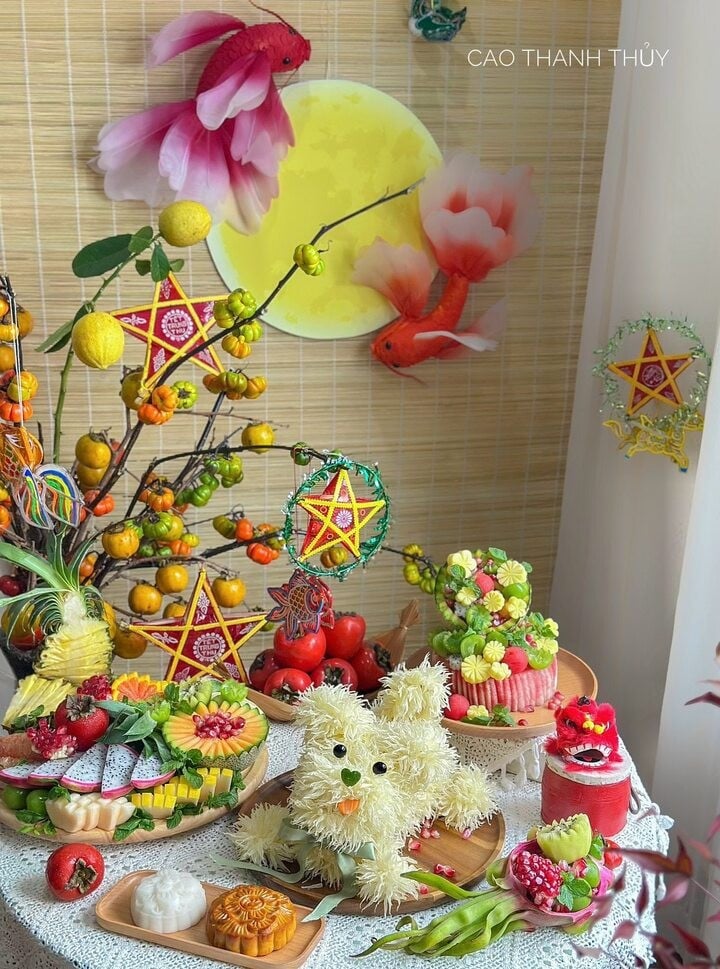
Besides the ancestral offering, many Vietnamese families also prepare a separate feast for the moon-gazing ceremony. Mid-Autumn Festival. The special feature of this feast is the harmonious combination of green and ripe fruits, symbolizing the balance of yin and yang, representing the harmony of heaven and earth according to folk beliefs.
A traditional Mid-Autumn Festival feast typically includes a platter of five kinds of fruit, mooncakes (both baked and glutinous), lotus tea, and various characteristic candies and pastries. In addition, familiar decorative items such as lanterns and star-shaped lamps contribute to the festive and warm atmosphere.
The plate of five fruits is the soul of the feast.
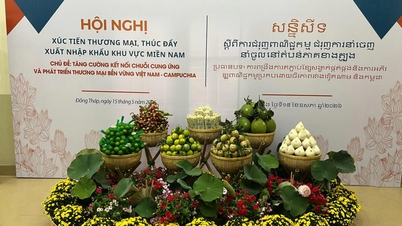
The five-fruit platter is an important and symbolic component of the Mid-Autumn Festival. According to the Five Elements theory, the five fruits symbolize abundance, completeness, and balance. Common fruits include:
- A bunch of green bananas: A symbol of togetherness and protection.
- Grapefruit: A wish for peace, health, and prosperity.
- Persimmon: Symbolizes good luck and hope.
- Custard apple: Represents the aspiration for fertility and abundance in the home.
- Pomegranate: Symbolizes a large family with many children and grandchildren, and a prosperous household.
Mooncakes – a key highlight
If the five fruits represent the soul of the feast, then mooncakes are the centerpiece. Mooncakes are typically round or square, symbolizing heaven and earth. Additionally, mooncakes shaped like carp or plump pigs are also popular, bringing joy to children.
The combination of mooncakes and glutinous rice cakes symbolizes the harmony and completeness of life. Enjoying these cakes with lotus tea, jasmine tea, or black tea is a beautiful tradition, evoking the flavors of autumn while showcasing the sophistication of Vietnamese culinary culture.
Sticky rice with green rice flakes
Sticky rice with green beans, or "cốm" sticky rice, is an indispensable part of the Mid-Autumn Festival feast. It's made from three simple yet flavorful ingredients that evoke the taste of autumn: mung beans, young green beans, and grated coconut. Besides being delicious, this dish also symbolizes togetherness, representing the bond of family as they gather around the table, enjoying traditional flavors under the full moon.
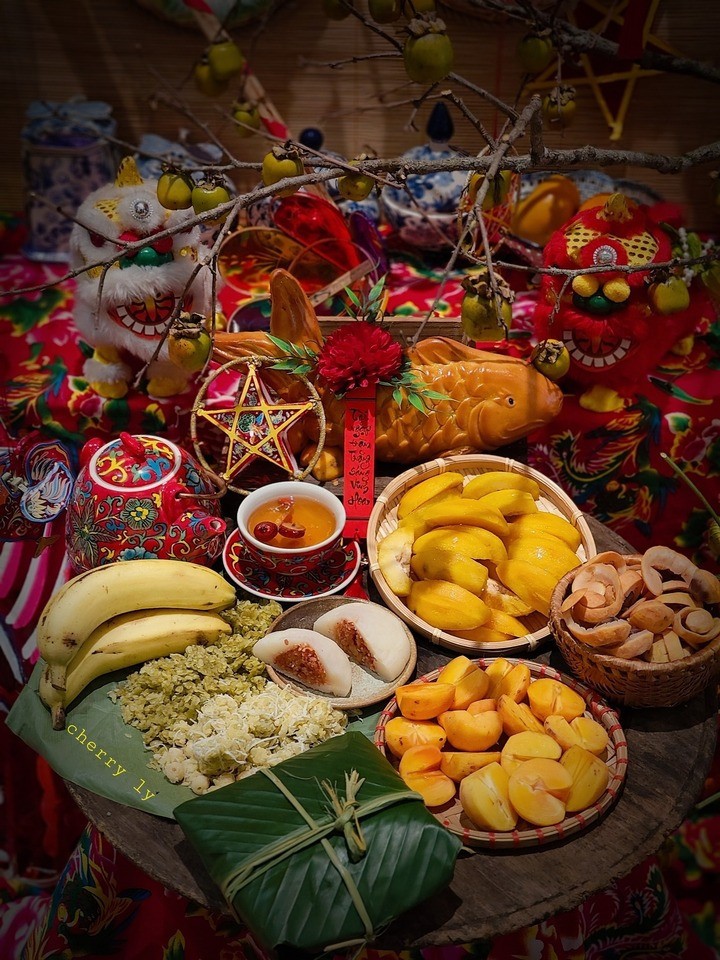
Lanterns and decorative items
A Mid-Autumn Festival feast is incomplete without dazzlingly colorful lanterns. From star-shaped lanterns and spinning lanterns to rabbit-shaped lanterns, all contribute to the festive atmosphere. In particular, the image of a dog skillfully crafted from grapefruit segments has long become a familiar symbol, closely associated with the childhood memories of many generations.
Unlike the ancestral offering, the moon-gazing feast can be arranged on a large table with a variety of fruits, cakes, and sweets.
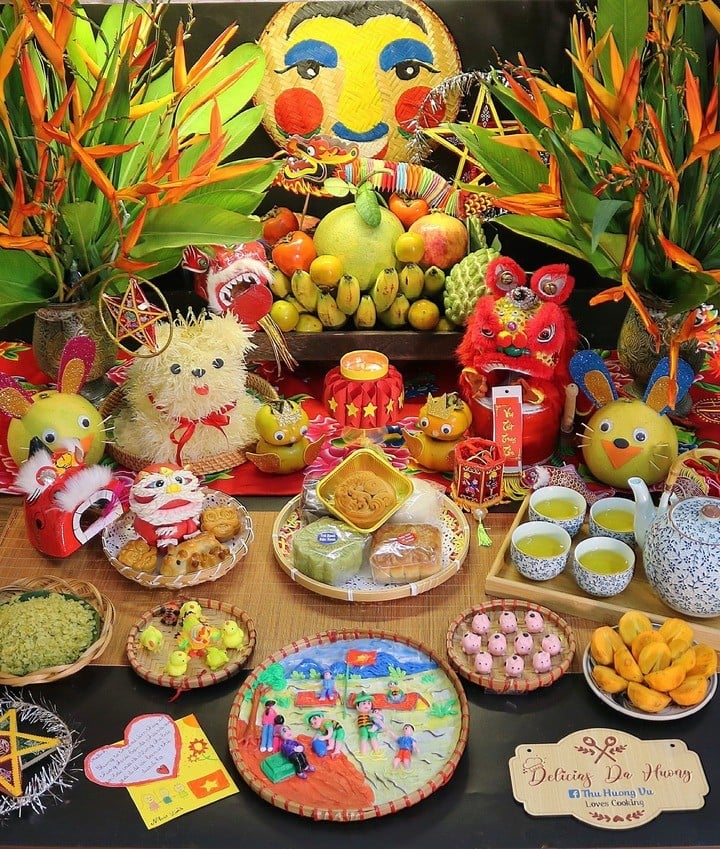
Guide on how to arrange a beautiful Mid-Autumn Festival feast.
To create a Mid-Autumn Festival feast that is both visually appealing and meaningful, homeowners can refer to traditional arrangements combined with modern creativity.
First, prepare and select the ingredients. Prioritize fresh, visually appealing fruits that are not bruised, and still have their stems and leaves intact. Choose cakes from reputable brands with intact packaging. For presentation, you can use large ceramic plates, traditional bamboo trays, or modern decorative trays to create a harmonious look.
Next, decorate the fruit platter. First, place the bunch of green bananas at the bottom of the large plate, with the curve of the bunch facing upwards, like a sturdy arm embracing the other fruits. The pomelo should be placed in the center, nestled within the banana bunch. Then, arrange smaller fruits such as persimmons, custard apples, and pomegranates around it to create balance. When arranging, pay attention to coordinating bright, harmonious colors so that the fruit platter is both visually appealing and auspicious according to feng shui principles.
The next step is arranging the sweets and other items. After completing the fruit platter, mooncakes are placed around it. Various candies and puffed rice snacks can be placed in small, pretty plates to add variety. Some families even skillfully carve fruits into the shapes of jade rabbits or carp to enhance the creativity.
Finally, small lanterns, candles, and a pomelo dog should be placed in prominent positions, both to create focal points and to illuminate the space.
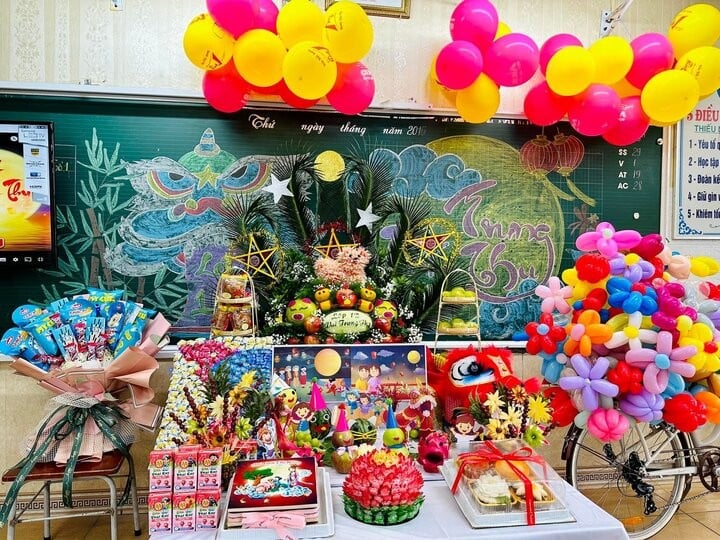
The moon-gazing feast is not just a combination of flavors and colors, but also encapsulates spiritual values. It represents a prayer for a bountiful harvest, a prosperous family, and healthy children. It is also a symbol of family reunion, as all generations gather to admire the moon and share stories of the past.
For generations, the Mid-Autumn Festival feast has always held a special place in Vietnamese cultural life. Although many modern dishes exist today, the flavor of mooncakes, green bananas, golden pomelos, and the shimmering light of star-shaped lanterns remain beautiful memories in everyone's hearts.
Source: https://baolangson.vn/mam-co-trong-trang-dem-trung-thu-gom-nhung-gi-5060697.html

![[Image] Hanoi's urban life under the challenge of a "scorching hot" environment](https://vphoto.vietnam.vn/thumb/1200x675/vietnam/resource/IMAGE/2026/05/25/1779706979265_nang-nong-t5-2026-minh-duy-7-4636-jpg.webp)























































Comment (0)