

As expected, air conditioning and refrigeration equipment are operating at full capacity while the electricity sector continuously calls for energy conservation. Authorities are also deeply concerned about the increased greenhouse gas emissions from these devices, further exacerbating the global warming effect.
El Nino and the chronic headache for the electricity industry.
The weather in 2023 saw an early onset of hot weather with temperatures higher than the multi-year average in both the North and South of Vietnam. The heat and rising temperatures led to increased demand for air conditioning and ventilation systems in households, production facilities, agencies, and construction sites for extended periods, resulting in significantly higher electricity consumption. Mr. Vu Xuan Khu, Deputy Director of the National Power System Dispatch Center, stated that although the intense heatwave in early May only lasted a few days in the North, electricity consumption and output in the North and nationwide increased significantly.
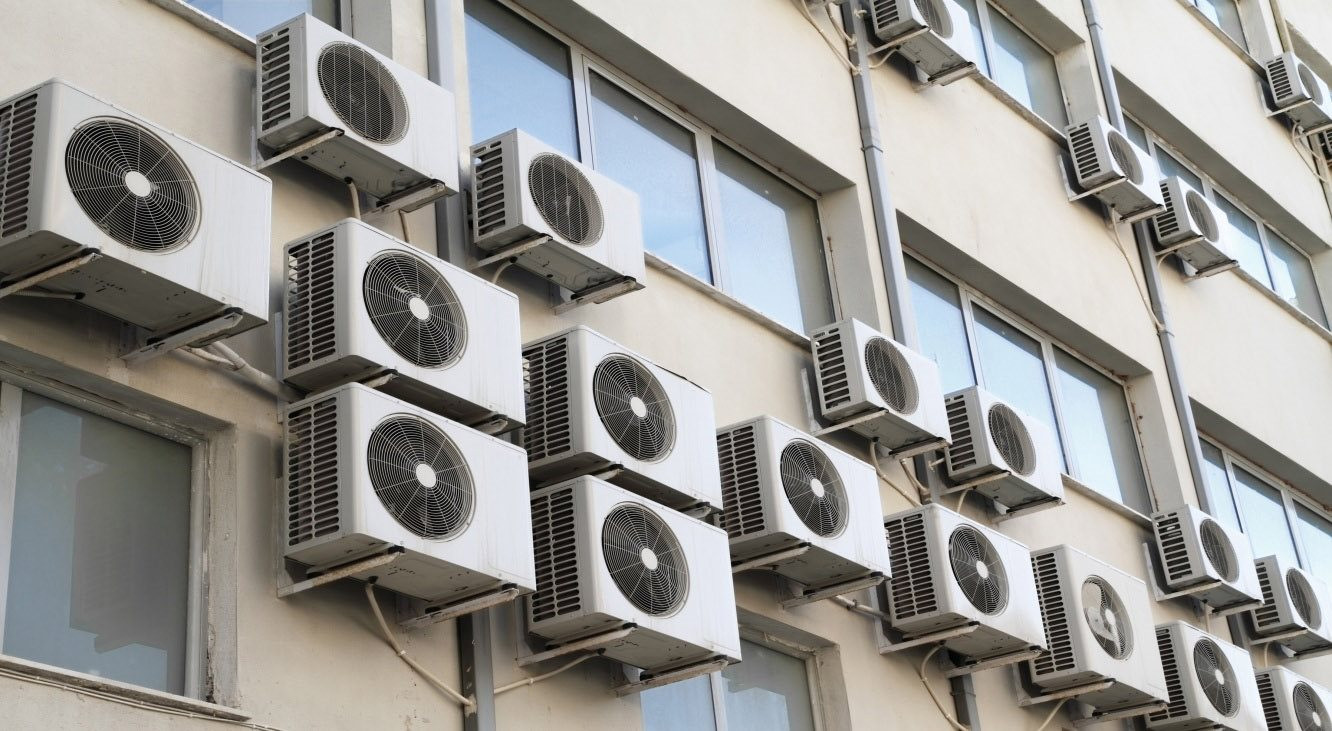
On May 6th alone, the heat reached record levels. Despite it being a weekend, nationwide electricity consumption reached over 43,300 MW, an increase of approximately 6% compared to the highest consumption day in May 2022. Total electricity consumption nationwide on that day also exceeded 895 million kWh.
According to forecasts from the National Center for Hydrometeorology and as a general rule, May is not the peak of the hot season, but rather June and July, possibly even extending into August. Notably, due to the influence of the El Nino phenomenon, temperatures in 2023 are predicted to be about 0.5°C higher than the average for the same period.
In the northern region in particular, temperatures tend to be higher than in 2022; the number of hot days and the frequency of hot weather are also longer. This will lead to a further increase in electricity demand in the coming period.
According to estimates by the Climate Change Department ( Ministry of Natural Resources and Environment ), cooling systems, including air conditioners, fans, and coolers, account for up to 40% of domestic electricity demand in Vietnam and 25-40% of electricity demand in the service and commercial/public sectors. Cooling technology is widely applied in food preservation, domestic use, healthcare, industry, data centers, research, etc.
The Vietnam Electricity Group (EVN) warns that if severe and widespread drought occurs, with no floods or low water levels in hydropower reservoirs, the northern power system could face the largest shortage, estimated at around 1,600-4,900 MW during peak hot months. Even before the peak hot season, EVN continuously advises people to use electricity economically, use air conditioners judiciously, and avoid using multiple high-power electrical appliances simultaneously.
Cooling must be... green.
The increasing demand for air conditioners and cooling systems not only consumes a significant amount of electricity but also emits substances that deplete the Earth's protective ozone layer and greenhouse gases that increase the global warming effect – the main manifestation of which is El Niño. For many years, this has been a vicious cycle that has been difficult to break because air conditioning has become an essential need for people as their quality of life has improved. The urgent issue is to control and gradually reduce emissions in the cooling sector, mitigating negative impacts on the environment.
To achieve this, countries and international standardization organizations like ISO have published 50 standards for the air conditioning and HVAC sector and are developing 27 more new standards to update international requirements. Regarding Vietnamese standards, Mr. Trieu Viet Phuong, Deputy Director of the Vietnam Institute of Standards and Quality, General Department of Standards, Metrology and Quality ( Ministry of Science and Technology ), stated that there are currently 34 Vietnamese National Standards (TCVN) on air conditioning and HVAC that are completely equivalent to ISO standards; and 7 TCVN on energy efficiency of air conditioning and HVAC, meeting the regulations of the Law on Economical and Efficient Use of Energy.
The World Bank estimates that by 2020, Vietnam may have lost up to $518 million due to increased cooling costs, contributing to the overall losses from the impacts of climate change.
Overall, Vietnamese standards (TCVN) have helped businesses manufacturing and importing air conditioners and HVAC systems improve equipment quality, overcome technical barriers in trade to meet domestic requirements, and expand into international markets. However, the number of Vietnamese standards still lags behind ISO standards. Given the limited state resources, completing the national standards system will require greater collaboration from stakeholders such as research institutes, universities, associations, and businesses in the HVAC and air conditioning sectors.
According to Mr. Nguyen Tuan Quang, Deputy Director of the Climate Change Department (Ministry of Natural Resources and Environment), if left uncontrolled, emissions from cooling processes in Vietnam are expected to double by 2030 and triple by 2100.
Over the past period, the Ministry of Natural Resources and Environment, acting as the national focal agency, has advised and submitted to the National Assembly and the Government for promulgation legal documents, especially the 2020 Environmental Protection Law, to create a legal framework for managing ozone-depleting substances and greenhouse gases in Vietnam. Requirements for sustainable cooling have also been included in Vietnam's updated Nationally Determined Contribution (NDC) (2022) and the National Climate Change Strategy up to 2050.
Currently, the Department is collaborating with the Southeast Asian Energy Transition Partnership to study the current state of the cooling sector and propose a plan for building a national green cooling program to promote the transition to high-energy efficiency and low-carbon technologies, and enhance energy savings in the cooling sector.
The results of this research will provide the necessary data for the Ministry of Natural Resources and Environment to use in developing the Plan for managing the elimination of ozone-depleting substances and controlled greenhouse gases, to be submitted to the Prime Minister for consideration and promulgation in 2023.
Source

![[Image] Hanoi's urban life under the challenge of a "scorching hot" environment](https://vphoto.vietnam.vn/thumb/1200x675/vietnam/resource/IMAGE/2026/05/25/1779706979265_nang-nong-t5-2026-minh-duy-7-4636-jpg.webp)


![[Image] Close-up view of the interchange connecting the two expressways and Long Thanh Airport.](https://vphoto.vietnam.vn/thumb/1200x675/vietnam/resource/IMAGE/2026/05/25/1779703378210_ndo_br_z7863716673926-224453a31600126cce10622af6290afd-4549-jpg.webp)


























































































Comment (0)