


A naval officer assists residents in navigating a flooded street after heavy rains in Veracruz, Mexico, on October 12, 2025. (Photo: AP)
The upcoming Atlantic hurricane season may be less intense than usual due to the developing and strengthening El Niño phenomenon, according to the U.S. National Oceanic and Atmospheric Administration (NOAA).
In its recently released hurricane season outlook, NOAA predicts a 55% probability that this year's hurricane season will be below average. The agency forecasts 8-14 named storms, with 3-6 of them likely to intensify into hurricanes and 1-3 reaching major hurricane status.
A typical Atlantic hurricane season includes about 14 named storms, 7 of which intensify into hurricanes, and 3 that reach major hurricane status, with wind speeds exceeding 177 km/h.

People walk through the Santa Cruz area of Jamaica after Hurricane Melissa swept through on October 29, 2025. (Photo: AP)
Many private and academic forecasting groups also believe this year's hurricane season may be below average. The average forecast from these groups indicates around 12 named storms, 5 strengthening into hurricanes, and 2 reaching major hurricane status. The cumulative cyclone energy index, used to measure the strength and duration of storms, is predicted to be around 80% of normal.
Colorado State University (USA), a leading institution in hurricane season forecasting since 1984, predicts that this year's hurricane activity could be the lowest since 2015. This also coincides with the strongest El Niño event in 75 years.
El Niño is a natural phenomenon where the waters of the central Pacific Ocean warm up, potentially altering global weather patterns. Scientists believe that El Niño typically reduces hurricane activity in the Atlantic, while increasing the number of powerful storms in the central and eastern Pacific.
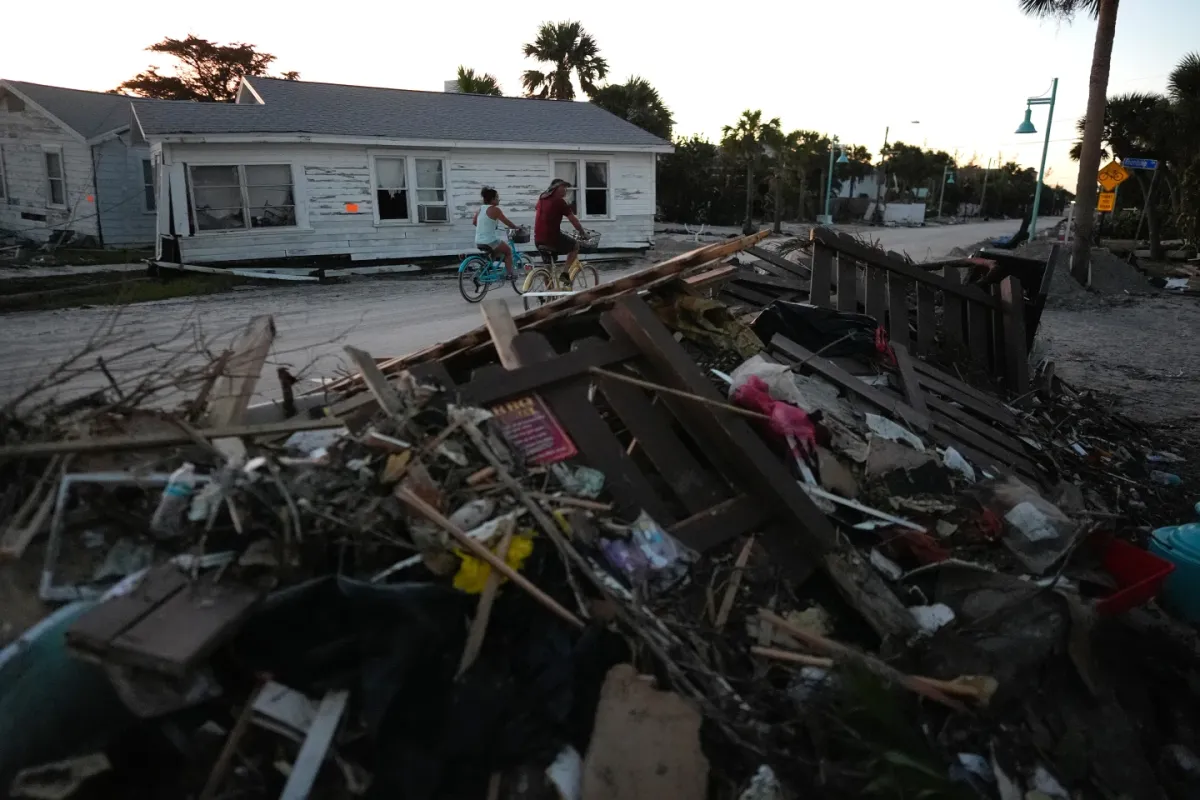
People cycle through areas of damaged homes and rubble after Hurricane Milton in Florida, USA, on October 13, 2024. (Photo: AP)
According to experts, El Niño increases wind shear, which is the change in wind direction or speed with altitude. This phenomenon can disrupt the structure of thunderstorm clouds that form storms, pushing dry air into the storm system and hindering the storm's intensification.
However, meteorologists warn that a less active hurricane season doesn't mean it's at risk of disappearing. Even a single hurricane can cause significant damage. According to the insurance group Munich Re, global damage from tropical cyclones has increased from an average of $11.4 billion per year in the 1980s to $109.7 billion per year over the past 10 years.
Forecasts indicate that the hurricane season in the Eastern Pacific will begin on May 15th, while the Atlantic hurricane season will start on June 1st. Both hurricane seasons are expected to end around November 30th.
Source: https://vtv.vn/du-bao-ve-muc-do-mua-bao-dai-tay-duong-100260521232459836.htm



![[Image] Pleasant weather helps students enter the 10th grade entrance exam with confidence.](https://vphoto.vietnam.vn/thumb/1200x675/vietnam/resource/IMAGE/2026/05/29/1780034401612_ngay-1-thi-lop-10-minh-duy-8-5009-jpg.webp)
![[Photo] Ba Lang An Lighthouse - the "eye of the sea" amidst the "rock museum" of Quang Ngai province.](https://vphoto.vietnam.vn/thumb/1200x675/vietnam/resource/IMAGE/2026/05/29/1780038698840_anh-man-hinh-2026-05-29-luc-14-10-42.png)







































































































Comment (0)