


Users of dating apps and websites need to be wary of sweet talk and tempting promises. (Source: cpcs.vn)
Money lost, love gone.
With the development of information technology, many dating websites and apps are now used by people hoping to find their ideal partner. However, instead of finding happiness, they often become victims of emotional scams perpetrated by unscrupulous individuals.
In June 2023, the Hanoi City Police Investigation Agency initiated legal proceedings and temporarily detained TAS (44 years old, residing in Tam Hung commune, Thanh Oai district, Hanoi) for the crime of fraud and appropriation of property. It is known that TAS deceived seven women both emotionally and financially. TAS's modus operandi involved creating a Facebook account, presenting himself as having a stable and respectable job, living with retired parents, and siblings who were teachers. Of course, all of this was false information.
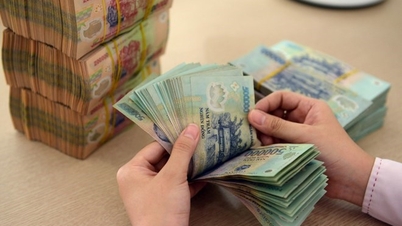
TAS regularly went online to search for targets, primarily naive, gullible, and emotionally vulnerable women. Once a victim took the bait, S introduced himself as a single man who, in addition to his regular job, also owned a private company. After dating the victims, S would use the excuse of his company facing difficulties to borrow money, accompanied by sweet promises. Notably, S only accepted cash, not bank transfers, to easily erase any traces. Finally, when he saw that the victim was financially exhausted, S would break up with them, threatening and verbally abusing them if they demanded their money back. The total amount of money S defrauded from his victims reached 2.5 billion VND.
Currently, a particularly prevalent online romance scam involves impersonating foreigners to befriend people on social media, then pretending to send gifts to Vietnam in order to extort money. Specifically, these individuals introduce themselves as foreign officers, doctors, businesspeople, lawyers, etc., using social media to make friends and seek love. Once they gain the victim's trust, they often exploit greed, claiming they will send gold, US dollars, or other valuable gifts to Vietnam. After some time, the victim receives a call from a "customs officer" demanding a fine ranging from tens to hundreds of millions of Vietnamese dong, claiming the package was held because it contained a large amount of US dollars or valuable items. If the victim falls for the trap and transfers money once, they will demand more money multiple times to drain the victim's resources.
Besides deception and extortion, many individuals are also "disguised" human traffickers operating online. For example, in 2021, the People's Court of Cao Bang province sentenced TVM to 22 years in prison for the crimes of: Human trafficking; trafficking of persons under 16 years of age; and "Fraudulent appropriation of property." Specifically, TVM (from Cho Moi district, Bac Kan province) was contacted by a Chinese man seeking to buy women. TVM met NTH (from Bao Thang, Lao Cai) online, and after dating online for a while, he persuaded H to go to China to work. However, M colluded with several individuals to sell H to China, while M remained in Vietnam and received the agreed-upon sum of 10 million VND. H was taken to China to be sold into prostitution, but fortunately escaped and reported the incident to a Chinese police station.
Although none of the above are new scam methods, many victims still fall for them, losing relationships, money, and suffering severe psychological trauma. According to victims' descriptions, the scammers often present themselves as attractive individuals with respectable jobs and wealthy lifestyles. After getting to know each other and chatting for a while, the scammers offer to send expensive gifts to Vietnam or borrow money from their "lovers" for joint investments, business ventures, or partnerships. Once the victims trust them and fall into the trap, the scammers usually disappear and cut off all contact immediately.
In reality, many victims are vigilant, but not everyone can escape the sophisticated traps set by scammers. Especially with the development of information technology, Photoshop, and artificial intelligence, many fraudsters can "change faces" (using Deepfake technology) to appear as attractive, successful men and women in video calls, gaining the trust of their victims.
Beware of tempting offers.

According to a survey by Decision Lab of 1,012 Vietnamese people, 65% are using at least one dating app. Tinder is the most popular dating app (approximately 22%), followed by messaging apps like Zalo and Telegram (around 21%), and Facebook (around 17%). Regarding frequency of use, the report indicates that Vietnamese people use dating apps quite frequently, with nearly 30% of respondents using them daily, and 19% using them 2-3 times a week. While the online platform offers advantages such as easy communication, making friends, and finding suitable partners, many people still fall victim to scams, financial fraud, and even human trafficking.
According to the Information Security Department (Ministry of Information and Communications), in the first six months of 2023 alone, online fraud in Vietnam increased by 64.78% compared to the same period last year; and by 37.82% compared to the last six months of 2022. Data from the Internet Crime Reports organization indicates that in 2020 alone, 24,000 people were victims of online romance scams on social media, reporting financial losses exceeding $600 million. Despite numerous reports of romance scams involving the misappropriation of assets, many people are still blinded by greed and emotions, falling prey to scams involving real money transfers, only to suffer bitterness and emotional pain.
Exploiting feelings of loneliness, emotional deprivation, naivety, gullibility, and greed, these perpetrators often promise victims large sums of money, along with assurances about their future and the fulfillment of their emotional needs. From there, the criminals easily seize the assets of their online "partners." The amounts can range from a few hundred thousand to billions of Vietnamese dong.
With the current advancements in technology, fraudsters employ increasingly sophisticated methods and tactics, often combining various forms of crime. Some cases of online scams and property theft even involve transnational fraud, causing significant losses. Since most transactions between victims and fraudsters take place online, investigation and tracing criminals is extremely challenging.
In particular, it is very difficult for victims to recover their stolen money themselves, as they are only provided with false information and have no idea who the scammer behind the screen is or where they live. The only way to deal with the scammer and recover the stolen money is to report the fraud to the competent police authorities.
The Cybersecurity Department also advises social media users on this issue, warning them not to trust vague or overly attractive promises and commitments. Scammers often use tricks to build trust and lure victims, so always check and verify information before taking any action involving finances or sending information.
To avoid falling into this scam, the police recommend that people be wary of unfamiliar applications, especially those with deceptive tactics such as: Do not log in to suspicious links; do not provide or enter your username, password, internet banking PIN, OTP code, or account number into unfamiliar websites or links... People need to be highly vigilant and always keep themselves in a safe zone when participating in online dating applications, avoiding being exploited or scammed by malicious individuals. If you encounter such cases, you should immediately report it to the nearest police station for appropriate legal action. To facilitate the investigation, victims should gather all relevant information such as messages, phone numbers, bank accounts used for fraudulent transfers, etc., and provide it to the police.
Maya Diamond, a relationship and marriage consultant in Berkeley, CA, USA, once shared how to identify online scammers: “If you haven’t met someone and they’ve already confessed their feelings, it could be a scam, especially if they haven’t made any effort to meet in person. Another clear sign is when the person you’re dating says they’re working in another country and need money to visit you. Unfortunately, this is a trick that traps many people, even intelligent, knowledgeable, and successful individuals.”
Source link
![[Image] Pleasant weather helps students enter the 10th grade entrance exam with confidence.](https://vphoto.vietnam.vn/thumb/1200x675/vietnam/resource/IMAGE/2026/05/29/1780034401612_ngay-1-thi-lop-10-minh-duy-8-5009-jpg.webp)




![[Photo] Ba Lang An Lighthouse - the "eye of the sea" amidst the "rock museum" of Quang Ngai province.](https://vphoto.vietnam.vn/thumb/1200x675/vietnam/resource/IMAGE/2026/05/29/1780038698840_anh-man-hinh-2026-05-29-luc-14-10-42.png)

























































































Comment (0)