

The Fourth Industrial Revolution is unfolding rapidly globally, driving countries to focus on developing high-tech industries such as semiconductors and artificial intelligence (AI). In Southeast Asia, Malaysia has made impressive progress, rising to second place after Singapore and far ahead of the rest of ASEAN countries.
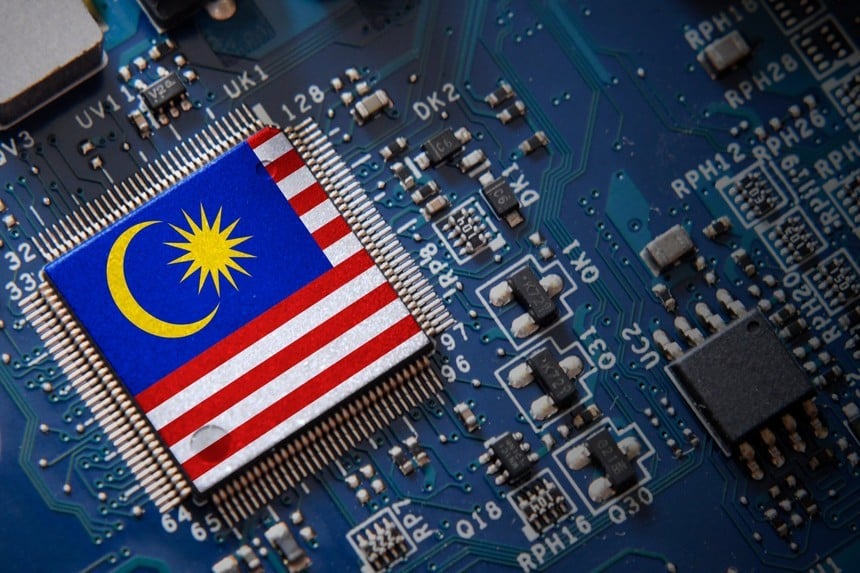 |
| Malaysia is becoming a shining example in Asia in the technology race. (Source: Instagram) |
Thanks to its early strategic steps, Malaysia is becoming a shining example in Asia in the technology race. Among Southeast Asian countries, Malaysia is a successful model, a pioneer with many aspects that Vietnam can learn from and refer to in the development of high-tech industries, especially semiconductors and artificial intelligence.
Ahead of the curve, yet similar.
Malaysia and Vietnam, despite being at different stages of economic development, share several notable similarities in their economic structures. Firstly, in both countries, the service sector contributes the largest share to GDP, typically accounting for around 40-50%. This reflects the general trend of economies shifting from manufacturing-based activities to trade, finance, and tourism.
Furthermore, the industrial sector also holds an equally important position in the economic structure of both Malaysia and Vietnam, with its share fluctuating around 30-40%. Notably, manufacturing and processing industries are the main drivers of growth in this sector in both countries, primarily due to the contributions of FDI enterprises. Meanwhile, the agricultural sector is showing a declining trend in its share and currently accounts for only about 10% of GDP in both Malaysia and Vietnam.
Manufacturing and processing industries are the main drivers of the industrial development of both countries. Besides similar industrial structures, the economic growth models of both countries also share many similarities in their development processes. In the early stages, both Malaysia and Vietnam relied heavily on resource extraction and agricultural exports. However, they gradually shifted to export-oriented economies based on light industries, assembly, and manufacturing, with foreign direct investment (FDI) playing a key role. Currently, both Malaysia and Vietnam are striving to develop a service-based, knowledge-based economy with increasing application of scientific and technological advancements.
Both Malaysia and Vietnam are countries with highly open markets, actively participating in multilateral and bilateral free trade agreements. Therefore, exports and attracting foreign direct investment (FDI) have been the two most important drivers of economic growth for both nations over the years. Exports from both Malaysia and Vietnam typically account for a very high proportion, exceeding 50% of GDP. This is a fairly typical characteristic of developing economies heavily reliant on external markets. Meanwhile, FDI has also contributed significantly to the growth of both countries, especially in export-oriented manufacturing and processing industries.
One factor that helps Malaysia and Vietnam maintain a competitive advantage in exports and attract FDI is their abundant and low-cost labor force. This is a particularly important advantage for labor-intensive industries such as textiles, footwear, and electronic component assembly. In addition, both countries have favorable geographical locations, possess numerous deep-water ports, and well-developed logistics infrastructure. These factors have created a solid foundation for the breakthroughs in exports and foreign investment for both Malaysia and Vietnam in recent years.
In summary, despite being at two different stages of development, Malaysia and Vietnam still possess many significant similarities in economic structure, growth models, and competitive strengths. These common characteristics have created many opportunities for cooperation between the two countries, and at the same time, allow Vietnam to learn from Malaysia's valuable experiences in its development and integration process.
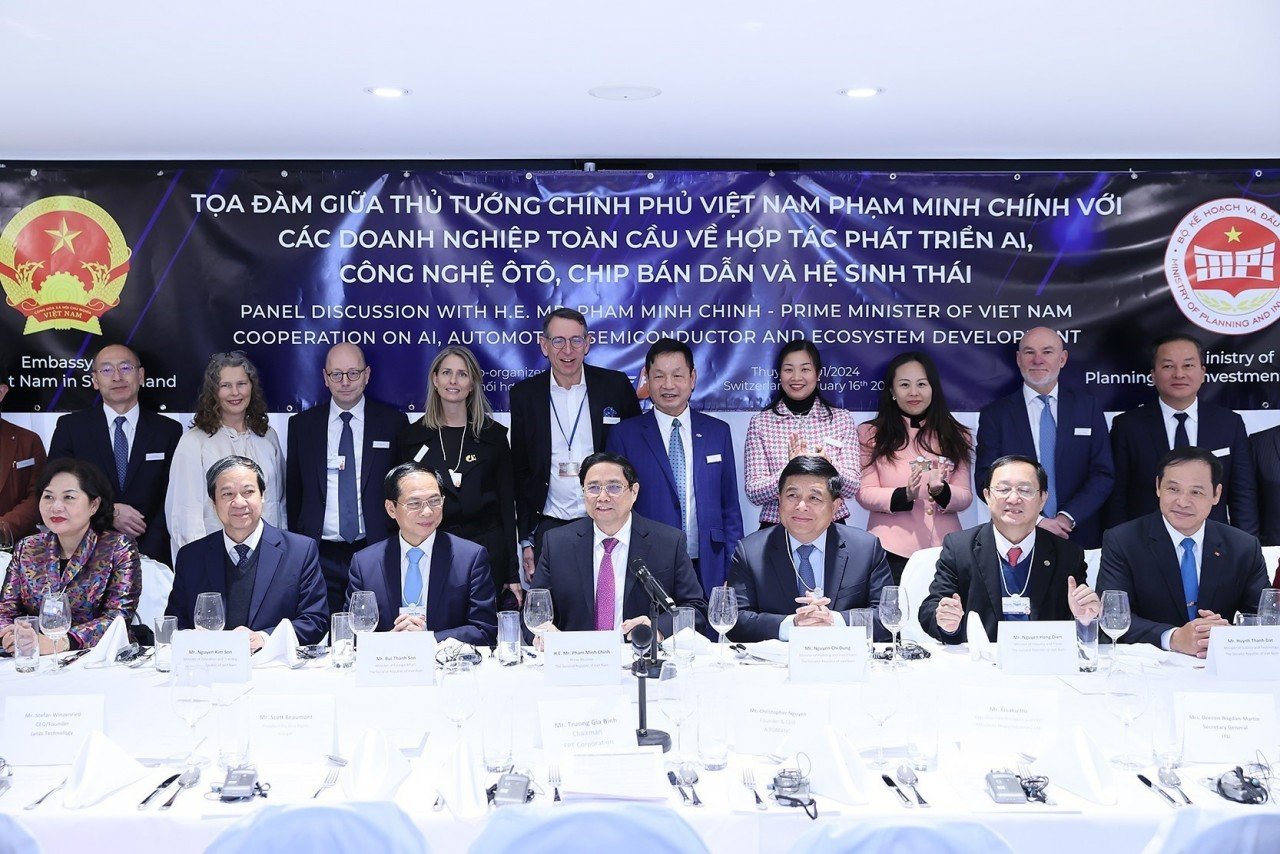 |
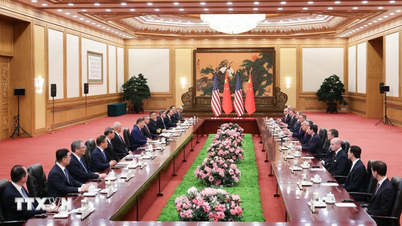
| Prime Minister Pham Minh Chinh attended a roundtable discussion with global businesses on cooperation in AI development, semiconductor chips, and the ecosystem at the annual World Economic Forum 2024 in Switzerland on January 16, 2024. |
A trip to Malaysia and lessons learned.
Malaysia's journey to becoming a semiconductor and AI powerhouse has gone through many stages, driven by the tireless efforts of the government and the collaboration of numerous stakeholders. Throughout this process, Malaysia has implemented a comprehensive and integrated approach, ranging from long-term strategic planning and building a favorable ecosystem to attracting foreign investment, developing human resources, and promoting scientific research.
In the semiconductor sector, Malaysia has been very proactive in attracting foreign investment. The government has offered many attractive incentives regarding taxes, land, infrastructure, and human resources to entice major technology companies. One of the most prominent projects is the Kulim Hi-Tech Park, established in 1996 in Kedah, northern Malaysia.
The Malaysian government has offered special incentives in terms of taxes, land, infrastructure, and human resources to make Kulim an attractive destination for chip and semiconductor component manufacturers. For example, Intel – the American technology giant – decided to build a $1.3 billion chip manufacturing plant in Kulim Hi-Tech Park as early as 1996. This is considered a significant milestone, marking a major turning point in Malaysia's efforts to become a chip manufacturing hub.
Subsequently, a series of other major technology companies such as AMD, Fairchild, Infineon, Fuji Electric, Renesas, etc., successively established factories in Malaysia in the late 1990s and early 2000s. In 2005, AMD opened a $1.7 billion chip manufacturing plant in Kulim. Meanwhile, Infineon also continuously expanded its investments in Malaysia, with total capital reaching $2 billion by 2008. The presence of these "giants" contributed to the formation of a complete supply chain and a strong industry cluster for Malaysia's semiconductor industry.
Thanks to the aforementioned efforts, Malaysia's semiconductor industry experienced spectacular growth in the 1990s and 2000s. Today, this industry contributes approximately 25% of GDP and over 40% of Malaysia's total exports, making the country the 6th largest exporter in the semiconductor industry, generating significant added value and hundreds of thousands of high-quality jobs.
In the field of AI, Malaysia has also taken strong steps. In 2020, Malaysia established the National Blockchain and Artificial Intelligence Commission (NBAIC) and launched the National AI Development Roadmap to promote investment and the application of AI solutions in practice. The NBAIC is under the direction of the National 4IR Council, chaired by the Malaysian Prime Minister. The roadmap identifies four priority areas for AI development: healthcare, education, financial services, and transportation.
Simultaneously, the Roadmap also outlines 19 strategies and 62 specific initiatives to build a national foundation and capacity for AI, create a comprehensive legal framework, promote public-private sector cooperation, attract investment, and develop talent in this field. In 2022, Malaysia adopted five National Technology Roadmaps, encompassing technology development in the fields of electrical and electronics, blockchain technology, artificial intelligence (AI), advanced materials technology, and robotics for the period 2021-2030. Among these, the National AI Roadmap sets a vision to make Malaysia a leading AI innovation and application hub in the ASEAN region by 2030.
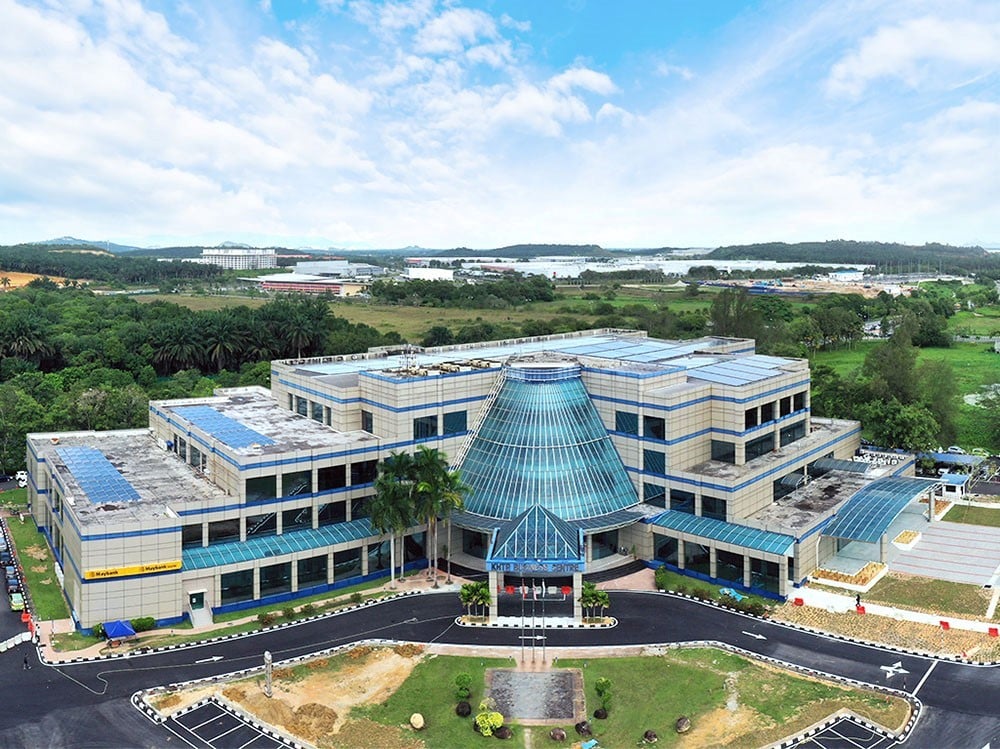 |
Malaysia's Kulim Hi-Tech Park, a high-tech industrial zone. |
Malaysia promotes comprehensive collaboration among the government, academia, industry, and society to build a holistic AI ecosystem. Numerous AI research centers have been established at leading Malaysian universities. Furthermore, the government provides financial support and a favorable legal framework to facilitate technology startups in researching and commercializing AI applications across various sectors. Malaysia also has a roadmap to become one of the top 20 global startup ecosystems.
Another crucial element in Malaysia's technology-forward strategy is the training of high-quality human resources. The country has placed great emphasis on developing its higher education and vocational training systems to provide a skilled workforce for high-tech industries such as semiconductors and AI. Furthermore, the Malaysian government has implemented numerous programs to attract talented experts and engineers from abroad to work in the country, supplementing its domestic workforce.
In fact, Vietnam and Malaysia share many similarities in terms of economic conditions and structures. Therefore, the solutions that Malaysia has implemented can be flexibly adapted and applied to Vietnam's context.
Vietnam has established major directions for the development of Industry 4.0, but it now needs to concretize strategies for key technology sectors such as semiconductors, cloud computing, big data, and IoT. Simultaneously, creating incentive mechanisms and policies to attract large foreign investors in the semiconductor and AI sectors should become a priority in the country's economic development strategy.
Malaysia's experience demonstrates the importance of forming high-tech industrial clusters to build a favorable ecosystem for businesses to thrive, from manufacturing to research and development. Increased investment in scientific research and the development of AI applications will also propel businesses, especially Vietnamese technology startups, up the value chain. Although lagging behind, Vietnam can certainly leapfrog ahead by investing in modern infrastructure and equipment.
Malaysia's experience also highlights the crucial importance of high-quality human resources to meet the demands of advanced technology industries. Improving the quality of higher education and technical vocational training must go hand in hand with promoting support for Vietnamese people abroad through appropriate policies and initiatives, possibly including specific pilot mechanisms regarding salaries, benefits, and social mobilization strategies to attract technology experts and talents to contribute to the country.
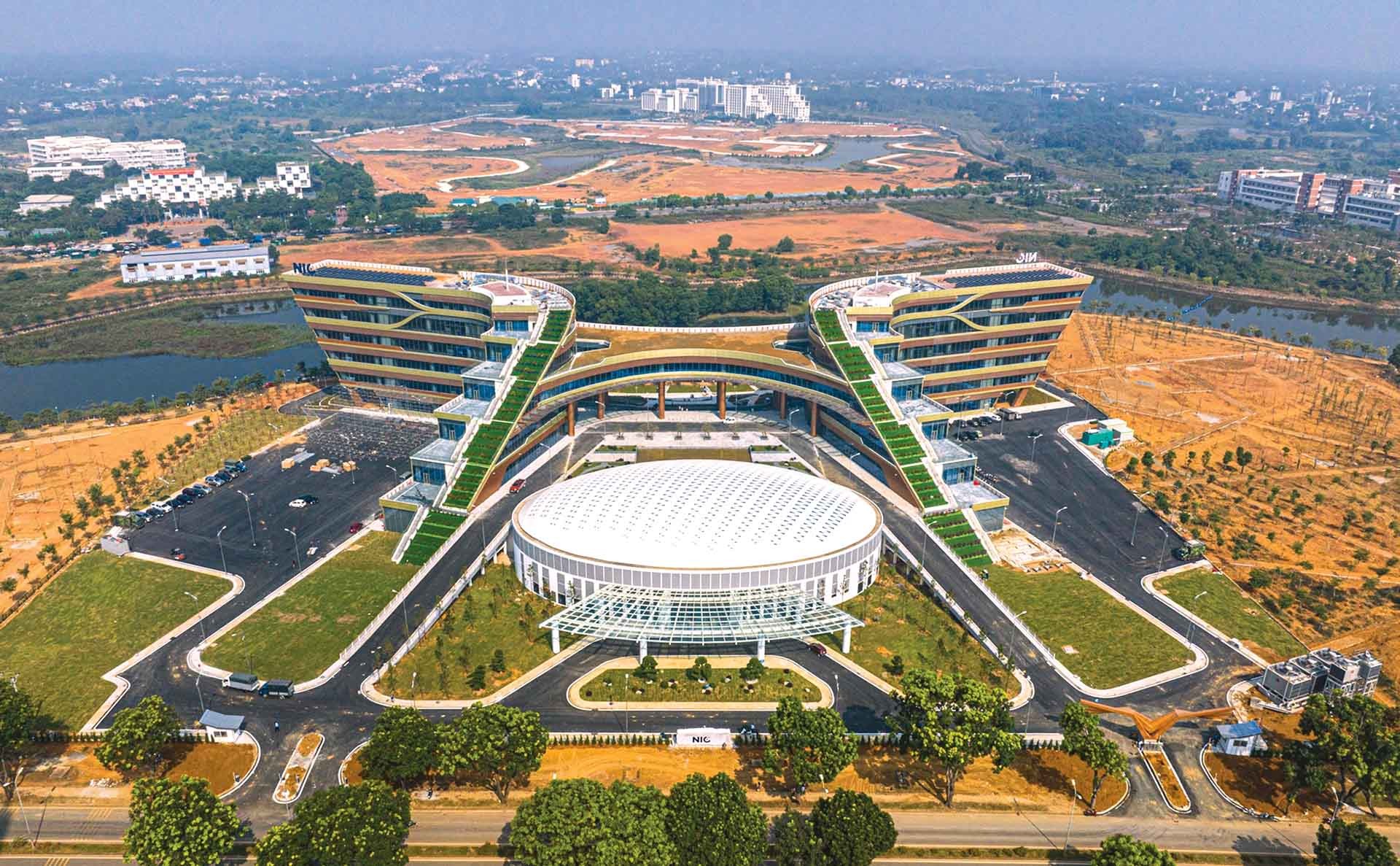 |
| The National Innovation Center at Hoa Lac High-Tech Park (NIC Hoa Lac). (Source: Dan Tri Newspaper) |
Potential for collaboration at multiple levels
First, it is necessary to recognize Malaysia as a developed partner, but not too far behind, and with similarities that can be used as a reference. Based on this, it is important to strengthen high-level exchanges and contacts between Vietnamese agencies and their Malaysian counterparts. Through these visits and exchanges, both sides can discuss policies, laws, and mechanisms to promote bilateral cooperation, creating conditions for signing specific agreements and memoranda of understanding on technology transfer, digital transformation, and innovation.
From a local perspective, Vietnamese provinces and cities should proactively learn from the experiences of some Malaysian states excelling in high-tech fields, particularly in infrastructure development and investment incentives. Some exemplary examples include Penang, often referred to as the "Silicon Valley of Southeast Asia," which could serve as valuable models for Vietnamese localities in establishing semiconductor industrial clusters, attracting investment, and developing high-quality human resources.
Selangor state, with its Cyberjaya smart city and concentration of leading technology corporations, is a prime example of how to build infrastructure and an ecosystem for startups and innovation. Johor state, with its Iskandar Puteri high-tech zone, follows a model of close integration between research institutes, universities, and businesses. Kedah state, home to many high-tech industrial parks such as Kulim Hi-Tech, attracts large multinational corporations like Intel, Bosch, and Panasonic to invest in sectors such as semiconductor manufacturing, electronics, and medical equipment.
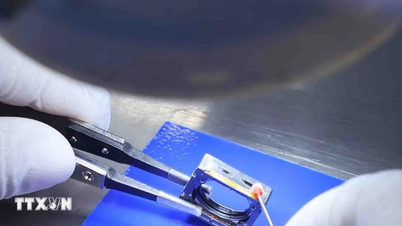
From the business perspective, Vietnamese investors should take advantage of opportunities to access, learn about, and cooperate with leading Malaysian technology corporations, such as: Silterra Malaysia, a manufacturer of analog, mixed-signal, and logic semiconductor chips; Inari Amertron, a provider of comprehensive manufacturing, assembly, and testing services for RF, optical, and sensor products; Unisem (M) Berhad, a specialist in advanced semiconductor processing and packaging services; Vitrox Corporation, a company renowned for its automation, optical inspection, and AI solutions for the semiconductor industry; and Oppstar Technology, a startup providing AI applications for manufacturing optimization and industrial data analysis.
To effectively implement the above activities, close coordination is needed between the Ministry of Foreign Affairs, our representative offices in Malaysia, and relevant domestic agencies such as the Ministry of Science and Technology, the Ministry of Industry and Trade, the Ministry of Information and Communications, and the Chamber of Commerce and Industry. At the same time, it is necessary to leverage the support of industry associations, the business community, and Vietnamese experts in Malaysia to effectively utilize the enormous potential for cooperation with Malaysia in these areas.
Source: https://baoquocte.vn/cong-nghe-ban-dan-va-tri-tue-nhan-tao-o-malaysia-mo-hinh-tham-khao-cho-viet-nam-277138.html
![[Image] Hanoi's urban life under the challenge of a "scorching hot" environment](https://vphoto.vietnam.vn/thumb/1200x675/vietnam/resource/IMAGE/2026/05/25/1779706979265_nang-nong-t5-2026-minh-duy-7-4636-jpg.webp)

![[Image] Close-up view of the interchange connecting the two expressways and Long Thanh Airport.](https://vphoto.vietnam.vn/thumb/1200x675/vietnam/resource/IMAGE/2026/05/25/1779703378210_ndo_br_z7863716673926-224453a31600126cce10622af6290afd-4549-jpg.webp)















































































Comment (0)