

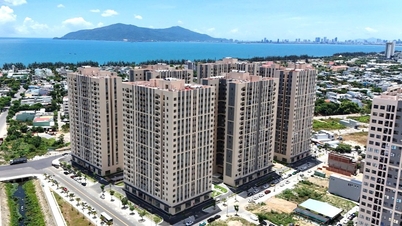
Viglacera Corporation has just commenced construction of its first social housing project for rent in Hanoi , comprising 270 units in the Dang Xa 2 urban area (Gia Lam district), with handover expected on April 30, 2015.
Viglacera estimates the rental price for this type of housing at approximately 30,000 VND/m2/month, which is 40%-60% cheaper than market rates. In addition, the service fee of approximately 2,000 VND/m2/month is also significantly lower than the market rate. The lease term is 5 years. After 5 years, the company will resell the apartments to the tenants at the social housing price stipulated by the Hanoi Department of Finance.
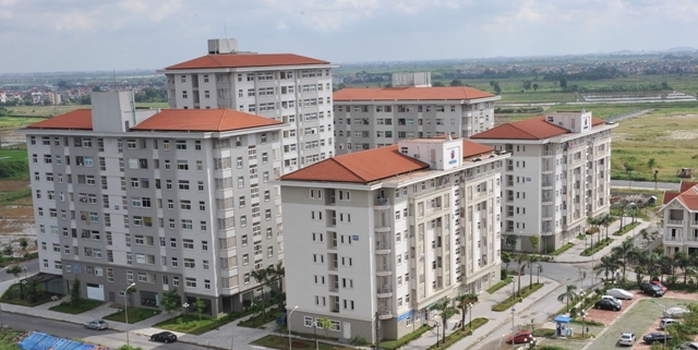
According to this company, in order to offer such low rental prices, they have to use profits from the commercial and social housing segments to offset losses from rental housing, ensuring that the company's profit margin across all three segments does not exceed 10%. "Because social housing rentals are not profitable, businesses are not enthusiastic about them," a Viglacera representative stated.
According to Mr. Le Huu Nghia, General Director of Le Thanh Trading and Construction Co., Ltd., investing in rental housing under the current policy mechanism would not generate enough revenue to cover the initial investment, and loans would be impossible to repay. "Investing in commercial properties and then selling them allows businesses to collect upfront payments from customers for construction. However, building rental properties requires completing the entire project before renting them out, and only then can businesses begin to recover their investment. This makes businesses hesitant to undertake such ventures," Mr. Nghia explained.
In fact, Hanoi, Ho Chi Minh City, Da Nang , etc., already have rental housing options, but the number is very modest, mainly funded by the state budget, and private businesses have not yet participated.
Speaking to the press, Deputy Minister of Construction Nguyen Tran Nam acknowledged that businesses investing in building rental housing are "investing huge sums of money but receiving pennies every month." "Investing in this type of project requires significant resources and long loan terms; the government must provide support for businesses to succeed," Mr. Nam observed.
The demand for social housing in major cities is extremely high. However, connecting investors and those in need of rental housing is not easy due to barriers related to rental eligibility requirements.
“Those renting social housing must meet the same conditions as those purchasing low-income housing, meaning they must be households with confirmed housing difficulties in their place of residence or have an employment contract of one year or more and pay social insurance contributions in the locality (where the rental housing is located). Those who are unmarried and temporarily residing in the area do not meet the housing situation confirmation requirements,” complained Mr. Nguyen Van Dung, an office worker currently renting housing in Hanoi.
The aforementioned situation not only makes it difficult for people in need to access social housing for rent, but also makes businesses hesitant to invest because they worry that after construction, there will be no eligible tenants. Deputy Minister Nguyen Tran Nam affirmed that with the passing of the amended Housing Law, policies for investing in this type of housing will be more specific and provide greater encouragement. The regulation requiring businesses to allocate 20% of their housing stock for rent has been legalized as a mandatory requirement...
In addition to expanding the target group, according to Deputy Minister Nguyen Tran Nam, the procedures for registering to rent a house also need to be simplified, for example, students only need to have a student ID card.
Source: https://nld.com.vn/kinh-te/mo-loi-nha-o-cho-thue-20141201083942216.htm
![[Image] Nearly 125,000 Hanoi students completed the Literature exam for the 10th grade entrance exam.](https://vphoto.vietnam.vn/thumb/1200x675/vietnam/resource/IMAGE/2026/05/30/1780117233041_ndo_br_thiet-ke-chua-co-ten-2-png.webp)






































































































Comment (0)