

"Vietnamese Food is Home" is a collection of short essays about Vietnamese culinary culture, which you can read a little each day, leisurely while enjoying your morning tea or during your last metro ride home. But for Vietnamese women, it can also be seen as an interesting guide to dishes, culinary destinations, and customs and traditions of each Vietnamese family.
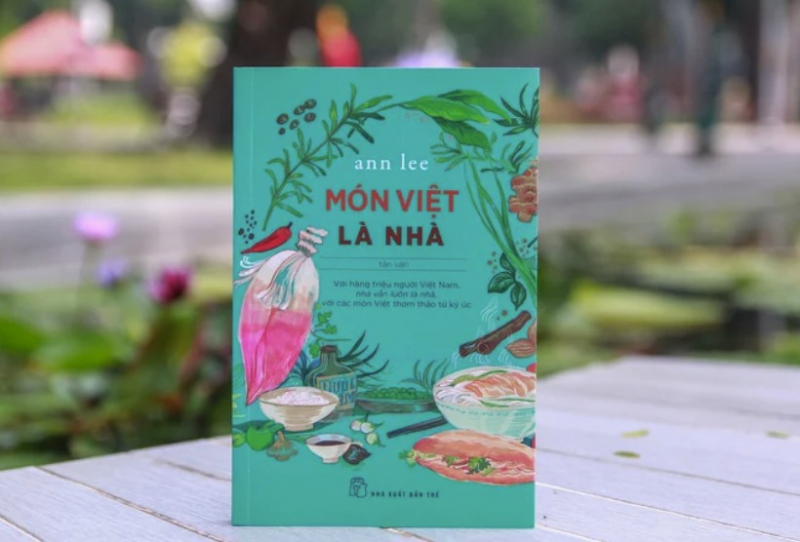
The book is divided into six parts, serving as an allegory for fortune in Vietnamese culture. Part one recounts special market days with traditional snacks from North to South. Part two, titled "Marketplace Meals, Eat If You Miss Out," presents typical culinary experiences with simple yet exquisite dishes like broken rice, porridge, and bread. Part three, Ann Lee divides home-cooked meals by day of the week, recalling the warm, comforting meals that always linger in everyone's minds. Part four, "Early Morning on the First Day of the Lunar New Year," consists of gentle essays about dishes offered as incense on holidays. Part five tells the story of the various leaves in Vietnamese meals, where meat and fish may be absent, but meals are always filled with plenty of vegetables. Part six explores customs and traditions, revealing the underlying cultural currents of Vietnamese meals, from which one can see the warmth and coldness of life reflected in a bowl of rice, a cup of tea, or sometimes just a peppercorn or a chili pepper…
In the opening of the book, Ann Lee writes: “Tigers descend from the mountains and venture out to the open sea, but sometimes they still yearn to turn back, remembering the forest where they were born. Children who leave the sunny, warm city, who leave the green, shady countryside, who leave the garden with its yellow flowering gourds and sweet, cool rainwater, no matter how far they travel across the globe, even when they grow up and grow old, will still remember the flavors of the food that nurtured them, raised by their grandmothers, mothers, and loving aunts and uncles who held their hands in childhood, as well as those who remain, who, no matter how many years pass, still remember the sweet and fragrant tastes they loved. How can we not grow up and forever cherish Vietnamese food, which, no matter where we are, reminds us of our homeland?”
Indeed, when reading the pages of "Vietnamese Food is Home," one can vividly picture the image of the Vietnamese woman in every home. That woman, regardless of her appearance, when standing in the kitchen filled with the aroma of fish sauce and the steaming dishes, will always radiate a bright and cheerful aura. Because no wife or mother would pour her bitter resentments into the meals she prepares for her husband and children.
When writing about familiar, rustic dishes, Ann Lee's descriptions go beyond simply explaining how to cook and eat them. Hidden within each word is the unique flavor of the region where these fresh ingredients originate, the experiences passed down from grandmother to mother to daughter, and the culinary traditions of many generations of Vietnamese people.
Ann Lee schedules her home-cooked meals for the entire week, with a different dish each day, and Sunday being a formal and heartwarming meal for guests. There, Ann Lee plays the role of the head cook, sharing stories about cooking and eating, about the kitchen and the home, about the past and present, all revolving around family meals, with dishes that everyone has tried or eats regularly every day. Yet, some of her writing touches the reader's heart, here and there like a reminder, here and there like a pang in the hearts of children thinking about their parents…
As a daughter, a mother, and soon-to-be grandmother, Ann Lee dedicates her writing to the kindest, warmest, and most cherished words, as if cherishing the affectionate bonds of her life. In her writings about food, about simple pastries, about street food, about home-cooked meals, or about the ingredients of cuisine, it's always clear that she is meticulously attending to the kitchen and meals for her own family every day. The great message behind the story of food and gifts is that wherever there is kitchen smoke, where someone cooks and waits for us to return, that is our home. Food nourishes us daily, and the way women care for their families through meals has nurtured the Vietnamese soul, so that wherever we go, we still find our homeland in the heart of that kitchen.
The culinary journey that Ann Lee presents in this small book is a journey to rediscover the love that is gradually fading away in the modern city, where women have to work to earn money while rushing to prepare meals for their families. It seems Ann Lee wants to gently remind young women, like her daughter, that we are constantly striving to become better versions of ourselves, but what we need to retain is being happy. And the happiness of every Vietnamese family is often most clearly displayed through each meal…
Ann Lee is the pen name of journalist Le Lan Anh, who has spent many years working with women's magazines. She was a co-founder and developer of the publication "Women Today" for many years, and has dedicated much of her passion to topics related to women, marriage, and children. After books such as "Beloved Forty," "Still in Love," "Eat and Love and Eat and Love," "Just Love Is Enough," "Hello, Love of Yesterday," "The 4.0 Daughter-in-Law, the Modern Mother-in-Law," etc., Ann Lee has presented readers with a collection of essays titled "Vietnamese Food is Home," as a gift to women ahead of International Women's Day 2025.


![[Photo] Closing Ceremony of the 10th Session of the 15th National Assembly](/_next/image?url=https%3A%2F%2Fvphoto.vietnam.vn%2Fthumb%2F1200x675%2Fvietnam%2Fresource%2FIMAGE%2F2025%2F12%2F11%2F1765448959967_image-1437-jpg.webp&w=3840&q=75)





































![[OFFICIAL] MISA GROUP ANNOUNCES ITS PIONEERING BRAND POSITIONING IN BUILDING AGENTIC AI FOR BUSINESSES, HOUSEHOLDS, AND THE GOVERNMENT](https://vphoto.vietnam.vn/thumb/402x226/vietnam/resource/IMAGE/2025/12/11/1765444754256_agentic-ai_postfb-scaled.png)




































Comment (0)