

Follow the seasons and go wherever the flowers bloom.
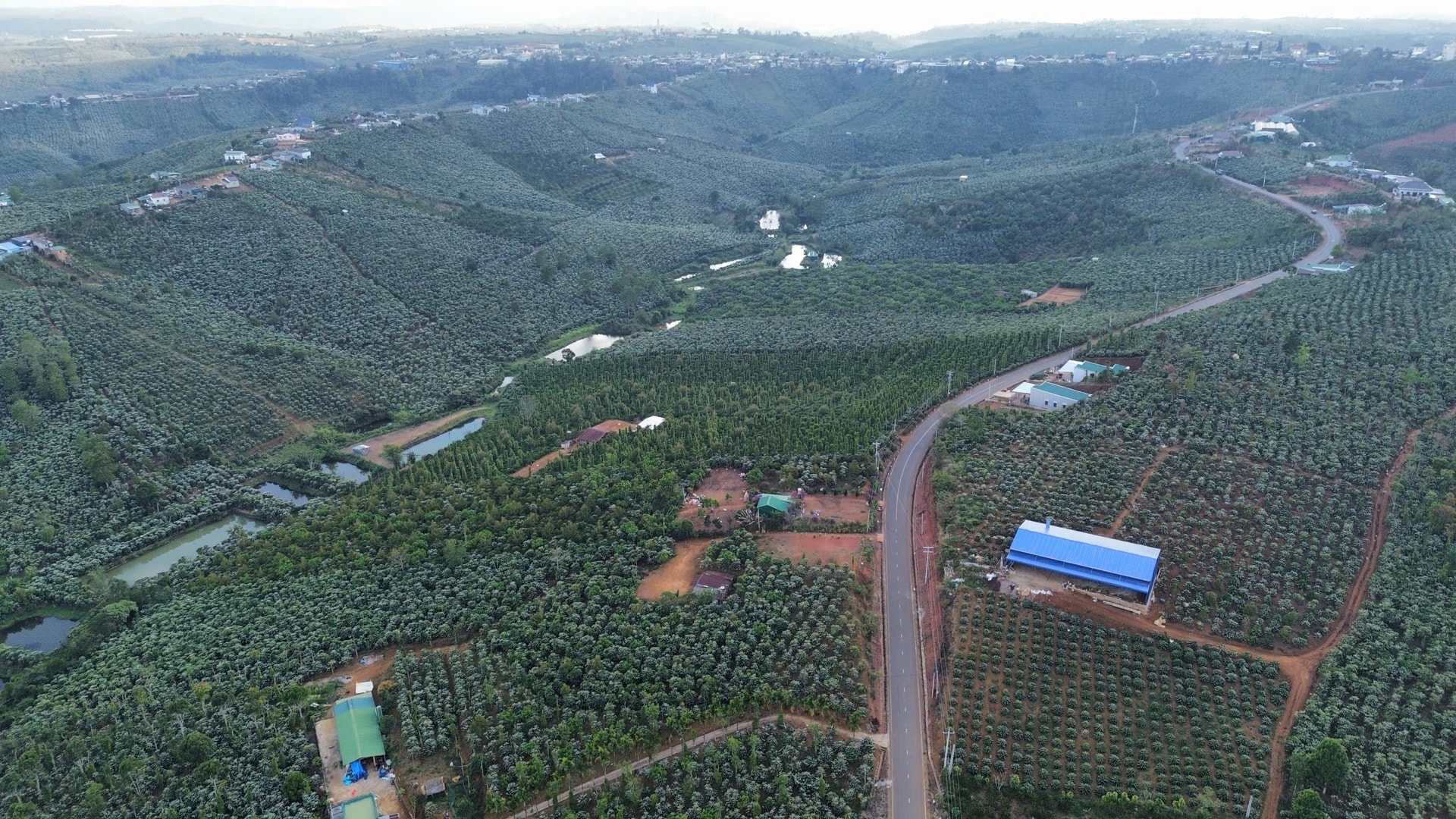
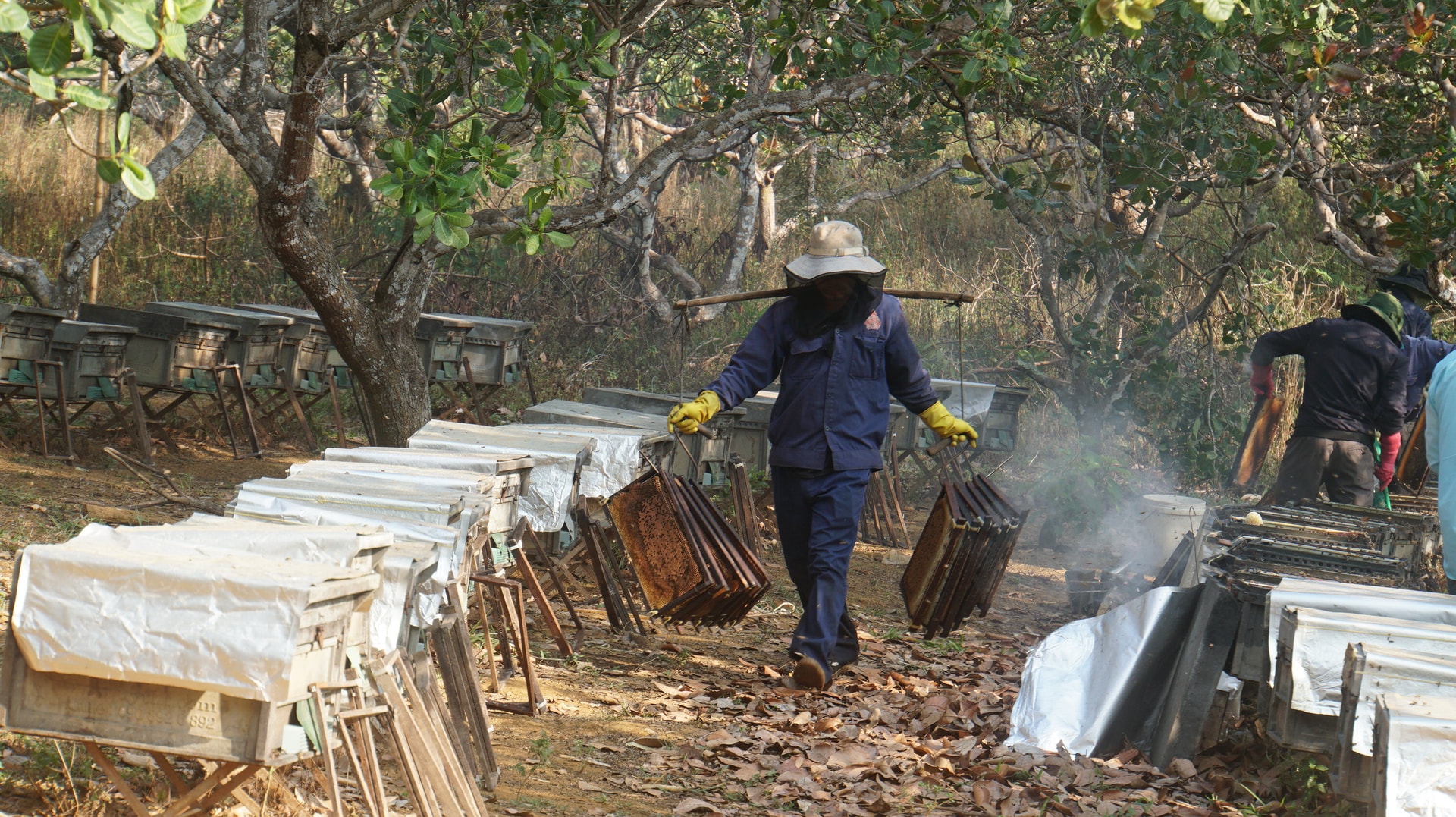
As night falls amidst the fragrant coffee plantations of Thuan An commune, flashlight beams sweep across the hillside. Beehives are passed from hand to hand and neatly placed under the trees. The bees are transported at night to avoid the harsh sun, minimize losses, and maintain the stability of the colony before the honey-gathering season begins.
Mr. Bui Tien Chuyen (46 years old, Dong Nai ) arrived just in time for the coffee blossoms to bloom. For him, the flowering season has almost become a habit; when coffee growers start irrigating, it's also the time he packs his bags and "leads" his bee colony to the highlands. Instead of keeping his bees in one fixed location, he chooses to "raise bees" according to the flowering season.
This year, the coffee flowers bloomed simultaneously, the weather was sunny and beautiful, with little unseasonal rain, so the bees produced honey quickly. Compared to last year, both the yield and quality of honey are higher.
Mr. Bui Tien Chuyen
His journey into the profession began in 2003, when he worked as a hired hand at a bee farm. Accompanying his employer on trips to various flower-growing regions helped him accumulate practical experience. After more than a year of apprenticeship, he boldly invested in 50 beehives of his own. From that foundation, he independently multiplied his colonies, learned how to treat diseases, and adapted to changing weather conditions. There were years of crop failure, and periods when his bee colonies weakened due to disease, but with each setback, his skills grew stronger.
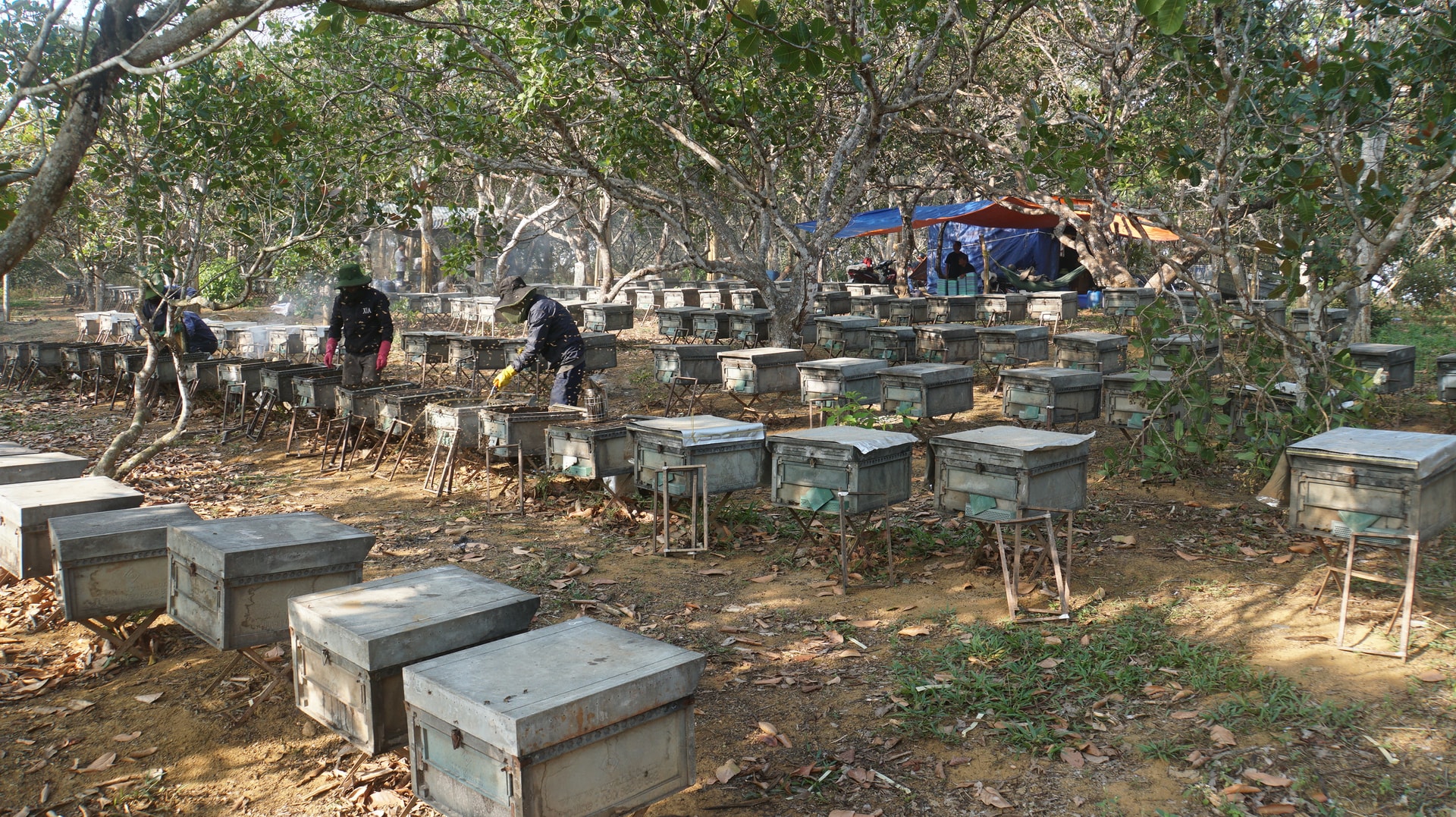
He currently maintains about 400 beehives using a "nomadic" model. During the coffee flowering season, the harvesting period lasts for more than a month. If the weather is favorable, the yield reaches nearly 2 tons of honey, with a selling price of around 80,000 VND/kg. Coffee flower honey has a light yellow color, a thick consistency, and a subtly sweet, non-harsh taste. Placing the bees right in the middle of the plantation during the peak flowering season ensures that the honey harvested is almost purely from coffee flowers.
From selling only to traders, Chuyen's family has now become a local retailer of coffee flower honey, distributing it to many provinces and cities nationwide. For Chuyen, more than two decades of beekeeping is not just a livelihood, but also a persistent journey following the flowering seasons, carefully collecting every drop of honey amidst the vast forest.
Not far away, Mr. Phan Hung, also from Dong Nai, has been on the plateau for over 10 days with 200 beehives. “Coffee blossoms are the best type of flower for honey production. The honey is fragrant, thick, and easy to sell; almost every household buys it for personal use. But the flowering season is very short, only about 3 weeks to a little over a month. We try to collect as much honey as we can,” Mr. Hung shared.
As Hung explained, beekeeping is therefore entirely dependent on the flowering season. When the flowers bloom profusely, the bees are healthy, and the beekeepers are happy. If the flowers wither quickly or bloom sporadically, the whole season is considered a loss.
From honey to OCOP products
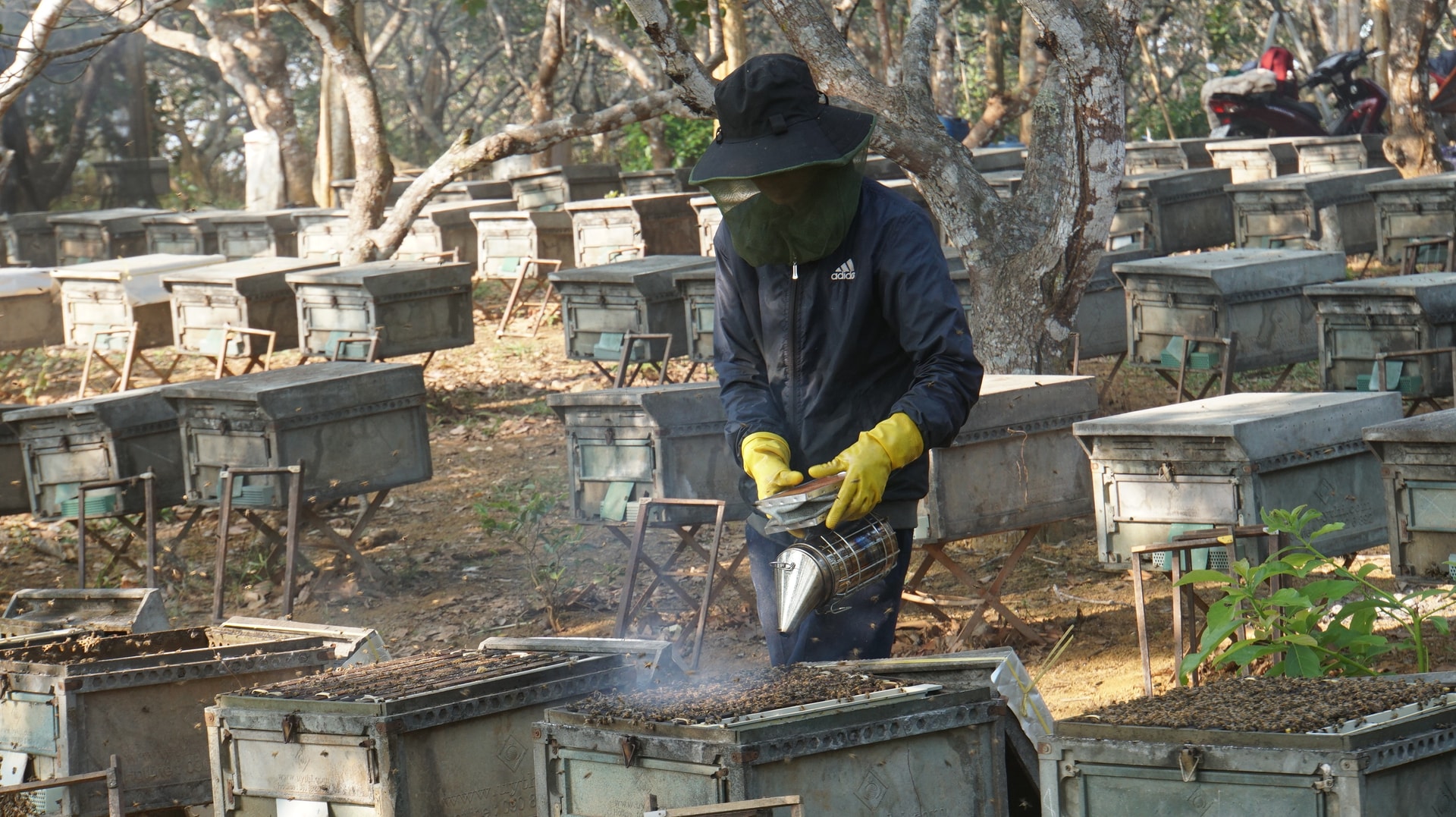
Not only are there nomadic beekeepers, but many beekeeping households in coffee-growing regions have built their own brands from coffee flower honey. Mr. Nguyen Ngoc Phuc, the owner of the 3-star OCOP product "Dak Mil Honey" in Duc Lap commune, can harvest more than 5 tons of honey each coffee flowering season. When the flowers are in full bloom, he places his beehives right in the coffee plantation so the bees can naturally collect nectar. "If you place the beehives at the right time when the flowers bloom simultaneously, the honey is almost purely from coffee flowers. The most important thing is not the quantity, but the quality and safety," Mr. Phuc said.
Coffee blossom honey is considered one of the signature honeys of the Central Highlands region due to its unique natural characteristics. Coffee flowers bloom simultaneously in a short period, resulting in an abundant and relatively pure nectar source from a single flower, creating a consistent flavor. The flowering period is also when farmers limit the use of pesticides to ensure pollination, contributing to a safer honey source.
The dry, sunny climate of the highlands during the coffee blossom season helps the honey, once brought back to the hive by the bees, to quickly concentrate and reduce its water content. Therefore, coffee blossom honey typically has a high viscosity, a light yellow color, and a subtly sweet, non-harsh taste.
Taking advantage of this abundant source of flowers, many people and businesses have developed honey products from coffee blossoms. Currently, many honey products in the province have achieved OCOP standards. Some have traceability, quality testing, and brand building associated with the characteristic coffee growing region. Coffee blossom honey has the potential to become a product alongside coffee, becoming one of the specialties of the highlands.
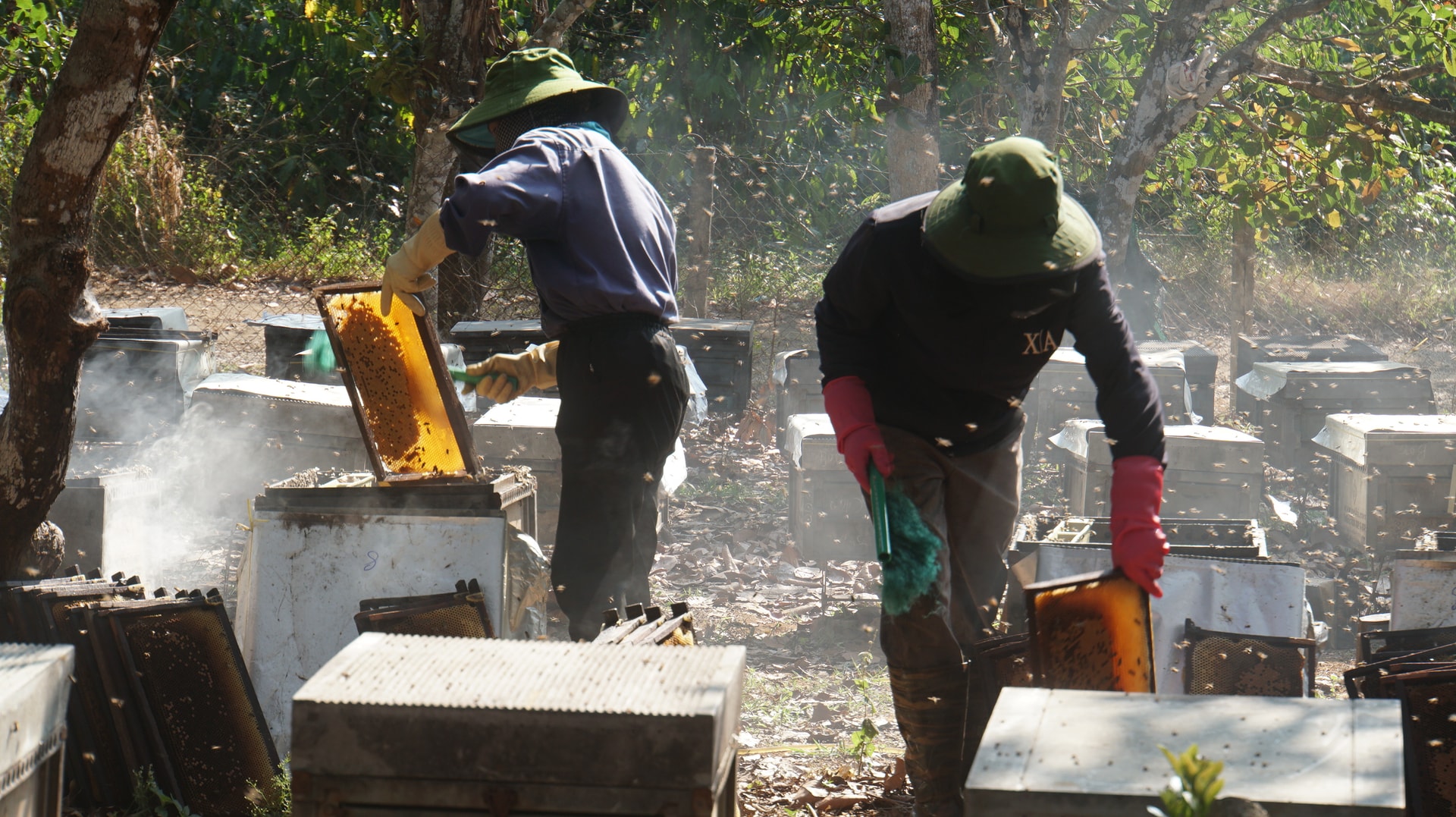
The trend towards sustainable farming, reducing chemicals and increasing organic farming, is opening up opportunities for beekeeping. When coffee growing areas are managed according to safety standards, bee colonies not only help increase productivity but also contribute to affirming the quality of agricultural products.
According to the experience of many farmers, bees help with cross-pollination, increasing the chances of fruit formation. Flowers pollinated by bees can help increase the fruit set rate. If every hectare of coffee has a bee colony present during the flowering season, the double benefit is clearly visible: increased coffee yield and additional income from honey. When coffee production is organized and integrated with beekeeping in a chain, the economic value generated is significant.
Amidst a sea of white coffee blossoms, the buzzing of bees is not only the sound of nature, but also the rhythm of life for the people who follow the seasons. They don't own the land, they don't plant the trees, yet they contribute to the harvest.
I suddenly realized that the coffee flowering season is not only the beginning of a new harvest season, but also a place where beekeepers gather sweet honey, coffee growers await the fruiting day, and the entire plateau benefits from this enduring symbiotic relationship.
Lam Dong province currently has over 328,000 hectares of coffee plantations. When the coffee plants bloom simultaneously, it not only signals the beginning of the fruiting season but also creates a huge source of nectar.
Source: https://baolamdong.vn/mua-hoa-ca-phe-goi-ong-ve-426898.html
![[Photo] Admire the coral "masterpiece" amidst the million-year-old heritage of Dak Lak province.](https://vphoto.vietnam.vn/thumb/1200x675/vietnam/resource/IMAGE/2026/05/31/1780221235105_anh-man-hinh-2026-05-31-luc-16-53-27.png)
![[Image] Hanoi Police officially crowned champions of V-League 2025/2026](https://vphoto.vietnam.vn/thumb/1200x675/vietnam/resource/IMAGE/2026/05/31/1780244769054_ndo_br_039d561b692be875b13a-jpg.webp)

![[Photo] Solemn bathing ceremony and Buddha procession in Hue](https://vphoto.vietnam.vn/thumb/1200x675/vietnam/resource/IMAGE/2026/05/31/1780228263543_1-jpg.webp)
![[Photo] The General Secretary, President and his wife begin their state visit to the Philippines.](https://vphoto.vietnam.vn/thumb/1200x675/vietnam/resource/IMAGE/2026/05/31/1780230559452_anh-man-hinh-2026-05-31-luc-19-28-11.png)


















![[Video] Sunset at Lap An Lagoon – Where the sun sets over the fishing nets](https://vphoto.vietnam.vn/thumb/340x192/vietnam/resource/IMAGE/2026/05/31/1780192137701_beach-landscape-sea-water-nature-grass-745871-pxhere-com.jpeg)





































































Comment (0)