

One Lunar New Year, a friend who had lived in Australia for many years returned home. He visited my house, wishing me a happy new year on the very first day, his eyes widening in amaryllis, admiring the lush pot of perilla leaves I had lovingly placed on the porch, along with the vibrant green pandan leaves.
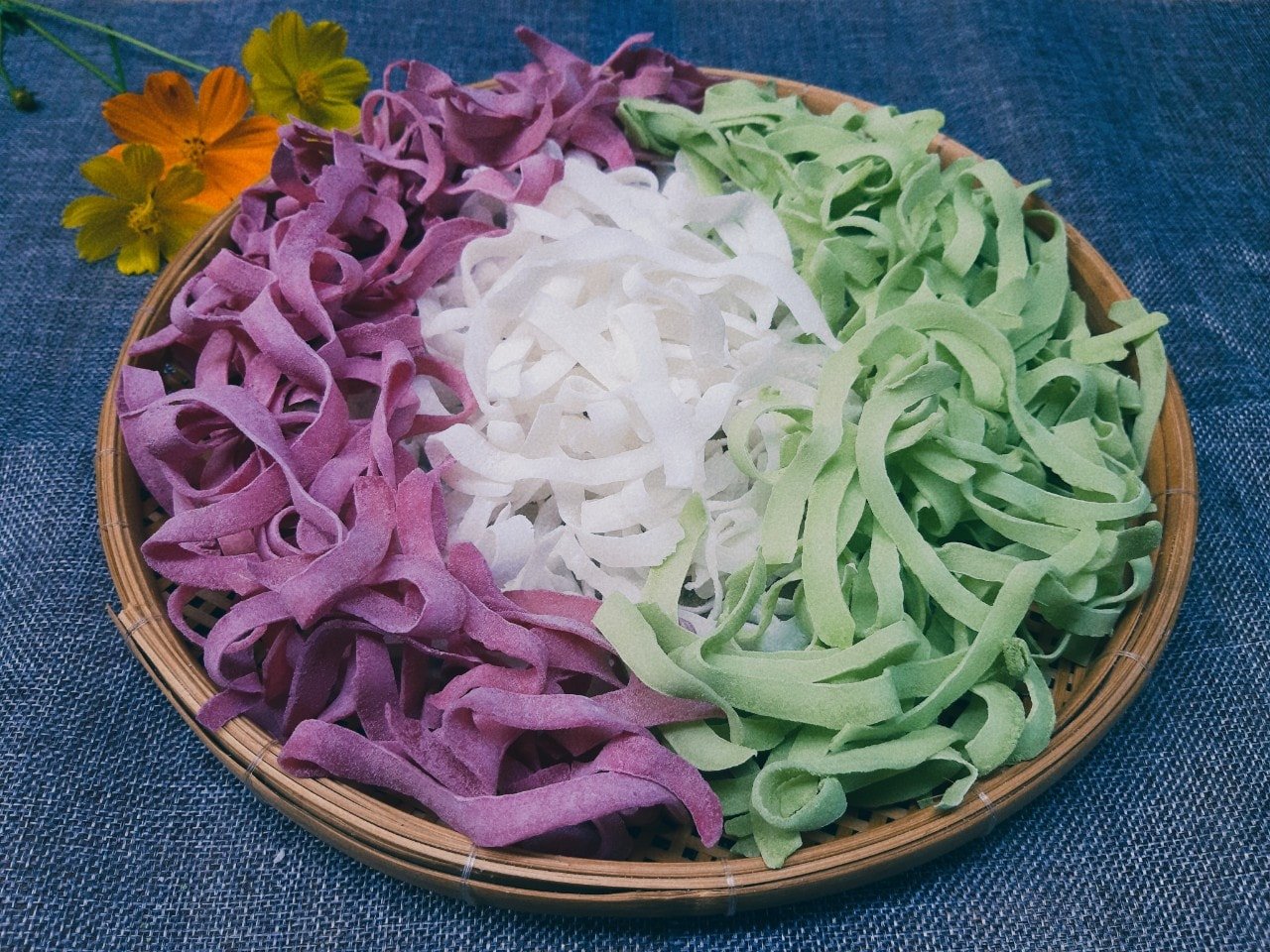
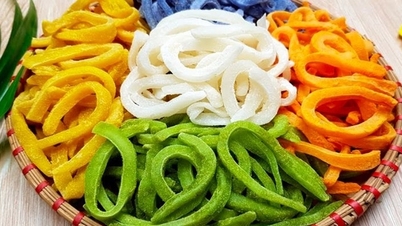
Even though I live in the city, I still maintain my old habits, trying to grow things I'm familiar with. You'll be amazed to learn that the beautiful green and purple coconut jam strands I display on the table are marinated and simmered with the juice of two familiar homegrown plants.
Two nostalgic souls leisurely nibble on strands of coconut jam with its distinctly rustic flavors: pandan leaves, purple yam leaves, condensed milk, coffee... exactly like the Tet jam of the 80s and 90s.
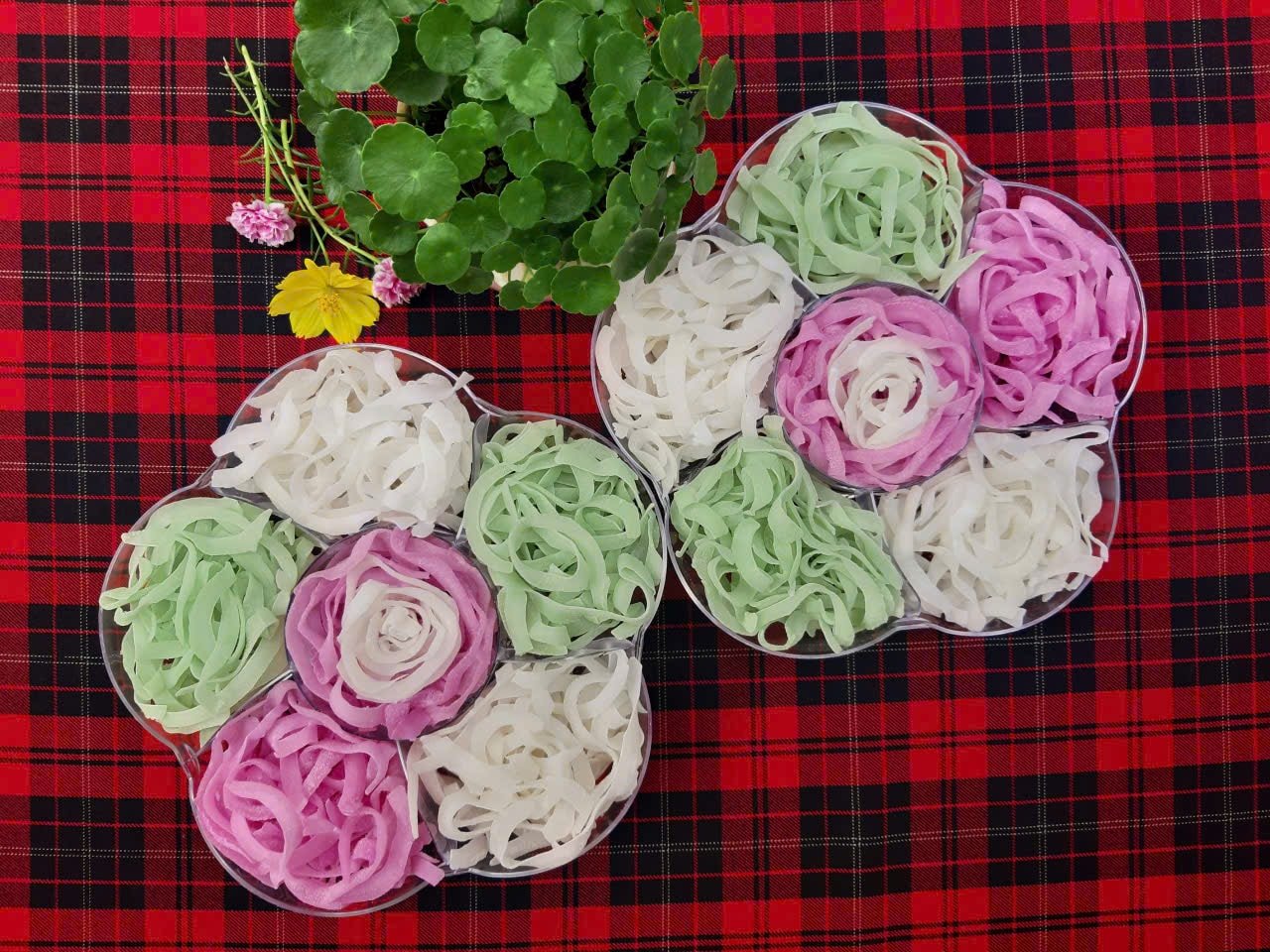
This Tet holiday, you asked me to try my best to wrap some coconut candy strands into rose shapes, put them in the same candy box as before, so you can take them to Australia to give to your relatives. Your relatives are elderly people far from home. They will nibble on the coconut candy strands, reminiscing about the Tet holiday in their homeland.
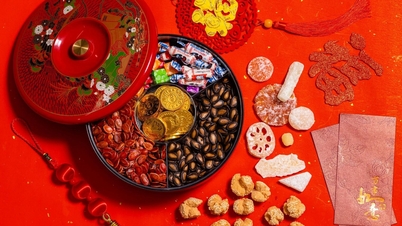
I grated the coconut into thin strips. From these coconut strips, I coiled them into a truly elegant rose, more beautiful than any other candied fruit in the Tet holiday candy tray.
How can you shred coconut so many times in a pan full of sugar syrup without it breaking apart? The secret lies in choosing the right coconut. Coconuts that are neither too old nor too young, with a moderately thick flesh, can be shredded without becoming mushy like young coconuts, and aren't as hard and crunchy as dried coconuts.
Another secret lies in the amount of sugar. The coconut should have just the right amount of sugar so it doesn't become mushy during the simmering process; too much sugar will make the coconut strands hard, brittle, and easily broken when stirred. I've painstakingly honed my mother's traditional coconut jam-making technique over many Tet seasons to produce batches of perfectly shredded coconut jam – it wasn't easy at all!
Every time I stand in the kitchen simmering jam, I'm overcome with nostalgia for my old family garden. A garden in the truest sense of the word: a dozen coconut trees, a dozen mango trees, a few rows of banana trees, some lemongrass bushes, some patches of water spinach, a few star fruit trees…
Every time Tet (Vietnamese New Year) comes around, the garden is filled with the scent of banana leaves that my father strips and dries out so my mother can wrap them in banh tet (Vietnamese sticky rice cakes). My father climbs the coconut tree, tapping the shell to check which bunches are just ripe (like banh tet), then he takes them down for my mother to make jam.
At that time, I stood on the ground, pointing and asking my father to pick me some ripe coconuts – and only later did I understand why he burst out laughing: "Dried coconuts, son. Nobody asks for ripe coconuts." My father knew I only liked eating the sprout of dried coconuts, even though they…smelled terribly like soap!
Now that my father is gone and my mother is over seventy, the children in the house only like young coconut jam. But I still make shredded coconut jam, as a way for me to revisit my own Tet holiday, so far away, to feel the longing and nostalgia surge within me.
Those beautiful strands of candied coconut will be offered to the ancestors and the heavens during the New Year's Eve celebration. Then, the rich, creamy taste of young coconut, the delicate aroma of pandan leaves, the deep purple color of the perilla leaves… will remain in my memory for a long time to come.
Source: https://baoquangnam.vn/mut-dua-soi-tet-xua-thuong-nho-3147838.html














































































Comment (0)