The latest controversies revolve around inspections of Iran's nuclear facilities and the future of the Strait of Hormuz.
In the Strait of Hormuz, the United Nations and Iran are implementing a plan to help hundreds of ships, including many oil tankers stranded due to the conflict, to resume navigation. However, Tehran says the ships must register with a new Iranian insurance company. This move is seen as preparation for Iran to potentially impose service fees in the future.

The Strait of Hormuz. (Photo: Reuters)
Iranian chief negotiator Mohammad Bagher Ghalibaf declared that the management of the Strait of Hormuz would not return to its pre-war state. Meanwhile, US Secretary of State Marco Rubio opposed this view, asserting that no country has the right to charge fees for an international shipping lane.
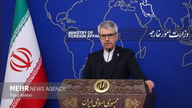
The two sides also disagree on the issue of nuclear inspections. Iranian Foreign Ministry spokesman Esmaeil Baghaei said Tehran has not had any meetings with the Director General of the International Atomic Energy Agency (IAEA) and has no plans to allow the agency to inspect Iranian nuclear facilities in the near future.



Conversely, President Donald Trump asserted that Iran had agreed to allow international inspectors access to its nuclear facilities. He argued that Iran was denying what had been discussed in the negotiations. However, Trump also acknowledged that the inspectors would not arrive in Iran immediately and that this would happen at the "appropriate time."
Another point of contention concerns Iran's frozen assets abroad. US Vice President JD Vance previously suggested that if these assets were released, the funds would be used to purchase American agricultural products and support the Iranian people. However, Iran's ambassador to the UN, Ali Bahreini, rejected this, emphasizing that only Iran has the right to decide how to use its assets.
Amidst ongoing disagreements in negotiations, Foreign Secretary Rubio traveled to the United Arab Emirates (UAE) to reassure Gulf allies. He stated that countries in the region support peace, but ultimate success will depend on the specific terms of the agreement. He noted that the recent round of talks laid a positive foundation, but many issues remain unresolved.
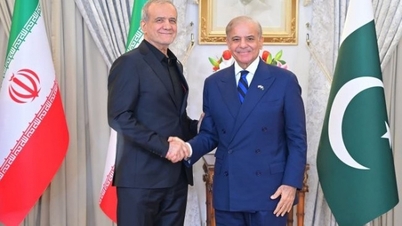
Conversely, Iran also continued its diplomatic efforts. President Masoud Pezeshkian visited Pakistan, one of the mediating countries. Iranian officials also reiterated that any final agreement must include the issue of Lebanon.
In southern Lebanon, the fragile ceasefire between Israel and Hezbollah remains in effect. Many residents have begun returning home after weeks of displacement. However, residential areas in previously contested zones continue to suffer significant damage.
In a related development, Oman announced on June 23 that it had coordinated with the International Maritime Organization (IMO) to establish a temporary shipping corridor for vessels wishing to pass through the Strait of Hormuz. According to Oman's state news agency, ships using this corridor will have to coordinate with the IMO based on coordinates published by the organization and the Omani authorities.

Oman stated that the measure aims to ensure freedom of navigation through this strategic sea route in accordance with international law and the United Nations Convention on the Law of the Sea, which affirms the principle of freedom of passage and does not impose transit fees on ships. This move is seen as a signal contrary to earlier statements by some Iranian officials about the possibility of imposing service fees on ships passing through the Strait of Hormuz in the future.
Source: https://baoangiang.com.vn/my-iran-bat-dong-ve-thanh-tra-hat-nhan-and-phi-qua-eo-bien-hormuz-a490123.html


![[Photo] Prime Minister Le Minh Hung presides over the thematic session on promoting science and technology development and innovation.](https://vphoto.vietnam.vn/thumb/1200x675/vietnam/resource/IMAGE/2026/06/23/1782207872934_ndo_br_dsc-1724-jpg.webp)