

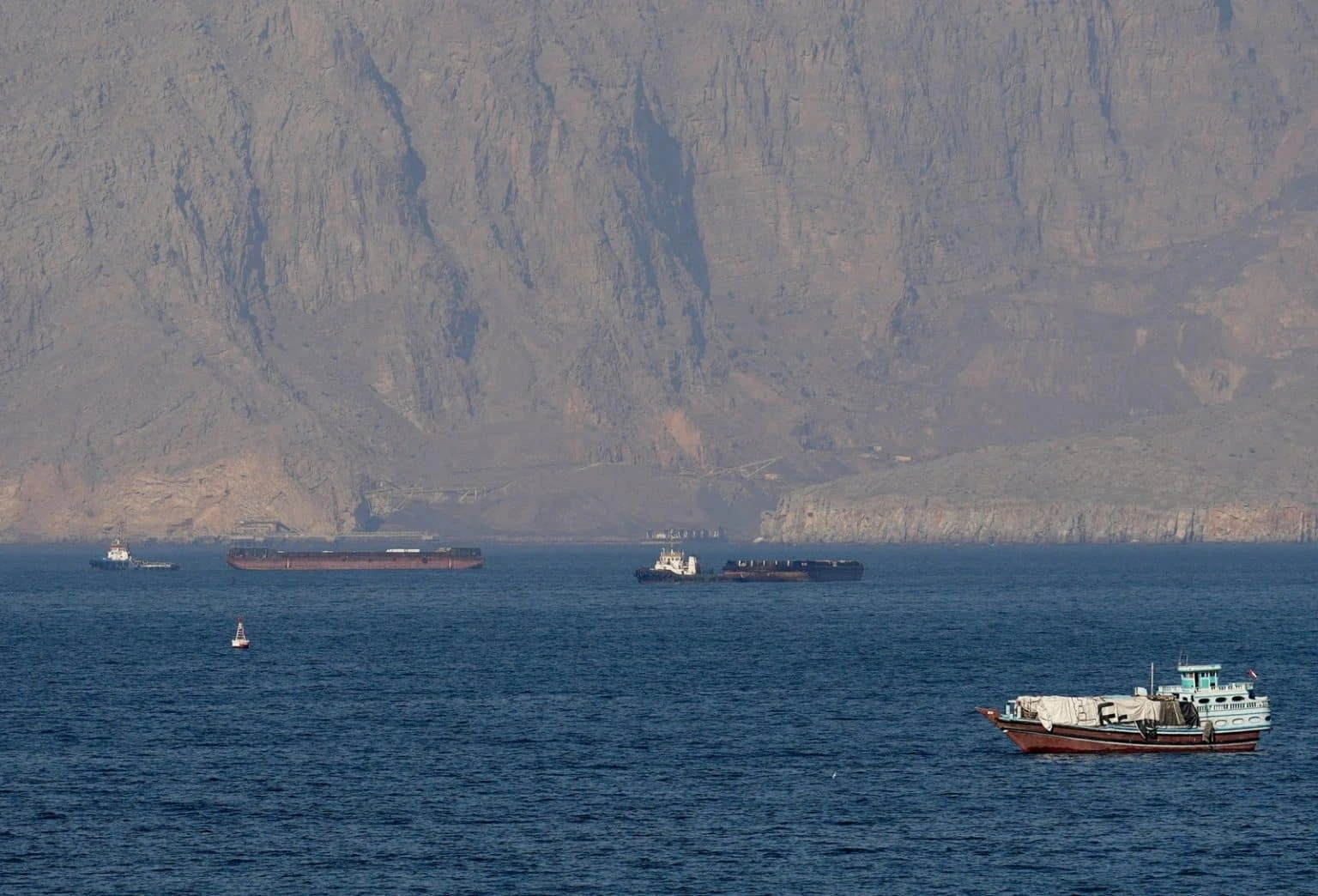
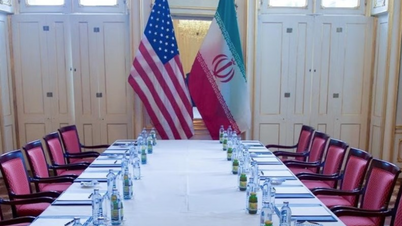
According to The Washington Post, the US and Iran have agreed on a memorandum of understanding. If signed, maritime traffic through the Strait of Hormuz would be fully restored within 30 days. Photo: Arabianbusiness.
The Washington Post, citing a senior, unnamed US government official, reported that the two sides have agreed on a memorandum of understanding. If signed, maritime traffic through the Strait of Hormuz would be fully restored within 30 days. According to this source, the agreement is expected to include a 60-day extension of the ceasefire to allow for negotiations toward a more comprehensive agreement. During that time, the Strait of Hormuz would be cleared of mines and reopened.
An anonymous diplomat familiar with the situation has also revealed that Iran will immediately reopen the Strait of Hormuz after the memorandum of understanding is signed, and will implement measures to restore the shipping lanes to their pre-conflict state. The parties involved may also declare an end to military operations on multiple fronts in the region, including in Lebanon.

Fox News, citing informed sources, claims that the framework agreement between the US and Iran is now "95% complete." According to these sources, the two sides have reached a consensus on Iran's nuclear stockpile and the Strait of Hormuz, but negotiations on the final wording are ongoing. (Photo: CNN)
Meanwhile, Fox News, citing informed sources, claims that the framework agreement between the US and Iran is now "95% complete." According to these sources, the two sides have reached a consensus on Iran's nuclear stockpile and the Strait of Hormuz, but are still negotiating the final wording.
A U.S. official stated that Washington is not ready to sign an agreement in the next day or two, but President Donald Trump may take another five to seven days to finalize the negotiations. The source also warned that the U.S. military could resume airstrikes against Iran if a suitable agreement is not reached.
On the same day, The New York Times reported that the US and Iran had reached an agreement in principle on a phased deal to de-escalate the conflict in the Middle East, but final ratification by the leaders of both countries could take several more days. According to sources, the current framework includes a commitment from Iran not to possess nuclear weapons and to dispose of its stockpile of highly enriched uranium. However, the specific methods are still being negotiated.
Iranian officials confirmed the existence of a draft agreement, but stressed that negotiations related to Tehran's controversial nuclear program would be suspended for 60 days after any agreement is signed. Iranian President Masoud Pezeshkian told state television that Tehran “remains ready to assure the world that we are not seeking nuclear weapons,” but it is unclear whether this promise will be included in the text of the agreement.
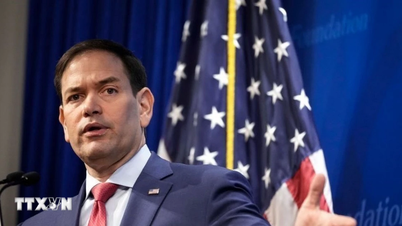
Meanwhile, on May 25, U.S. Secretary of State Marco Rubio declared that the U.S. would either reach a good deal with Iran or resolve the issue with it “in another way,” as Washington downplayed hopes of an imminent breakthrough in the three-month-long conflict. Rubio told reporters in New Delhi that the U.S. would create every opportunity for successful diplomacy before considering “alternative options.” Rubio said, “There has been a fairly plausible proposal about the possibility of them opening the strait, conducting a real, meaningful and time-bound negotiation on the nuclear issue, and hopefully we can achieve that.”
Thanh Vân
Source: Xinhua News Agency, Arab News.
Source: https://baothanhhoa.vn/my-iran-tien-gan-thoa-thuan-khung-288825.htm


![[Image] Close-up view of the interchange connecting the two expressways and Long Thanh Airport.](https://vphoto.vietnam.vn/thumb/1200x675/vietnam/resource/IMAGE/2026/05/25/1779703378210_ndo_br_z7863716673926-224453a31600126cce10622af6290afd-4549-jpg.webp)


![[Image] Hanoi's urban life under the challenge of a "scorching hot" environment](https://vphoto.vietnam.vn/thumb/1200x675/vietnam/resource/IMAGE/2026/05/25/1779706979265_nang-nong-t5-2026-minh-duy-7-4636-jpg.webp)


















































































Comment (0)