

The aroma of medicinal herbs and the story of the traditional healer.
In a small house of less than 20 square meters on Lan Ong Street, Mrs. Tran Thi Tuyet Mai, a traditional medicine practitioner who has dedicated more than half her life to the profession, quietly rearranges her jars of medicinal herbs. Over 120 different herbs are stored in earthenware jars, wooden barrels, and cloth bags hanging against the walls. Each herb has its own unique scent, its own specific use, and a story that only those with years of experience in the profession truly understand.
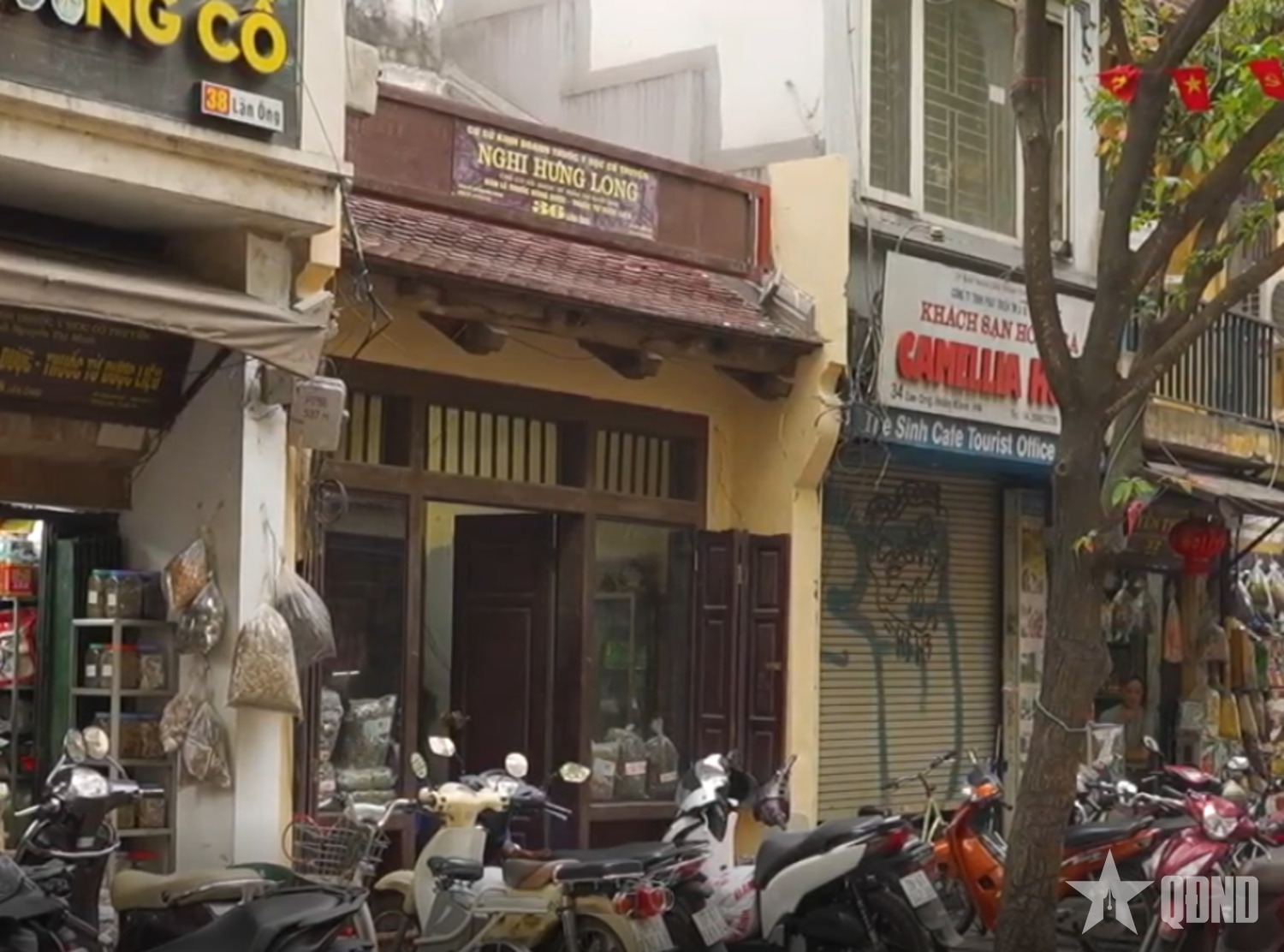 |
A small herbal medicine shop on Lan Ong Street with hundreds of medicinal herbs preserved in traditional ways. |
Some herbs have a mild, pleasant aroma, others a strong, pungent taste, and some even retain a faint earthy, forest-like scent when held in the hand. For Mrs. Mai, these are not just medicinal herbs, but "professional companions" that have been with her for decades.
Traditional medicine practitioner Tran Thi Tuyet Mai shared: "The profession of dispensing medicine is not just about curing diseases, but about maintaining integrity in every pinch of medicinal herbs. A slight under-dosing or over-dosing can alter the entire prescription." Therefore, in her small medicine room, she doesn't use machines for measuring. Her calloused hands, her familiar eyes, and her memory accumulated over the years are the most accurate "scales." Each herb is divided by hand, carefully placed on wrapping paper, in the correct order and dosage – a task requiring absolute concentration and patience.
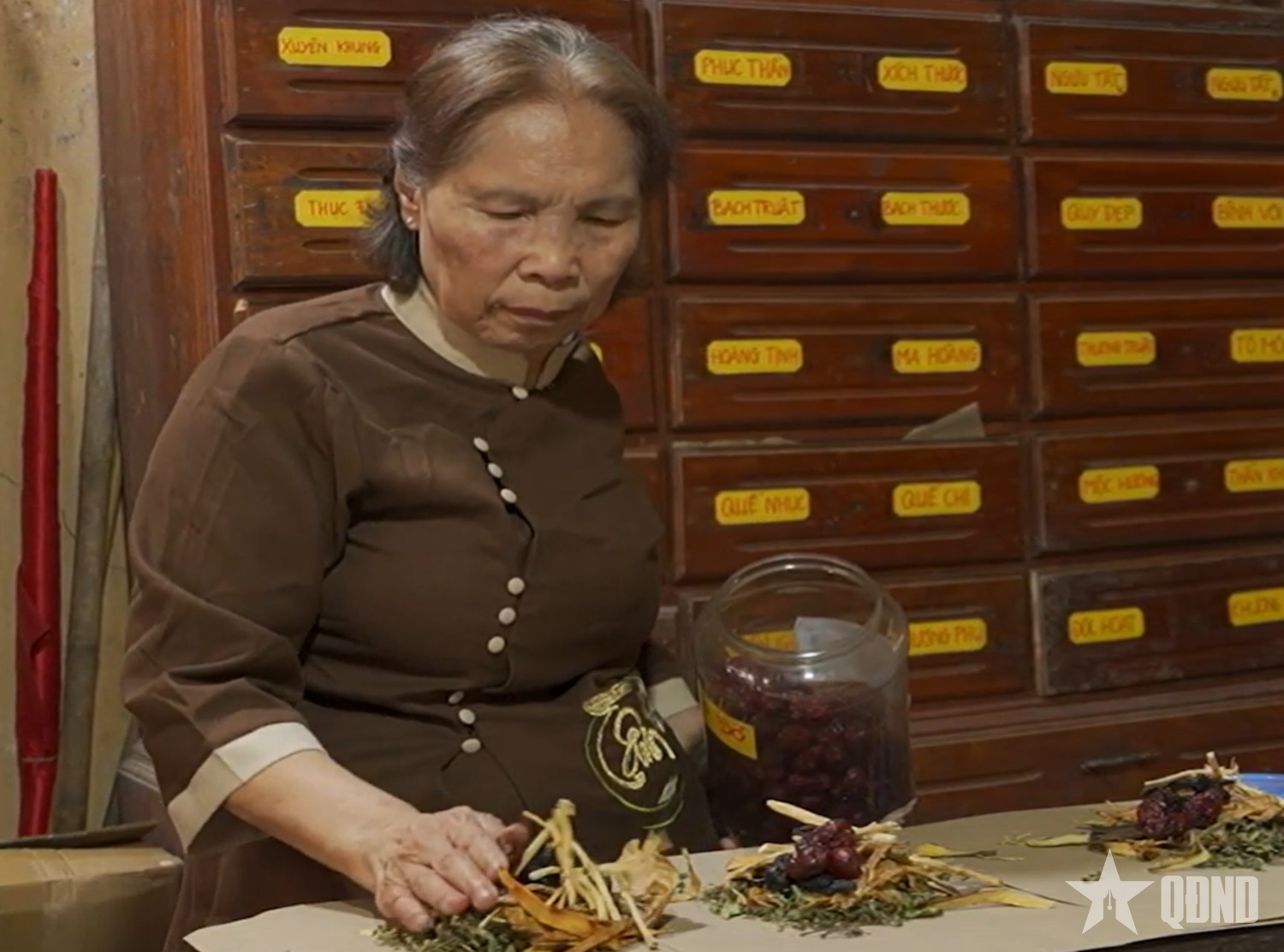 |
Mrs. Tran Thi Tuyet Mai quietly picks out each medicinal herb with her skilled hands in her small pharmacy on Lan Ong Street. |
The rhythmic clicking sound of the knife cutting the herbs echoed steadily. The dried roots, stems, and leaves fell onto the paper, creating a unique, rustic sound. Interspersed were the customers' inquiries about their illnesses and the old woman's slow instructions on how to prepare and drink the medicine. All blended together, forming the familiar rhythm of the herbal medicine street – a sound many Hanoians call "the sound of memory."
On Lan Ong Street, people don't just come to buy medicine. Some stop by because they believe in the family's traditional remedies, others because they are familiar with the scent of the herbs their mothers used to brew in the small kitchen of yesteryear. And some simply want to linger for a few minutes amidst the incense and cinnamon, to find their minds slowing down amidst the bustling streets.
Traditional crafts thrive amidst modern streets.
Over a hundred years ago, the first Chinese-owned traditional medicine shops appeared in the Old Quarter. Gradually, Vietnamese people learned the trade, modified the recipes, and passed them down through generations, eventually forming famous streets specializing in traditional medicine throughout Northern Vietnam. Some families have been in the profession for three or four generations, considering the practice of dispensing medicine as an integral part of their lives.
The streets are different now than they used to be. Brighter signs, more spacious shops, and more machinery to assist in the preparation process. But in long-established pharmacies, the most important step – dispensing medicine according to the illness – remains the same. "Machines can't replace the heart of the person dispensing the medicine," said Mrs. Tuyet Mai, her hands steadily dividing each ingredient, her eyes never leaving the finalized prescription.
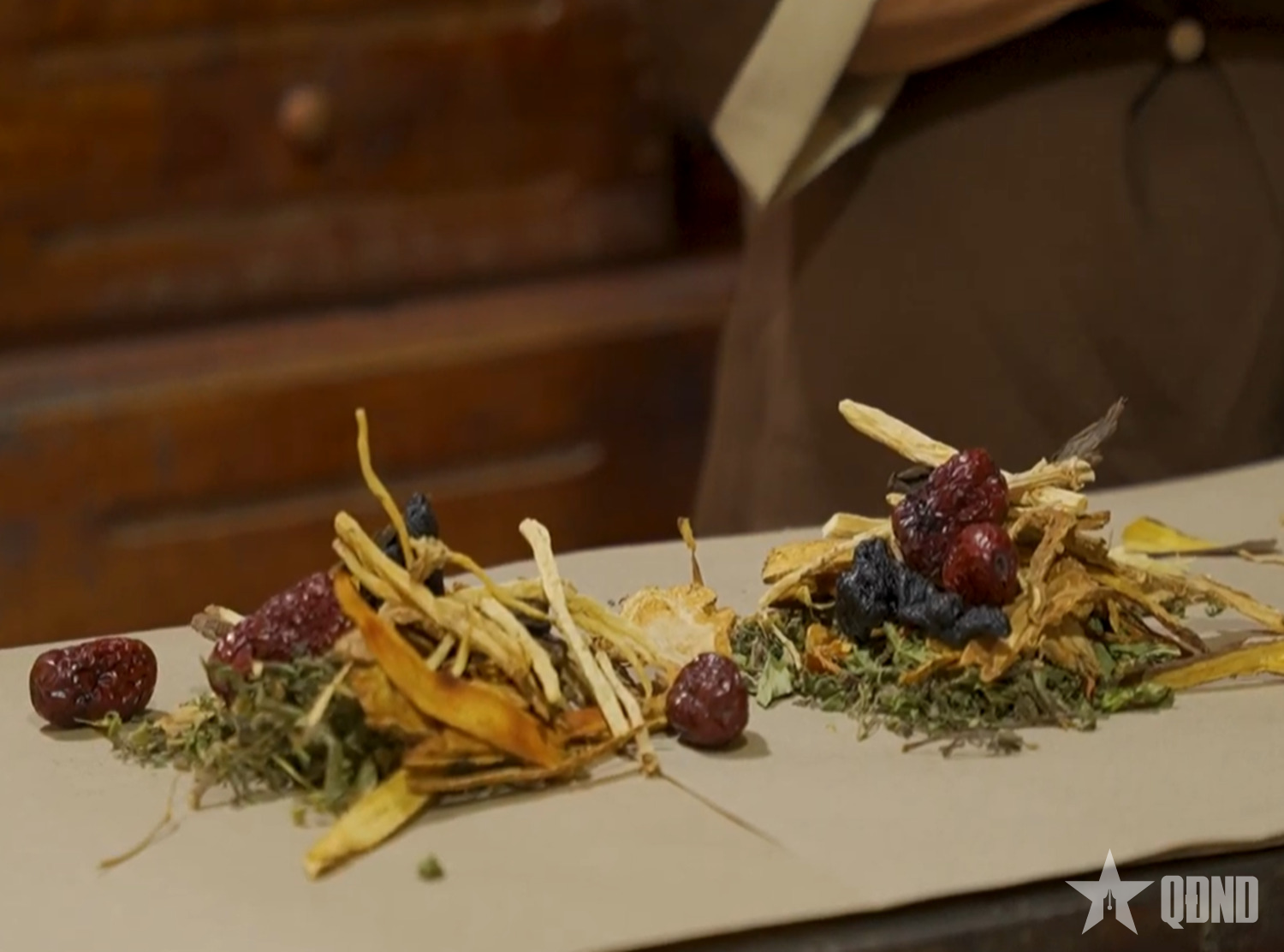 |
The herbal remedies are prepared manually and carefully packaged. |
Amidst the convenience and speed of Western medicine, the traditional practice of dispensing herbal medicine survives through its slow pace and meticulousness. Each prescription is the result of experience, observation, and listening to the patient – something no modern production line can replace.
Preserving the craft is about preserving the unique scent of Hanoi.
Each day, Mrs. Tuyet Mai doesn't prepare a large quantity of medicine, and her income isn't high compared to many other professions. But in her small house on Lan Ong Street, the practice of preparing herbal medicine is maintained regularly as her children and grandchildren help her, learning the trade and gradually becoming familiar with each herb and the way of weighing and dividing it. Younger hands are gradually continuing the work of her hands, which have been marked by time.
For her, sticking to the profession is not just about making a living, but also about preserving a decent trade for future generations, a way of life that is slow but enduring. "If Hanoi loses these traditional medicine shops, the Old Quarter will lose a unique scent," she said, her voice soft but firm.
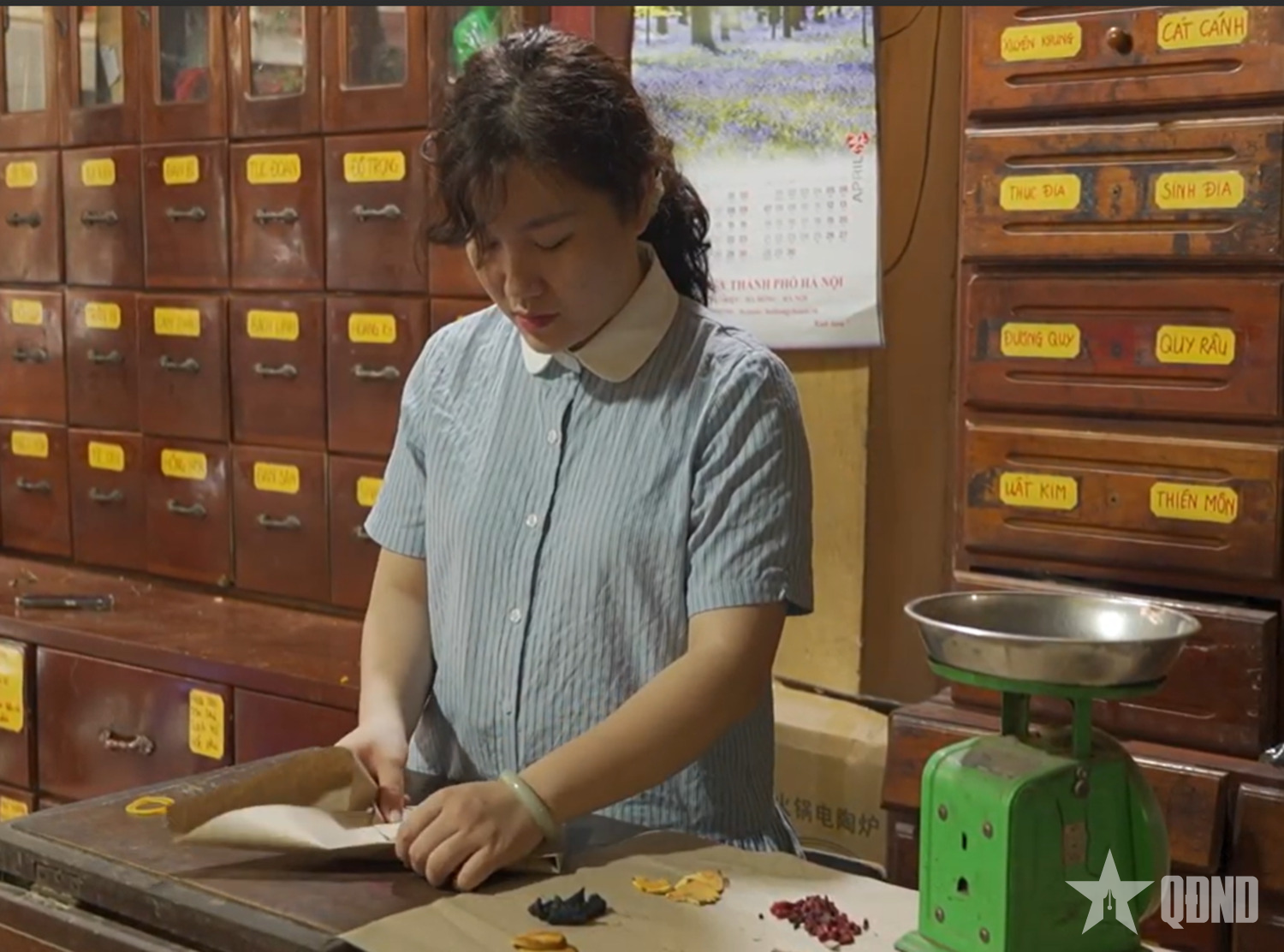 |
The descendants of Mrs. Tuyet Mai still diligently work with herbal remedies, continuing the family tradition in the heart of the old town. |
As evening falls on Lan Ong Street, the lights from the pharmacies cast their glow upon the narrow street. The scent of herbs wafts on the breeze, blending into the rhythm of Hanoi's late-day life. Amidst the ever-changing modern metropolis, the profession of traditional medicine continues to exist quietly – without fanfare or ostentation.
The herbal remedies, prepared with the utmost care by the elderly physician and passed down through generations, continue to quietly spread their fragrance. They are not just medicines, but also a part of memory, a distinctly Hanoi scent – enduring through the years, quiet yet never fading.
Source: https://www.qdnd.vn/van-hoa/doi-song/nghe-boc-thuoc-thom-nuc-tieng-ha-thanh-1017447































































































Comment (0)