The art of dispersing the enemy on the Dien Bien Phu battlefield.
Báo Dân trí•29/04/2024
(Dan Tri Newspaper) - The victory of the Dien Bien Phu campaign marked a turning point in military art during the resistance war against the French, including the art of dispersing the enemy across battlefields, according to Major General Nguyen Hong Quan.
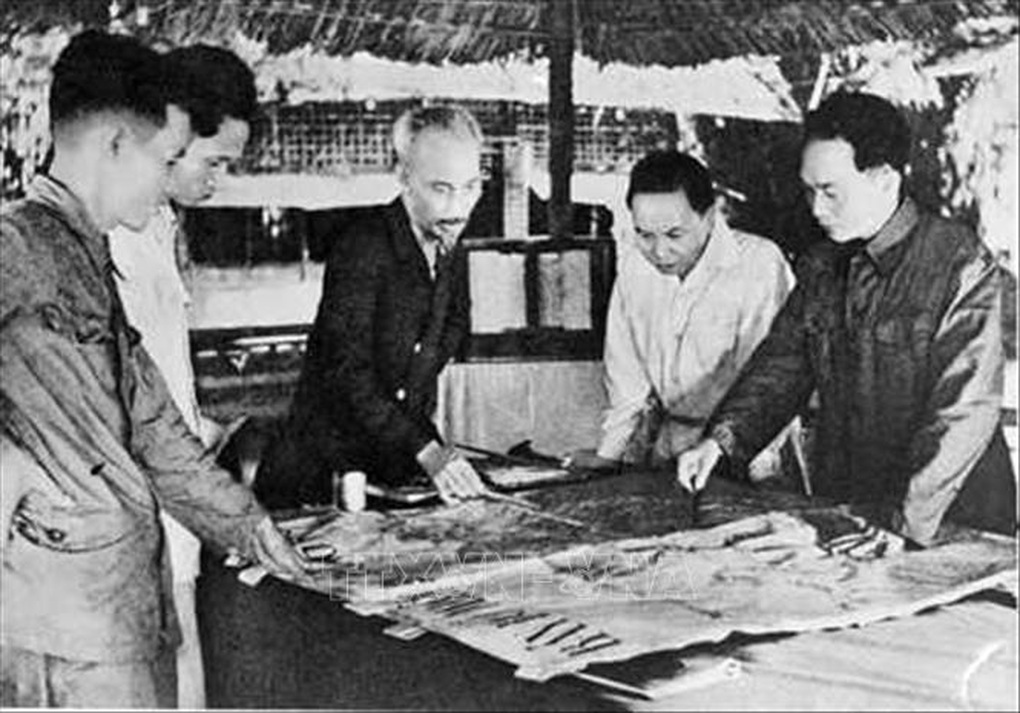
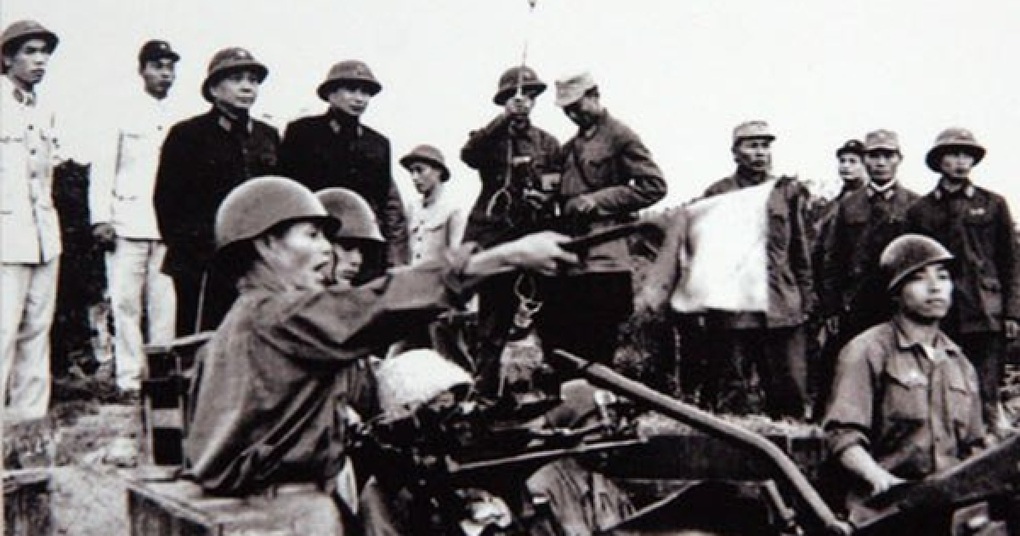
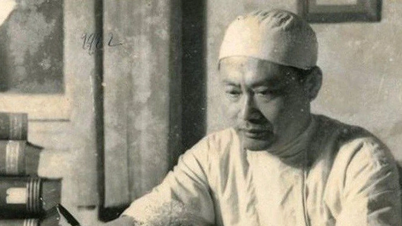
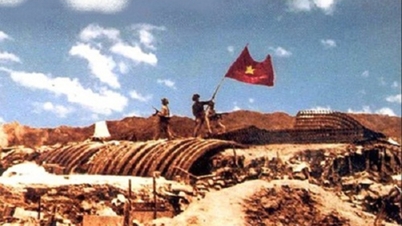
"The strategic thinking of offensive warfare and the art of dispersing the enemy on the battlefields in the Dien Bien Phu campaign" is the main content of the paper by Major General, Professor, Dr. Nguyen Hong Quan (former Deputy Director of the Institute of National Defense Strategy). He submitted the paper to the seminar "Military Art in the Dien Bien Phu Campaign - Practical Lessons in Current Combat Training," organized by the 12th Army Corps Command in coordination with the People's Army Newspaper in early April. The most difficult decision in General Vo Nguyen Giap's military career. According to Major General Nguyen Hong Quan, the French built Dien Bien Phu into the strongest military complex in Indochina, an "invincible fortress" in terms of forces, weapons, equipment, ground and air combat vehicles, fortifications, bunkers, etc., aiming to "crush" the main forces of the Viet Minh. Therefore, to achieve victory, our army needed to destroy the Dien Bien Phu fortified complex, shattering the hopes of the colonial and imperialist powers to continue the war. Major General Nguyen Hong Quan - former Deputy Director of the Institute of National Defense Strategy (Photo: Tien Tuan). In September 1953, the Politburo, headed by President Ho Chi Minh, met to discuss the military tasks for the 1953-1954 Winter-Spring campaign. President Ho Chi Minh emphasized: "The enemy is concentrating a large military force to create strength. If we force them to disperse their forces, that strength will be gone..." Two months later, under the direction of the Politburo and the General Military Commission, the General Staff, our troops advanced into the Northwest. Along with the main direction in the Northwest, our troops also attacked Central Laos, Lower Laos, Northern Central Highlands, and Upper Laos. Therefore, the French army was forced to disperse its forces to defend the Northwest, Upper Laos, Lower Laos, Northern Central Highlands, and the Northern Delta. On December 6, 1953, the Politburo decided to launch the Dien Bien Phu Campaign. President Ho Chi Minh clearly stated: "This campaign is a very important one; we must concentrate our efforts to complete it successfully." In late 1953, after inspecting Na San and analyzing the enemy situation at Dien Bien Phu, General Vo Nguyen Giap and the Chinese military advisory delegation considered and proposed two options: a quick attack and a steady attack. After discussion, the head and deputy head of the Chinese expert delegation, Wei Guoqing and Mai Jiasheng, both chose the "quick attack, quick victory" option, using a deep penetration to "create chaos in the enemy's defense center from the outset, then attacking from within and without, destroying the enemy in a relatively short time." They decided to open fire at 5 PM on January 25, 1954. All preparations for the Dien Bien Phu campaign were rapid. However, close to January 25, 1954, General Vo Nguyen Giap decided to postpone the attack for 24 hours while the units were ready awaiting orders. The General decided to convene a meeting of the Front Party Committee to present his thoughts on a new operational plan that was appropriate to the balance of forces between our side and the enemy. At the meeting on January 26, 1954, in his capacity as Commander and Secretary of the Campaign Party Committee, General Vo Nguyen Giap made the most difficult decision of his military career when, together with the Campaign Party Committee, he decided to change the campaign's strategy from "quick attack, quick victory" to "steady attack, steady advance." This was a "historic decision," based on scientific grounds, because the balance of forces between our side and the enemy had changed. On December 6, 1953, the Politburo held a meeting chaired by President Ho Chi Minh to hear the General Military Commission's report and finalize the 1953-1954 Winter-Spring operational plan, and simultaneously decided to launch the Dien Bien Phu Campaign with the determination to completely destroy this fortified complex (Photo: VNA). At this point, the French army was no longer in a state of temporary defense but had become a "solidly fortified defensive complex," an "impregnable" fortress, equipped with state-of-the-art weapons. Meanwhile, despite receiving weapons and ammunition from China and the Soviet Union, our army still had many limitations and could not compare with the tanks, aircraft, artillery, and professional army of the French. Considering the lives of each soldier on the battlefield, General Vo Nguyen Giap realized that it was impossible to risk deploying all forces to "attack quickly and win quickly." Major General Nguyen Hong Quan assessed that the glorious victory of the Dien Bien Phu campaign marked the pinnacle of Vietnamese military art in the resistance war against France, including the art of dispersing the enemy on the battlefields. According to the Spring 1954 operational plan approved by the Politburo, from December 10 to 25, 1953, our troops attacked enemy forces in Lai Chau , destroying 20 enemy companies and creating a strong threat to Dien Bien Phu. At the end of December 1953, our troops, in coordination with the Pathet Lao forces, broke through the French "forbidden line" at the 18th parallel, liberating many areas in Central Laos. General Vo Nguyen Giap visits the Dien Bien Phu battlefield (Archival photo). In early February 1954, our troops attacked the enemy in Kon Tum and the northern Central Highlands, initially thwarting the French Operation Atlantic; completely defeating the plan to pacify the liberated areas of Nam-Ngai-Binh-Phu, contributing to "sharing the burden" with the Dien Bien Phu battlefield. These strategic offensives, along with the activities of our troops and people behind enemy lines, dispersed the French mobile forces in many directions, forcing the French to deploy only 17 battalions out of 52 mobile battalions at Dien Bien Phu, and 20 battalions to defend the vast Northern Delta. Right at the Dien Bien Phu battlefield, our troops organized their forces and positions to besiege the entire enemy stronghold, encircling each resistance center. Our troops built underground positions for infantry, artillery, the campaign command post, and the command posts of divisions and regiments to ensure safety and prevent interruptions in command and control. Our troops also deployed anti-aircraft artillery to block enemy air resupply and protect our own supply lines. While our forces tightened their encirclement, the French were unable to reinforce the Dien Bien Phu battlefield because their mobile forces were pinned down in strategic areas. In coordination with Dien Bien Phu, our army and people organized attacks on Gia Lam ( Hanoi ) and Cat Bi (Hai Phong) airfields, blocking the air supply bridge to Dien Bien Phu. This demonstrates the seamless coordination between the main Northwest battlefield – Dien Bien Phu – and other battlefields, creating a continuous encirclement and offensive, pushing the enemy towards defeat. Thus, in the Dien Bien Phu campaign, our army and people correctly implemented the strategic directive: "fight to win; fight to annihilate; maintain the initiative, resolutely attack." According to Major General Nguyen Hong Quan, we developed the art of attracting and pinning down the mobile forces of the French army, dispersing the enemy across battlefields , liberating many large areas, and especially tightly encircling the French forces at the Dien Bien Phu stronghold, striking directly at the enemy's strong but vulnerable points. The French themselves later had to admit that "the opponent (Viet Minh), weaker in numbers, bent the enemy's will by exploiting their weaknesses."

 Báo Dân trí•29/04/2024





![[Photo] General Secretary and President To Lam presides over a meeting on preparations for the review of one year of operation of the three-tiered government system.](https://vphoto.vietnam.vn/thumb/1200x675/vietnam/resource/IMAGE/2026/06/02/1780391821195_a1-bnd-4595-9717-jpg.webp)



































































Comment (0)