The Do Temple (also known as Co Phap Dien or Ly Bat De Temple) is located in Tu Son ward, Bac Ninh province. Construction of the temple began in the 11th century on the very land of King Ly Cong Uan's birthplace. It is a place of worship for eight kings of the Ly dynasty: Ly Thai To, Ly Thai Tong, Ly Thanh Tong, Ly Nhan Tong, Ly Than Tong, Ly Anh Tong, Ly Cao Tong, and Ly Hue Tong.
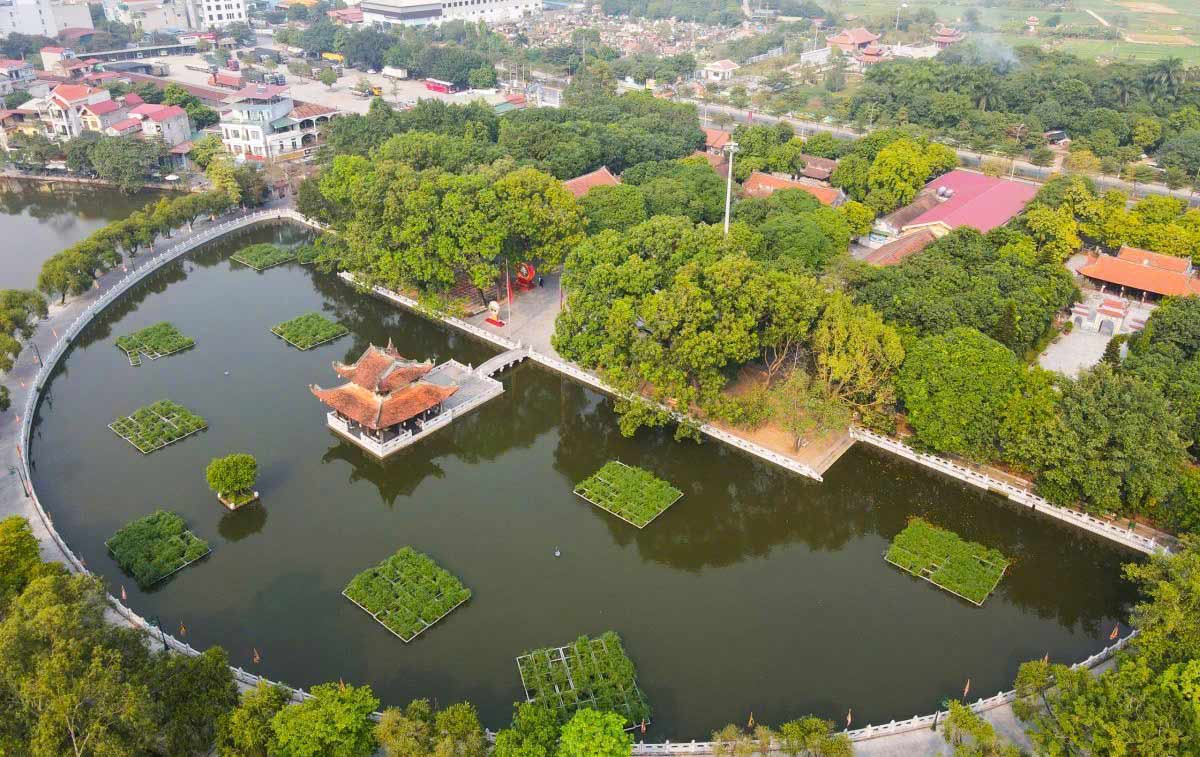
Panoramic view of the Den Do historical site. Photo: Bac Ninh Department of Culture, Sports and Tourism.
According to the management board of the Dinh Do Temple relic site, the temple was built on the land where King Ly Cong Uan returned to visit his hometown. According to historical records, the villagers of Dinh Bang built a large house to welcome the king.
Initially, the temple was just a royal shrine built by Ly Thai To on land southeast of Huong Co Phap, Chau Co Phap (Dinh Bang village).
When King Ly Cong Uan passed away, Ly Thai Tong ascended the throne to succeed his father. He had the old house renovated and chose it as a place of worship for his father. From then on, the temple became a place of worship for the Ly dynasty kings after their death.
The Do Temple was completely destroyed in 1952 during the resistance war against French colonialism. In 1989, the government and people restored the temple to its original form.
The site is divided into two parts, inner and outer, with 21 exquisite structures. The outer part includes structures such as the Văn Chỉ (Confucian Temple), Võ Chỉ (Martial Arts Temple), Thủy Đình (Water Pavilion), and the Crescent Lake. The inner part includes: the Ngũ Long Môn (Five Dragon Gate), the Dragon Courtyard, Phương Đình (Feng Pavilion), the Front Hall, Chuyển Bồng (Transferring Offering House), the Rear Hall, the Horse House, the Stele House, the Mother Goddess Temple, the Guest House, and the Traditional Hall. Visitors usually begin their journey from the Crescent Lake at the Water Pavilion, then proceed to the tranquil inner hall nestled under ancient trees.
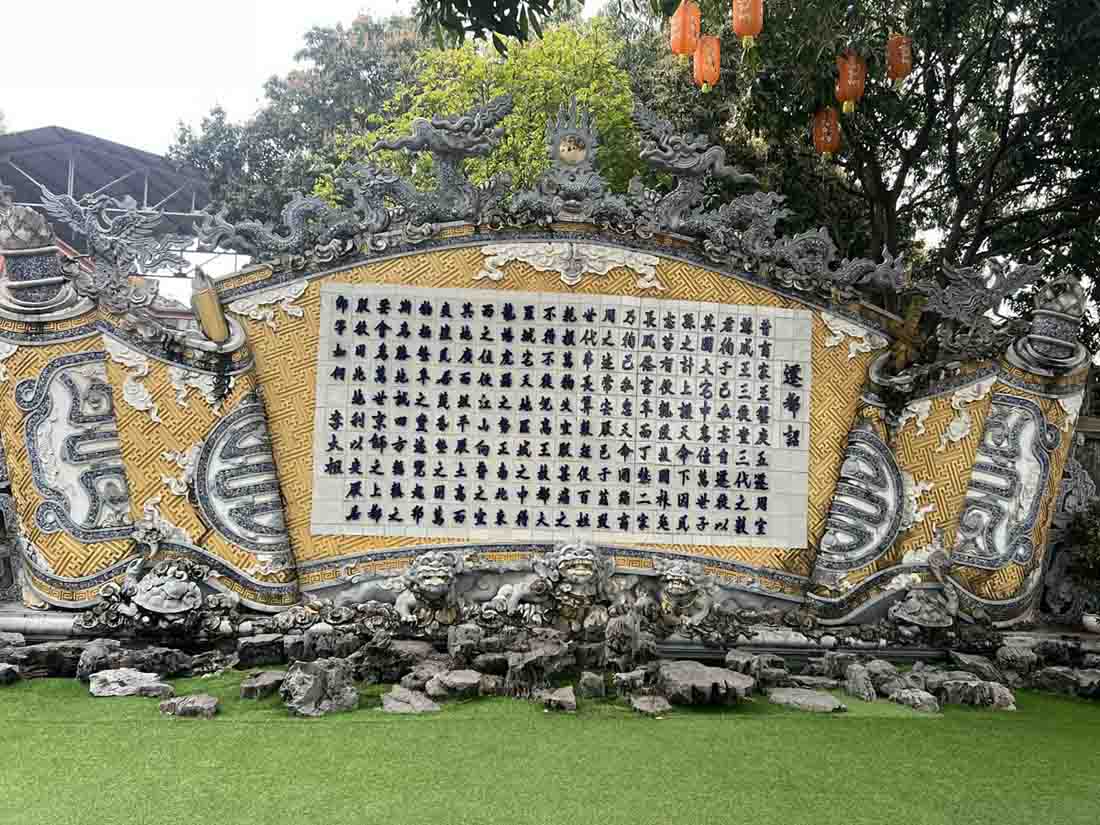
The scroll bearing the "Decree on Relocating the Capital" is 3.5 meters high and over 8 meters wide.
A highlight not to be missed at the Do Temple is the scroll depicting the Royal Edict on Relocating the Capital, located at the temple gate. The Guinness World Records recognizes it as the largest royal edict on relocating the capital in Vietnam today. The scroll is 3.5 meters high and over 8 meters wide.
Notably, the royal decree contains exactly 214 Chinese characters, corresponding to the 214 years of the Ly Dynasty's existence. All the characters are embossed using blue glazed Bat Trang ceramic.
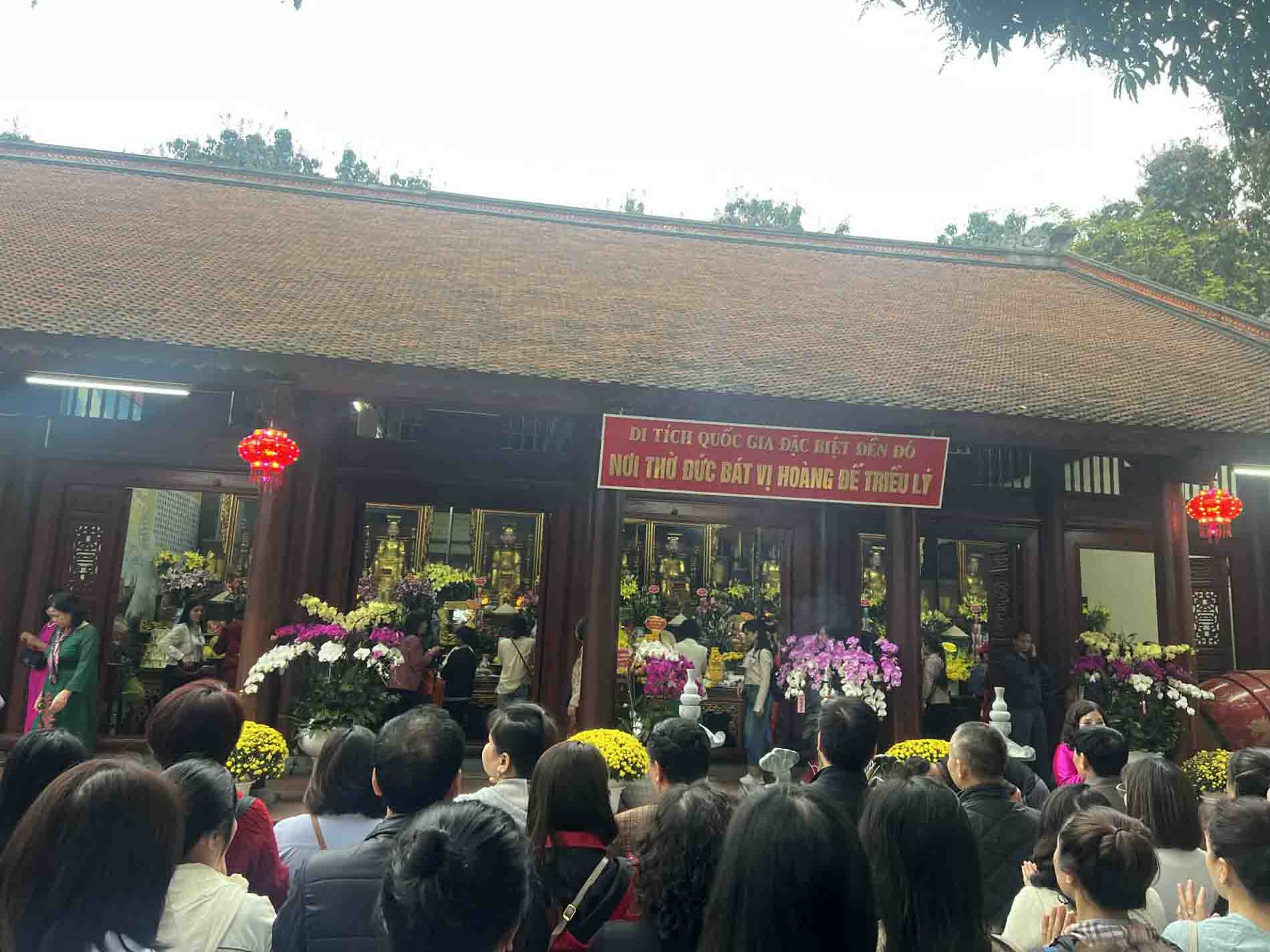
The Do Temple has become a spiritual gathering place at the beginning of spring.
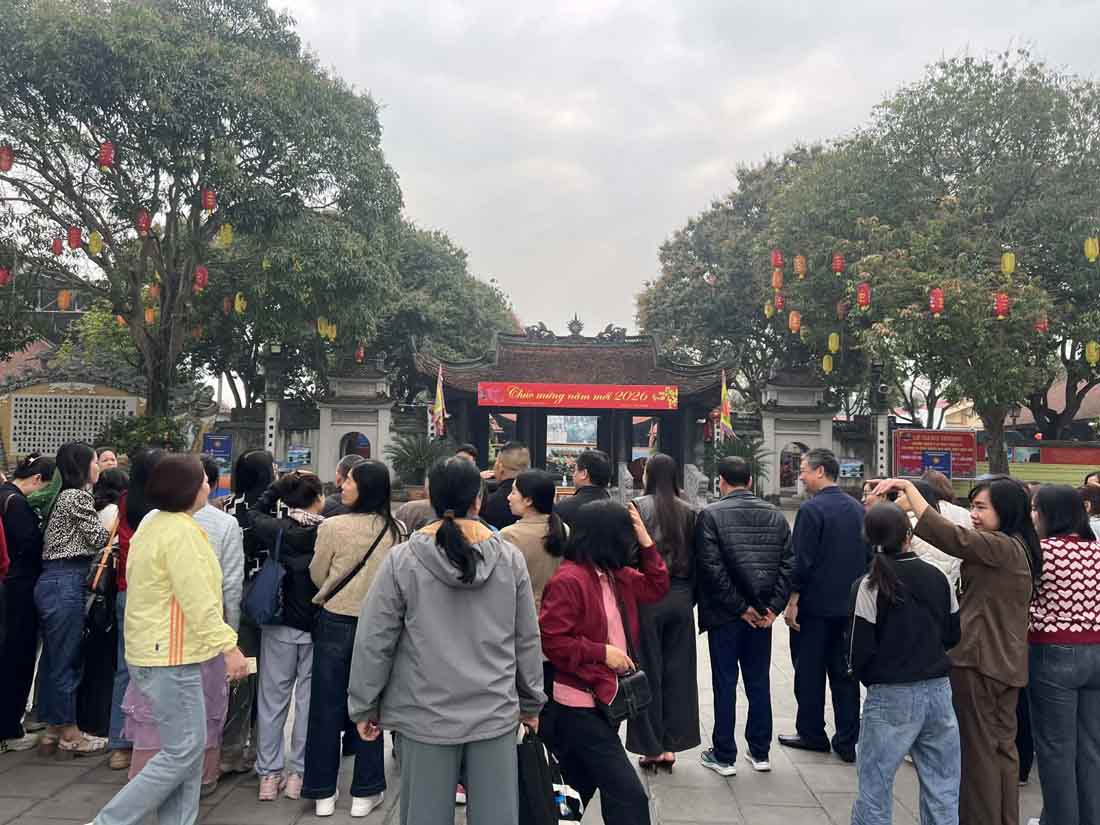
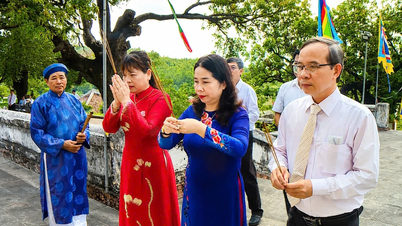
These days, the ancient grounds of the Do Temple are always bustling with pilgrims.
During the spring festival season, crowds flock to the Do Temple to offer incense and pray for health and good fortune. Visitors come here not only to worship but also to admire the unique architecture spread across an area of over 31,000 square meters.
Ms. Dao Lien (a tourist from Hanoi ) shared: "Every year at the beginning of the year, my family comes to Do Temple to express our gratitude to our ancestors. Standing before this majestic space, I feel proud of our nation's history and also feel more peaceful."
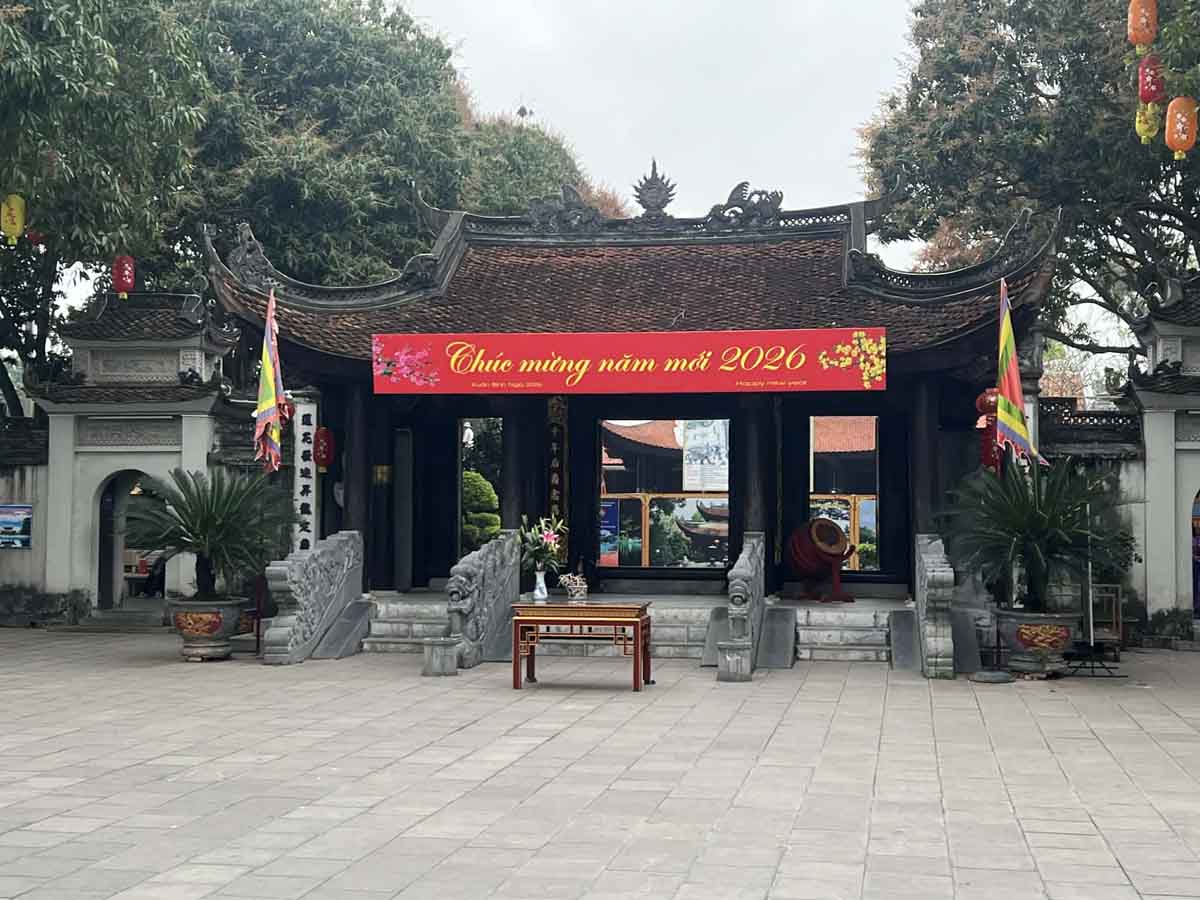
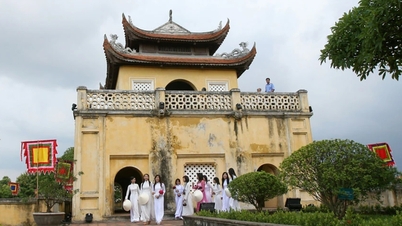
The Five Dragon Gate, carved with five intertwining dragons, is the main gate leading into the inner city.
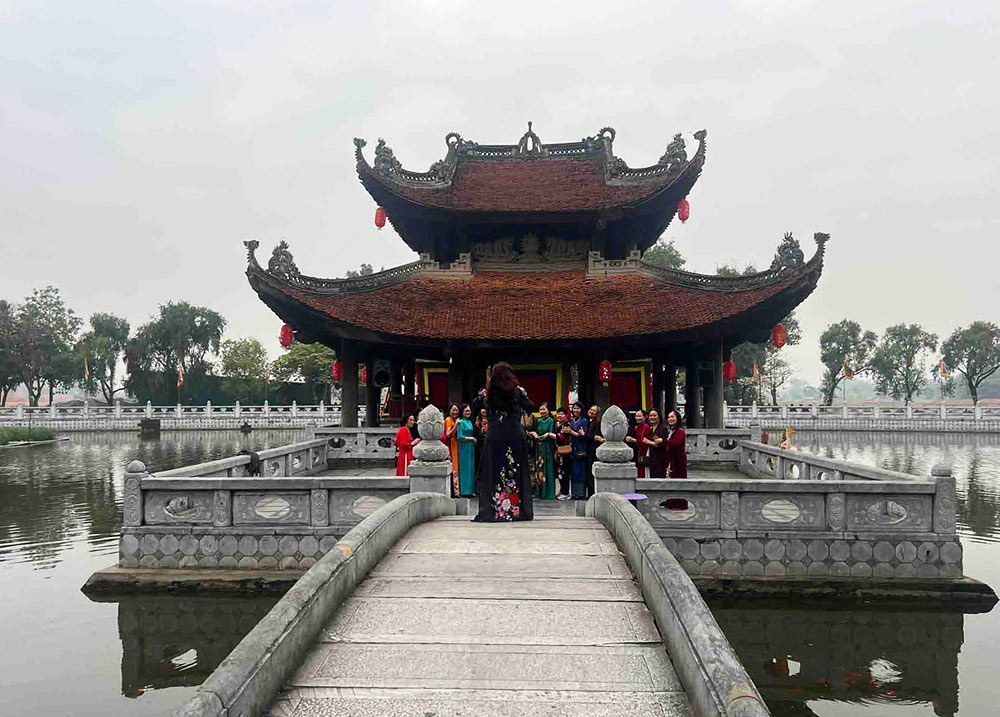
The spacious five-bay pavilion features an eight-roofed, eight-curved gable structure, constructed from sturdy ironwood and intricately carved with exquisite patterns.
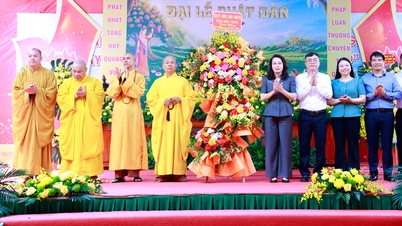
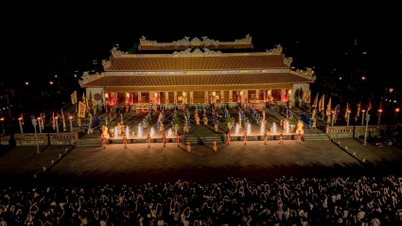
The main festival at the Do Temple takes place on the 14th, 15th, and 16th of the third lunar month. This is an occasion to commemorate the coronation of Emperor Ly Cong Uan, attracting tens of thousands of visitors from all over to offer incense and remember the contributions of the Ly dynasty. The festival includes many unique traditional rituals such as processions, sacrificial ceremonies, and incense offerings.
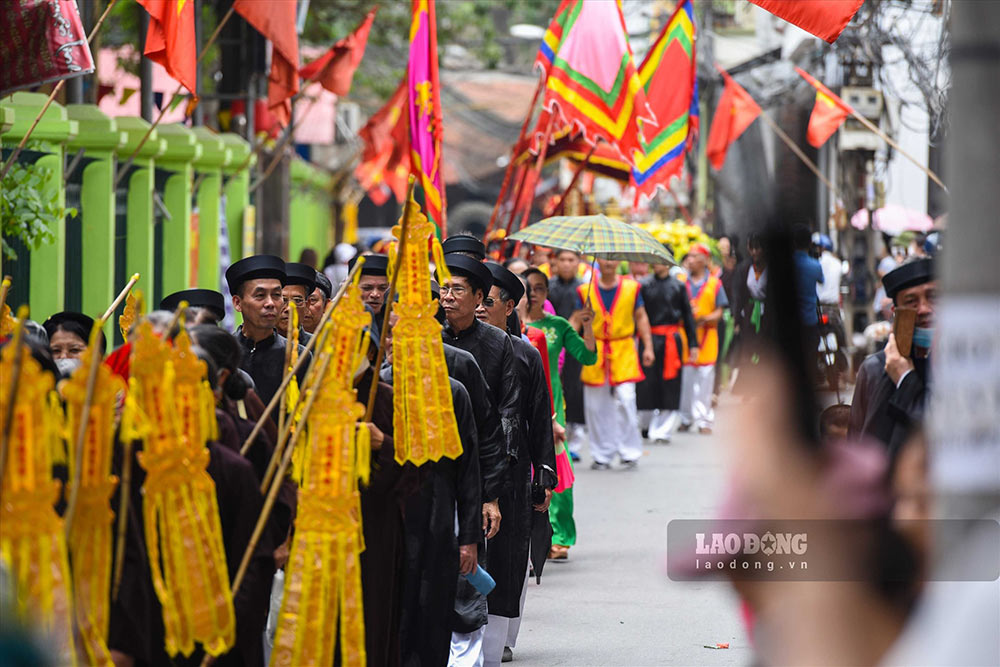
The Do Temple Festival attracts thousands of participants. Photo: Tran Tuan.
The Do Temple was recognized as a historical and cultural relic by the Government according to Decision No. 154 of the Ministry of Culture, Sports and Tourism dated January 25, 1991. In 2014, it, along with the tombs of the Ly Dynasty kings, was classified as a special national relic.
Linh Boo
Source: https://laodong.vn/du-lich/kham-pha/ngoi-den-o-bac-ninh-co-buc-chieu-thu-bang-gom-lon-nhat-viet-nam-1666991.html





![[Image] Nearly 125,000 Hanoi students completed the Literature exam for the 10th grade entrance exam.](https://vphoto.vietnam.vn/thumb/1200x675/vietnam/resource/IMAGE/2026/05/30/1780117233041_ndo_br_thiet-ke-chua-co-ten-2-png.webp)


















![[Photo] Admire the coral "masterpiece" amidst the million-year-old heritage of Dak Lak province.](https://vphoto.vietnam.vn/thumb/1200x675/vietnam/resource/IMAGE/2026/05/30/1780107638639_y25-jpg.webp)




























































Comment (0)