

To prevent the ship from being docked.
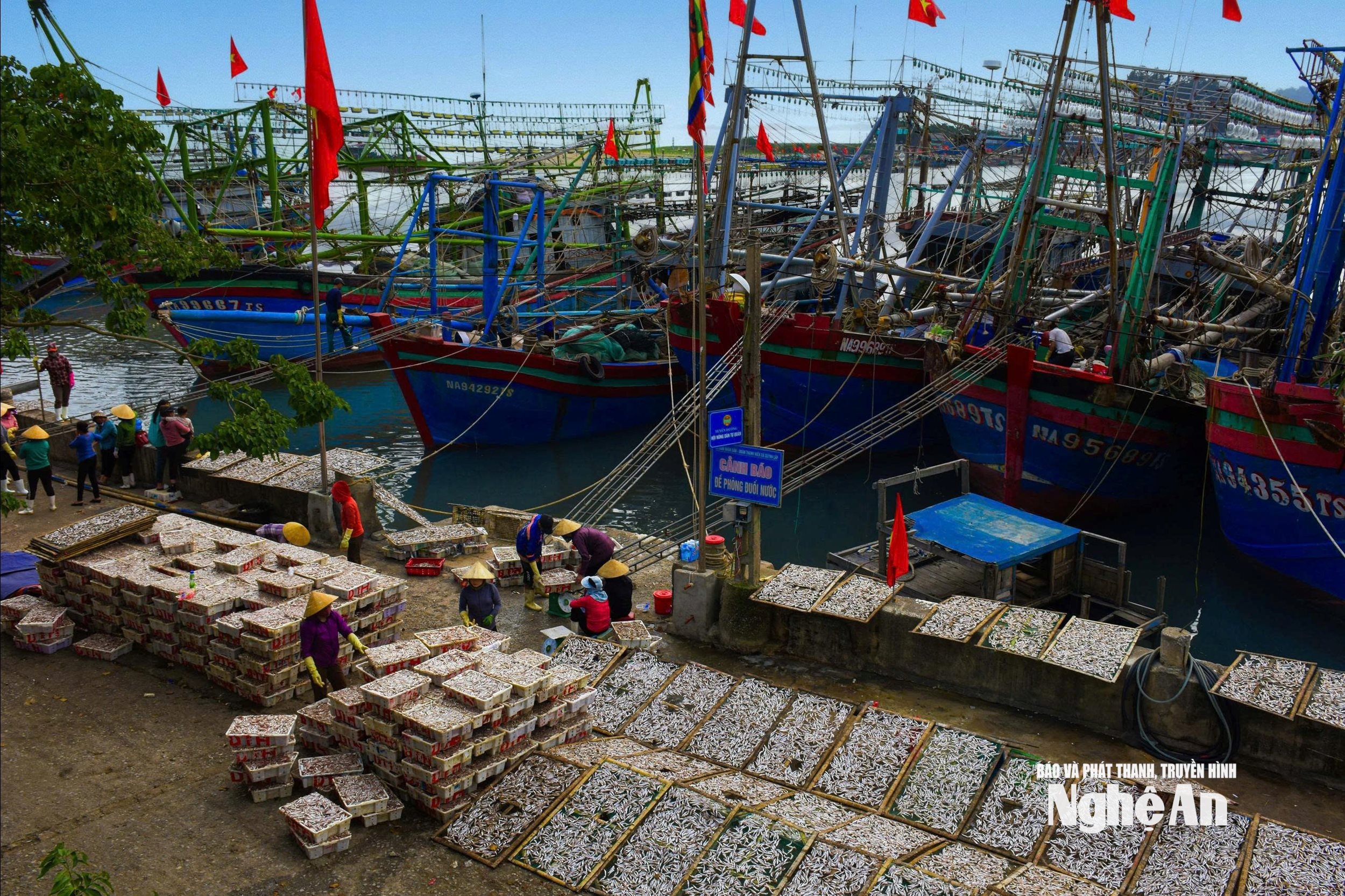
In late May, the fishing ports in Tan Mai and Quynh Mai become busier after months of rough seas during the northern fishing season. This is also the time when fishermen enter the main fishing season, which lasts from April to September each year – the most anticipated fishing season when the sea is smoother, fishing grounds expand, and fishing fleets begin to venture further out to sea. However, behind this bustling atmosphere lie many worries as fuel prices remain high, input costs increase, while marine resources decline and the labor force in the fishing industry becomes increasingly scarce. This forces many boat owners to change their methods to avoid having their boats idle at shore.
Mr. Ho Van Thuc, the owner of a fishing boat in Tan Tien Hamlet, Quynh Mai Ward, said that from 2022 to the present, the cost of each fishing trip has increased by hundreds of millions of dong, with fuel, ice, fishing gear, and necessities all rising in price. Despite this, his family's boat continues to go out to sea from the beginning of the season because it is not only their livelihood but also a responsibility to dozens of workers at sea and a burden to repay the loan taken out to build the boat.
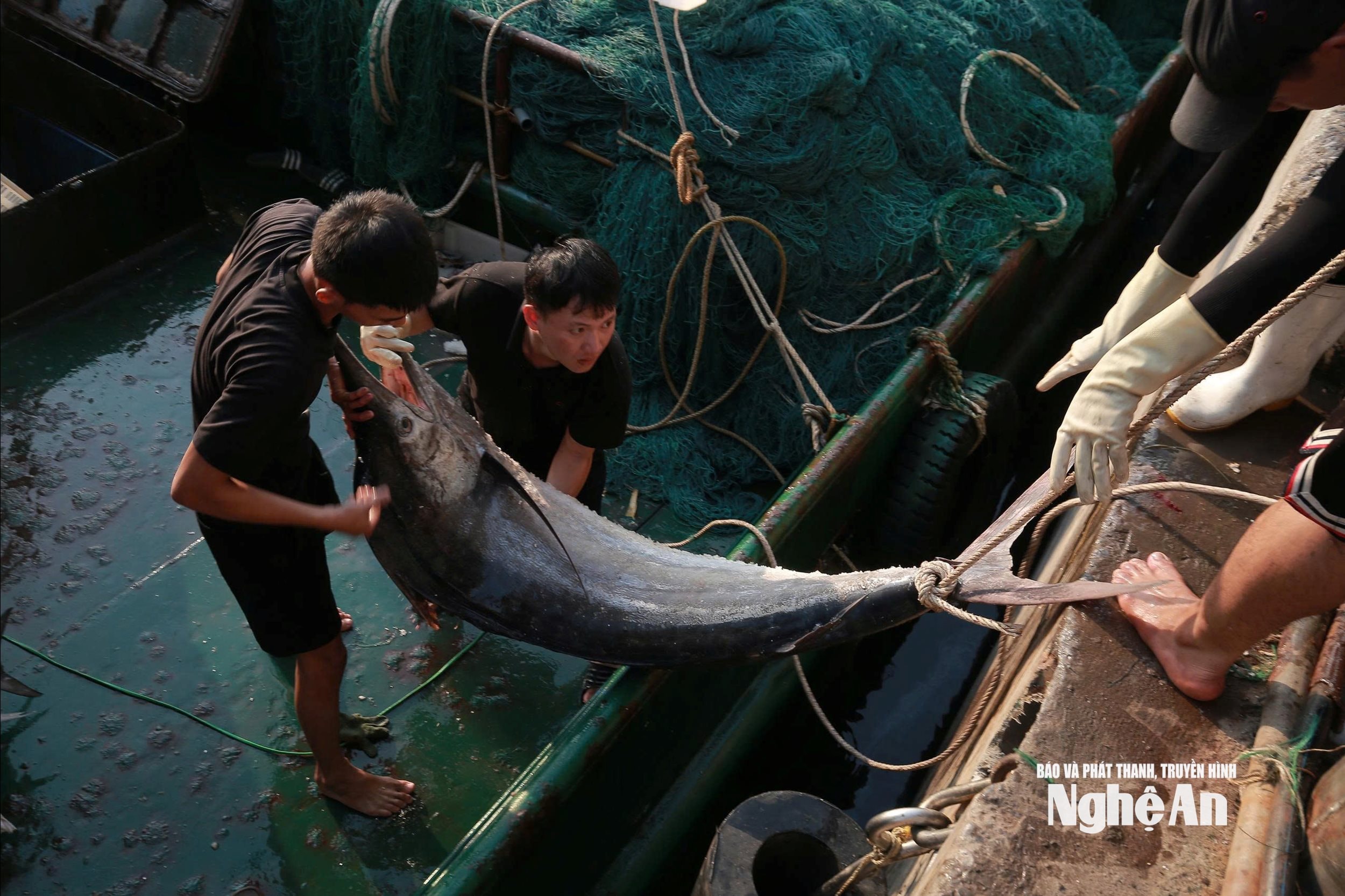
Mr. Thuc's ship, worth over 5 billion VND, requires about 10-12 workers per trip. If they hit a good school of fish, the crew can earn around 10 million VND per trip, but there are also trips where the owner has to accept losses to keep the crew. "Fishing is difficult, but we can't let the ship sit idle. For fishermen, each trip out to sea is not only a livelihood for the owner's family and crew members, but also a contribution to protecting national sovereignty at sea," Mr. Thuc shared.
Compared to the northern fishing season, which mainly operates in inshore and coastal areas, the main fishing season opens up opportunities for key fishing methods such as purse seine, squid fishing, and trawling to venture further into distant fishing grounds. Favorable weather conditions and the increased availability of various seafood species such as tuna, mackerel, scad, and squid have revitalized fishing activities.
Mr. Pham Viet Van, owner of fishing vessel NA-99555-TS in Tan Hai Hamlet, Tan Mai Ward, said that May is the peak season for pelagic fish activity, with some purse seine fishing trips yielding up to 10 tons of fish. According to Mr. Van, current fishing efficiency largely depends on investing in high-capacity machinery, horizontal and vertical fish finders, and mechanizing the net hauling process to reduce losses. “The price of mackerel and tuna is currently above 30,000 VND/kg; if we achieve the desired catch volume, we can still make a profit. The most important thing is maintaining a steady pace of fishing so that the crew members have work and income,” Mr. Van said.
However, the biggest headache for many ship owners right now is not just the price of fuel, but also the shortage of seafaring labor. In recent years, finding crew members has become increasingly difficult as young people in coastal areas are no longer interested in the profession.
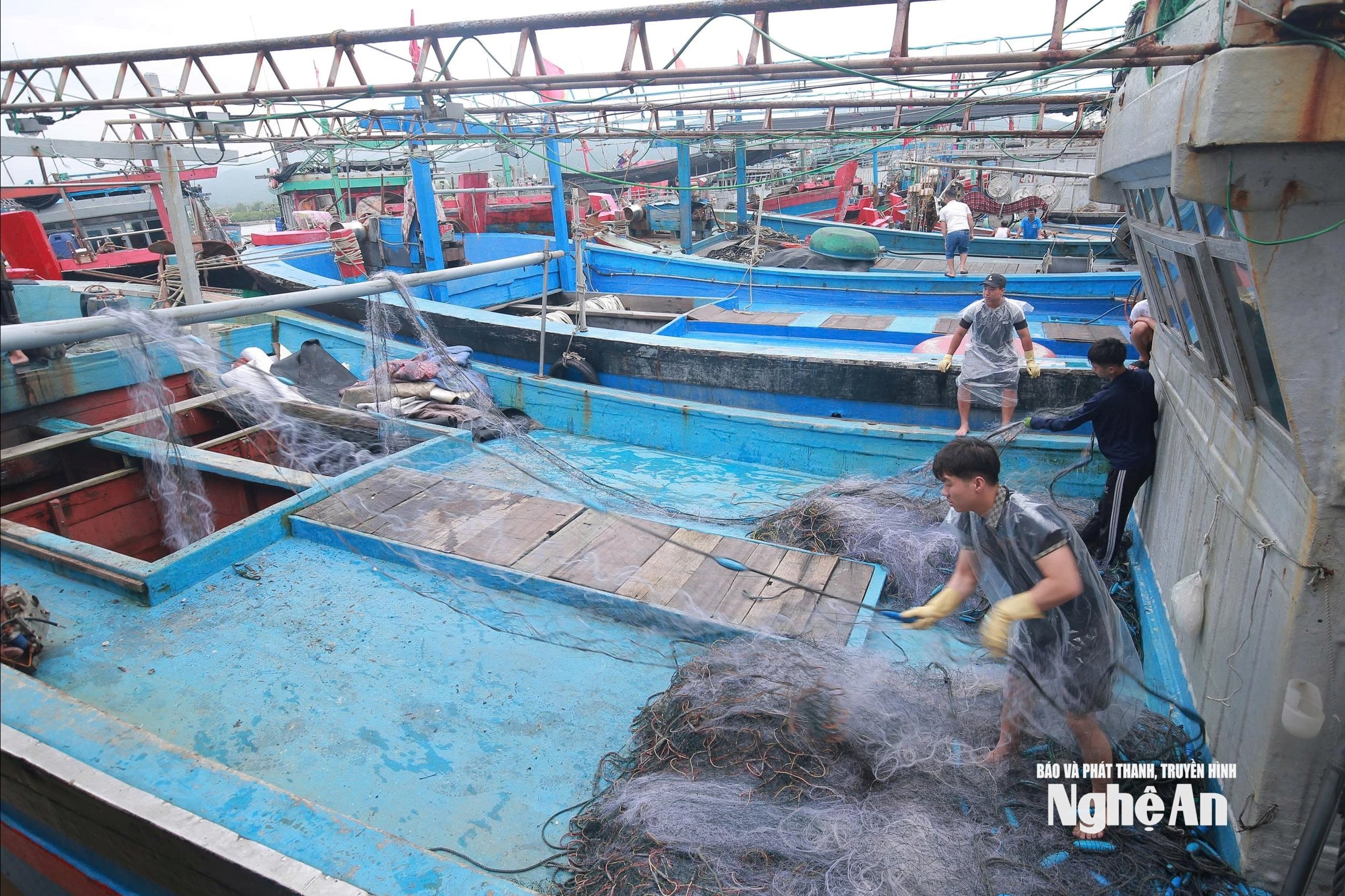
Previously, to retain crew members, most ship owners adopted a system of paying wages based on catch; crew members earned more on successful trips and less on unsuccessful ones. However, in the context of declining fish stocks, with many fishing trips resulting in more losses than profits, this method of payment gradually lost its appeal. Many workers have left the country to find other jobs such as factory workers, construction laborers, motorbike taxi drivers, or even overseas employment to secure a more stable income and be closer to their families.
This has forced many ship owners to change their methods of retaining workers. Currently, instead of paying based on quotas, many ship owners have switched to paying a fixed daily wage of around 700,000 VND per person, including food and drink, regardless of whether the fishing trip is profitable or not. For ship owners, accepting increased labor costs remains a way to maintain a stable workforce and keep pace with long voyages at sea.
Collaboration to reduce costs and increase efficiency.
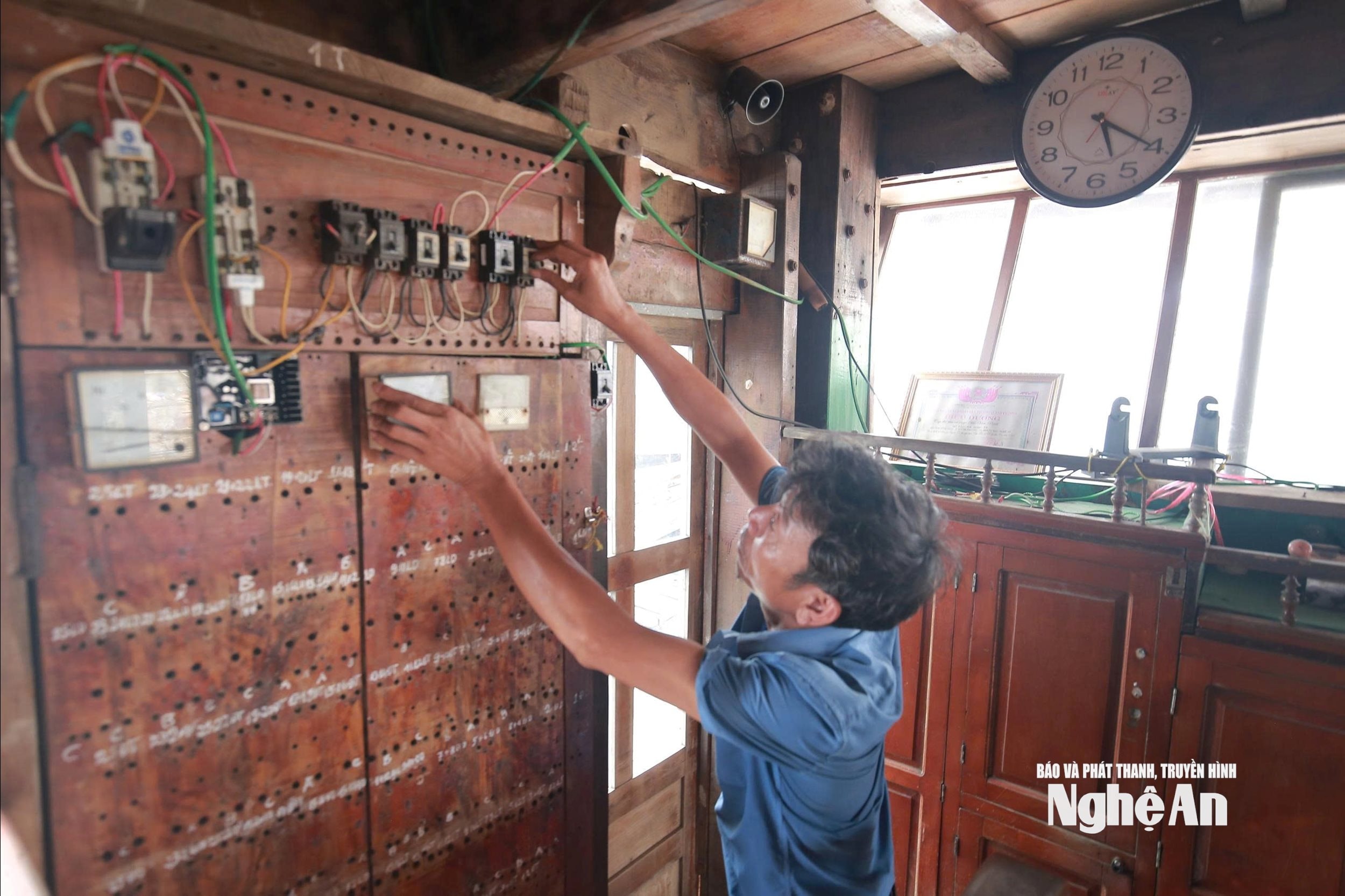
Not only have fishermen in the Tan Mai coastal area changed their payment methods or invested in equipment, but many have also begun shifting from individual fishing to forming fleets to reduce costs and extend their time at sea. One of the most talked-about models is the Doan Ket Cooperative, headed by Mr. Le Hoi Hung, owner of the NA-98679-TS vessel in Quynh Lap, Tan Mai ward. Amidst rising fuel prices and increasingly expensive logistics costs, the cooperative has built a fleet operating under a cooperative model, including a support vessel to provide fuel, ice, necessities, and collect seafood directly at sea.
This method allows fishing vessels to avoid returning to port after each short trip, significantly reducing fuel consumption. After catching, seafood is transported by support vessels for immediate consumption at nearby ports such as Quang Binh, Quang Tri, and Da Nang, instead of being forced to return to Quynh Lap port.
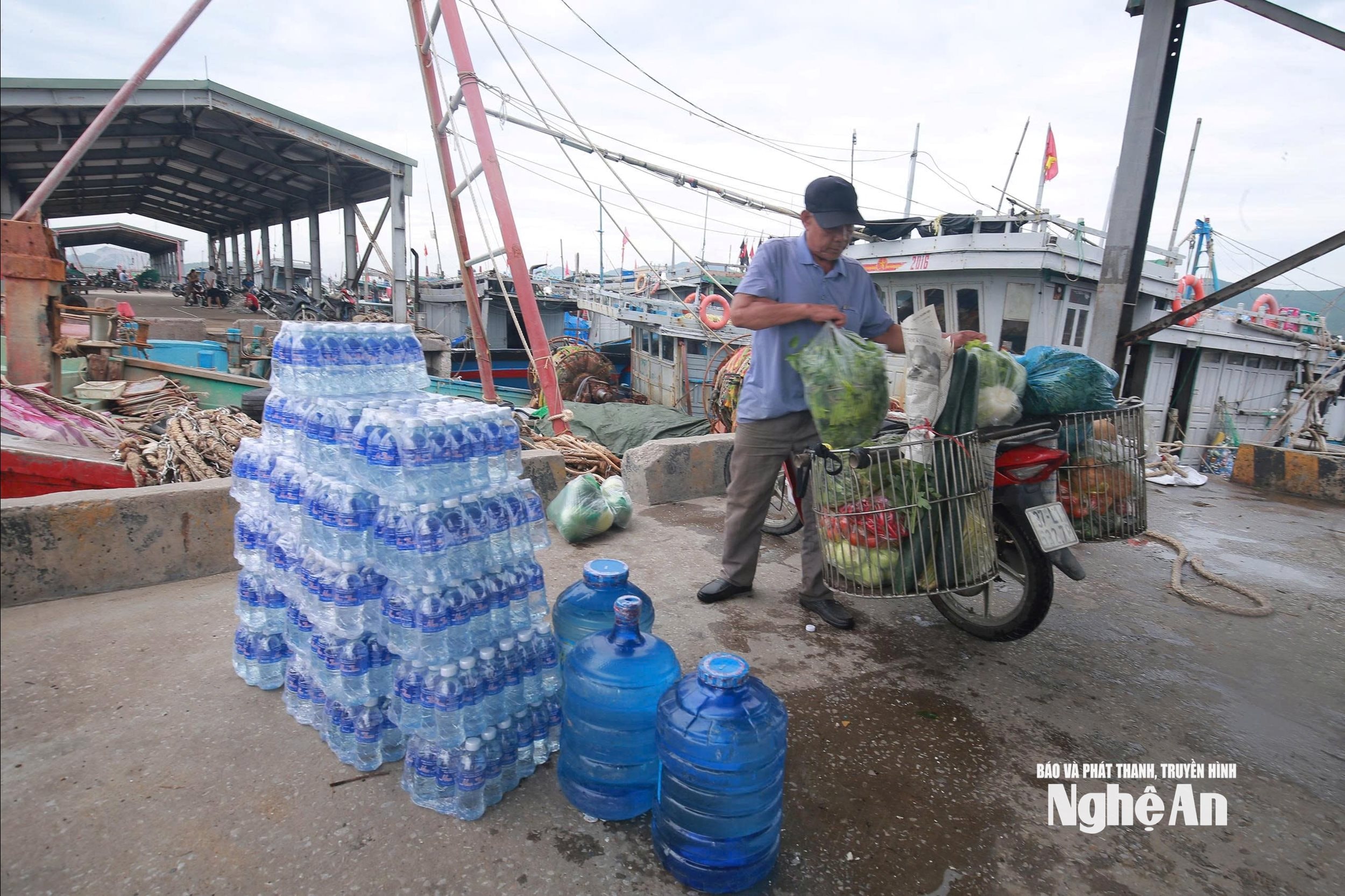
“With the support vessels, many of the cooperative's ships spend more than 60 days at sea before returning to port. Most importantly, it saves costs and increases the efficiency of fishing,” Mr. Hung shared. From over 20 initial ships, by early May 2026, the cooperative's fleet had increased to about 35, mainly fishing for mackerel, tuna, scad, and squid – high-value commodities. Each fishing trip can bring in hundreds of millions of dong in revenue per ship, helping sailors earn over 18-20 million dong per month.
On shore, the rhythm of the fishing industry is also changing towards increasing the value of harvested products. Mr. Nguyen Van Chung, owner of a fish steaming and export factory in Quynh Lap, Tan Mai ward, said that during the peak of the main fishing season, his factory steams about 10 tons of scad fish daily for export. “We export about 2 containers of dried scad fish to the Chinese market every month. In recent years, the demand for further processing has increased, so facilities have also invested in more cold storage and machinery to improve product quality,” Mr. Chung said.
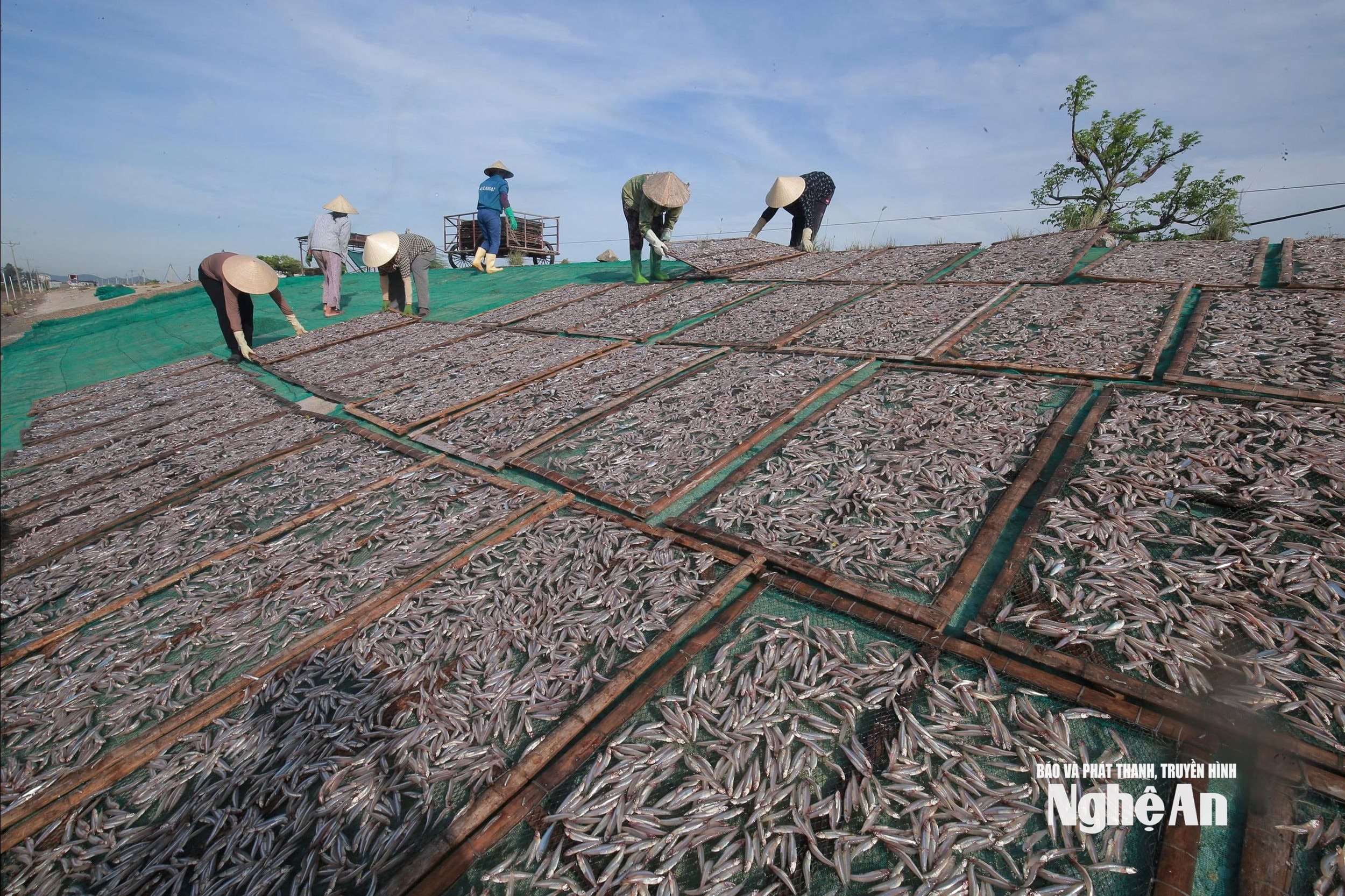
According to Mr. Phan Van Hai, Chairman of the Quynh Lap Fisheries Association (Tan Mai ward), a noteworthy aspect of this year's fishing season is the proactive and adaptable spirit of the fishermen. The Fisheries Association has encouraged boat owners to form groups of about 5 boats per group to support each other at sea, and has also encouraged the expansion of logistical models such as the Doan Ket Cooperative to reduce fuel costs and extend fishing time. "Despite many difficulties, the fishermen remain determined to stay at sea. The important thing is to change our approach, increase cooperation, open more distribution channels, and enhance the value of seafood after harvesting in order to preserve the profession," Mr. Hai said.
From a local management perspective, Mr. Ho Sy Tung, Vice Chairman of the Tan Mai Ward People's Committee, stated that the locality currently has over 400 large-capacity fishing vessels along with approximately 100 medium and small vessels, boasting the highest catch volume in the province. Entering the main fishing season, the local government has requested fishermen to develop offshore fishing plans suitable for each type of fishing and fishing ground; strengthen cooperation among groups and teams; and focus on post-harvest product preservation to enhance economic value.

In addition, fishermen must strictly comply with regulations against illegal fishing, maintain vessel tracking devices 24/7, keep complete fishing logs, and not violate foreign waters in order to work together with the whole country to lift the EC's "yellow card" warning.
Source: https://baonghean.vn/ngu-dan-nghe-an-doi-cach-lam-vuon-khoi-vu-ca-chinh-10338453.html



![[Image] Pleasant weather helps students enter the 10th grade entrance exam with confidence.](https://vphoto.vietnam.vn/thumb/1200x675/vietnam/resource/IMAGE/2026/05/29/1780034401612_ngay-1-thi-lop-10-minh-duy-8-5009-jpg.webp)
![[Photo] Ba Lang An Lighthouse - the "eye of the sea" amidst the "rock museum" of Quang Ngai province.](https://vphoto.vietnam.vn/thumb/1200x675/vietnam/resource/IMAGE/2026/05/29/1780038698840_anh-man-hinh-2026-05-29-luc-14-10-42.png)


















































































Comment (0)