

The Dutch government has collapsed after Prime Minister Mark Rutte's four-party coalition failed to reach an agreement on measures to curb migration, Dutch media reported on July 7.
The crisis stemmed from Prime Minister Mark Rutte's People's Democratic Party (VVD) pushing for restrictions on the flow of asylum seekers to the Netherlands, but facing opposition from two of the four parties.
For months, this alliance has been continuously discussing solutions to reduce the influx of new migrants into the country of nearly 18 million people. Proposals include classifying asylum seekers into two categories: a temporary one for those fleeing conflict, and a permanent one for those trying to escape persecution, as well as reducing the number of family members allowed to accompany asylum seekers in the Netherlands.
Tensions reached a peak this week when Mr. Rutte proposed restricting immigration for the children of war refugees already in the Netherlands, forcing them to wait at least two years before reunification. This latest proposal has met with fierce opposition from the Christian Union and the democratic D66 party, causing a deadlock.
Mr. Rutte chaired the meetings on the night of July 5-6 without reaching an agreement on migration policy. At the final round of negotiations on the evening of July 7, the parties decided that they could not reach a consensus, and therefore could not remain together in the coalition.
“It is no secret that alliances have differing views on immigration policy. Today, we regret to conclude that we have been unable to overcome those differences. Therefore, I will immediately submit the resignations of the entire cabinet to the King,” Rutte said in a televised press conference.
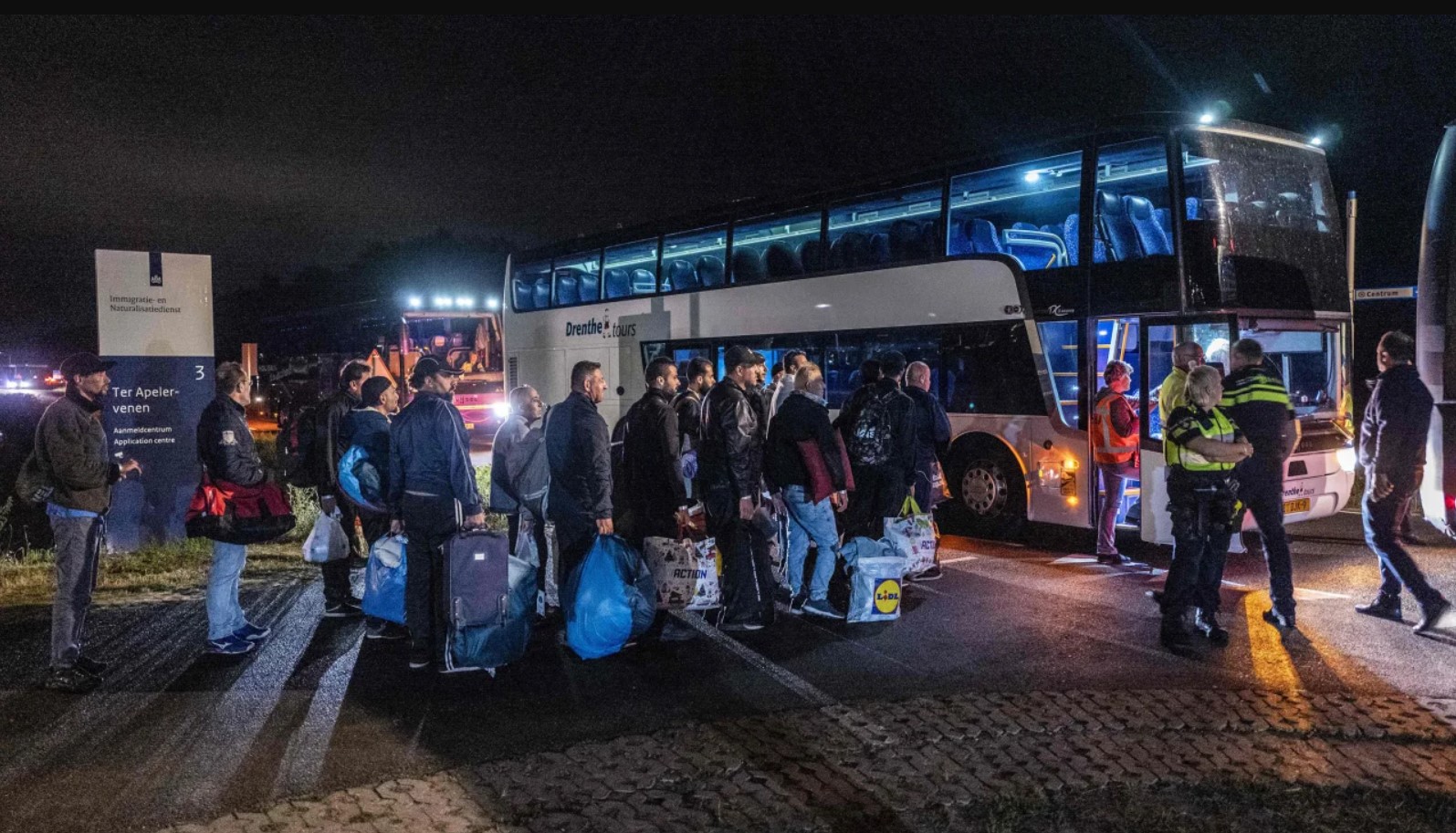
Asylum applications to the Netherlands have surged despite the country having one of the strictest immigration policies in Europe. Photo: CNN
Following Rutte's resignation, his coalition will continue to function as a caretaker government until a new administration is formed after new elections. This process is expected to take months in the context of the polarized Dutch political landscape, with 20 parties in the 150-seat House of Representatives.
The ANP news agency quoted the Dutch national electoral commission as saying that elections would not be able to take place before the second half of November.
The Netherlands has had one of the toughest immigration policies in Europe. Under pressure from right-wing parties, Rutte has been trying for months to further reduce the influx of asylum seekers.
The number of asylum applications in the Netherlands increased by a third last year to over 46,000. The EU country expects this number to rise to over 70,000 this year, surpassing the previous peak of 2015.
This will once again strain the country's refugee facilities, where hundreds of refugees were forced to sleep in harsh conditions with little or no access to drinking water, sanitation, or healthcare for months last year.
Mr. Rutte said he felt "ashamed" about these issues and promised to improve conditions at the facilities, mainly by reducing the number of refugees arriving in the Netherlands. But he failed to win the support of his coalition partners, who felt his policies had gone too far.
Rutte's current coalition came to power in January 2022. This is his fourth consecutive administration since he became Prime Minister in October 2010.
Mr. Rutte and his cabinet resigned once in 2021 after the government failed to protect thousands of families from tax audits, but he weathered the crisis and went on to become the Dutch leader in December of that year .
Nguyen Tuyet (Based on CNN, AP, Euronews, NYTimes)
Source
![[Photo] Prime Minister Pham Minh Chinh attends the Conference on the Implementation of Tasks for 2026 of the Industry and Trade Sector](/_next/image?url=https%3A%2F%2Fvphoto.vietnam.vn%2Fthumb%2F1200x675%2Fvietnam%2Fresource%2FIMAGE%2F2025%2F12%2F19%2F1766159500458_ndo_br_shared31-jpg.webp&w=3840&q=75)



























































































Comment (0)