

 |
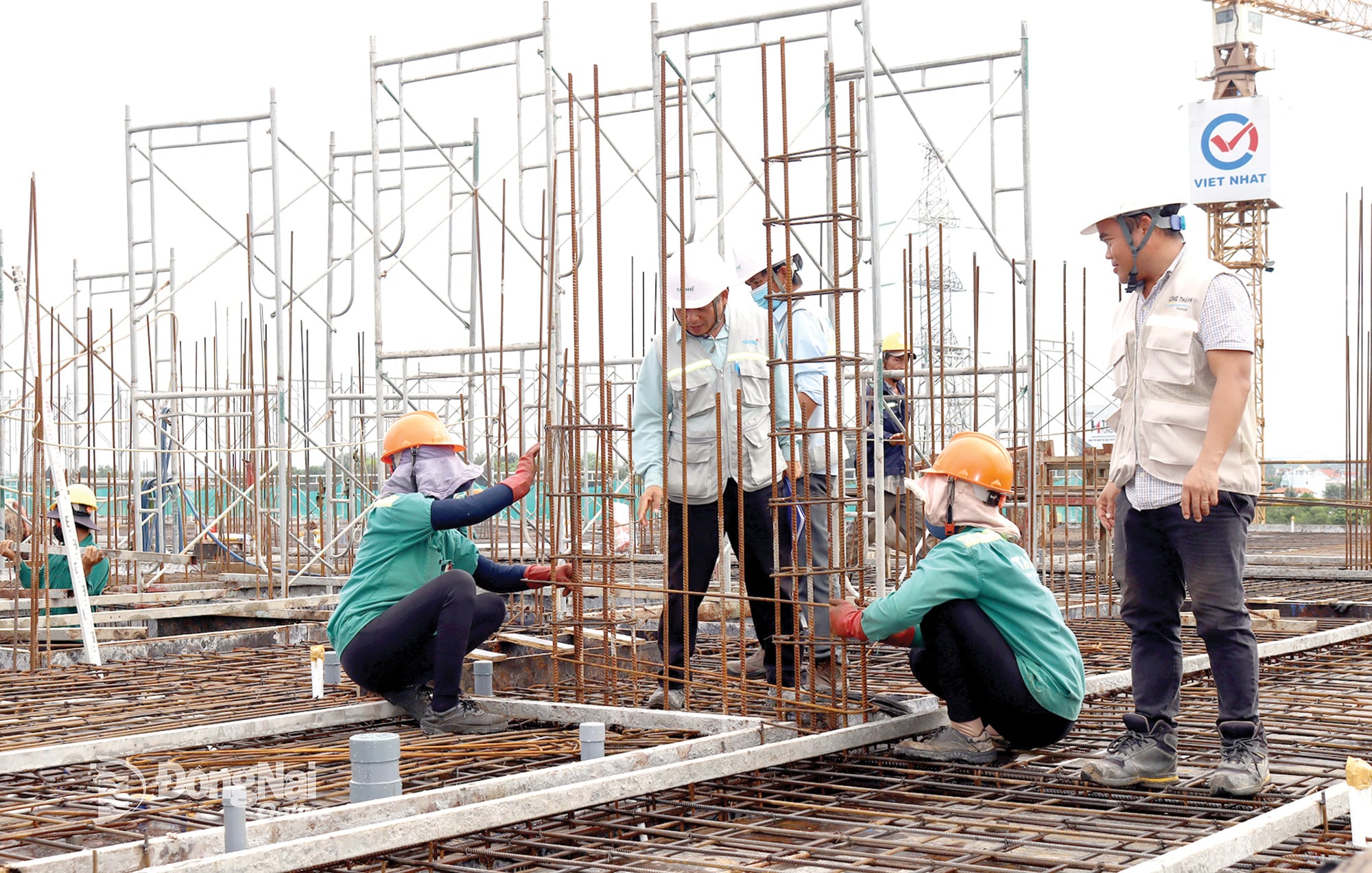
| Construction work is underway on a social housing project in Long Thanh commune. Photo: Hoang Loc |
With these policies, thousands of officials, civil servants, and public employees will have stable lives and peace of mind at work.
Timely and humane policy decisions
Following the provincial merger, many officials and civil servants had to commute long distances to work, facing increased costs. In response to this situation, the government issued regulations expanding the eligibility criteria for renting public housing, creating conditions for stable housing and encouraging job security.
Accordingly, from December 3, 2025, officials, civil servants, and public employees who relocate to the new political -administrative center in localities subject to provincial-level administrative unit reorganization will be eligible to rent official housing. The conditions are that these individuals do not own a house, or if they do, the distance from their home to their workplace is 10km or more in mountainous areas, remote areas with difficult economic conditions, border areas, and islands, and 30km or more in other areas.
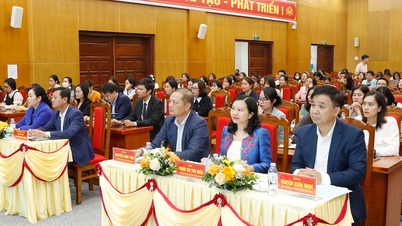
Immediately after the Government issued the above regulation, at the end-of-year session in 2025, the Provincial People's Council approved the Draft Resolution stipulating policies to support officials, civil servants, and employees of Party, State, Fatherland Front, and socio-political organizations at the provincial level when they are transferred, rotated, seconded, assigned, or appointed to work within the province.
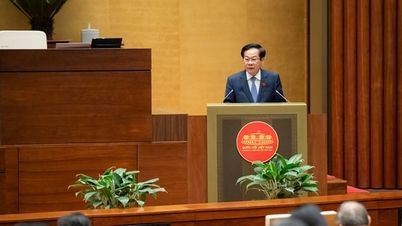
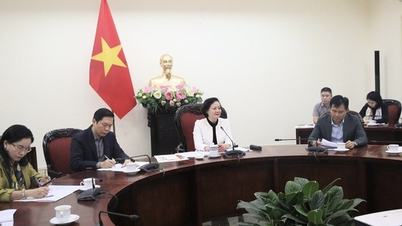
At the 8th session of the 10th Provincial People's Council, held on December 9th, Provincial Party Committee member and Director of the Department of Internal Affairs Nguyen Huu Dinh stated: This is a unique policy, unprecedented, both an urgent requirement stemming from the practical situation after the merger and in accordance with central government regulations.
Accordingly, the province provides housing, food allowances, and travel expenses for officials and employees from the former provincial and district levels who are transferred to the commune level and vice versa, or transferred between communes; officials from Binh Phuoc province (before the reorganization) who are assigned to work at the current centralized administrative center of Dong Nai province; and employees of provincial-level organizations and associations in Binh Phuoc (before the reorganization) or those with labor contracts who are assigned to work at the centralized administrative center of the province.
 |
| Customers visit a commercial housing project in Bien Hoa ward that prioritizes apartments for government officials and employees. |
Compared to central government regulations, the provincial resolution is more specific, flexible, and expands the forms of support. Specifically, the province has four support groups for the aforementioned workforce: those who commute 30km or more to work receive housing allowances at different levels for those who have not been allocated official housing, those who live in social housing but have to pay fees, and those who are allocated accommodation in dormitories or collective housing; meal allowances; travel allowances if the agency has not provided official vehicles or shuttle services; and additional support for female and ethnic minority officials.
According to the general assessment of the provincial People's Council representatives and beneficiaries, the above support policy is very timely and humane for cadres, civil servants, and public employees who have to change their residences and workplaces due to administrative unit restructuring; reassignment, secondment, and rotation.
Housing for civil servants
Changing residences or workplaces is something most public servants do not want. However, in response to practical demands and the overall tasks, the staff of officials and civil servants are still willing to continue working and performing their duties well in new environments. Therefore, providing moral support and material assistance to this workforce is essential to ensure their peace of mind and long-term dedication to their work.
Ms. Nguyen Thi Ngoc Anh, who works at a unit under the Department of Agriculture and Environment, shared that previously, her commute to work was only a few kilometers. After the provincial merger, the distance from her home to work has become very far, making daily commuting impossible. She is very pleased that the central and provincial governments continue to provide support policies for officials and civil servants.
"I am most concerned about housing support policies. My wish is to be given the opportunity to buy social housing or housing specifically for civil servants who have to change jobs. This way, my children will have an easier time studying, and I won't have to commute long distances every week," Ms. Anh expressed.
According to the report of the Legal Affairs Committee of the Provincial People's Council, the province's policies have met the practical requirements in the process of rearranging provincial and commune-level administrative units; at the same time, they have created incentives to encourage and motivate officials, civil servants, and workers when they are transferred to new areas. These policies help them feel secure in their work, commit to long-term employment with their agencies and units, and thus perform their assigned tasks well. Appropriate attention and support also contribute to stabilizing the organizational structure, ensuring the continuity, smooth operation, and effectiveness of the political system in the new administrative units after rearrangement.
Previously, the Dong Nai Provincial Party Committee and People's Committee had issued numerous directives to meet the housing needs of citizens, workers, and administrative staff. These included accelerating the implementation of social housing projects and working with commercial housing project developers to prioritize allocating apartments for civil servants to purchase. Furthermore, the province directed a review of surplus office buildings and the recovery of social housing units that were not allocated to eligible recipients for repair and renovation into official housing. In addition, the province has a policy of allocating budget and land for investment in official housing projects for rent and housing for the armed forces. These policies address the housing needs of officials, civil servants, and public employees.
Hoang Loc
Source: https://baodongnai.com.vn/xa-hoi/202512/giai-bai-toan-cho-o-cua-cong-chuc-vien-chuc-di-lam-xa-b731ab1/
















































































Comment (0)