

I remember an image from the days when Hanoi was fighting the Covid-19 pandemic a few years ago. At that time, I had the opportunity to accompany a city leader to inspect a boarding house in Gia Lam.
In a room barely a few dozen square meters in size, about 10 men are living crammed together. They are freelance workers, manual laborers, motorbike taxi drivers, and hired hands from various provinces who have come to Hanoi to make a living.
Because the city was under lockdown, they had to stay in that room for days. After listening to everyone's stories about their living conditions, food, and struggles to make a living, the city leader stepped outside and blurted out, "Their people are living in such misery."
That saying has stayed with me ever since.
Today, as leaders begin to view rental housing as a strategic segment, I realize that behind the debates about real estate, house prices, or urban planning lies the story of millions of people living in similar cramped and impoverished rooms.
A "city of rented rooms" inside Hanoi.
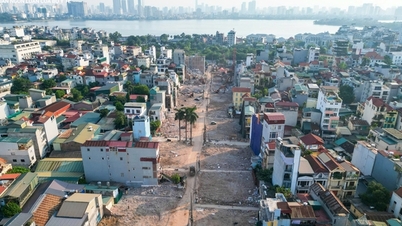
Hanoi currently has a very large rental housing market. According to city leaders, nearly 2 million people may be living in rented accommodations, equivalent to about a quarter of the capital's population. These include factory workers, students, migrant workers, young office workers, and families who cannot yet afford to buy a house.
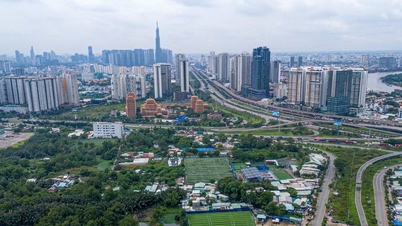
They created a giant "rental city" that exists alongside new urban areas where prices reach hundreds of millions of dong per square meter.
These two worlds coexist within the same city, yet access to housing is vastly different.
The rental housing market has existed for a long time, primarily formed by the people themselves, from rows of worker's dormitories in the suburbs, small houses subdivided for student rentals, to tens of thousands of mini-apartments springing up in residential areas.
In other words, a very large part of Hanoi's housing problem for middle and low-income earners over the years has essentially been solved primarily through "social resources," or "the people taking care of the people."
With housing prices consistently rising faster than incomes and public housing programs failing to meet expectations, another question arises: Is home ownership absolutely necessary for people to live comfortably in the city?
Vietnam doesn't lack housing; it lacks access to housing.
According to the Ministry of Construction , nearly 6 million homes are currently in real estate projects nationwide, with total investment reaching trillions of dong. This shows that Vietnam's problem doesn't necessarily lie in the supply.
The problem lies in accessibility. When a typical apartment in Hanoi costs around 7-8 billion VND, while many workers only earn a little over ten million VND per month, the gap between the market and people's affordability is widening.
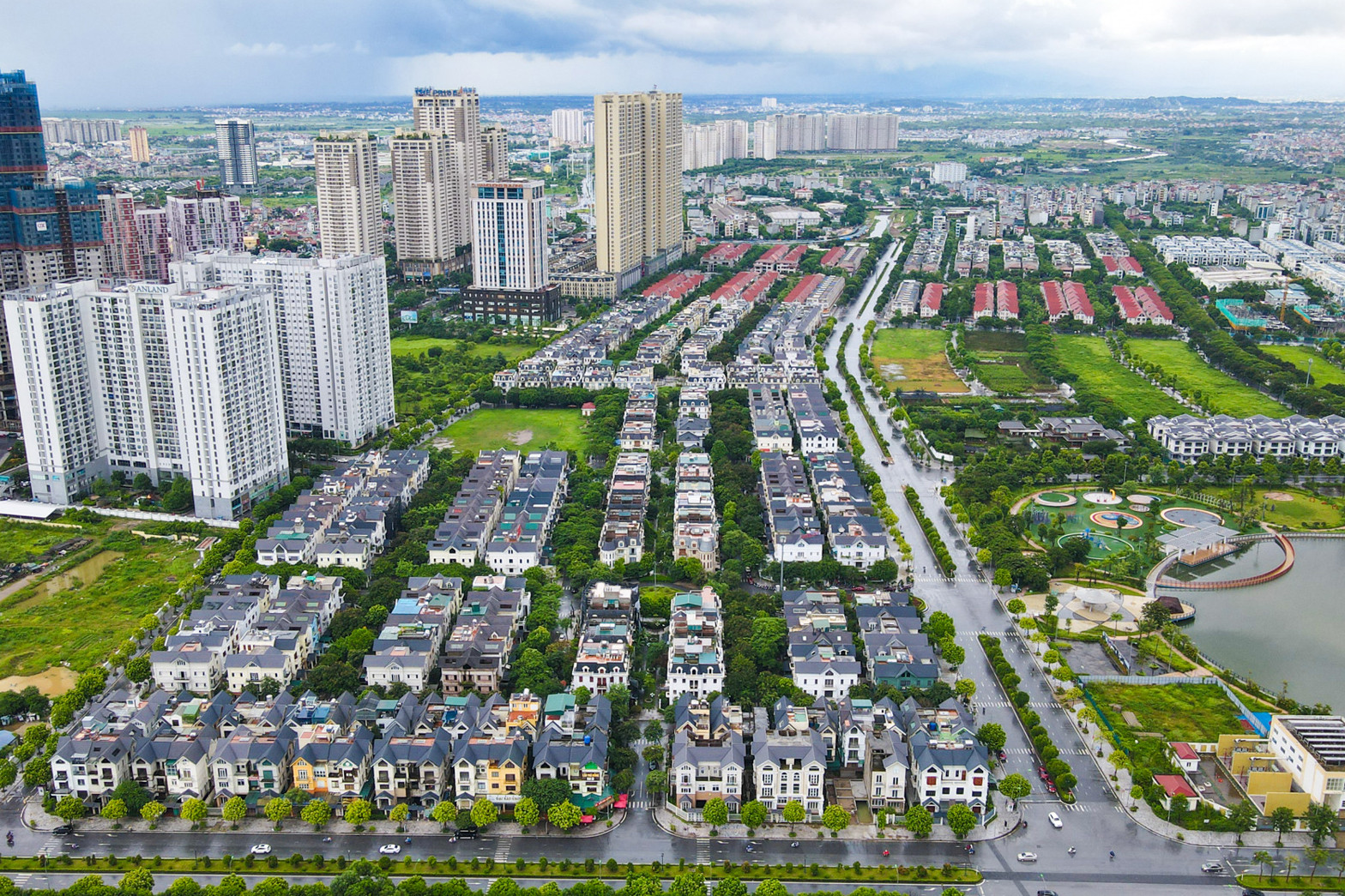
In other words, Vietnam may not lack housing in the physical sense, but it lacks housing that is accessible to ordinary workers with their incomes.
That's also why millions of people continue to rent homes even as more and more new real estate projects are being built around them.
How would a city of 15 million people function?
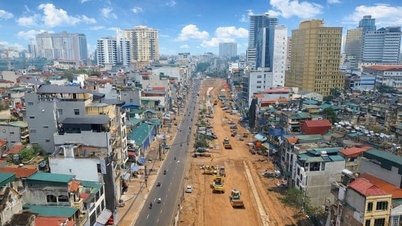
Currently, the population of the capital city is approximately 8.5 million people. However, the city's planning aims to reach around 14-15 million people by 2035 and 15-16 million people by 2045.
That means the city will have to absorb approximately 6 million more people in just the next decade.
Given its scale, the challenge is no longer simply about how to make homes affordable for everyone, but how to make it possible for millions of people to live in the city.
A city aiming for a population of 15-16 million is almost impossible to function if it relies solely on the mindset that everyone must own a home.
Housing is no longer just real estate.
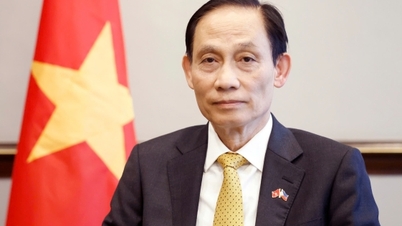
In this context, Prime Minister Le Minh Hung's call to develop rental housing as a strategic, long-term segment can be seen as a signal that Vietnam's housing mindset is beginning to change.
It is noteworthy that rental housing is considered within the context of labor, productivity, and urban competitiveness.
A worker living near their workplace, a young engineer able to stay in the city, or a newly graduated teacher not having to spend decades in debt to buy a house—this is not just a housing story. It's also a development story.
In other words, this is a human story. From that perspective, rental housing is no longer just a simple social welfare policy but is becoming a tool for development.
Because the ability to retain workers is sometimes just as important as attracting investment. A city will struggle to compete if its workers cannot afford to live there.
From home buyer to home user
For many years, Vietnam's housing policy has primarily focused on helping people own homes. However, that approach is facing increasing challenges as housing prices in urban areas rise much faster than people's incomes, while the demand for housing from the workforce continues to increase with urbanization.
Not everyone needs to own a home immediately, but everyone needs a stable, safe, and affordable place to live. It may sound like a small difference, but these are actually two completely different philosophies of urban development.
For many years to come, the majority of young people in Hanoi will still aspire to own their own home. But a city aiming for a population of 15-16 million cannot possibly be built on the assumption that everyone must be able to buy a house to feel secure in their living situation.
Because, ultimately, what gives a city its vitality is not the value of its buildings, but its ability for ordinary people to live, work, and build their futures there.
Part 2: Rental housing: What's the formula for a win-win situation?

Source: https://vietnamnet.vn/nha-o-cho-thue-su-thay-doi-lon-trong-tu-duy-nha-o-2521389.html


















































































Comment (0)